Support

Tarragona Amphitheatre

About

The Tarragona Amphitheatre is one of the most impressive ancient Roman structures, located in the city of Tarragona on the picturesque Mediterranean coast of Spain. This grand historical monument is a key archaeological attraction in the region and is rightfully included in the UNESCO World Heritage list. Its location right by the water's edge gives it a special charm and makes it one of the most photographed spots in the city.
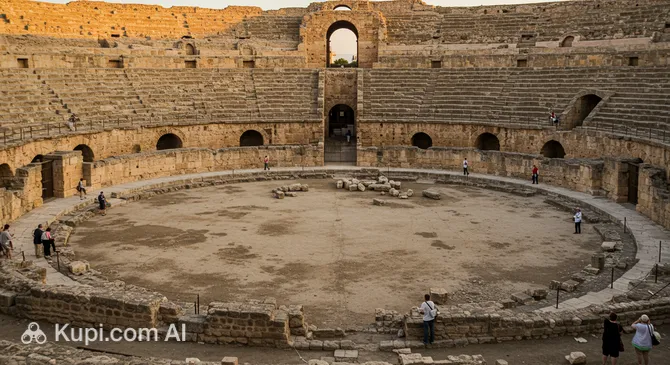
Tarragona Amphitheatre. Illustration.
Source: Kupi.com AI

Traveler photos:

Built in the 2nd century AD, the amphitheatre served as an arena for thrilling and sometimes brutal spectacles. It hosted gladiator fights, battles with wild animals, and public executions, drawing thousands of spectators. Today, standing on its ancient tiers, you can easily imagine the roar of the crowd and the tense atmosphere of the competitions that once took place in this arena.

The structure's uniqueness lies in the fact that it is partially carved directly into the rock, allowing it to blend harmoniously with the coastal landscape. The dimensions of the amphitheatre are impressive: its elliptical arena measures approximately 109.5 meters long and 86.5 meters wide. In its prime, it could hold up to 14,000 spectators, a testament to its immense importance for the ancient city of Tarraco, as Tarragona was then known.

Contacts

For the latest information on opening hours, ticket prices, or special events, you can contact the Tarragona tourist office, which manages this and other historical sites in the city.

How to contactContact
AddressParc de l'amfiteatre, s/n, 43003 Tarragona, Spain
Phone number+34 977 24 25 79
Websitewww.tarragona.cat

What to Do

A visit to the Tarragona Amphitheatre is a true immersion into history. Visitors can freely walk along the well-preserved stone tiers, imagining themselves as one of the 14,000 spectators who once gathered here. By descending into the arena itself, you'll find yourself at the center of the action where gladiator fights and other spectacles took place. Here, you can get a close look at fragments of the ancient walls and the podium that protected the audience from wild animals.

Of particular interest are the ruins located directly on the arena floor. Here you can see the remains of the 6th-century Visigothic basilica, built in memory of the Christian martyrs executed on this site. Later, in the 12th century, the Romanesque church of Santa Maria del Miracle was built on its foundation, the ruins of which are also open to visitors. These centuries of layers from different eras make the amphitheatre a unique historical monument.

For those who want to learn more, guided tours are held regularly on the grounds. Experienced guides tell fascinating stories about the lives of ancient Romans, the traditions of gladiator fights, and the archaeological finds made here. Additionally, the upper tiers of the amphitheatre offer a stunning panoramic view of the Mediterranean Sea, making it an ideal location for photos and leisurely walks filled with the spirit of antiquity.

Getting There

The Tarragona Amphitheatre boasts an extremely convenient location in the heart of Tarragona, close to the coastline and major tourist routes. This makes it very easy to reach, regardless of your chosen mode of transport.

For those arriving in the city by train, the simplest way is to walk. The journey from Tarragona's main train station to the amphitheatre takes no more than 10–15 minutes. Most tourists prefer this option, combining a visit to the ancient arena with a leisurely stroll through the historical center, where other Roman monuments are also located.

If you are using public transport, several city bus routes pass near the attraction, making it easy to reach from any part of the city. For travelers with a car, there are both paid and free parking options nearby, though it is worth noting that finding a spot can be challenging during the peak tourist season.

Nearest city: Tarragona

History & Facts

The amphitheatre in Tarragona holds many historical secrets, dating back to its creation. It was built in the early 2nd century AD, during the height of the Roman city of Tarraco. Later, in 221 AD, under Emperor Heliogabalus, the structure was renovated. A testament to this is the unique 140-meter inscription on the podium, considered the longest monumental inscription surviving from the Roman Empire. This fact alone makes the amphitheatre an outstanding monument of antiquity.

However, the arena was not just a place for entertainment. In 259 AD, it became the scene of a tragic and significant event for the Christian world. Here, the city's bishop, Fructuosus, and his deacons, Augurius and Eulogius, were publicly burned alive. This execution became a key moment in the early history of Christianity on the Iberian Peninsula, turning the amphitheatre into a site of pilgrimage and remembrance for believers for many centuries.

The fall of the Roman Empire did not mark the end of the site's history; it simply took a new turn. To commemorate the martyrs, a Visigothic basilica was built directly on the arena in the 6th century. Centuries later, in the 12th century, the Romanesque church of Santa Maria del Miracle (Saint Mary of the Miracle) was erected upon its ruins. Today, visitors can see the remains of both churches, which serve as a vivid reminder of the multi-layered and rich history of this remarkable place.

Time Needed

To fully enjoy the atmosphere of the Tarragona Amphitheatre and properly explore its key elements, most visitors will need between 1.5 and 2 hours. This is generally enough time to leisurely walk around the entire site, take impressive photos against the backdrop of the sea and ancient ruins, and soak in the grandeur of this unique structure.

By planning for about two hours, you can walk through the stone stands without rushing, descend into the arena where gladiators once fought, and examine the remains of the Visigothic basilica and the medieval church located at the heart of the complex. This amount of time is recommended for a thorough look at the amphitheatre and its surrounding area. If you are deeply interested in the history of Ancient Rome or want to capture the perfect panoramic shots from the upper tiers, you may want to plan for a bit more time.

Working Hours

The Tarragona Amphitheatre is open to visitors year-round; however, keep in mind that opening hours may change depending on the season. According to the information provided, the typical schedule is as follows: Tuesday to Friday, the attraction is open from 9:00 to 18:30, Saturday from 9:30 to 18:30, and Sunday from 9:30 to 14:30. Monday is the day off.

Given the high popularity of this historical monument, especially during the peak tourist season, it is strongly recommended to check the current schedule on Tarragona's official tourist portal in advance. This will help you plan your visit and avoid any potential changes in the schedule. It may also be useful to look into combined tickets, which often allow entry to several of the city's Roman sites at a discounted price.

DayOpening hours
MondayClosed
Tuesday9:00 – 20:00
Wednesday9:00 – 20:00
Thursday9:00 – 20:00
Friday9:00 – 20:00
Saturday9:00 – 20:00
Sunday9:30 – 14:00

Nearby

Visiting the Amphitheatre is just the beginning of your journey into Tarragona's rich heritage. The city is steeped in history, and many other significant landmarks are within walking distance of the ancient arena. Exploring the surrounding area will allow you to dive deeper into the atmosphere of ancient Roman Tarraco and see how different eras intertwine in the streets of this amazing city.

A stroll through the nearby sites will not only complement your experience of the Amphitheatre but also help you form a more complete picture of Tarragona's historical and cultural significance. Below is a list of interesting sites located within easy walking distance.

NameDistance
Roman Circus of Tarragona0.2 km
Balcón del Mediterráneo0.2 km
Tarragona Museum of Modern Art0.3 km
Saint Anthony Gate0.4 km
Casa Canals0.4 km
Model of the Roman City of Tarraco0.5 km
Twins Craft Beer0.5 km

Have you reached the end of the page?

So the route has been studied inside and out