Support

Roman Circus of Tarragona

About

The Roman Circus of Tarragona is a majestic monument of the ancient era, located in the heart of Tarragona, one of the oldest cities in Spain. Built in the 1st century AD, this circus was the center of social life, where exciting chariot races and other spectacular events took place. It is one of those places where history literally comes to life beneath your feet.
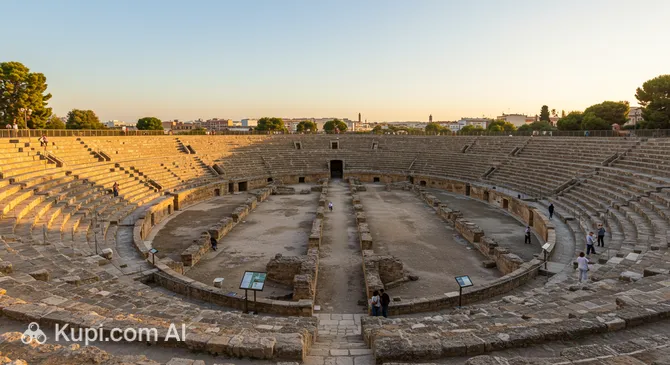
Roman Circus of Tarragona. Illustration.
Source: Kupi.com AI

Traveler photos:

The structure is impressive in scale: its arena reached 325 meters in length and 115 meters in width, allowing it to accommodate up to 30,000 spectators. Imagine the roar of the crowd, the quadrigas racing across the arena, and the thrill of the competition—all of it happened right here. Today, visitors can walk along the partially preserved stands and underground galleries through which gladiators and racers once passed.

The uniqueness of the circus in Tarragona lies in its location—unlike most such arenas, it was built right within the city limits. It is because of this, and the fact that in the 19th century parts of its structures were integrated into new buildings, that it is considered one of the best-preserved Roman circuses in Western Europe.

Today, the Roman Circus is part of the Tarraco archaeological ensemble, which is included in the UNESCO World Heritage List. A visit to this place is not just a tour of ruins, but a true immersion into the grand past of the Roman Empire, which left an indelible mark on Spanish soil.

Contacts

To check the current schedule, ticket prices, or find out about upcoming events, it is recommended to contact the administration. All necessary information can be found on the official Tarragona tourism portal or by phone.

How to contactContact
AddressRambla Vella, 2, 43003 Tarragona, Spain
Phone number+34 977 23 01 71
Websitewww.tarragona.cat

What to Do

Visiting the Roman Circus of Tarragona is a unique opportunity to literally touch history. Unlike many other ancient monuments, here you can do more than just look at ruins—you can walk along the preserved stone stands where thousands of spectators once sat. Exploring the underground galleries and corridors is especially impressive; these vaulted passages were used by performers to enter the arena. This walk allows you to fully feel the scale and greatness of ancient Roman architecture.

Inside the complex, exhibits are open to visitors, helping to deepen their understanding of life in the ancient city of Tarraco. You will learn about construction techniques of the time and how mass entertainment, such as chariot races—the main event in the circus—was organized. This is not just a tour of ruins, but a real educational journey into the past.

A must-do is climbing the Pretorium Tower, which is part of the circus complex. Its observation deck offers a magnificent panoramic view of the old city, the nearby amphitheater, and the endless Mediterranean Sea. This is where you can take the best photos and feel how ancient history is harmoniously integrated into the modern life of Tarragona. Themed excursions and cultural events are often held near the circus, making the visit even more fulfilling.

Getting There

The Roman Circus of Tarragona is conveniently located in the heart of the city, making it easily accessible on foot. If you are exploring Tarragona's historical center, you will find this landmark without any trouble. It is just a 10–15 minute walk from the city's main railway station, following scenic streets. This is a great way to combine your commute with sightseeing and other ancient monuments.

The entrance to the complex is on Rambla Vella, one of the city's main thoroughfares. Thanks to this location, the circus is easily reachable by public transport. Numerous city bus routes pass nearby, allowing you to get there from any part of Tarragona. You can also always use taxi services, which will quickly take you to the entrance.

If you are traveling by car, there are several paid parking lots in the city center. However, keep in mind that finding a free space can be difficult during the peak tourist season, so public transport is recommended. For tourists arriving from other cities, such as Barcelona, Tarragona has excellent rail and bus connections, making the trip to the Roman Circus quick and convenient.

Nearest city: Tarragona

History & Facts

The Roman Circus of Tarragona is an impressive monument of the ancient era, built at the end of the 1st century AD during the reign of Emperor Domitian. Its primary function was to host chariot races—one of the most popular and thrilling entertainments in the Roman Empire. Strategically located between the main Via Augusta road and the provincial forum, the circus was not just an arena for competitions but a true center of social life in ancient Tarraco.

Architecturally, the circus was a unique structure. It was partially adjacent to the city wall and, on the other side, to the forum, creating a natural barrier between the administrative center and the city's residential quarters. This grandiose building could accommodate thousands of spectators eager to witness spectacular races and participate in vibrant city events.

With the decline of the Roman Empire, the circus gradually lost its original significance. Over the centuries, its massive structures were partially dismantled, and Medieval buildings began to appear on its grounds. However, despite this, a significant part of its original structure, including the stands and vaulted galleries, has survived to this day, hidden beneath later buildings. Thanks to extensive archaeological research, the appearance of this grand structure has been reconstructed.

Today, the Roman Circus is one of Tarragona's key attractions and an important part of its historical heritage. In 2000, along with other Roman monuments, it was included in the UNESCO World Heritage List, highlighting its outstanding universal value. A visit to the circus allows you to literally touch history and imagine how life bustled in one of the most important cities of Roman Spain.

Time Needed

For a complete and leisurely tour of the Roman Circus in Tarragona, it is recommended to allocate approximately 1.5–2 hours. This will be enough time to not only walk around the visible parts of the arena but also to descend into the well-preserved underground galleries and tunnels where gladiators and chariots once waited for their entrance. This duration will allow you to thoughtfully study the information stands, feel the scale of the structure, and take impressive photographs.

Of course, the length of your visit may vary. If you are limited on time, you can spend about an hour on the main structures to get a general idea of this unique monument. However, for those with a deep interest in the history of Ancient Rome, exploring all the details and adjacent exhibits may take more than two hours. Since the circus is part of the larger Tarraco archaeological ensemble, it’s worth planning your time to enjoy the ancient city's other treasures as well.

Working Hours

The Roman Circus of Tarragona is open to visitors throughout the year, but has different working hours depending on the day of the week. From Tuesday to Friday, the complex can be visited from 9:30 AM to 9:00 PM. On Saturdays, the hours are slightly different: from 10:00 AM to 9:00 PM. On Sundays and public holidays, the visiting time is reduced—from 10:00 AM to 3:00 PM. Monday is the official closing day.

It is important to remember that working hours may change depending on the season. Therefore, before planning your visit, it is highly recommended to check the current information on the landmark's official website. This will help avoid surprises and make your visit as comfortable as possible. Generally, pre-booking tickets is not mandatory, but during the peak tourist season, purchasing online can help save time.

DayOpening hours
MondayClosed
Tuesday9:00 – 20:30
Wednesday9:00 – 20:30
Thursday9:00 – 20:30
Friday9:00 – 20:30
Saturday9:00 – 20:30
Sunday9:00 – 14:30

Nearby

A visit to the Roman Circus of Tarragona is an exciting immersion into the history of the ancient Roman era. However, to get a full picture of Tarragona's rich heritage, it is worth taking the time to explore its immediate surroundings. The city is so compact and saturated with historical monuments that a fascinating walk from one landmark to another will be a logical continuation of your journey through time.

Exploring the neighboring streets and squares will enrich your experience, revealing new facets of this amazing Catalan city. Just a few steps from the circus, other iconic sites await you, which together create a unique archaeological ensemble listed as a UNESCO World Heritage site.

NameDistance
Tarragona Amphitheatre0.2 km
Tarragona Museum of Modern Art0.2 km
Roman Walls of Tarragona0.3 km
Archaeological Promenade0.3 km
Model of the Roman City of Tarraco0.3 km
Casa Canals0.3 km
Balcón del Mediterráneo0.3 km

Have you reached the end of the page?

So the route has been studied inside and out