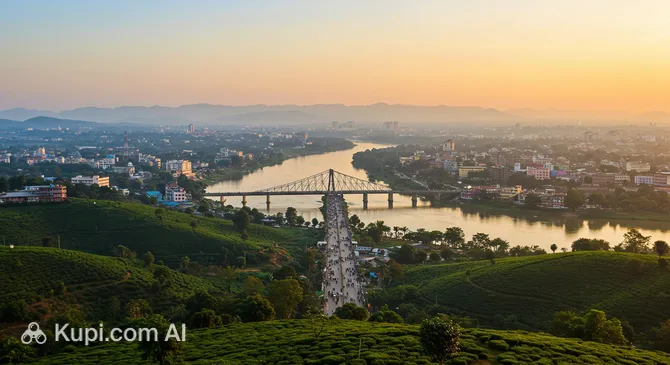
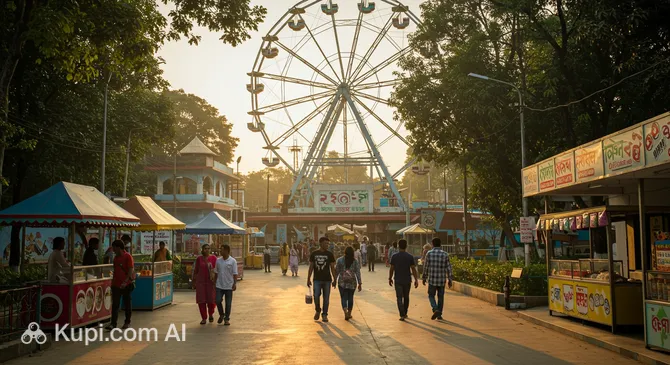
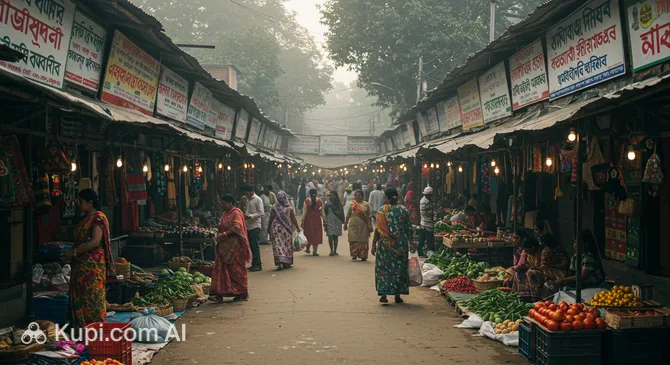
Often referred to as the land of "Two Leaves and a Bud," Sylhet is a captivating destination renowned for its rolling hills and endless tea gardens. Located in the northeastern part of Bangladesh, this city sits gracefully on the banks of the Surma River. It serves as a major administrative and cultural hub, boasting a population of approximately 480,000 residents who contribute to its vibrant and welcoming atmosphere.
Sylhet. Illustration.
Source: Kupi.com AI
The city holds a special place in the hearts of travelers due to its unique blend of natural beauty and spiritual heritage. Those interested in the past will find that the history of Sylhet is rich with tales of Sufi saints, most notably Hazrat Shah Jalal, whose shrine remains a significant pilgrimage site. Beyond its spiritual allure, the region is blessed with a tropical climate that nurtures the lush greenery defining the landscape.
Nature lovers will be spoiled for choice with the area's stunning attractions. Sylhet is the gateway to the mesmerizing Ratargul Swamp Forest, one of the few freshwater swamp forests in the world, and the scenic Jaflong, known for its crystal-clear waters and stone collections. Of course, no visit is complete without touring one of the many sprawling tea estates, such as the historic Malnicherra Tea Garden, which offers a serene escape from the bustle of city life.
Whether you are seeking spiritual solace or an adventure in the lap of nature, Sylhet promises an unforgettable experience. Its friendly locals, distinct cuisine, and breathtaking scenery make it a must-visit destination for anyone exploring the region.
Weather Overview
The climate in this region is subtropical, characterized by distinct seasonal changes that influence the lush landscape. Travelers planning their itinerary can find detailed forecasts and climatic trends by checking the weather in Sylhet.
The winter months, particularly from November to February, are generally the coolest and driest. January is typically the coldest month, with an average temperature of 17.7°C and lows dipping to around 11.9°C. Rainfall is minimal during this period, with January and December seeing as few as two wet days, making it an excellent time for outdoor exploration.
In contrast, the summer and monsoon season, stretching from May to October, brings higher heat and humidity. Average temperatures in July and August hover around 28.3°C, with maximums occasionally exceeding 31°C. This period is marked by frequent precipitation, with rain occurring on up to 30 days a month in the peak of the season. Expect warm summers with regular showers and mild, dry winters.
Average monthly temperature
Average monthly precipitation
Interesting Facts
Beyond the lush tea gardens and spiritual sites, Sylhet holds fascinating secrets that surprise many travelers. From unique local legends to global connections, the city offers intriguing stories that reveal the depth of its heritage.
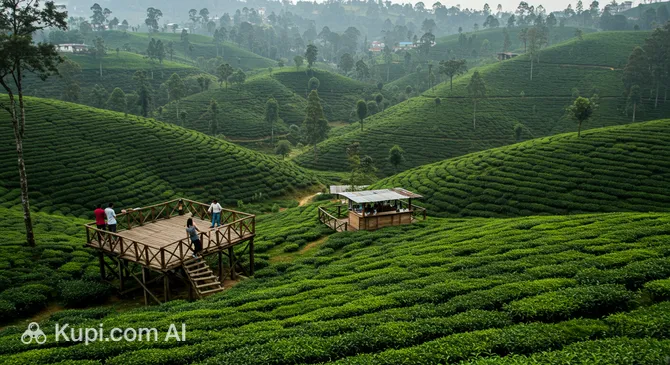
Malnicherra Tea Estate. Illustration.
Source: Kupi.com AI
Traveler photos:
The city is home to the oldest commercial tea garden in the country, the Malnicherra Tea Estate. Established in 1854, this historic plantation played a pivotal role in introducing tea cultivation to the region, eventually making it one of the most significant tea-producing areas in South Asia.
A curious legend surrounds the pond at the Shrine of Hazrat Shah Jalal, which is inhabited by hundreds of Gzar fish (catfish). Locals believe these fish are sacred companions of the saint and have lived there for centuries, and feeding them is considered a traditional act of respect by visitors.
Sylhet is often affectionately nicknamed "Second London" due to its deep connection with the United Kingdom. A large proportion of the Bangladeshi diaspora in the UK originates from this region, creating a unique economic bond that has significantly influenced the city's modern skyline and development.
Geographically, the city is located just a short distance from Cherrapunji in India, which is known as one of the wettest places on Earth. This proximity explains why Sylhet experiences such high rainfall and maintains its incredibly vibrant green landscape throughout the year.
How to Get There
Reaching this destination is quite convenient due to its well-established transport network. Whether you prefer flying directly or traveling overland, there are several options available. For a detailed guide on planning your journey, you can read more about how to get to Sylhet.
The most direct and popular way to arrive is via Sylhet Civil Airport (ZYL), also known as Osmani International Airport. Located just 6.4 km from the city center, it serves as the primary gateway for both domestic and international travelers. A taxi or auto-rickshaw from the airport to the heart of the city typically takes around 30 minutes. This facility handles a medium volume of passenger traffic, connecting the region efficiently to the capital, Dhaka, and other locations.
Travelers in the broader region might also consider airports in neighboring cities, though these routes involve longer transfers and crossing international borders. Shillong Airport (SHL) is located in the city of Shillong, approximately 89 km from Sylhet. The journey from there by road takes roughly 2.5 to 3 hours. Another significant hub is Agartala Airport (IXA) in Agartala, situated about 129 km away. Traveling from Agartala takes approximately 3.5 hours by car.
For clarity, here is a summary of the main airports:
In addition to air travel, the city is well-connected to the rest of the country by an extensive railway and road network. The main railway station in Sylhet is a major hub, receiving regular intercity trains from Dhaka and Chittagong. These train journeys are popular among tourists for the scenic views of the countryside they offer. Long-distance buses are also a frequent and affordable option for reaching the city from various parts of Bangladesh.
Main Attractions
Sylhet is a city that seamlessly blends natural splendor with deep-rooted history, offering visitors a variety of sites that reflect its cultural heritage and scenic charm. While the surrounding region is famous for its tea gardens, the city itself houses significant landmarks that tell the story of its past and its people.
One of the most iconic spots to visit is the Malnicherra Tea Estate. As the oldest commercial tea garden in Bangladesh, established in 1854, it offers a glimpse into the colonial history of the region. Tourists love walking through the manicured trails, observing the tea-picking process, and enjoying the tranquil atmosphere that contrasts with the busy city streets nearby. It is a perfect starting point for understanding why this area is known as the land of "Two Leaves and a Bud."
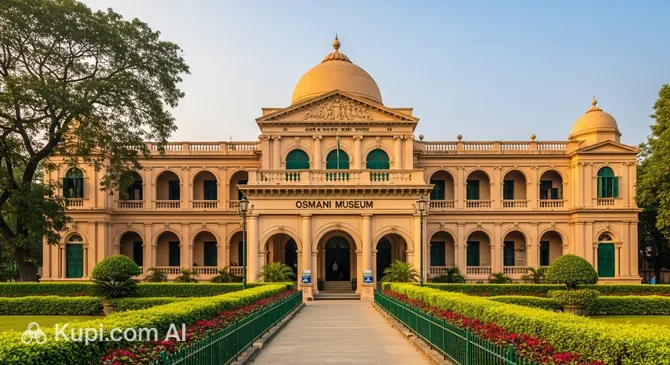
For those interested in history and architecture, the Osmani Museum is a must-visit destination. Housed in the historic "Nur Manzil," this museum is dedicated to General M.A.G. Osmani, the Commander-in-Chief of the Bangladesh Forces during the 1971 Liberation War. The building itself is a beautiful example of colonial-era architecture, and inside, visitors can explore a collection of personal effects, photographs, and artifacts that shed light on the life of this national hero.
Osmani Museum. Illustration.
Source: Kupi.com AI
Traveler photos:
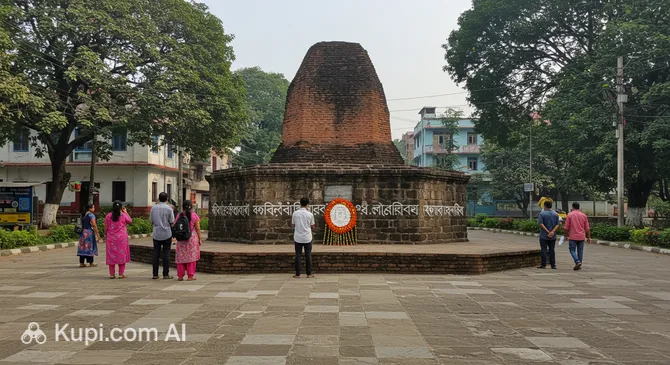
Another significant historical landmark is the Kadamtoli Point Liberation War Square. Located near the central railway station, this monument stands as a proud tribute to the sacrifices made during the country's fight for independence. Its prominent location makes it an easily accessible stop for travelers arriving by train, serving as a poignant reminder of the nation's resilience and spirit.
Kadamtoli Point Liberation War Square. Illustration.
Source: Kupi.com AI
Traveler photos:
Families and those seeking a relaxing afternoon should consider a visit to Bongobir Osmani Children's Park. This recreational area offers a refreshing green space within the city, complete with rides and walkways. It is a popular spot for locals and tourists alike to unwind, enjoy a leisurely stroll, and experience the lively local atmosphere in a comfortable setting.
Local Cuisine
The culinary landscape of Sylhet is distinct and celebrated across Bangladesh for its unique flavors and ingredients. The region is famous for its use of Satkora (Citrus macroptera), a wild citrus fruit that adds a tangy, aromatic kick to curries. A trip to this city would be incomplete without trying the signature Beef Satkora, a rich and spicy dish where the citrus cuts through the richness of the meat, creating a flavor profile that is truly unforgettable.
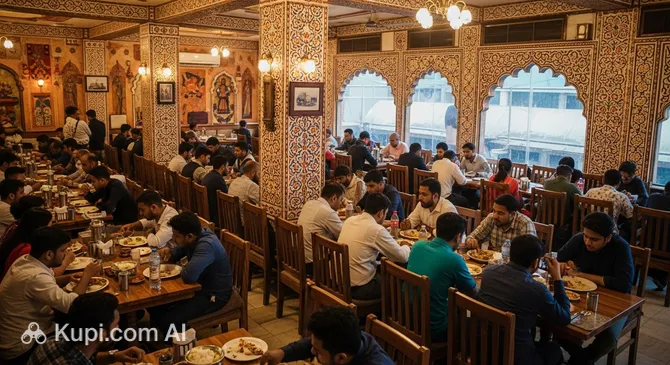
Rice dishes also hold a special place in the local diet. While biryani is popular nationwide, Sylhet has its own version known as Akhni Polao. This fragrant dish is cooked with chinigura rice, meat, and a special blend of spices, resulting in a meal that is somewhat moister than a traditional biryani. For those looking to indulge in hearty rice-based meals, Kacchi Bhai is a popular dining spot known for serving authentic and flavorful platters that attract both locals and visitors.
Kacchi Bhai. Illustration.
Source: Kupi.com AI
Traveler photos:
Given the region's status as a tea capital, it is no surprise that tea is the most consumed beverage. You will find tea stalls on almost every corner serving steaming cups of "cha." A unique local specialty is the Seven Layer Tea, a visually striking drink featuring distinct layers of different tea blends and flavors in a single glass. For alcoholic beverages, options are quite limited due to local culture and regulations, typically found only in upscale hotels or specific venues like SEASONS Grand, which offers a more exclusive environment for evening drinks.
The food scene in Sylhet offers a mix of traditional eateries and modern cafes. While street food stalls serve quick snacks like fuchka and chotpoti, there is a growing trend of contemporary dining. Places like MEATUP cater to the younger crowd and tourists seeking a break from traditional curries, offering burgers and grilled dishes in a modern setting.
To truly understand the local food culture, a visit to a bustling marketplace is essential. Modina Market is a vibrant hub where you can see the fresh produce, including the famous Satkora fruit and freshwater fish from the Surma River, which form the backbone of Sylheti cuisine. Exploring these markets offers a sensory experience that connects you directly to the culinary heart of the city.
Modina Market. Illustration.
Source: Kupi.com AI
Traveler photos:
Travel Tips
Welcome to Sylhet! To ensure your journey through this lush, spiritual, and culturally rich region is as smooth and enjoyable as possible, we have compiled a list of essential travel advice. These practical tips will help you navigate the local customs, climate, and daily logistics with the confidence of an experienced traveler.
Clothing and Gear: Given the region's conservative culture and religious significance, it is respectful to dress modestly. Both men and women should aim to keep shoulders and knees covered, especially when visiting religious sites like the Shah Jalal Shrine. Since Sylhet is one of the wettest regions in Bangladesh, a sturdy umbrella or a high-quality raincoat is essential, particularly between May and October. For the winter months (November to February), bring light layers or a jacket, as evenings can get surprisingly cool.
Transportation: The most convenient way to navigate the city is by using CNGs (green auto-rickshaws). They are ubiquitous and perfect for navigating traffic. For shorter distances within neighborhoods, cycle rickshaws offer a slower, scenic pace. While ride-sharing apps like Pathao or Uber may operate, they are less reliable here than in the capital, so be prepared to hail a CNG and negotiate the fare before starting your journey.
Finances: The local currency is the Bangladeshi Taka (BDT). While upscale hotels and restaurants in Sylhet accept credit cards, cash is king for almost everything else, including transport, street food, and entrance fees to tea gardens. ATMs are widely available in the city center, but it is wise to carry smaller denominations for tips and minor purchases.
Health and Safety: Always stick to bottled or filtered water and avoid tap water to prevent stomach issues. Pharmacies are plentiful in the city center, but it is smart to bring a basic medical kit with you. Mosquito repellent is a must-have, especially if you plan to visit the swamp forests or stay near tea gardens, as bugs can be active in the evenings.
Communication: The official language is Bengali, but the local dialect, Sylheti, is widely spoken and distinct. English is generally understood in hotels, major tourist spots, and by younger people, but learning a few basic phrases like "Dhonnobad" (Thank you) goes a long way. For internet access, you can easily buy a SIM card from operators like Grameenphone or Robi with your passport at official stores.
Local Etiquette: Sylhet is known for its hospitality and spirituality. The standard greeting is "As-salamu alaykum" (Peace be upon you). When visiting homes or mosques, always remove your shoes before entering. Using your right hand for eating and passing money or objects is the cultural norm, as the left hand is considered unclean for these activities.
What to Avoid: Avoid public displays of affection, as they are frowned upon in this conservative society. Additionally, refrain from taking photographs of locals, especially women, without asking for explicit permission first. Respecting these boundaries will ensure warm interactions with the residents.
Tea Garden Tip: If you are visiting the tea estates, plan to go in the morning or early afternoon. Most gardens are active workplaces, and wandering into the bushes after sunset is not only prohibited but can be unsafe due to wildlife and lack of lighting.
By keeping these tips in mind, you are all set to explore the breathtaking landscapes and vibrant culture of Sylhet. Embrace the local rhythm, enjoy the warm hospitality, and have a wonderful time discovering the hidden gems of this green paradise!
Entertainment & Nightlife
Entertainment and nightlife in Sylhet differ significantly from the high-energy clubbing scenes found in many Western or Southeast Asian capitals. Here, the evening culture is more about socializing, dining, and enjoying the vibrant atmosphere of bustling streets and modern hangouts. The city comes alive after sunset as the heat of the day dissipates, drawing families, groups of friends, and tourists to the illuminated thoroughfares of Zindabazar and Jallarpar, which serve as the heart of the city's evening activity.
For those looking to experience the modern side of local social life, shopping complexes have become major hubs for evening entertainment. Arcadia is a prime example of this trend. This modern shopping destination is not just for retail therapy; it acts as a gathering spot where people come to stroll, enjoy cafes, and soak in the contemporary vibe of the city. It is a great place to observe the local crowd, which is typically well-dressed and enjoying a relaxed night out.
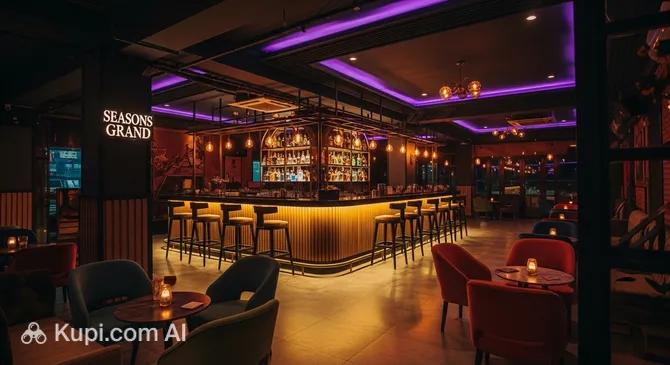
If you are seeking a more exclusive environment to unwind with a drink or enjoy a sophisticated ambiance, options are somewhat limited but present. SEASONS Grand offers a refined setting that stands out in the local scene. Categorized as a bar and lounge, it provides a quiet escape from the chaotic streets, making it an ideal venue for travelers who prefer a calm evening with good service and a comfortable atmosphere. Note that alcohol availability is generally restricted in the region, mostly found in such upscale establishments.
SEASONS Grand. Illustration.
Source: Kupi.com AI
Traveler photos:
Outdoor entertainment remains a staple for locals, especially families. In the cooler evening hours, MAG Osmani Amusement Park becomes a lively destination. The park features various rides and attractions that light up the night, creating a festive environment. It is a fantastic spot to mingle with residents and experience the wholesome, family-oriented nature of Bangladeshi recreational culture.
Practical Advice for Night Owls:
Timing: Most shops and markets close by 9:00 PM or 10:00 PM, but restaurants and lounges may stay open later. The peak time for evening outings is between 7:00 PM and 9:00 PM.
Dress Code: The atmosphere is conservative yet casual. Smart casual attire is recommended for dining venues and malls.
Getting Around: The best way to navigate at night is by CNG (auto-rickshaw). They are plentiful and safe. It is advisable to agree on a fare before hopping in.
Safety: The main areas like Zindabazar are generally safe for walking in the evening due to the crowds. However, it is wise to avoid dimly lit backstreets and solitary walks late at night.
While the nights are for socializing, the daytime offers its own array of cultural entertainment. Visitors can explore the city's rich heritage at local museums or enjoy a peaceful afternoon at the Haat Market, which offers a glimpse into traditional commerce. For a breath of fresh air, the city's parks and the nearby tea gardens provide a scenic backdrop for day trips before the sun sets and the city lights take over.
Parks & Museums
Sylhet is a city that prides itself on its green heritage and historical consciousness. Beyond the famous tea gardens that carpet the horizon, the urban center is dotted with parks and cultural institutions that offer residents and travelers alike a space for relaxation and reflection. These venues provide a deeper understanding of the region's past and a welcome respite from the bustling city streets.
For history enthusiasts, the Osmani Museum is the crown jewel of the city's cultural offerings. Situated in the majestic "Nur Manzil," a colonial-era building that exudes architectural elegance, this museum is a tribute to General M.A.G. Osmani, a pivotal figure in the nation's history. Unlike typical museums, the atmosphere here is intimate and personal, allowing visitors to walk through galleries filled with memorabilia that chronicle the life of the "Bangabir" (Hero of Bengal). It serves as a quiet sanctuary where one can connect with the spirit of the Liberation War.
Complementing the indoor historical experience is the Kadamtoli Point Liberation War Square. While not a museum in the traditional sense, this open-air monument functions as a significant historical landmark. Its striking design and prominent location make it a powerful visual reminder of the sacrifices made for independence, turning a simple public square into a place of reverence and memory.
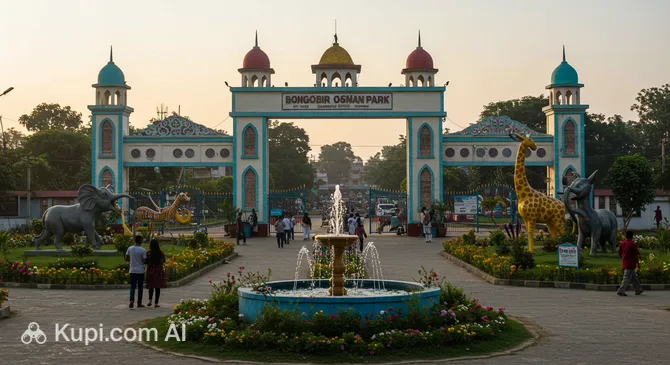
When it comes to outdoor recreation, Bongobir Osmani Children's Park stands out as a favorite among locals. Located conveniently within the city, this park serves as a green lung where the urban pace slows down. It is beautifully landscaped with walkways and shaded areas, making it an ideal spot for a morning jog or a leisurely afternoon picnic. The park's vibrant yet relaxed environment offers a perfect opportunity to observe the daily lifestyle of Sylhet's residents.
Bongobir Osmani Children's Park. Illustration.
Source: Kupi.com AI
Traveler photos:
For those looking for a mix of leisure and entertainment, the MAG Osmani Amusement Park offers a more dynamic experience. While it is a popular destination for families seeking fun rides, the park also features well-maintained open spaces that appeal to visitors of all ages. Whether you are there to enjoy the amusements or simply to sit and enjoy the fresh air, it is a key part of the city's recreational landscape.
MAG Osmani Amusement Park. Illustration.
Source: Kupi.com AI
Traveler photos:
Getting Around
Navigating Sylhet is an experience in itself, characterized by a transport system that is informal, vibrant, and quite different from the structured networks found in many Western cities. There is no metro, tram, or extensive municipal rail system within the city limits. Instead, the streets are dominated by a variety of three-wheeled vehicles and cycle rickshaws that serve as the primary means of getting around for both locals and visitors.
The most popular and efficient mode of transport is the CNG (Compressed Natural Gas) auto-rickshaw. These distinctively green, three-wheeled vehicles are essentially the taxis of the city. They are perfect for medium to long distances and can navigate the traffic with surprising agility. You can hire them for a specific trip or rent them by the hour if you plan to visit multiple tourist spots like the tea gardens on the outskirts. While some operate on shared routes with fixed rates, most tourists prefer to hire them exclusively ("reserved") for comfort and convenience.
For shorter distances and a more leisurely pace, cycle rickshaws are the king of the road. These colorful, open-air vehicles are ubiquitous and offer a fantastic way to soak in the sights and sounds of the city. They are ideal for navigating narrow lanes where larger vehicles might struggle. Riding a rickshaw is not just a commute; it is a quintessential part of the local experience, allowing you to travel slowly and enjoy the breeze.
Regarding payment, the system operates almost exclusively on cash. There are no travel cards, tap-to-pay terminals, or digital ticketing systems for public transport here. Fares for rickshaws and CNGs are not fixed by a meter; they must be negotiated before you start your journey. It is highly recommended to ask a local or your hotel reception for the approximate fare to your destination to avoid being overcharged. Always carry smaller denominations of the local currency, as drivers often do not have change for large notes.
While traditional town buses exist, they are generally crowded and can be confusing for tourists who do not speak the local language. However, modern alternatives are gaining ground. Ride-sharing apps like Pathao and Uber operate in the city, offering both car and motorbike services. These apps are excellent for travelers who prefer a fixed price and the safety of GPS tracking, although availability can sometimes be lower than in the capital.
Practical Advice for Tourists:
Negotiate First: Never hop into a rickshaw or CNG without agreeing on the price first.
Safety: When riding in a CNG, ensure the metal cage doors are latched. Keep your bags and valuables secure and away from the open sides.
Operating Hours: Rickshaws and CNGs are available from early morning until late at night. However, if you are traveling very late, it is safer to arrange transport through your hotel.
Traffic: Be prepared for traffic congestion, especially during school runs and evening rush hours. Plan your travel time accordingly.
Accommodation
Where to Stay:
Accommodation in Sylhet caters to a wide spectrum of travelers, ranging from budget-friendly guesthouses to high-end luxury resorts. Whether you are a backpacker looking for a simple place to sleep or a leisure traveler seeking a scenic retreat amidst nature, the city and its outskirts offer plenty of choices to suit your preferences and budget.
For those who prefer to be in the heart of the action, the city center areas of Zindabazar, Bandar Bazar, and Jallarpar are the most convenient locations. Staying here places you within walking distance of popular restaurants, transport hubs, and modern shopping destinations like Arcadia. This area is bustling and noisy but offers easy access to everything a tourist might need, including the ability to quickly hail a CNG or rickshaw.
Arcadia. Illustration.
Source: Kupi.com AI
Traveler photos:
Another popular area for accommodation is near the Shrine of Hazrat Shah Jalal (Dargah Gate). This zone is particularly favored by spiritual tourists and pilgrims. The streets here are lined with numerous budget hotels and residential boarding houses. It is a lively area with a distinct cultural atmosphere, though it can get quite crowded during religious festivals.
Travelers seeking tranquility often opt for the resorts located on the outskirts of the city, particularly along the Airport Road and near the tea estates. These properties are Sylhet's specialty, offering lush green surroundings, panoramic views of the hills, and a peaceful environment far removed from the urban chaos. Many of these resorts provide premium amenities and are destinations in themselves, perfect for a relaxing getaway.
Booking Tips:
If you plan to visit during the winter months (November to February) or during major holidays like Eid, it is highly recommended to book your accommodation in advance. Sylhet is a top domestic tourist destination, and the best hotels and resorts tend to fill up quickly during peak seasons.
Price Range and Methods:
Prices are generally very reasonable compared to international standards. Budget hotels in the city center can be extremely affordable, while mid-range options offer air-conditioning and modern amenities at a modest cost. The luxury resorts on the outskirts command higher prices but offer excellent value for the quality of service and scenery provided. While major hotels and resorts are listed on international booking platforms, many smaller budget establishments still rely on direct phone bookings or walk-ins.
Nearby Cities
For travelers wishing to expand their itinerary beyond the tea gardens and hills of Sylhet, several significant cities are located within the broader region. These destinations serve as key administrative and cultural hubs, offering further insight into life in Bangladesh. Whether you are traveling by road or rail, these cities are accessible for those planning onward journeys toward the central or southern parts of the country.
City
Population
Distance
Cherrapunji
14 816
42 km
Karimganj
56 854
51 km
Shamshernagar
—
58 km
Kailashahar
23 418
66 km
Dharmanagar
45 887
66 km
Brahmanbaria is the closest major town on this list and is well-connected by the railway line that links Sylhet to Dhaka, making it a common transit point. Further afield, Comilla is renowned for its archaeological sites and historical significance, while Mymensingh sits on the banks of the Brahmaputra River, offering a different geographical setting. Gazipur, located near the capital, is a major industrial hub often passed through when heading to Dhaka.
Shopping & Souvenirs
Shopping in Sylhet offers a delightful mix of traditional charm and modern convenience. The city is a treasure trove for those looking to take back a piece of Bangladeshi culture, ranging from world-class tea to exquisite handicrafts. The experience is less about high-end luxury brands and more about discovering unique local products that reflect the region's heritage and natural abundance.
The heart of the city's commercial activity beats in Zindabazar and Bandar Bazar. These two bustling districts are the primary shopping hubs where tourists can find almost anything. Zindabazar is known for its modern shops, fashion outlets, and shoe stores, making it a favorite for clothing and lifestyle products. In contrast, Bandar Bazar offers a more traditional atmosphere, filled with wholesale shops, spice merchants, and vibrant street vendors, perfect for those who enjoy the energy of a busy marketplace.
For travelers seeking a contemporary shopping experience with air-conditioned comfort, the city boasts several modern complexes. Arcadia is a standout destination in this category. It is one of the most upscale shopping malls in the city, featuring a variety of branded clothing stores, electronics shops, and a food court. It provides a relaxed environment where you can browse through the latest fashion trends or pick up travel essentials in a clean and organized setting.
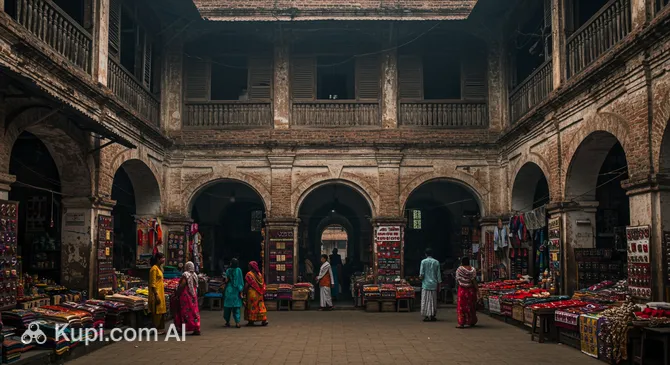
To truly understand the local commerce, visiting a traditional market is a must. Haat Market is an interesting spot to explore, offering a glimpse into the daily trade of the locals. Here, you can find a variety of goods ranging from clothing to household items at very affordable prices. Another significant venue is Modina Market, which is particularly famous for its fresh produce and local foodstuffs. It is an excellent place to see the famous regional ingredients, such as the citrus fruit Satkora, being traded.
Haat Market. Illustration.
Source: Kupi.com AI
Traveler photos:
When it comes to souvenirs, Sylhet has several signature items that are worth buying. The most obvious choice is tea; purchasing fresh, high-quality tea leaves directly from the source is a must for any visitor. The region is also renowned for Manipuri textiles, particularly colorful sarees and shawls woven by the indigenous communities. Additionally, the city is famous for its cane and bamboo products, including furniture and home decor, which are crafted with exceptional skill and are widely available in specialized shops.
Regarding logistics, most shops typically open around 10:00 AM and close by 9:00 PM or 10:00 PM. However, many businesses may remain closed or open late on Fridays, which is the weekly holiday. Cash is the primary mode of payment in local markets and smaller shops, so it is essential to carry sufficient Bangladeshi Taka. While fixed prices are common in malls like Arcadia, bargaining is expected and necessary in street markets and independent stalls to get a fair price.
Tax-free shopping or VAT refund schemes for tourists are not currently available in Bangladesh. The price you see or negotiate is the final price you pay, which is generally quite reasonable by international standards.