Support

Imperial Fountain

About

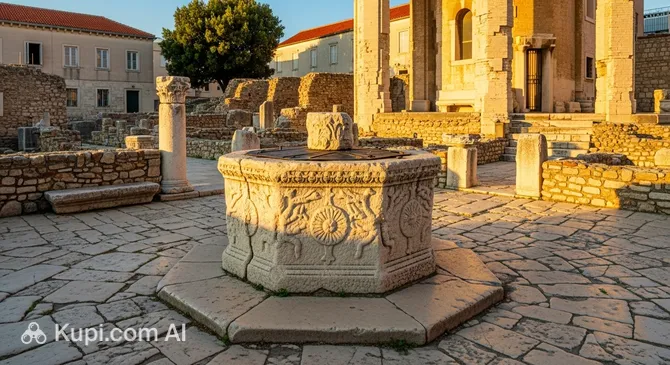
On the shores of the azure Zadar Channel, in the cozy Kolovare district, sits the Imperial Fountain — a unique architectural monument of the Renaissance. This is not just a decorative structure, but a monumental historical site that for centuries served as a vital source of fresh water for the residents of Zadar and the crews of ships entering the port.
Imperial Fountain
Imperial Fountain. Иллюстрация. Источник: Kupi.com AI

Visually, the attraction is a harmonious circular red-brick building crowned with a majestic dome. The structure stands nearly 8 meters tall, and its walls facing the Adriatic Sea are adorned with nine elegant arches supported by powerful pylons. Inside the pavilion is hidden a well of an unusual octagonal shape, which still preserves the memory of medieval engineering.

Today, this site in Croatia is a favorite spot for travelers who appreciate a calm atmosphere and authentic antiquity. In front of the pavilion, an ancient stone pier remains, built back in 1790, which adds a special maritime charm to the place.

Contacts

If you are planning to visit this historical location, the following official information will be useful for navigation. Although it is an open monument, general information can be found on the city's tourism portal.

How to contactContact
Address23000, Задар, Хорватия
Websitewww.zadar.travel

What to Do

A visit to this place is a great reason to slow down and enjoy the Renaissance aesthetics. The first thing worth doing is examining the architectural details of the fountain and taking a few atmospheric shots. The view of the sea through the pavilion's stone arches creates a perfect frame for photos, especially during sunset hours.

A walk along the adjacent waterfront in the Kolovare Beach area will give you a sense of tranquility. You can explore nearby historical symbols, such as finding the image of the Venetian Lion of Saint Mark, which serves as a reminder of the region's glorious past. The sea breeze and the sound of the waves make this spot an excellent point for a short break during a city tour.

If the weather is nice, a visit to the fountain can be combined with relaxation on the city's most popular beach or by continuing your route toward the old town to hear the sounds of the Sea Organ. This space is ideal for those who love combining history with leisurely walks in the fresh air.

Getting There

Finding this historical site is quite easy: the Imperial Fountain is located in the Kolovare district, right on the picturesque promenade of the Zadar Channel. If you are staying in the historic center, the best way to get here is on foot. A walk from the central Forum Square or the famous Sea Organ will take about 20–30 minutes along the coastline.

For those who prefer comfort or are coming from more distant areas, a taxi is an excellent option. The ride from the city center is short and inexpensive. You can also use local buses heading towards Kolovare Beach, which is in the immediate vicinity of the fountain.

If you are using a navigator, use the coordinates 44.1039326° N, 15.2367869° E. This spot is popular with locals for evening strolls, so the path to it is always lively and safe.

Ближайший город: Zadar

History & Facts

The history of this structure dates back to the middle of the 16th century when Croatia was under the strong influence of the Venetian Republic. The construction was initiated in 1546–1547 by the Zadar captain-regent Agostino Canal. Originally, a deep well was dug at this site, which was later covered by an elegant brick pavilion to protect the fresh water source.

During the Renaissance, the Imperial Fountain played a strategic role: it served as the main source of fresh water not only for local residents but also for the numerous merchant and military ships calling at the port. The architecture of the pavilion harmoniously combines the strict Italian canons of the time with local Dalmatian building traditions.

Over the centuries, the fountain has undergone several changes. In the 18th century, it was carefully restored, and in 1790, a massive stone pier was added in front of the pavilion to facilitate access to water from the sea. Although the dome was partially reinforced with concrete in later periods, the building has retained its original elegance and status as an important engineering monument of the past.

Time Needed

For a quick look at the architecture of the fountain itself and a couple of photos against the backdrop of the sea, you will need very little time — about 20–30 minutes. This is quite enough to examine the brickwork details and enjoy the view through the arches.

However, if you want to truly feel the atmosphere of the Kolovare district, we recommend allowing 1–2 hours for your visit. This will allow you to take a leisurely stroll along the promenade, relax on the adjacent beach, or walk to the nearest historic city gates, turning your sightseeing into a complete seaside walk.

Working Hours

Since the Imperial Fountain is part of an open urban space on the waterfront, it is available for viewing 24 hours a day, daily. It has no gates or ticket offices, so you can come here early in the morning to catch the sunrise or late in the evening under the city lights.

For up-to-date information regarding possible cultural events near the site or temporary restoration work, we recommend checking Zadar's official tourism website before your trip.

Круглосуточно

Nearby

A walk to the Imperial Fountain is just the beginning of exploring the region's rich heritage. The site's location makes it easy to combine your visit with other iconic landmarks within walking distance.

The surroundings of the fountain are filled with the spirit of history: here you will find ancient city gates, cozy squares, and old fortifications. Below is a list of interesting locations nearby:

NameDistance
Kolovare Beach0.2 km
City Galleria0.7 km
Butler Gourmet & Cocktails Garden0.8 km
Jazine Hall0.8 km
Podbrig Beach1 km
Five Wells Square1.1 km
Museum of Illusions Zadar1.3 km

Reached the end of the page?

That means the route is fully explored