Support

Darbhanga

About

Darbhanga is one of the most culturally significant cities in the state of Bihar, often regarded as the heart of the Mithila region. Known for its rich traditions in art, music, and literature, this city offers a unique atmosphere where ancient heritage blends with the bustle of modern life. It is particularly famous for being a center of the exquisite Madhubani art form and the Dhrupad tradition of classical music.

Geographically, the city is situated in the vast alluvial plains of North Bihar, characterized by its numerous ponds and lush mango groves. With a population of approximately 380,000 residents, it serves as an important urban hub in this part of India. The climate here is typical of the region, with hot summers and pleasant, cool winters, making the cooler months an ideal time for exploration.

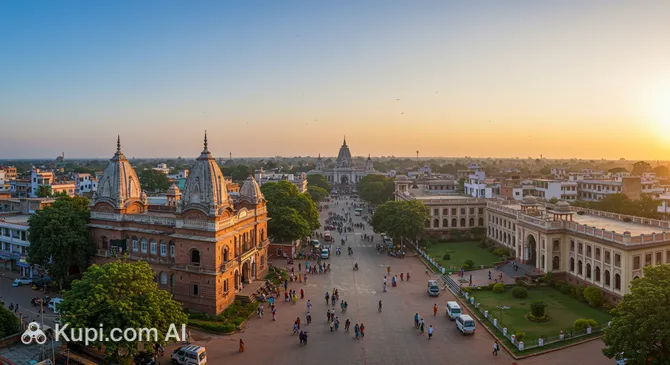
Darbhanga. Source: Kupi.Binoculars

The architectural landscape of the city is dominated by the legacy of the royal family, the Darbhanga Raj. You can delve into the fascinating history of Darbhanga by visiting the majestic Darbhanga Fort, also known as Raj Qila, which is often compared to the Red Fort in Delhi due to its imposing structure. Inside the complex, the Shyama Mai Temple stands as a serene spiritual landmark, attracting devotees and tourists alike.

Beyond its monuments, the city is a treasure trove for culture enthusiasts. Visitors can admire the grandeur of palaces like the Nargona Palace and Anand Bagh Palace, or explore the local markets to find authentic Mithila paintings. Darbhanga invites travelers to experience its royal past and vibrant culture, promising a memorable journey through one of Bihar's most historic cities.

Weather Overview

The climate in this region varies significantly throughout the year, offering distinct experiences depending on when you choose to visit. To help you pack appropriately, it is useful to check the detailed weather in Darbhanga before your journey. Generally, the city experiences hot summers, a humid monsoon season, and pleasant, cool winters.

The warmest period typically spans from April to June, where average temperatures hover around 30°C to 31°C, with highs reaching up to 36.4°C in April. Following the heat, the monsoon brings frequent rainfall from July through September; July and August are the wettest months, seeing up to 28 rainy days. In contrast, the winter season from November to February is largely dry and comfortable, with average temperatures dropping to around 16°C in January and minimums occasionally reaching 10.3°C, making it the most comfortable time for outdoor activities.

Interesting Facts

Beyond the main attractions, Darbhanga holds many fascinating secrets that reveal the extent of its former royal influence and unique local culture. Here are a few lesser-known facts that make this city truly special.

  • The city was once home to its own private airline, Darbhanga Aviation, established by the Maharaja. The royal family owned a fleet of aircraft and maintained a private airstrip long before commercial aviation became widespread in the country, showcasing their immense wealth and modern outlook.

  • The Nargona Palace is widely cited as one of the first earthquake-resistant buildings constructed in India. After a devastating earthquake in 1934, the palace was rebuilt using advanced Japanese technology to withstand future tremors, making it an architectural marvel of its time.

  • Darbhanga is a global powerhouse for the production of Makhana (fox nuts). The region's unique landscape, dotted with countless ponds ("Pokhar"), provides the perfect environment for cultivating this superfood, which is a staple of the local economy and cuisine.

  • The imposing walls of the Darbhanga Fort, also known as Raj Qila, were modeled directly after the iconic Red Fort in Delhi. This ambitious construction was intended to symbolize the prestige of the Darbhanga Raj, creating a striking historical parallel in the heart of Bihar.

How to Get There

Reaching this historic city has become increasingly convenient for travelers, thanks to improved air connectivity and a robust railway network. Whether you are planning a quick flight or a scenic train journey, there are multiple options to suit your itinerary. For a comprehensive guide on all available transport modes and detailed routes, you can read more about how to get to Darbhanga.

The most direct way to arrive is via the city's own transport hub, Darbhanga Airport (DBR). Located just 5 km from the city center, it allows you to reach your accommodation in approximately 20 to 30 minutes by taxi or auto-rickshaw. This airport has significantly reduced travel time for visitors coming from major Indian metros. Alternatively, many travelers choose to fly into Jay Prakash Narayan International Airport (PAT) in Patna, which is a larger hub situated about 102 km away. While it offers a wider range of flight connections, the subsequent journey to Darbhanga by road typically takes around 3 hours.

For clarity, here is a summary of the main airports serving the region:

Airport Name City Passenger Traffic Km from City
Jay Prakash Narayan International Airport Patna Large 101.9
Darbhanga Darbhanga Medium 5.0
Biratnagar Airport Biratnagar Medium 141.8
Simara Simara Small 143.7
Janakpur Airport Janakpur Small 61.5

Traveling by train is another popular and authentic way to experience the region. Darbhanga Junction is a major railway station well-connected to key destinations across India, including New Delhi, Kolkata, and Mumbai. The rail network in Bihar is extensive, making trains a reliable and affordable option for many tourists. If you choose this mode of transport, it is capable of bringing you right into the heart of the city, where local transport is readily available to take you to your final destination.

Main Attractions

Darbhanga is a city steeped in history and mythology, offering visitors a glimpse into the grandeur of the Mithila region's royal past. The city's primary appeal lies in its magnificent architectural heritage and deeply revered spiritual sites, which continue to draw pilgrims and history enthusiasts from across the country.

Darbhanga Fort (Raj Qila) is undoubtedly the most iconic landmark in the city. Built by the Khandavala dynasty, this imposing structure is often compared to the Red Fort in Delhi due to its massive red brick walls and grand gateways. Walking around the complex, you can witness the scale of the former royal estate, which houses several palaces and temples within its perimeter. It is a fascinating spot for photography and for understanding the architectural ambition of the Darbhanga Raj.

Located within the fort complex is the Shyama Mai Temple, a site of immense spiritual significance dedicated to Goddess Kali. Uniquely, this temple was constructed on the funeral pyre of Maharaja Rameshwar Singh, yet it is considered highly auspicious. Devotees and tourists alike are drawn to its serene atmosphere and the beautiful idol of the Goddess. The temple complex serves as a peaceful retreat where you can observe local religious traditions and enjoy the tranquil surroundings of the pond nearby.

For those interested in art and history, the Chandradhari Museum is a must-visit destination. Established in 1957, this state museum showcases an extensive private collection of the royal family. The exhibits include rare manuscripts, statues made of brass and metal, semi-precious stones, and intricate ivory works. It offers a comprehensive overview of the region's cultural evolution and provides a cool, educational break from the outdoor heat.

A short distance from the main city lies Ahilya Asthan, a temple deeply rooted in the epic Ramayana. Legend has it that this is the spot where Ahilya, the wife of Sage Gautama, was liberated from a curse by Lord Rama. The temple is famous for its Ram-Janki festival and holds a special place in the hearts of those interested in Hindu mythology. The vibrant local fairs held here occasionally offer a colorful insight into the rural culture of Mithila.

Local Cuisine

The culinary landscape of Darbhanga is a delightful reflection of the wider Mithila region, characterized by simple yet distinct flavors that rely heavily on local produce. The cuisine here is traditionally cooked in mustard oil, which gives the dishes a pungent and robust aroma. For any traveler, exploring the local food is not just about eating; it is an immersion into a culture that regards food as a symbol of hospitality and celebration.

The most iconic duo in the local diet is undoubtedly Maachh-Bhaat (fish and rice). Given the region's abundance of ponds and rivers, freshwater fish, particularly the Rohu, is a staple. It is typically prepared in a spicy mustard paste gravy that is best enjoyed with steamed rice. This dish is so integral to the local identity that it is often considered auspicious and is a fixture at weddings and special occasions.

Another unique gastronomic feature of Darbhanga is its extensive use of Makhana (fox nuts). As a major production hub for this superfood, the city offers it in various forms. While roasted Makhana serves as a crunchy, healthy snack, the Makhana Kheer is a must-try dessert. This creamy pudding, made by simmering the nuts in milk with sugar and cardamom, offers a rich texture that is quite different from the standard rice kheer found elsewhere in India.

For a taste of the region's famous street food, you cannot miss Litti Chokha. These are wheat flour balls stuffed with spiced sattu (roasted gram flour) and roasted over coal, served with a side of mashed vegetables known as chokha. It is a hearty, rustic meal available at numerous roadside stalls and small eateries throughout the city. Locals also enjoy Dahi-Chura (curd and flattened rice), a light and cooling dish often eaten for breakfast, especially during the summer months.

To beat the heat, the locals turn to Sattu Sharbat, a savory drink made from roasted gram flour, water, lemon, and spices. It is an indigenous energy drink that is both hydration and nutrition in a glass. After a meal, it is customary to chew on Paan (betel leaf), as the Mithila region has a long-standing tradition of paan cultivation and consumption, often marking the end of a satisfying dining experience.

Travel Tips

Welcome to the cultural capital of Mithila! To help you make the most of your visit to Darbhanga, here are some practical tips to ensure a comfortable, safe, and respectful journey through this historic city.

  1. Clothing and Gear: The weather dictates your wardrobe here. For the scorching summers (April to June), pack loose, breathable cotton clothing and a good hat. If visiting in winter (November to February), bring light woolens or a jacket, as evenings can get chilly. Since Darbhanga is a traditional city with many religious sites, modest dress is essential; cover your shoulders and knees, especially when visiting temples.
  2. Transportation: The most convenient way to navigate the narrow streets is by auto-rickshaws or battery-operated e-rickshaws (often called "Totos"). They are affordable and readily available. Ride-hailing apps are not reliable here compared to major metros, so it is best to negotiate the fare before boarding a rickshaw or ask your hotel to arrange a private car for longer excursions.
  3. Finances: The local currency is the Indian Rupee (INR). While upscale hotels may accept credit cards, cash is king in Darbhanga. You will need small denominations for transport, street food, and local markets. ATMs are widely available in the city center, but it is wise to carry sufficient cash when venturing into the outskirts.
  4. Health and Safety: To stay healthy, strictly stick to bottled or filtered water and avoid raw food from street vendors. Pharmacies are plentiful, particularly around the Darbhanga Medical College and Hospital (DMCH) area. The city is generally safe for tourists, but standard precautions apply: keep your valuables secure and avoid isolated areas late at night.
  5. Communication: The primary languages spoken are Maithili and Hindi. English is understood by hotel staff and some shopkeepers, but it is less common on the streets. downloading a translation app or learning a few basic phrases like "Namaste" (Hello) and "Kitna?" (How much?) can be very helpful.
  6. Local Etiquette: The people of Mithila are known for their hospitality but are also socially conservative. Always greet people with a polite "Namaste." It is mandatory to remove your shoes before entering temples and private homes. When interacting with locals, a respectful and calm demeanor is highly valued.
  7. What to Avoid: Alcohol is strictly prohibited throughout the state of Bihar. Do not carry, consume, or attempt to purchase alcohol, as this is a serious legal offense with strict penalties. Additionally, avoid public displays of affection, as they are considered culturally inappropriate.
  8. Local Insight: Take advantage of the city's status as a hub for Makhana (fox nuts). It is one of the best places in India to buy high-quality, fresh makhana at local prices. Visit the Tower Chowk market to find various grades of this superfood to take home as a healthy souvenir.

With these practical tips in mind, you are well-prepared to immerse yourself in the vibrant traditions and daily life of Darbhanga. Enjoy the unique charm and warm hospitality that this ancient city has to offer!

Entertainment & Nightlife

Entertainment and nightlife in Darbhanga differ significantly from what you might expect in major metropolitan cities. It is crucial for visitors to know that Bihar is a dry state, meaning the sale and consumption of alcohol are strictly prohibited by law. Consequently, you will not find bars, pubs, or discos here. Instead, the city's evening culture is family-oriented, revolving around bustling markets, movie theaters, and a vibrant street food scene that comes alive as the sun sets.

The epicenter of evening activity is undoubtedly Tower Chowk. This area serves as the commercial heart of the city and remains lively well into the late evening. It is the perfect place to witness the local atmosphere, where crowds gather to shop for clothes, accessories, and, most importantly, to enjoy evening snacks. The streets here are lined with vendors selling everything from spicy chaat to hot beverages, creating a chaotic but energetic vibe that defines the city's night character.

For a more modern leisure experience, many locals and tourists head to shopping centers like City Life Mall or the various complexes near Donar Chowk. These venues offer a climate-controlled environment where you can shop for branded goods or enjoy a meal at a food court. Watching a Bollywood movie is a popular pastime here, and local cinemas are often packed in the evenings, serving as the primary form of entertainment for the youth and families alike.

Dining out is the main social activity at night. Restaurants in Darbhanga typically focus on multi-cuisine menus, offering North Indian, Chinese, and local Mithila dishes. Venues such as the restaurants within Hotel Rama Residency or popular standalone eateries near the Laheriasarai area offer a comfortable setting for a sit-down dinner. These places usually have a casual dress code, though modest attire is always recommended in keeping with local sensibilities.

During the daytime, entertainment leans towards cultural exploration. Before the evening rush begins, you can spend your day visiting the Chandradhari Museum or walking around the expansive grounds of the university and the Raj Fort area. These locations offer a quiet respite and a dose of history, contrasting sharply with the noisy, vibrant energy of the evening markets.

When planning your night out, keep in mind that the city shuts down relatively early compared to bigger cities. Most shops and restaurants begin to close by 10:00 PM. For transportation, battery-operated e-rickshaws (Totos) are the lifeline of the city and are available until the markets close. However, availability drops sharping after 9:30 PM, so it is wise to arrange your return transport in advance.

In terms of safety, the main market areas like Tower Chowk and Laheriasarai are generally safe for evening walks due to the crowd. However, the streets can be poorly lit in places, and traffic can be unruly. It is advisable to stick to well-populated zones and avoid venturing into isolated alleys late at night. Since there is no nightlife district in the western sense, the best advice is to follow the local rhythm: enjoy a hearty dinner, soak in the market buzz, and return to your accommodation by late evening.

Parks & Museums

Darbhanga is a city where cultural heritage is deeply intertwined with its unique landscape. Often referred to as the "City of Ponds," it offers a distinct environment where historic water bodies serve as the primary open spaces, complemented by institutions that preserve the region's rich artistic and intellectual history.

The city is geographically defined by its magnificent historic ponds, most notably Dighi, Harahi, and Gangasagar. These are not merely water reservoirs but are central to the city's identity and social life. Legend has it that these ponds were dug during the time of the Raj to secure water supply and provide relief during famines. Today, the embankments of these vast tanks serve as de facto parks where locals come for morning walks and evening strolls. The areas surrounding them are often breezy and offer a cooling respite from the city's congestion, making them excellent spots for photographers looking to capture the reflection of the sky and nearby temples on the water.

For nature enthusiasts willing to venture a bit further, the Kusheshwar Asthan Bird Sanctuary is a significant natural attraction located within the district. This wetland area transforms into a paradise for birdwatchers during the winter months. It is famous for hosting migratory birds from as far as Siberia, including the rare Siberian Crane. The sanctuary consists of several waterlogged villages and lakes, offering a raw and authentic glimpse into the biodiversity of North Bihar, distinct from the manicured gardens found in metropolitan cities.

In terms of museums, the Chandradhari Museum stands as the cultural custodian of the region. Located near the railway station, this museum houses an eclectic private collection donated by Babu Chandradhari Singh, a local landlord. The exhibits are incredibly diverse, ranging from rare manuscripts and coins to intricate ivory carvings and metal statues. It provides a fascinating window into the lifestyle of the aristocracy in India during the early 20th century, displaying personal artifacts alongside historical treasures.

Another intellectual landmark is the Maharajadhiraja Kameshwar Singh Kalyani Foundation. While more of a research center and archive than a traditional museum, it is a treasure trove for those interested in the history of the Darbhanga Raj. The foundation preserves a vast collection of rare books, journals, and photographs that document the legacy of the royal family and the Mithila region. It is an essential stop for history buffs seeking to understand the administrative and cultural grandeur of the past.

For a modern educational experience, the city has recently added the Darbhanga Planetarium (Taramandal) to its list of attractions. Situated on the Polytechnic ground, this facility is designed to promote science and astronomy. It features modern projection systems that offer shows about the cosmos, making it a popular destination for students and families looking for an edutainment experience distinct from the city's historical themes.

For a truly local experience, take a walk along the banks of the Harahi Pond at sunset. The fading light over the water creates a serene atmosphere that contrasts sharply with the busy streets, offering a quiet moment to observe the daily rhythms of life in this historic city.

Getting Around

The public transport system in Darbhanga is primarily informal and road-based, differing significantly from the structured networks found in larger metropolitan areas. There is no metro, tram, or large-scale city bus service operating within the city limits. Instead, the local transportation backbone consists of three main types of vehicles: auto-rickshaws, battery-operated e-rickshaws (locally known as "Totos"), and traditional cycle rickshaws. These vehicles navigate the narrow lanes and bustling market areas with ease, providing connectivity to every corner of the city.

For most short to medium distances, the e-rickshaw has become the most popular mode of travel. These quiet, eco-friendly vehicles are ubiquitous and operate on a shared basis along fixed routes, such as from the Railway Station to Tower Chowk or Laheriasarai. For slightly longer distances or when carrying heavy luggage, the larger, fuel-run auto-rickshaws are a better option. Cycle rickshaws remain a charming and practical choice for very short trips, especially in the congested old parts of the city where motorized traffic struggles to move freely.

Regarding payment, the system operates entirely on cash. There are no travel cards, digital passes, or mobile ticketing apps for local transport. Fares are generally very affordable. Shared rides on e-rickshaws typically cost a small fixed amount, often between 10 to 20 units of the local currency, depending on the distance. If you prefer a private ride without other passengers, you must negotiate the fare with the driver before boarding. It is highly recommended to carry small denominations of cash, as drivers often do not have change for large bills.

Tourists will find it easy to locate transport at major hubs such as the Darbhanga Junction railway station, the Bus Stand, and key intersections like Tower Chowk and Donar Chowk. There is no need to validate a ticket; you simply pay the driver at the end of your journey. Transport services are most active from early morning until around 9:00 PM or 10:00 PM. Late-night availability drops sharply, so if you are arriving or traveling late, it is advisable to arrange transportation in advance.

Alternatives like modern ride-hailing apps are not reliable or widely available in this city compared to bigger urban centers. While you might occasionally find a service, it is risky to depend on them for time-sensitive plans. Taxis are generally not available for street hailing; they are mostly used for inter-city travel or full-day rentals. The best way to hire a car for the day is to ask your hotel reception to book a private taxi from a local agency. For those staying in the city center, walking is often the fastest way to explore the dense markets, though one must be careful of the chaotic traffic.

Accommodation

Accommodation in Darbhanga primarily caters to functional needs, serving pilgrims, business travelers, and families visiting for social occasions. The hospitality landscape is dominated by budget hotels, guesthouses, and mid-range properties. Visitors should not expect ultra-luxury international hotel chains or sprawling resorts here. Instead, the city offers comfortable, no-frills lodging that provides good value for money, often characterized by warm local hospitality.

When choosing where to stay, location is a key factor. The area surrounding Darbhanga Junction Railway Station is the most popular choice for travelers due to its sheer convenience. Staying here ensures easy access to trains and the bus stand, with plenty of auto-rickshaws available to take you anywhere in the city. For those who prefer being in the heart of the action, the vicinity of Tower Chowk places you right in the middle of the bustling markets and street food scene, though it can be quite noisy.

Another notable area is Laheriasarai, the administrative twin town of Darbhanga. This area tends to be slightly less chaotic than the main market districts and offers a few decent mid-range hotels suitable for those seeking a quieter environment. Since the Darbhanga Airport is located very close to the city center (about 5 km), you do not necessarily need to look for specific "airport hotels"; staying in the city center still allows for a quick commute to catch a flight.

Booking Tip: The city sees a massive influx of visitors during the traditional wedding season (Laggan) and major festivals like Chhath Puja and Durga Puja. During these times, room availability drops drastically, and prices can surge. It is highly recommended to book your accommodation several weeks in advance if you plan to travel during these peak cultural periods.

In terms of pricing, Darbhanga is generally very affordable. Budget options and basic lodges are available at very low rates, making them ideal for backpackers or solo travelers. Mid-range hotels, which typically offer amenities like air conditioning, Wi-Fi, and in-house dining, are priced moderately. While many established hotels are listed on major online travel platforms, some smaller guesthouses still rely on direct bookings via phone or walk-ins. Checking online reviews is advisable to ensure the cleanliness and service standards meet your expectations.

Nearby Cities

For those looking to explore the surroundings, Darbhanga serves as an excellent base for day trips to several interesting nearby locations:

One of the closest and most significant stops is Laheriasarai, located just 5 km away. Often described as the twin city of Darbhanga, it functions as the administrative headquarters of the district. The town derives its name from the historic "Lah" (lac) industry, which was once a thriving trade here. It offers a bustling market atmosphere and features several colonial-era buildings that house government offices, providing a glimpse into the administrative history of the region.

A short journey of about 22 km takes you to Pandaul, a town situated in the neighboring Madhubani district. This location is of interest to history buffs as it houses the ruins of a palace built by Maharaja Rameshwar Singh. Additionally, Pandaul has mythological significance, with local legends associating it with the Pandavas from the Mahabharata. It is a quiet spot where visitors can reflect on the fading grandeur of the region's royal past.

City Population Distance (km)
Pandaul 35113 22
Laheriasarai 19697 5
Basatpur 18639 13
Kakraul 16991 24
Ughara 16964 16

These nearby destinations offer a glimpse into the diverse culture and landscapes of the region.

Shopping & Souvenirs

Shopping in Darbhanga offers a vibrant and authentic experience that contrasts sharply with the polished, impersonal atmosphere of big-city malls. The city is a bustling trade center for the Mithila region, where traditional bazaars sit alongside emerging modern retail outlets. For tourists, the real charm lies in exploring the local markets to discover indigenous handicrafts, regional textiles, and unique agricultural products that are difficult to find elsewhere in India.

The heartbeat of the city's commercial life is undoubtedly Tower Chowk. This central square and the streets radiating from it form the primary shopping district where you can find almost anything. The area is a sensory overload of sights and sounds, lined with shops selling colorful sarees, electronics, footwear, and accessories. It is the best place to witness the daily hustle of the city and is particularly famous for its cloth merchants and sweet shops. Another key shopping area is Laheriasarai, the city's twin town, which is well-known for its wholesale textile markets, offering a slightly more organized shopping environment than the chaotic center.

While Darbhanga is primarily known for its street markets, modern retail culture has made its mark. City Life Mall is one of the most popular destinations for those seeking a contemporary shopping experience. Located centrally, it houses various fashion brands, a food court, and entertainment zones under one roof. Additionally, retail chains like V-Mart and V2 (Value & Variety) have a strong presence in the city, offering branded clothing and accessories at fixed prices, which can be a relief for travelers who prefer not to bargain.

For a more specialized traditional feel, the local bazaars are indispensable. The markets around Bakerganj are particularly renowned for their exquisite jewelry shops. This area serves as the go-to destination for gold and silver ornaments, where you can find intricate traditional designs that are favored for weddings and festivals. In the evenings, the streets near Donar Chowk transform into lively marketplaces where vendors sell fresh local produce, street food, and small trinkets, providing a perfect snapshot of the local lifestyle.

When it comes to souvenirs, Darbhanga offers treasures that are deeply rooted in the region's culture. The most iconic purchase is Madhubani Art (also known as Mithila Painting). You can find these intricate, colorful folk paintings on handmade paper, canvas, or textiles in local art shops or emporiums. Another must-buy item is Makhana (fox nuts). Since this region produces the vast majority of the world's supply, buying high-quality, fresh makhana here is significantly cheaper than in metros. You can also look for Sikki grass crafts, which are golden-hued baskets and toys woven by local artisans, and Tussar silk sarees, which are a specialty of the wider Bihar region.

Most shops in the city open around 10:00 AM or 11:00 AM and remain active until 9:00 PM. While the main markets are open all week, some specific shops may close on Sundays or Thursdays. In terms of payment, cash is king in the local bazaars and smaller shops. While malls and larger showrooms accept credit and debit cards, you will need small denominations of Indian Rupees for rickshaws, street vendors, and market stalls. Digital payment methods like UPI are becoming increasingly popular, but carrying cash is always the safest bet.

Tourists should note that the tax-free shopping concepts found in international travel hubs do not apply here. The prices you see generally include all local taxes (GST). Bargaining is a standard practice in street markets and smaller standalone shops; do not hesitate to negotiate politely to get a fair price, as vendors often quote higher rates to visitors.

Reached the end of the page?

That means the route is fully explored