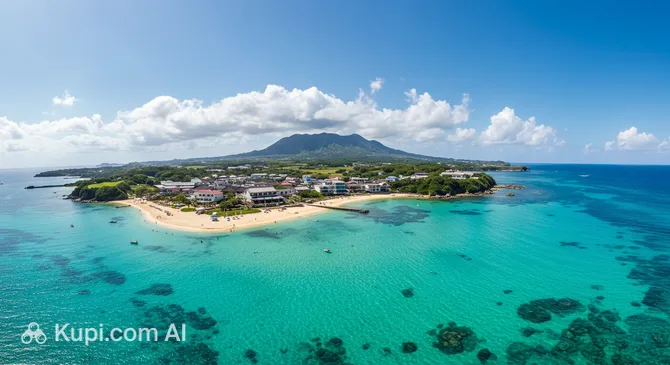
The transport system of Iejima is organized quite differently from the major metropolises of Japan. Since it is a small island with a population of about 4,300, you won't find subways, trams, or train stations here. Life here flows slowly, and the infrastructure fully matches this rhythm. The main transport hub is the ferry terminal of Ie Port, where vessels from Okinawa Island arrive, and all traveler routes begin from here.
The only type of public transport on the island is the Ie Village Community Bus. These buses connect the port with main residential areas, schools, and some attractions. They are comfortable and air-conditioned but do not run very often—the schedule is mainly tailored to the needs of local residents and schoolchildren rather than tourists. Therefore, relying solely on the bus when planning a tight sightseeing schedule can be risky.
To pay for the bus fare, you will need cash yen. The fare is fixed or depends on the zone, but it is quite affordable. It is important to remember that typical Japanese IC cards (Suica, Pasmo) or the JR Pass do not work on local buses. We recommend changing large bills in advance and having coins with you, as the driver may not have change for large amounts. Payment is usually made upon boarding or exiting through a special machine near the driver.
Given the nature of public transport, the most popular alternative for tourists is renting a means of transport. Several rental points are located right in the ferry terminal building and next to it. Since the island's terrain (except for Mount Gusuku) is relatively flat and the roads are scenic and quiet, most guests choose bicycles. You can rent a regular city bike or an electric model, which is especially relevant in hot weather.
If you want to see the whole island in one day, renting a car or scooter is an excellent option. This will give you full freedom of movement and the ability to reach remote beaches and observation decks where the bus does not go. To rent any motorized transport (including scooters) in Japan, an international driving permit of the appropriate category and a passport are strictly required. Without these documents, you will be refused a rental even for the smallest moped.
There is also a taxi service on the island, but there are few cars, and they cannot simply be hailed on the street. Taxis must be ordered by phone, or you can ask hotel or tourist center staff to call a car for you. This is a convenient option for evening trips to a restaurant or if you are traveling with heavy luggage, but keep in mind that waiting times may be long at night.
For hikers, Iejima is only partially accessible. The village center, shops, and some cafes are within walking distance of the port, but walking to the main natural beauties like Lily Park or Nya-Ti-Ya Cave will take a long time under the open sun. Therefore, the combination of "ferry plus a rented bicycle" remains the gold standard for a comfortable acquaintance with this cozy island.