Support

Onna

About

Onna is a charming village, a true gem of the west coast of Okinawa Island in Japan, where the azure waters of the Pacific Ocean meet snow-white beaches and picturesque rocky cliffs. This place is famous for its peaceful atmosphere and incredible natural beauty, attracting travelers looking for a relaxing holiday and a connection with nature.

Stretching along a rugged coastline, Onna is surrounded by lush tropical forests and magnificent coral reefs. Thanks to its mild subtropical climate, it is sunny here almost all year round, and the fresh sea breeze makes the stay particularly pleasant. The village population is just over 10,000 people, which allows it to maintain a cozy and relaxed atmosphere, far from the hustle and bustle of big cities.
Onna. Illustration.
Source: Kupi.com AI

Onna is rightfully considered one of the best resort corners of the country. Tourists are drawn here by perfect beaches, excellent opportunities for diving and snorkeling among coral gardens, as well as the chance to relax in traditional Japanese hot springs — onsens. In addition, the region offers many trails for leisurely walks, opening up breathtaking views of the coast and the ocean. Here, you can fully experience the authentic spirit of Okinawa, where ancient traditions blend harmoniously with modern comfort.

If you dream of an unforgettable vacation where you can enjoy pristine nature, crystal-clear seas, and tranquility, Onna will be the perfect choice for you. This is a place where every sunset over the ocean turns into a real spectacle, leaving warm memories in your heart.

You can find more interesting facts on the history of Onna page.
Weather Overview

The weather in Onna is generally warm and humid throughout the year, characteristic of a subtropical climate. In summer, especially in July and August, the average temperature stays around 28°C, and the maximum can reach 29°C. This period is also characterized by the highest amount of precipitation; for example, in June about 10 mm falls, with up to 18 rainy days. Winters here are mild: in January and February, the average temperature is approximately 18°C, with minimum values around 17°C. The amount of precipitation decreases in winter, but rainy days still occur quite frequently, averaging 13-16 days per month.

Thus, in Onna you can expect a warm, humid summer with frequent but not always heavy rain, and a very mild winter, also with occasional precipitation. To learn more about the weather by month, you can view detailed information here: Onna Climate.

Average monthly temperature

Average monthly precipitation

Interesting Facts

In addition to its magnificent beaches and world-class resorts, Onna holds many amazing stories and little-known details that make this corner of Okinawa truly special.

Cape Manzamo. Illustration.
Source: Kupi.com AI

Traveler photos:

  • Deep Roots in the Ryukyu Kingdom: Onna is not just a modern resort, but a land with a rich historical heritage. To this day, unique crafts are carefully preserved here, such as traditional pottery and special types of fabrics that carry the spirit of the ancient Ryukyu culture, distinguishing them from the rest of Japan.

  • Picture-Perfect Beaches and Underwater Wonders: Local beaches, including the picturesque Nabe Beach, regularly appear in rankings of the best not only in Okinawa but in all of Japan. And the famous Cape Maeda, while not a beach in the traditional sense, attracts divers and snorkelers with its mysterious underwater grottoes and rich marine life.

  • An Oasis of Organic Farming: Onna stands out in Okinawa for its active development of organic agriculture. Juicy mangoes, fragrant papayas, sweet pineapples, and even exotic vegetables rare for Japan are grown here with special care, which then grace the tables of the region's best restaurants, such as Shimabutaya Onna or Fisherman's Restaurant Kamenohama.

  • Living Ryukyu Traditions: Colorful festivals dedicated to the ancient Ryukyu culture, the sea, and rich harvests take place in Onna throughout the year. This is a unique opportunity to not only see but also participate in energetic Eisa dances, try traditional fishing, or learn how to create authentic souvenirs, perhaps inspired by the craftsmanship of local artisans at Teida Glass Studio.

How to Get There

The most convenient way to reach the resort village of Onna, located on the main island of Okinawa, is by air. The main gateway to the region is Naha Airport (IATA: OKA). This large international airport is located in Naha city, approximately 39 km south of Onna. From here, you can easily get to Onna by taxi, rental car, or one of the bus routes that run along the coast. A car trip usually takes about 1 hour to 1 hour and 20 minutes, depending on traffic and the chosen route.

While there are other airports in the Okinawa region, such as Yoron Airport (IATA: RNJ) on Yoron Island (located about 81.5 km in a straight line from Onna) or Kumejima Airport (IATA: UEO) on Kume Island (about 114.6 km away), they primarily serve local flights and are located on other islands. Traveling from these airports to Onna would require additional transfers (ferry or local flight) to the main island of Okinawa, followed by ground transport to Onna, making them a less direct option for most tourists.

For clarity, here is a summary of the main airports in the region:

AirportPassenger trafficDistance
Naha Airport21.5 mln39 km
Yoron Airport145 91881 km
Kume-jima Airport221 325115 km
Okinoerabu Airport197 000134 km
Tokunoshima202 021180 km

As for rail connections, on the island of Okinawa where Onna is located, it is only represented by the Yui Rail monorail in Naha City, which connects the airport to Naha's city center but does not reach Onna. Therefore, there is no direct rail service to Onna. The primary modes of transport for moving around the island and for getting to Onna from Naha Airport or other Okinawan towns are road vehicles: buses, taxis, or rental cars. This is the most common and convenient way to explore the scenic surroundings of Onna and the entire island.

Main Attractions

Onna, a picturesque resort village in Okinawa, is famous for its natural beauty and unique cultural sites. Here, everyone will find something to their liking, from contemplating breathtaking landscapes to getting acquainted with local crafts. Here are some of the main attractions worth visiting in Onna.

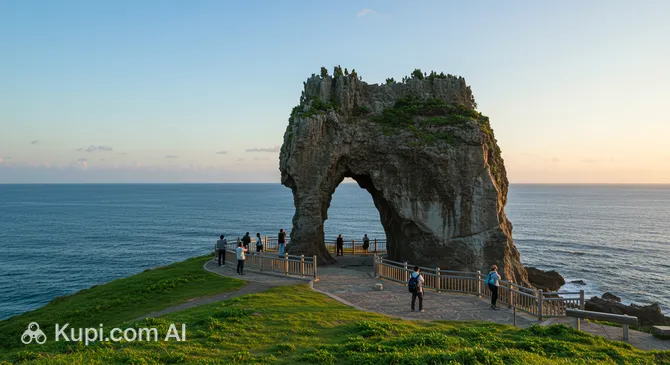
Cape Manzamo. Illustration.
Source: Kupi.com AI

Traveler photos:

One of the most famous and photographed attractions is Manzamo. This impressive rock formation, resembling an elephant's trunk, rises above the emerald waters of the ocean. The name "Manzamo" translates as "a field where 10,000 people can sit," emphasizing the vastness of the plateau at the top of the cliff. This place is especially popular for watching sunsets when the sky is painted in incredible colors, creating a truly magical atmosphere.

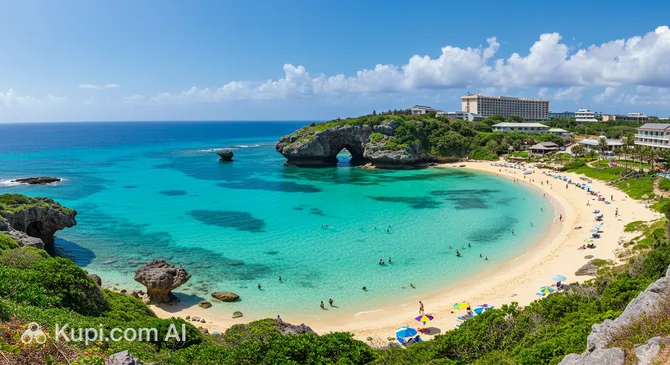
Nabee Beach. Illustration.
Source: Kupi.com AI

Traveler photos:

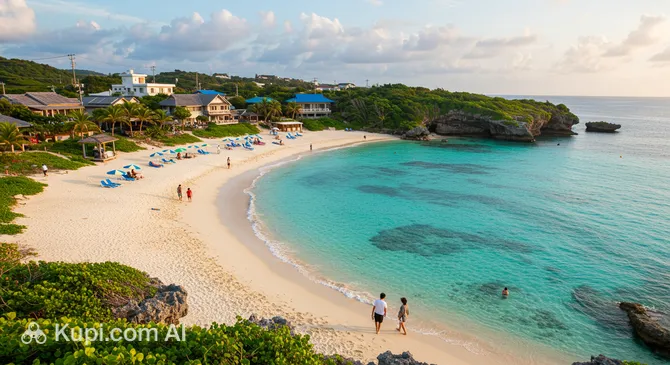
For beach lovers, Nabe Beach is a must-visit. This beautiful beach with white sand and crystal-clear water is perfect for swimming, sunbathing, and family vacations. The calm water and picturesque surroundings make it a wonderful place to relax and enjoy the nature of Okinawa.

Teida Glass Studio. Illustration.
Source: Kupi.com AI

Traveler photos:

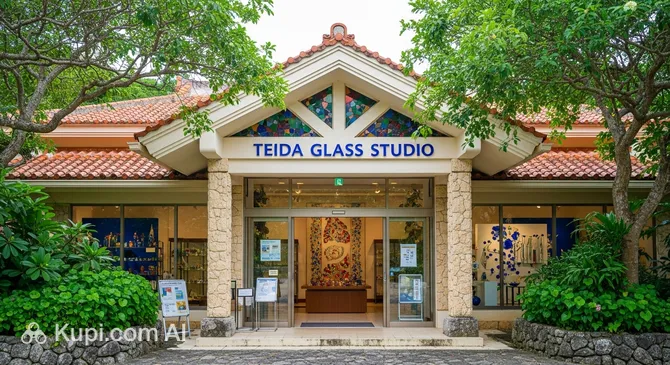
If you are interested in local crafts, stop by Teida Glass Studio. Here, you can not only see how masters create the famous Ryukyu glass, known for its bright colors and unique patterns, but also purchase original souvenirs. Sometimes the studio offers workshops where visitors can try their hand as a glassblower and create their own piece to remember their trip to Onna.

These attractions are just a small part of what Onna has to offer its guests. Each of these places is unique in its own way and will help you get to know the culture and nature of this charming corner of Japan more deeply.

Local Cuisine

The gastronomy of Onna is a true immersion into the unique flavors of Okinawa, where fresh seafood takes center stage. Fish, shellfish, seaweed, and shrimp arrive at the table almost straight from the ocean, promising unforgettable culinary experiences. The local cuisine is famous for its simplicity, heartiness, and incredible taste, based on high-quality local products.

Be sure to try Goya Champuru – a famous pork stir-fry with bitter melon, which is the signature dish of Okinawan cuisine. Don't miss the chance to enjoy dishes made from sea urchins and special seaweed called umi-budo (sea grapes), as well as fragrant soups with tropical vegetables. For a quicker but no less authentic snack, Okinawan Taco Rice – a hearty dish of rice topped with meat and vegetables in a local interpretation – is perfect.

As for drinks, in Onna you can refresh yourself with freshly squeezed juices from local mangoes and pineapples. A traditional choice is Sanpin-cha (Okinawan jasmine tea). Among alcoholic beverages, pay attention to Awamori – a strong local distilled spirit that is the pride of Okinawa. Many establishments also offer a variety of beers and other drinks.

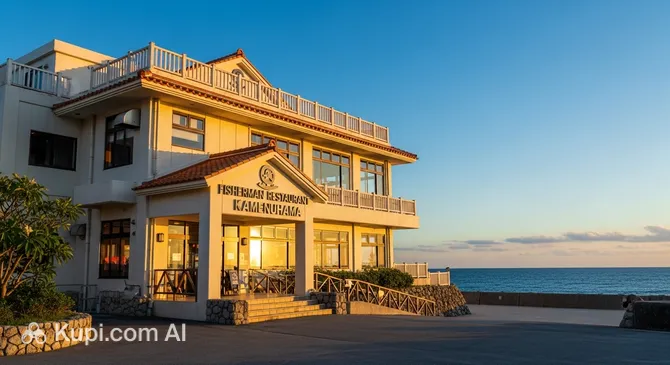
The dining culture in Onna is diverse: from cozy restaurants to lively street stalls and farmers' markets. Locals and tourists love trying fresh fruits, homemade sauces, and unusual sweets at the markets. To fully appreciate the richness of marine cuisine, check out places like Fisherman's Restaurant Kamenohama, where you can sample freshly caught fish and seafood. Street food lovers will enjoy small cafes serving fried fish and the famous brown sugar ice cream.

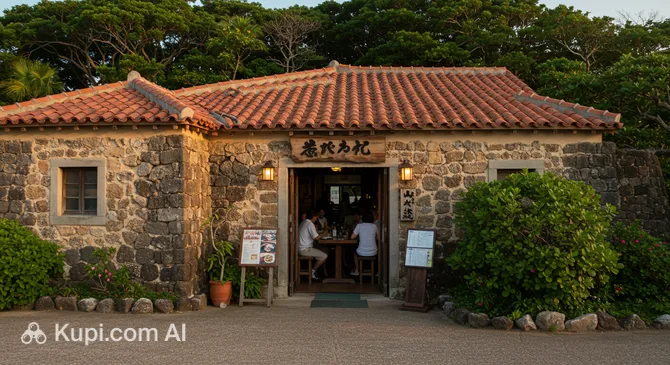
Fisherman Restaurant Kamenuhama. Illustration.
Source: Kupi.com AI

Traveler photos:

Onna's gastronomic scene attracts tourists with its authenticity and emphasis on fresh, natural ingredients. It is the perfect place to get to know the true tastes of Okinawa, whether through fine dining in a restaurant or simple but incredibly tasty street food. If your trip coincides with local festivals, don't miss the chance to visit food fairs to discover rare dishes and take a piece of the region's culinary soul home with you.

Travel Tips

Welcome to Onna, the gem of Okinawa! To make your journey through this picturesque corner of Japan as comfortable and memorable as possible, we have prepared some practical tips. They will help you navigate better and enjoy every moment of your vacation.

  1. Clothing and Essentials:

    Onna, located in Okinawa Prefecture, boasts a subtropical climate. In summer (June-September), choose light and breathable clothing made from natural fabrics, swimwear, hats, sunglasses, and sunscreen with high SPF. From May to June, a rainy season is possible, and from July to October is typhoon season, so a light waterproof jacket or umbrella will come in handy. For the shoulder seasons and evenings, bring a cardigan or light sweater. Comfortable shoes for walking and visiting beaches are a must. Don't forget an adapter for electrical appliances (Japan uses Type A and B sockets, 100V voltage).

  2. Transport:

    The best way to explore Onna and its surroundings is car rental. Public transport here is represented by buses, but their routes and schedules may not always be convenient for tourists wanting to visit secluded beaches or remote attractions. Taxis are available but can be quite expensive for frequent trips. If you plan to drive, obtain an International Driving Permit in advance.

  3. Finances:

    The local currency is the Japanese Yen (JPY). Credit cards (Visa, Mastercard) are accepted in most hotels, large restaurants, and shops. However, in small local establishments and for paying for certain services, cash may be required. It is recommended to carry some cash with you. ATMs accepting international cards can be found in post offices (Japan Post Bank) and convenience stores (e.g., 7-Eleven). Currency can be exchanged at the airport or in banks. Tipping is not practiced in Japan; good service is considered the norm.

  4. Health and Safety:

    Onna, like Japan as a whole, is a very safe place with a low crime rate. Pharmacies exist, but the range of medicines may differ, so it's better to bring basic medications with you. For medical assistance, tourists are recommended to have travel insurance. In summer, be careful with the sun and drink plenty of water. When swimming, pay attention to warning signs, especially regarding marine life (e.g., Habu jellyfish) and currents, although many popular beaches are equipped with safety nets.

  5. Communication:

    The official language is Japanese. In Onna's tourist areas, hotels, and large restaurants, staff often speak basic English. Learning a few simple Japanese phrases (e.g., \"Konnichiwa\" – hello, \"Arigato\" – thank you, \"Sumimasen\" – excuse me) will be very helpful and appreciated by locals. For constant internet access, it is recommended to rent a pocket Wi-Fi router or buy a local SIM card. Free Wi-Fi is available in many hotels and some public places.

  6. Local Etiquette:

    Japanese people value politeness and respect highly. When greeting, a slight bow is sufficient. In public places, especially on transport, try to speak quietly. Remove your shoes before entering homes, some temples, and traditional restaurants (usually a special area is provided for this). It is not common to eat or drink while walking on the street. Following these simple rules will help you feel more comfortable and show respect for the local culture.

  7. What to Avoid:

    Try not to talk loudly on the phone in public places, especially on transport. Also, do not stick your chopsticks vertically into a bowl of rice – this is associated with funeral rituals and is considered bad manners. Standing in line is the norm; do not try to cut in.

  8. Additional Tip:

    Onna is famous for its stunning beaches and water sports opportunities. Be sure to try snorkeling or diving to see Okinawa's rich underwater world. Also, don't miss the chance to experience unique Okinawan cuisine, which differs from traditional Japanese – dishes like \"Goya Champuru\" (stir-fried bitter melon) or \"Rafute\" (braised pork belly) will leave unforgettable gastronomic impressions.

We hope these tips make your stay in Onna even more pleasant and carefree. Enjoy the beauty of Okinawan nature, the hospitality of the locals, and the unique atmosphere of this paradise!

Entertainment & Nightlife

Evening and nightlife in Onna offer a relaxing atmosphere, perfect for ending the day after exploring Okinawa's beaches and attractions. Instead of noisy metropolitan clubs, you will find cozy bars, quality restaurants, and the opportunity to enjoy a quiet evening under the starry sky.

The main evening entertainment in Onna is concentrated along the coast and the main road, as well as within the grounds of large resort hotels. Here you can find many establishments serving local and international cuisine, as well as a good selection of drinks. Many restaurants stay open until late evening, allowing for a leisurely dinner. The atmosphere in most places is casual, encouraging conversation and relaxation. The dress code is generally casual, matching the resort mood.

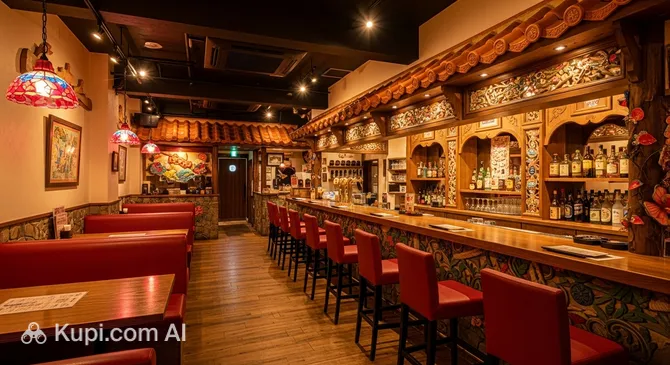
If you're looking for a place for an evening drink, check out Ryukyu Beef & Beer. This bar offers a pleasant setting to have a drink or two and sample local snacks. For a traditional Okinawan-style dinner, you can visit the Shimabutaya Onna restaurant, famous for its Agu pork dishes.

Ryukyu Beef & Beer. Illustration.
Source: Kupi.com AI

Traveler photos:

Most establishments in Onna come alive towards the evening, especially during the tourist season. It is recommended to arrive at popular restaurants by the start of dinner service or book tables in advance. Prices can vary from moderate in local eateries to higher in high-end hotel restaurants. As for clubs in the classic sense, there are virtually none in Onna; evening entertainment here is more focused on gastronomy and quiet pastimes.

Shimabutaya Onna. Illustration.
Source: Kupi.com AI

Traveler photos:

For getting around at night, taxis are the primary option. Onna, and Japan in general, is quite safe, but standard precautions should always be taken. It is recommended to order a taxi through your hotel reception or the restaurant, especially late at night, as hailing a car on the street can be difficult in some areas.

During the day, Onna offers many activities: from relaxing on magnificent beaches like Nabe Beach to exploring natural wonders like the famous Manzamo rock. You can also visit Teida Glass Studio to discover local craftsmanship. There are no large theaters or amusement parks in Onna; the emphasis is on natural beauty and water sports.

Thus, an evening in Onna is a wonderful opportunity to relax after a busy day, enjoy delicious food and drinks in a calm and welcoming atmosphere.

Parks & Museums

Onna, a picturesque corner on the Okinawan coast, offers guests the chance to enjoy not only magnificent beaches but also unique natural attractions and local culture through its crafts. Although traditional urban parks and large museums are few here, the natural beauty and cultural sites more than compensate for this.

Among the natural wonders of Onna, Manzamo holds a special place. This famous rock formation, resembling an elephant's trunk, is the symbol of the region. The cliff offers breathtaking views of the ocean, especially impressive at sunset. This spot attracts photographers and anyone who appreciates natural power and beauty.

Cape Manzamo. Illustration.
Source: Kupi.com AI

Traveler photos:

For beach lovers, Nabe Beach is a true find. This beach is famous for its white sand, crystal-clear water, and relatively calm atmosphere, making it ideal for family holidays and relaxing by the sea. The picturesque surroundings add to its charm.

Nabee Beach. Illustration.
Source: Kupi.com AI

Traveler photos:

Immerse yourself in the world of local art and crafts at Teida Glass Studio. Here, visitors can see how products are made from traditional Ryukyu glass, characterized by bright colors and unique patterns. It is not just a shop, but a place where you can touch Okinawan culture and perhaps purchase a unique souvenir.

Teida Glass Studio. Illustration.
Source: Kupi.com AI

Traveler photos:

Beyond these iconic sites, Onna offers many opportunities for exploration. Stroll along the rugged coastline to discover secluded coves and impressive rock formations. It is also worth visiting small local markets where you can find fresh produce and handmade items, allowing you to deeper experience the authentic spirit of this region of Japan.

Getting Around

When planning your travel around Onna, it's important to keep in mind that this is a resort area, and the public transport system has its own characteristics. The main form of public transport linking different parts of Onna and connecting it to other Okinawan towns is the bus. You won't find a subway, trams, or trolleybuses in Onna; these modes of transport are typical of larger cities.

Bus routes serve the main roads and tourist areas. Information about schedules and routes can be found at bus stops (though information may sometimes be limited to Japanese) or on the websites of Okinawan bus companies (such as Ryukyu Bus Kotsu, Okinawa Bus). Some routes, like No. 120, run through all of Onna, connecting Naha and Nago.

The payment system on buses usually involves paying in cash upon exiting. The fare depends on the distance. When boarding the bus (often through the middle door), you need to take a numbered ticket (整理券 - seiriken). When exiting (through the front door), you pay the driver, checking the electronic board above him which shows the fare from your boarding stop. It's advisable to have small change ready, as the change machines for large bills may have limits. In Okinawa, the OKICA transport IC card is used and can be used to pay for fares on buses that accept this system. However, its applicability on specific routes should be confirmed. Tourist passes for local buses are rare.

Practical tips for tourists: Tickets for intercity buses (e.g., Airport Limousine Bus connecting Naha Airport with hotels in Onna) are best purchased in advance online or at airport/bus terminal ticket counters. For regular local buses, payment is made upon exit. Buses generally run strictly on schedule, but they may not be very frequent, especially in the evening or on less popular routes. It is recommended to plan your trips in advance and check the current schedule.

Alternative ways to get around: Given the length of the Onna resort area and the location of attractions, many tourists prefer alternative modes of transport: * Car Rental: This is the most popular and convenient way to explore Onna and all of Okinawa. Many rental companies offer their services, including at Naha Airport. Having a car provides maximum freedom of movement. * Taxi: Available, but can be an expensive option, especially for long distances. Convenient for short trips or if you are traveling in a group. * Bicycle Rental: Some hotels and local rental points offer bicycles. This is a good option for leisurely exploring the immediate vicinity and beaches. * Airport Limousine Bus: A comfortable bus that takes you from Naha Airport directly to many major hotels in Onna. Tickets can be bought at the airport. Car sharing in Onna is less developed compared to traditional car rentals.

Overall, while public transport in Onna is mainly represented by buses, combining them with a rental car or taxi will allow you to comfortably explore this beautiful corner of Japan.

Accommodation

In Onna, known for its picturesque beaches and crystal-clear waters, you will find a wide range of accommodation options catering to various preferences and budgets. The core offerings consist of resort hotels and mid-to-high-end accommodations, many of which offer magnificent ocean views and a full range of services for a comfortable stay. You can also find guesthouses (minshuku) in Onna, allowing for a deeper immersion into local culture, and rental apartments, which are an excellent choice for families or travelers planning a longer stay.

Most popular housing options are strategically located along the coast, providing guests with easy access to famous beaches and major tourist attractions. Areas adjacent to iconic sites such as Manzamo or Nabe Beach are particularly popular with tourists due to their beauty and convenience. While specific hotels are not always highlighted in general attraction lists, Onna is famous for its first-class resort complexes, many of which offer swimming pools, fine dining restaurants, and spas.

When planning a trip to Onna, especially during the peak tourist season which falls in the summer months and national holiday periods, it is highly recommended to book your accommodation in advance. This not only guarantees availability but also allows you to choose the best option in terms of price and quality, and take advantage of potential early booking discounts.

The price range for accommodation in Onna is quite broad: from more budget-friendly options in small guesthouses to luxury offerings in five-star resorts. You can book accommodation through various methods: via popular international and local online booking platforms, by contacting travel agencies, or by reaching out directly to the management of your chosen hotel or guesthouse.

Nearby Cities

For those looking to explore the surrounding area, Onna serves as an excellent starting point for day trips to several interesting nearby locations:

CityPopulationDistance
Kin11 2529 km
Uruma122 37113 km
Nago63 06016 km
Yomitan39 79116 km
Motobu13 07318 km

Each of these cities offers its own unique experiences:

Naha, the capital of Okinawa Prefecture, attracts tourists with the famous Shuri Castle, a UNESCO World Heritage site, the lively Kokusai-dori Street with its numerous shops and restaurants, and the colorful Makishi Market. It is a city rich in the history of the Ryukyu Kingdom.

Okinawa (city) is known for its blend of cultures, including American influence due to nearby military bases, as well as attractions like the Southeast Botanical Gardens and the Okinawa Zoo & Museum. Here you can see traditional Eisa dances.

Uruma, located on the east coast, is famous for its picturesque beaches, the ruins of Katsuren Castle (also a UNESCO site), and the Kaichu-Doro Road, which connects several small islands. It's a great spot for nature lovers and water sports enthusiasts.

Urasoe, located north of Naha, is interesting for the ruins of Urasoe Castle, which was once the capital of one of Okinawa's three kingdoms, as well as the Urasoe Art Museum. The city offers a quiet atmosphere for exploring local history.

Ginowan attracts visitors with its Ginowan Tropical Beach, perfect for relaxation, and the Okinawa Convention Center, which frequently hosts various events. The city is also known for its proximity to the Futenma US Air Base.

These nearby destinations provide insight into the diverse culture and landscapes of the region. A trip to any of these cities will enrich your journey through Japan with new impressions and discoveries.

Shopping & Souvenirs

Onna, being a popular resort area in Okinawa, offers its guests opportunities for pleasant shopping, focused primarily on souvenirs, local delicacies, and beachwear. You won't find huge shopping malls here like in major cities, but you can purchase unique items to remember your trip to Japan.

The main retail outlets in Onna are usually concentrated along the main roads passing through the village, as well as within hotels and resort complexes. These may be small shops offering beachwear, accessories, local sweets, and handicrafts. There are no specialized large shopping streets here; shopping is more relaxed and local in character.

Major shopping centers are absent in Onna itself. For more extensive shopping, including global brands and large department stores, tourists usually head to larger Okinawan cities such as Naha.

While there are no large traditional markets in Onna, you can find small shops or stalls where locals sell fresh fruits, vegetables, and occasionally seafood. Additionally, souvenir shops often feature locally produced food items that can make excellent gastronomic souvenirs.

Recommended souvenirs from Onna include items made of Ryukyu glass, pottery, textiles with traditional Okinawan patterns, as well as local delicacies like Awamori (local liquor), sea salt, Kokuto brown sugar, and various sweets. Unique glass products can be found, for example, at Teida Glass Studio.

Most shops in Onna operate from approximately 10:00-11:00 to 19:00-20:00. Small souvenir stalls may have more flexible hours, especially during the tourist season. Both cash (Japanese Yen) and credit cards are accepted, particularly in hotels and larger stores. However, in small private shops, cash may be preferred.

For international tourists in Japan, a Tax-Free system is available. When purchasing goods for a certain amount in participating stores (usually indicated by a sticker), you can apply for a consumption tax refund. You will need to present your passport. Check the terms and minimum purchase amount directly in the stores.

Reached the end of the page?

That means the route is fully explored