Support

Tsuzumi-mon Gate

About

The Tsuzumi-mon Gate is an impressive architectural structure that greets guests at the East Exit of the railway station in Kanazawa, a city in Japan. This majestic gate is a modern interpretation of traditional Japanese style and has quickly become a new, recognizable symbol of the city, harmoniously blending history and modernity.
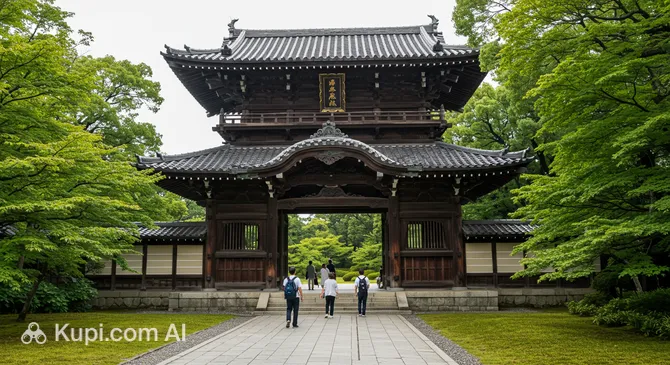
Tsuzumi-mon Gate. Illustration.
Source: Kupi.com AI

Traveler photos:

The gate received its name, Tsuzumi-mon, in honor of the ancient Japanese "tsuzumi" drums. These drums are an integral part of traditional Japanese Noh theater performances, adding cultural depth and symbolism to the structure by linking it to the country's rich heritage.

Tsuzumi-mon Gate is skillfully crafted from wood using the traditional Japanese construction technique called "miadaiku." This technique is famous for joining wooden elements without the use of metal nails or other fasteners, demonstrating the supreme craftsmanship of the carpenters. Although such structures (torii) are most often associated with Shinto shrines, Tsuzumi-mon fits surprisingly naturally into the modern cityscape, pairing perfectly with the station's glass roof and embodying a unique fusion of tradition and innovation.

Contacts

Since Tsuzumi-mon Gate is an architectural structure and part of the station complex, it does not have its own separate contact details. For additional information about the gate or other attractions in Kanazawa, you can contact the tourist information center located at Kanazawa Railway Station or the city tourism office.

How to contactContact
Address2 Kinoshinbomachi, Kanazawa, Ishikawa 920-0858, Japan
Phone number+81 76-220-2321
Websitewww4.city.kanazawa.lg.jp

What to Do

Arriving in Kanazawa by train, the first thing that greets travelers right at the exit of the railway station is the majestic Tsuzumi-mon Gate. This impressive wooden gate instantly captures attention with its unique design, which is said to be inspired by traditional Japanese tsuzumi drums. Visitors can examine the intricate construction in detail, paying special attention to the traditional technique of joining wooden elements without a single metal nail or fastener. This is a great opportunity not only to take memorable photos but also to truly appreciate the high craftsmanship of Japanese carpenters.

The Tsuzumi-mon Gate serves not only as an architectural masterpiece but also as a symbolic entrance to the city, making it an excellent starting point for an exciting tour of Kanazawa. Immediately after viewing the gate, many tourists head off to explore the Nagamachi samurai district, which preserves the atmosphere of feudal Japan. You can also simply stroll through the adjacent streets, admiring the local houses and small wooden temples to feel the authentic spirit of the city.

Viewing the Tsuzumi-mon Gate sets the tone for further exploration of Kanazawa's rich cultural heritage. From here, it is easy to reach other iconic landmarks, such as the partially restored Kanazawa Castle with its magnificent garden or the Gold Leaf Museum, where you can learn about the traditional craft that made this region famous. Thus, a visit to the gate becomes the first step toward a deep immersion into the history and culture of this amazing Japanese city.

Getting There

Getting to the famous Tsuzumi-mon Gate in Kanazawa is surprisingly easy, as it serves as a signature landmark of the city, welcoming guests right at the main transport hub. The gate is located directly in front of the East Exit of Kanazawa Railway Station, making it one of the most accessible tourist attractions for anyone arriving in the city by rail.

The primary and most convenient way to reach Tsuzumi-mon is by taking a train to Kanazawa Station. Upon arrival, follow the signs to the East Exit. As soon as you step out of the station building, the majestic wooden gate will appear before you in all its glory. No additional transport or long searching is required—the landmark is literally just a few steps away, greeting every visitor to the city.

Nearest city: Kanazawa

History & Facts

The Tsuzumi-mon Gate, located at the East Exit of Kanazawa Railway Station, is one of the city's most recognizable modern landmarks. Although construction was completed only in 2005, it quickly gained the status of a new symbol of Kanazawa. This was made possible by a unique combination of modern design and deep respect for traditional Japanese construction methods used in its creation.

Tsuzumi-mon Gate contributes significantly to the reputation of Kanazawa Station as one of the most beautiful in Japan. It serves as a kind of prologue to the city's rich history. Kanazawa has a glorious past, centered during the Edo period around the majestic Kanazawa Castle. The main part of this castle was erected in 1583 by the powerful Maeda clan, who ruled these lands and resided in the castle until 1869.

The name of the city itself, Kanazawa, which translates as "Marsh of Gold" or "Land of the Golden Marsh," is steeped in legends. One tells of a peasant named Imohori Togoro, who accidentally discovered gold nuggets in the ground while tending his garden. This find marked the beginning of Kanazawa's fame as a place rich in gold, and the products of local craftsmen made from this precious metal became a symbol of wealth and high status throughout Japan. Thus, the modern Tsuzumi-mon Gate greets travelers, inviting them to discover a city whose history and culture are inextricably linked with the noble metal and the mastery of its processing.

Time Needed

Viewing the Tsuzumi-mon Gate itself usually doesn't take much time. For most visitors, 15-20 minutes is enough to fully appreciate its impressive architecture, inspired by traditional Japanese tsuzumi drums, and to take a few memorable photos. This time is sufficient to examine the construction details and feel the atmosphere of this modern symbol of Kanazawa.

However, it's important to remember that the Tsuzumi-mon Gate is an integral part of the large and bustling Kanazawa Railway Station complex. City tours often start from here, and it also houses numerous shops, restaurants, and information centers. Therefore, while the gate itself can be seen quickly, many tourists spend much more time here exploring the station's infrastructure or waiting for transport for further travel through Japan.

If you plan to use the station as a starting point for exploring Kanazawa, it would be wise to allow extra time for orientation, perhaps visiting the tourist information center or buying souvenirs. Thus, the total time spent in the area of Tsuzumi-mon Gate and the station itself can easily range from 30 minutes to an hour or more, depending on your plans.

Working Hours

The Tsuzumi-mon Gate, located in front of the East Exit of Kanazawa Railway Station, is an impressive structure available for viewing at any time of day. As it is an open architectural composition, there are no specific working hours. This means you can admire the gate in the early morning or late at night, enjoying its appearance under different lighting.

Thanks to its 24-hour accessibility, no advance ticket booking or registration is required to visit the Tsuzumi-mon Gate. The landmark is open to everyone all year round, making it an easily accessible stop on your Kanazawa itinerary in any season.

Open 24 hours

Nearby

Seeing such iconic landmarks as the Tsuzumi-mon Gate is certainly a highlight of a trip to Kanazawa. However, to truly soak in the city's atmosphere and enrich your experience, it is worth taking the time to explore its surroundings. Often, it is short walks to nearby attractions that reveal new facets of culture and history, allowing you to see a place from an unexpected perspective.

Exploring what is near the Tsuzumi-mon Gate can turn your visit from a simple sightseeing stop into an exciting adventure. Kanazawa is a city with a rich heritage, and every corner here can tell its own story. Below is a list of interesting places located nearby that will help you gain a more complete picture of this amazing corner of Japan.

NameDistance
Kanazawa Hyakubangai0.1 km
Ramen Taiga0.3 km
Kanazawa Shu Shu1.1 km
Kazuemachi Chaya District1.4 km
Kanazawa Phonograph Museum1.4 km
Nomura Samurai House1.5 km
Nagamachi Samurai District1.6 km

Have you reached the end of the page?

So the route has been studied inside and out