Support

Shinjuku Niagara Falls

About

In the heart of Tokyo's bustling business district, at the foot of majestic skyscrapers, lies Shinjuku Niagara Falls. This decorative fountain, located in Shinjuku Central Park, is one of the most recognizable water installations in Japan. Despite its ambitious name, the site is an elegant man-made cascade that provides coolness and tranquility amidst the urban landscape.
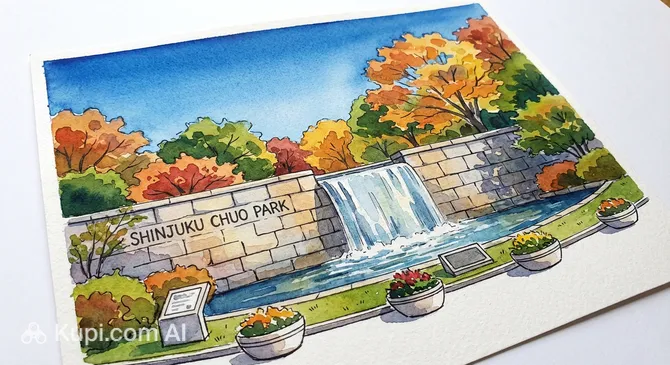
Shinjuku Niagara Falls. Illustration.
Source: Kupi.com AI

Traveler photos:

An interesting feature of the fountain is its visual contrast with the surrounding architecture. Journalists and travelers often ironically note the discrepancy between the scale of the waterfall and its name; however, this only adds a special charm to the place. The sound of falling water here serves as a natural sound barrier, separating the calm park zone from the perpetual motion of the megacity.

The waterfall is harmoniously integrated into the park's ecosystem, neighboring green alleys and ponds. For visitors to the city, this place has become a popular spot for a brief rest and photo shoots, where one can capture both the natural element and the futuristic facade of the Tokyo Metropolitan Government Building in a single frame.

Contacts

When planning a visit to Shinjuku Niagara Falls, we recommend checking the current information regarding the park area's operating hours in advance. This will help you better plan your route and avoid potential restrictions related to city events or maintenance work.

Since the site is located within a public space in Tokyo, details about its operation may be updated depending on the season. It is recommended to verify details on the management company's official resource or immediately before your visit.

How to contactContact
Address2-chōme-11-11 Nishishinjuku, Shinjuku City, Tokyo 160-0023, Япония
Phone+81 3-3342-4509
Websiteparks.prfj.or.jp

What to Do

A visit to Shinjuku Niagara Falls offers city guests a pleasant pause in the rhythm of the metropolis. Here, you can simply sit on a bench, enjoying the view of the falling water and the play of light on the fountain's jets. It is an ideal place for those who want to take striking photos where Tokyo's urban landscapes meet natural aesthetics.

Within Shinjuku Central Park itself, visitors often stroll along well-maintained paths, watch ducks in the pond, or have family picnics in open areas. In the summer heat, the fountain becomes a true savior, refreshing the surrounding air. In the evening, the location is transformed by artistic lighting, which creates a romantic atmosphere against the backdrop of the glowing windows of nearby skyscrapers.

A visit to the waterfall is easy to combine with a cultural program. For example, you can visit the observation deck in the Metropolitan Government Building to see a panorama of the city, or stop by one of the nearby museums. For fans of nightlife, cozy venues like the legendary Bar Benfiddich are within walking distance, where you can end the day in an authentic atmosphere.

Getting There

The easiest way to get to Shinjuku Niagara Falls in Tokyo is by public transport. The main landmark is Shinjuku Station, one of the world's largest transport hubs. From its west exit, you can reach the park on foot in 10–15 minutes, walking toward the Nishi-Shinjuku skyscraper district.

For those who prefer minimal walking, Tocho-mae Metro Station (Oedo Line) is ideal. Exit A4 is just a couple of minutes' walk from the entrance to Shinjuku Central Park. The station serves many directions, making the site accessible from anywhere in the Japanese capital.

If you are arriving from Narita or Haneda airports, it is most convenient to take the Narita Express trains or Limousine Buses to Shinjuku Station. From there, the waterfall can be reached by taxi in just 5 minutes. Using a private car in this area can be difficult due to traffic jams and limited parking spaces, so public transport remains the priority option.

Nearest city: Tokyo

History & Facts

The history of Shinjuku Niagara Falls is inextricably linked to the urbanization of one of Japan's most dynamic districts. During the Edo period, starting in 1698, Shinjuku was merely a post station. However, after the Great Kanto Earthquake of 1923, the area began to develop rapidly: thanks to its stable soil, the first skyscrapers and modern administrative buildings were erected here.

The fountain itself appeared as part of a project to improve Shinjuku Central Park, which was created in the post-war years. A significant boost to the development of green zones in the area was given by the 1964 Olympic Games. City authorities sought to create a space where futuristic architecture would harmonize with elements of nature, offering residents a place to relax among the concrete giants.

In modern guidebooks, Shinjuku Niagara Falls is mentioned as a symbol of the Japanese people's technological yet poetic approach to the urban environment. Although the cascade is small compared to its world-famous namesake, it has become an important visual accent of Nishi-Shinjuku, reflecting the district's evolution from a quiet suburb to the business heart of the metropolis.

Time Needed

To leisurely inspect Shinjuku Niagara Falls and take a few good shots against the backdrop of the flowing water, 30–60 minutes is usually enough. This time is sufficient to enjoy the atmosphere of Shinjuku Central Park and take a break from the city noise.

If you plan to combine your visit with a trip to the observation decks in the neighboring skyscrapers or a stroll through the shopping centers of the Nishi-Shinjuku district, it is worth allocating at least 2 hours for this route. In clear weather, time can fly by unnoticed, especially if you decide to linger in the park for a small picnic.

Working Hours

Shinjuku Niagara Falls is open to visitors daily during the operating hours of Shinjuku Central Park. The fountain operates from 09:00 to 17:00 without breaks or days off, allowing it to be included in any Tokyo walking route.

Entrance to the park is free, making the site an excellent option for budget-friendly recreation. Please note that the cascade's operation schedule may change slightly depending on weather conditions or scheduled maintenance, so if in doubt, it is worth checking the latest information on the official park service website.

09:00–17:00

Nearby

A visit to Shinjuku Niagara Falls can easily be turned into a packed excursion, as it is surrounded by iconic Tokyo landmarks. Exploring Shinjuku Central Park itself will allow you to enjoy landscaped gardens and find secluded spots to relax amidst the bustle of the metropolis.

Just a couple of minutes' walk away rises the monumental Tokyo Metropolitan Government Building, which features free observation decks with breathtaking views of the city. Also nearby is the famous Robert Indiana's "LOVE" sculpture, which has become a popular photo spot. This proximity of natural and architectural attractions makes the area a must-visit.

NameDistance
Shibuya Coffee Bar3 km
Suga Shrine3.1 km
Shibuya Stream Bar3.8 km
Blue Note Tokyo4 km
Nezu Museum4 km
Reserve Roastery Tokyo4.5 km
Tokyo Imperial Palace5.7 km

Reached the end of the page?

That means the route is fully explored