Support

"Dormition of the Mother of God" Metropolitan Cathedral

About

In the heart of Transylvania, on the lively square of the city of Cluj-Napoca, stands the magnificent Dormition of the Theotokos Cathedral. This majestic temple is the main Orthodox cathedral of the region and one of the most recognizable architectural landmarks that Romania takes pride in.
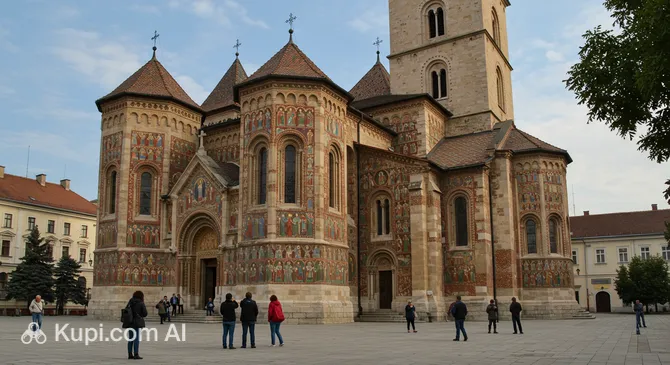
Dormition of the Mother of God Metropolitan Cathedral
Dormition of the Mother of God Metropolitan Cathedral. Иллюстрация. Источник: Kupi.com AI

The cathedral building is a unique example of the Brâncovenesc style — a distinct architectural movement that combines Byzantine traditions with elements of the Western Renaissance. Its impressive domes and elegant facade decoration attract the attention of not only believers but also connoisseurs of fine art from all over the world.

As the cathedral church of the local metropolis, it plays a key role in the spiritual life of the city. Dedicated to one of the most important Christian holidays — the Dormition of the Most Holy Theotokos (Assumption of the Virgin) — it serves not only as a place for prayer but also as an important symbol of the Romanian people's cultural identity.

Contacts

For those planning a visit or wishing to check the schedule of holiday services, the cathedral's current contact information is provided below. You can always refer to official resources for the latest news from the parish.

How to contactContact
AddressPiața Avram Iancu, Cluj-Napoca, Romania
Phone+40 264 431 004
Websitewww.mitropolia-clujului.ro

What to Do

Inside the cathedral, visitors can soak in an atmosphere of tranquility and grandeur. It is worth paying attention to the rich interior decorations: the detailed icons and monumental murals that reflect the depth of Orthodox traditions. If your visit coincides with a service, you can hear solemn church singing, which gives the space a special energy.

After leaving the cathedral, be sure to take a stroll through Avram Iancu Square. This is the perfect place to appreciate the scale of the building from the outside and take striking photographs. The square's architectural ensemble is complemented by the National Theatre and the monument to Avram Iancu, creating a harmonious space for a walk.

For those interested in art history, the cathedral will serve as a real open-air architecture textbook. It is recommended to slowly walk around the building to admire the stone carvings and decorative elements, where Byzantine and Renaissance motifs are masterfully intertwined.

Getting There

Finding this majestic cathedral is easy, as it is located on one of the city's main squares — Piața Avram Iancu. Due to its central location, the cathedral serves as a natural landmark for any traveler in this part of the city.

If you are staying in the historic center, the best way to reach it is by walking. The route takes you through picturesque streets with architecture from various eras, making the journey a pleasant addition to your tour. The cathedral is in close proximity to other iconic buildings, so it is almost impossible to miss.

For those who prefer comfort or are coming from more distant areas, a taxi or public transport is a great choice. Numerous bus and trolleybus routes pass through the city center, stopping just a few minutes' walk from the square. Since there is no metro in the city, surface transport remains the most convenient way for tourists to get around.

Ближайший город: Cluj-Napoca

History & Facts

The history of the cathedral is inextricably linked to an important stage in the country's life — the period following the unification of Transylvania with the Old Romanian Kingdom. Construction of the cathedral began on September 10, 1923, serving as a powerful symbol of the strengthening of Orthodox traditions in this multi-ethnic region.

The design of the building was entrusted to talented architects George Cristinel and Constantin Pomponiu. Prior to their work on this cathedral, they had already gained fame for creating the monumental mausoleum in Mărășești. Their expertise allowed them to embody a harmonious blend of Byzantine austerity and the refinement of the Romanian Renaissance in stone.

Bishop Nicolae Ivan played a special role in the realization of this large-scale project. It was his persistence and personal involvement in fundraising that allowed the construction to be completed by 1933. Thanks to his efforts, the city received not just a place of worship, but a true architectural masterpiece that became a spiritual stronghold for many generations of believers.

Today, the building is considered an important monument of the interwar period, reflecting the cultural and social transformations of Romanian society. An attentive observer will notice in its appearance an aspiration for national self-determination and the preservation of Byzantine heritage in a modern context.

Time Needed

For a brief introduction to the interior and architectural features of the cathedral, 30–45 minutes is usually sufficient. This is enough time to appreciate the murals, examine the details of the iconostasis, and feel the grandeur of the inner space.

If you plan to attend a church service or wish to study every decorative element more closely in a quiet atmosphere, it is worth setting aside about 1–2 hours for the visit. The cathedral is often filled with light and a special sense of solemnity during liturgies, which offers visitors a completely different experience.

Working Hours

The cathedral is hospitably open to parishioners and tourists throughout the week. On weekdays and Saturdays, the doors are open from 6:00 to 21:00, and on Sundays, visiting is possible from 7:00 to 21:00.

Please note that during liturgies and major religious holidays, access to some parts of the cathedral for tourist sightseeing may be limited. It is recommended to remain quiet and show respect to those praying.

DayWorking hours
Понедельник6:00 – 21:00
Вторник6:00 – 21:00
Среда6:00 – 21:00
Четверг6:00 – 21:00
Пятница6:00 – 21:00
Суббота6:00 – 21:00
Воскресенье7:00 – 21:00

Nearby

A visit to the cathedral is an excellent opportunity to explore the entire city center, as many other iconic sites are concentrated around it. Walking through the surrounding area will allow you to dive deeper into the city's atmosphere and see how different historical eras intertwine.

Within walking distance, you will find museums, ancient towers, and cozy squares where you can relax after sightseeing. Here is a list of sites worth including in your itinerary:

NameDistance
Tailors' Tower0.4 km
National Museum of Art Cluj-Napoca0.5 km
Firemen's Tower0.5 km
Steampunk Transylvania0.5 km
Joben Experience Bar0.5 km
Union Square0.6 km
Matthias Corvinus Monument0.6 km

Reached the end of the page?

That means the route is fully explored