Support

Camp d'Esports

About

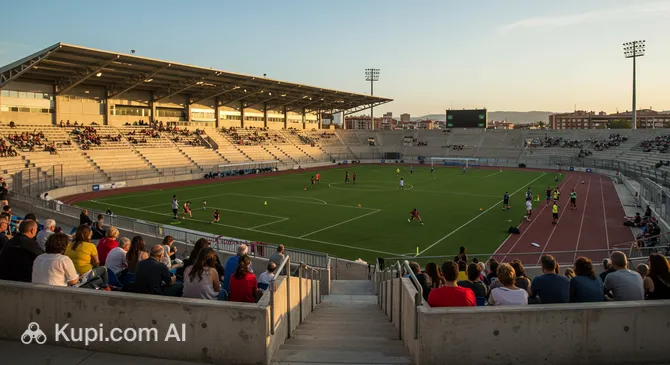
In the heart of northern Catalonia lies a unique sporting landmark — the Camp d'Esports stadium. Located in the city of Lleida, it is recognized as one of the most historic and significant structures of its kind in all of Spain. This is not just a football arena, but a true monument of sports architecture, listed in the Architectural Heritage Registry of Catalonia.
Camp d
Camp d'Esports. Иллюстрация. Источник: Kupi.com AI

As the home ground for the Lleida Esportiu club, this multipurpose stadium seats up to 13,500 spectators. It is considered the oldest stadium in Catalan football, giving every match here a special, solemn atmosphere. For the city, this place has become a symbol of generational continuity and a love for sports.

The complex is interesting not only to football fans but also to history buffs. Originally conceived as a grand sporting gift to the city, Camp d'Esports still retains elements of its former glory, remaining the central hub of football life in the region.

Contacts

To check information about upcoming events or tours, you can use the stadium's official communication channels. The facility's administration is open to inquiries from visitors and fans.

How to contactContact
Addresss/n, Av. del Doctor Fleming, s/n, 25006 Lleida, Spain
Phone+34 973 34 71 14
Websiteesport.paeria.es

What to Do

The main reason to visit Camp d'Esports is, of course, the football matches. The live energy of the stands, the thrill of the competition, and the chance to see Spanish clubs play will provide an unforgettable experience for any fan. Even if you aren't a die-hard supporter, the stadium's atmosphere during a match is well worth experiencing.

For architecture and history enthusiasts, it will be interesting to study the construction of the arena itself. Note the historic gates on the Alcalde Rovira Roure avenue side and the surviving velodrome — these are authentic details of the original complex that have survived through the decades. These are great spots for atmospheric photos capturing the spirit of old sporting Europe.

A walk through the grounds allows you to trace the evolution of sports infrastructure. You can see how modern elements of the stands, renovated in the 90s, blend with the century-long history of the foundation of this site, which is significant for all of Catalonia.

Getting There

The legendary stadium is conveniently located in the northern part of the city at Av. del Doctor Fleming, s/n. Thanks to its location, it is easily accessible to both locals and visitors coming to experience Catalan architecture and sports.

The easiest way to get there is by public transport. City bus routes connect central areas with the stadium zone, making the trip fast and budget-friendly. If you prefer comfort, a taxi from the city center will take you to the main gates in just a few minutes.

For those who prefer to travel by rental car, it is recommended to use the GPS coordinates (41°37′16.56″N 0°36′50.93″E). On match days, it is wise to leave early, as traffic in the arena area can be heavier than usual.

Ближайший город: Lleida

History & Facts

The history of this sports facility began on January 1, 1919, with a grand opening match. The stadium project, a generous gift to the city from the local republican movement, was designed by the talented architect Adolf Florensa. At the time, construction cost 100,000 pesetas, which was a very significant sum.

Did you know that Camp d'Esports holds the prestigious third place on the list of Spain's oldest stadiums? It is surpassed in age only by the arenas in Gijon and Aguilas, making it a true patriarch of Catalan football. Originally, it was a grand complex that included not just a football pitch, but also a velodrome, tennis courts, a swimming pool, and even an ice skating rink.

Over the decades, the arena has been updated several times. One of the most significant was the 1993–1994 reconstruction, timed to coincide with UE Lleida's promotion to the top division of Spanish football. Today, the site is included in the Architectural Heritage Registry of Catalonia, preserving the spirit of 20th-century sports history in its appearance.

Time Needed

To simply walk around the stadium, appreciate its monumental facades, and see the surviving elements of the old complex, you will need about 1–2 hours. This is quite enough for a leisurely tour of the architecture and commemorative signs.

If your goal is to feel the real excitement and attend a football match, plan to spend at least 3–4 hours here. It is recommended to arrive 30–40 minutes before kickoff to find your seat without rushing and enjoy the pre-match atmosphere.

Working Hours

The stadium's operating hours are directly linked to the schedule of sporting events and football club training sessions. Access to the stands for spectators is usually only open on match days.

To plan your visit and avoid arriving at closed gates, it is highly recommended to check the match calendar on the official website in advance or look for information on the social media pages of the Lleida Esportiu club. On regular days, viewing the stadium is only possible from the outside.

Nearby

A visit to the football arena can easily be combined with exploring other iconic sites in the city. The area around the stadium is rich in historical monuments that will allow you to learn more about the cultural heritage of this region.

NameDistance
Porco Dio0.5 km
Síbaris0.6 km
Suda Castle1 km
Lleida Museum1 km
Church of Sant Llorenç1 km
La Seu Vella1.1 km
Parador de Lleida1.1 km

Reached the end of the page?

That means the route is fully explored