Support

Museu de Lleida

About

If you are looking for a place where Catalonia's centuries-old history comes to life, the Museum of Lleida is a must-visit. This modern and impressive cultural space is located in the city of Lleida and is one of the most important art and archaeology centers that Spain has to offer. The museum combines two incredibly rich collections: the sacred art of the Diocesan Museum and unique archaeological finds spanning a colossal period from the Palaeolithic to the Baroque era.
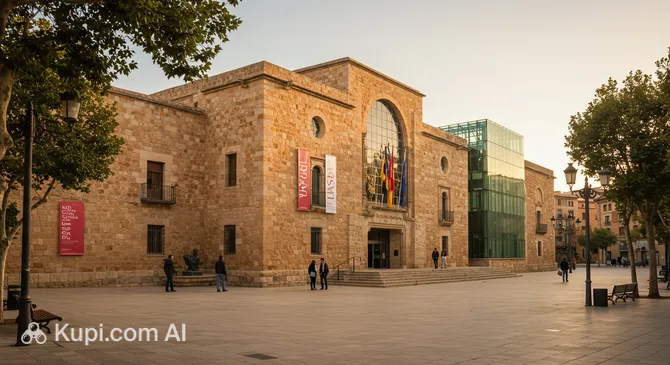
Lleida Museum
Lleida Museum. Иллюстрация. Источник: Kupi.com AI

Officially known as the Diocesan and Regional Museum of Lleida, it represents a harmonious blend of antiquity and modernity. The exhibition is housed in a stylish building on Rambla d'Aragó, which incorporates the restored chapel of a former 16th-century Carmelite convent. Under one roof, nearly a thousand works of art are gathered here, including rare Bronze Age artifacts and masterpieces of medieval sculpture.

The significance of the museum lies in its ability to show the continuity of cultures: from the Iberians and Romans to the Muslim period and the Christian Gothic flowering. It is not just an exhibition of objects, but a complete narrative of the identity of the Segrià region and the entire Lleida plain, embodied in stone, metal, and paint.

Contacts

For more information on special exhibitions or to book group tours, you can use the official contact channels. The museum actively stays in touch with visitors via its website and by phone.

How to contactContact
AddressCarrer del Sant Crist, 1, 25002 Lérida, Spain
Phone+34 973 28 30 75
Websitewww.museudelleida.cat

What to Do

The main adventure in the museum is its linear chronological route. Following the halls, you will journey through millennia: starting with the Palaeolithic and Neolithic eras, seeing mysterious rock paintings and everyday items from Bronze Age settlements, and then moving on to artifacts from the Ilergetian state and the Roman period. Particular attention should be paid to the unique Visigothic font from El Bovalar and the famous rock crystal chess pieces, dating back to the 9th century.

Fine art lovers will find a rich collection of sacred objects here. The halls feature magnificent Romanesque altar panels, stone sculptures from the famous 14th-century "School of Lleida," and luxurious Flemish tapestries. For a more complete experience, it is recommended to book a guided tour, which will help reveal the secrets of each exhibit and provide a better understanding of the context of their creation.

In addition to the permanent exhibition, the museum frequently hosts temporary themed exhibitions and educational programs. For those interested in anthropology or numismatics, there are separate sections with rare coins and scientific materials. The modern architecture of the building itself, with its unusual play of light, creates perfect conditions for thoughtful contemplation and photography at the crossroads of history and high-tech.

Getting There

Getting to this cultural hub is easy, as it is located in the heart of the historic district at Carrer del Sant Crist, 1, right next to the busy Rambla d'Aragó. If you are already exploring the city center, the easiest way is to reach the museum on foot, soaking in the atmosphere of the old quarters. For those traveling by private car, there are convenient parking areas nearby.

Travelers arriving from Barcelona or other major cities in the region can take high-speed trains or buses to the Lleida-Pirineus station. From the station, it is about a one-kilometer walk to the museum entrance, which takes about 15 minutes at a brisk pace or a few minutes by taxi. Public transport also runs throughout the city, with routes passing through the main tourist spots.

If you are planning to drive, follow the A-2 highway leading toward the city center. Since the museum is in a pedestrian-friendly area, it is best to check for a spot in one of the nearby paid parking lots beforehand so you can continue your journey to the art world on foot.

Ближайший город: Lleida

History & Facts

Although the modern museum building opened its doors only in 2007, the roots of its extensive collection reach deep into the past. The official birth of the collection is considered to be 1893, when Bishop Meseguer founded the Diocesan Museum. His primary goal was to rescue and preserve unique liturgical objects and works of sacred art from the parish churches of the diocese that were at risk of being lost.

The second major pillar of the museum's holdings is the archaeological collection of the Institute of Ilerdian Studies (Institut d'Estudis Ilerdencs), whose history dates back to the mid-19th century. Over time, these separate treasures were brought together to create one of Catalonia's most significant cultural venues. Today, the museum is the result of a joint effort by the government, the city council, and church authorities.

The architectural design of the building deserves special mention: the former convent of the Discalced Carmelites, built in 1595, is skillfully integrated into the modern minimalist design. The old convent chapel has become the central element and spiritual heart of the exhibition space, symbolizing the unbreakable link between different eras.

The exhibits tell the story of the region over thousands of years. It houses evidence from the Palaeolithic period (about 12,000–15,000 years ago), Bronze Age artifacts from the Genó settlement, and Iberian antiquities. Every era—from the Romans and Visigoths to the period of Muslim rule and the Christian Middle Ages—has left its unique mark here, shaping the distinctive identity of these lands.

Time Needed

To leisurely explore the main exhibition and delve into the details of the artifacts, most visitors need about 2 to 3 hours. This is the optimal amount of time to complete the entire chronological route—from prehistoric times to the Baroque era—without feeling rushed.

If you plan to join a guided tour or are a passionate fan of archaeology and sacred art, your visit might last for half a day. Given the richness of the numismatic collection and the wealth of small details in the Gothic altarpieces, time flies by here.

Working Hours

The museum welcomes visitors throughout the week, except for Mondays, when it is closed for maintenance. Please note the presence of a mid-day siesta—a traditional feature of the operating hours for many institutions in the region.

Opening Hours:

  • Monday: Closed
  • Tuesday – Saturday: 10:00 AM to 2:00 PM and 4:00 PM to 6:00 PM
  • Sunday: 10:00 AM to 2:00 PM

DayWorking hours
ПонедельникЗакрыто
Вторник10:00 – 14:00, 4:00 – 18:00
Среда10:00 – 14:00, 4:00 – 18:00
Четверг10:00 – 14:00, 4:00 – 18:00
Пятница10:00 – 14:00, 4:00 – 18:00
Суббота10:00 – 14:00, 4:00 – 18:00
Воскресенье10:00 – 14:00

Nearby

After immersing yourself in history within the museum walls, be sure to take some time to walk around the neighborhood. The area is steeped in antiquity, and just a few steps away, you will find many other iconic sites that help complete the overall picture of the region's past.

NameDistance
Church of Sant Llorenç0.1 km
Parador de Lleida0.2 km
New Cathedral of Lleida0.2 km
CaixaForum Lleida0.3 km
Síbaris0.5 km
Porco Dio0.5 km
La Seu Vella0.7 km

Reached the end of the page?

That means the route is fully explored