Support

Puerto de la Cruz

About

Puerto de la Cruz is a true gem of the northern coast of Tenerife, the largest of the Canary Islands belonging to Spain. The city is nestled on the shores of the Atlantic Ocean at the foot of picturesque volcanic mountains, surrounded by lush greenery and banana plantations. It is famous for its unique atmosphere, where historical quarters harmoniously blend with modern resort amenities.

The climate in Puerto de la Cruz is considered one of the mildest and most pleasant on the entire island: even in winter, temperatures rarely drop below +20°C, and a fresh sea breeze fills the air with the scents of salt and tropical flowers. The city's population is just over 30,000, allowing it to maintain the charm and tranquility of a small European town. Notably, Puerto de la Cruz became the first true resort in the Canary Islands back in the 19th century and continues to attract travelers from all over the world today.

Puerto de la Cruz. Illustration.
Source: Kupi.com AI

Among the city's main attractions are its old streets, perfect for leisurely strolls, and famous beaches with black volcanic sand, such as Playa Jardín. From here, magnificent views open up to the snow-capped peak of Mount Teide. Puerto de la Cruz also offers guests the chance to visit unique botanical gardens and theme parks, walk along the scenic promenade, and enjoy dinner with a view of the sunset over the ocean.

Puerto de la Cruz is the ideal place for those seeking a combination of relaxed holidays, an introduction to authentic Canarian culture, and natural beauty. This hospitable city is sure to give you many vivid impressions and a desire to return again.

You can find more interesting facts on the history of Puerto de la Cruz page.
Weather Overview

Puerto de la Cruz boasts a mild and pleasant climate throughout the year, making it an attractive destination for a holiday in any season. Average annual temperatures are comfortable, without sharp fluctuations.

The summer months, especially July and August, are the warmest, with an average temperature of around 21-22°C and minimal rainfall. Winter is also mild, with average temperatures in January and February staying around 15°C, while the number of rainy days increases slightly, although the total amount of precipitation remains low. Overall, expect a warm, mostly dry summer and a mild winter with little rainfall. Spring and autumn are characterized by comfortable temperatures, ideal for walking and exploring the surroundings.

To get a more detailed idea of the weather conditions by month, you can check the detailed information on the weather in Puerto de la Cruz page.

Average monthly temperature

Average monthly precipitation

Interesting Facts

Beyond its well-known landmarks, Puerto de la Cruz hides many curious details and historical moments that give it a special charm. Here are some interesting facts about this unique city:

Costa Martiánez Complex. Illustration.
Source: Kupi.com AI

Traveler photos:

  • Cradle of Canarian Tourism: Puerto de la Cruz was the first true resort in the Canary Islands. As early as the 19th century, European aristocracy began coming here to improve their health thanks to the mild climate and enjoy the exotic nature. The city was the main tourist center of Tenerife for a long time, and its old architecture, especially in the historical part, still preserves the spirit of that era with buildings from the 17th and 18th centuries.

  • A Royal Garden and Humboldt's Legacy: The local Botanical Garden of Puerto de la Cruz was founded by decree of the Spanish King Carlos III in 1788. It is not only one of the oldest such collections in Spain but also a place visited by the famous naturalist Alexander von Humboldt, who conducted observations here while preparing for his expedition to America.

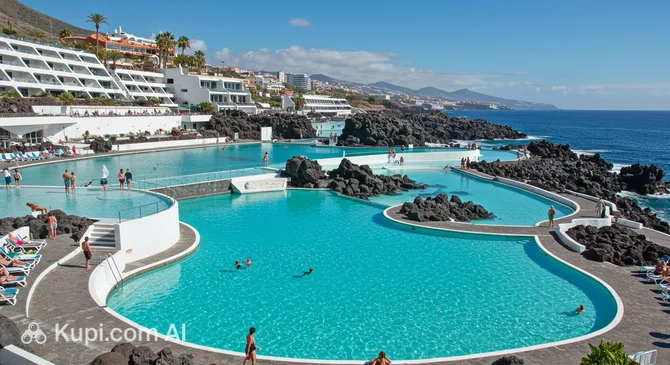
  • Water Landscapes as Art: The famous Costa Martiánez Complex is much more than just a system of seawater pools. Created by the prominent Canarian artist and architect César Manrique, it was conceived as a large-scale open-air art object. Here, artificial lakes, volcanic lava islands, and original sculptures merge harmoniously, turning the coastal area into a unique piece of landscape art.

How to Get There

The most convenient way to reach the charming town of Puerto de la Cruz on Tenerife is by air. Although the town itself does not have its own airport, Tenerife is served by two major airports from which you can easily reach your destination.

The closest to Puerto de la Cruz is Tenerife North Airport (TFN), also known as Los Rodeos. It is located in the municipality of San Cristóbal de la Laguna, near the city of Santa Cruz de Tenerife, approximately 21 km from Puerto de la Cruz. This airport primarily serves inter-island flights within the Canarian archipelago, as well as some national and international routes. A taxi or bus ride from here to Puerto de la Cruz takes about 45-55 minutes.

The other, larger option is Tenerife South Airport (TFS), or Reina Sofía Airport. It is located in the south of the island, in the municipality of Granadilla de Abona, about 41 km from Puerto de la Cruz. This is the main international airport of Tenerife, receiving most tourist flights from all over Europe. The journey from Tenerife South Airport to Puerto de la Cruz by car or bus usually takes 1 hour 15 minutes – 1 hour 30 minutes. Upon arrival at either airport, Puerto de la Cruz can be easily reached by public buses (guaguas), taxis, or a rental car.

For your convenience, here is a summary of the main airports through which you can reach Puerto de la Cruz:

AirportPassenger trafficDistance
Tenerife North Airport6.1 mln21 km
Tenerife South Airport12.3 mln41 km
La Gomera Airport113 00078 km
La Palma Airport1.4 mln121 km
Gran Canaria Airport14.0 mln126 km

Main Attractions

Puerto de la Cruz in Tenerife offers tourists many interesting places, from world-famous parks to picturesque beaches and historical monuments. This city combines natural beauty and cultural heritage, making it an attractive vacation destination.

Loro Parque. Illustration.
Source: Kupi.com AI

Traveler photos:

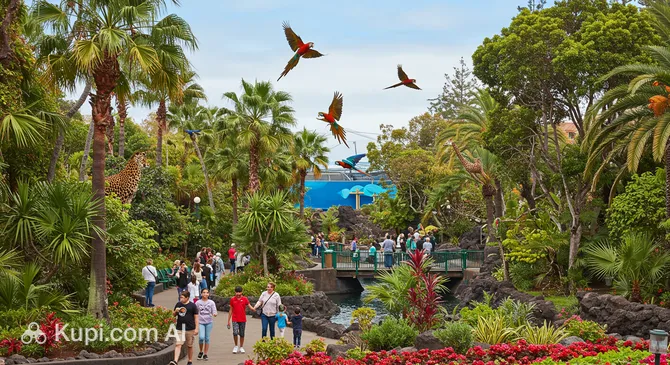
One of the city's main jewels is Loro Parque. This world-famous zoo and botanical garden amazes with its diversity of flora and fauna. Here you can see impressive shows with dolphins, orcas, and sea lions, as well as a huge collection of parrots, a penguinarium, a shark aquarium, and many other exotic animals. Loro Parque is a great place for a family holiday where everyone will find something interesting for themselves.

Costa Martiánez Complex. Illustration.
Source: Kupi.com AI

Traveler photos:

For lovers of water activities and unique design, the Costa Martiánez Complex is a must-visit. This complex of artificial seawater lakes was designed by the famous Canarian architect César Manrique. It represents a harmonious combination of volcanic stone, white architecture, and tropical vegetation. You can spend the whole day here swimming, sunbathing, and enjoying magnificent ocean views.

Botanical Gardens of Puerto de la Cruz. Illustration.
Source: Kupi.com AI

Traveler photos:

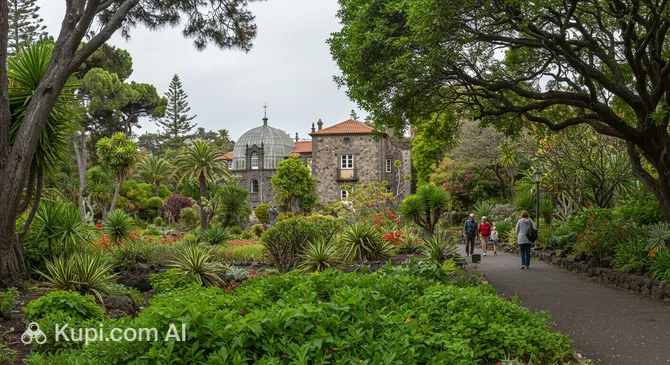
Nature enthusiasts should visit the Botanical Garden of Puerto de la Cruz, also known as the La Orotava Acclimatization Garden. Founded back in the 18th century, this garden has collected a unique variety of plants from all over the world. A walk through its shady alleys allows you to see rare species of trees and flowers brought from tropical and subtropical regions.

San Felipe Castle. Illustration.
Source: Kupi.com AI

Traveler photos:

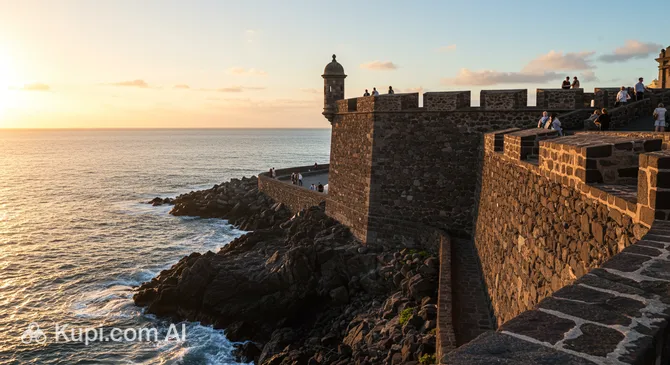
The San Felipe Castle will add a historical note to your trip. This small 17th-century fortress, located on the coast, once served to protect the city from pirate raids. Today, it is a cultural center hosting exhibitions and other events. From its walls, you can enjoy a beautiful view of the ocean and Playa Jardín.

Bollullo Beach. Illustration.
Source: Kupi.com AI

Traveler photos:

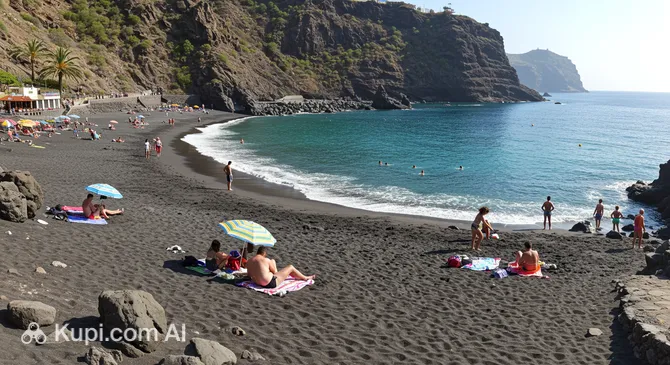
If you are looking for seclusion and natural beauty, head to Bollullo Beach. This picturesque beach with black volcanic sand is located away from the city's hustle and bustle and is surrounded by high cliffs. It is considered one of the most beautiful wild beaches in northern Tenerife and is perfect for those who want to enjoy the power of the ocean and tranquility.

Local Cuisine

The gastronomy of Puerto de la Cruz is a true feast for the senses, where Canarian culinary traditions are skillfully interwoven with Spanish, African, and Latin American notes. The local cuisine is based on the freshest gifts of the Atlantic, fragrant vegetables grown in volcanic soils, and juicy meats. A journey into the world of flavors in Puerto de la Cruz promises many pleasant discoveries.

Be sure to try the famous "papas arrugadas"—small potatoes boiled in their skins in very salty water, served with spicy mojo sauces: red (mojo rojo, which is spicier) and green (mojo verde, based on coriander). Among the fish dishes, vieja (parrotfish) stands out, which is excellently grilled here with herbs. Don't miss the chance to taste stewed goat (carne de cabra) or Canarian-style rabbit (conejo en salmorejo). Tapas, such as octopus, and fresh local cheeses are also popular. For dessert, try palm honey (miel de palma) with goat curd.

As for drinks, local wines are popular in Puerto de la Cruz, especially whites made from the Malvasia grape, as well as young red wine which perfectly complements meat dishes. Fans of spirits should try Canarian rum, specifically ron miel—honey rum. Among non-alcoholic options, fresh juices from tropical fruits are always available.

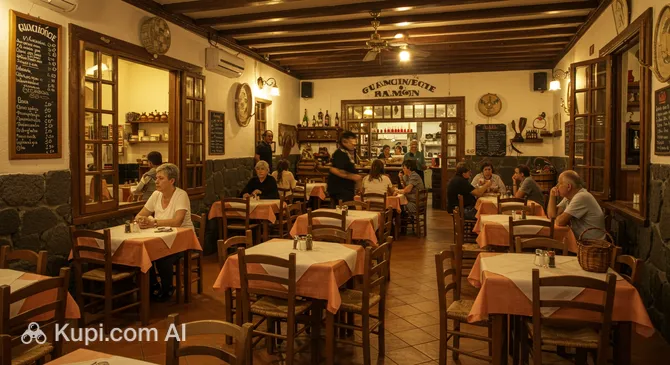
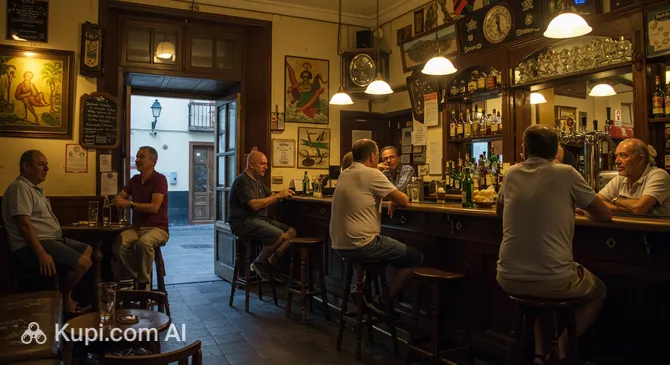
The dining culture in Puerto de la Cruz is diverse. Locals and tourists love dining in small family restaurants and traditional guachinches—establishments serving homemade food and self-produced wine. One such authentic spot is Guachinche Ramón. Restaurants with terraces offering beautiful views, such as Casa Pedro, are also popular. For fresh produce, exotic fruits, local cheeses, and sweets, head to the Mercado Municipal, where gastronomic festivals are also sometimes held, allowing you to immerse yourself in the atmosphere of a true Canarian feast.

Guachinche Ramón. Illustration.
Source: Kupi.com AI

Traveler photos:

The gastronomic scene of Puerto de la Cruz attracts with its authenticity, freshness of products, and the opportunity to try unique dishes that reflect the rich history and culture of the Canary Islands. This is a place where everyone will find something to their liking, from simple but incredibly tasty traditional snacks to refined restaurant dishes.

Travel Tips

Heading to the charming Puerto de la Cruz, the gem of the northern coast of Tenerife in Spain? To ensure your trip goes smoothly and leaves only the warmest memories, we have prepared some practical tips.

  1. Clothing and Essentials: The climate in Puerto de la Cruz is mild year-round, but evenings can be cool, especially in winter. Pack light, layered clothing, comfortable shoes for walking on cobbled streets and promenades, swimwear, sunglasses, a hat, and sunscreen with a high SPF. A light jacket or raincoat won't hurt, especially in the winter months. Don't forget an adapter for electrical appliances (Spain uses Type F sockets). When visiting churches, it's best to choose more modest clothing that covers the shoulders and knees.
  2. Transport: Getting around the city and its surroundings is easy using local buses, known here as "guaguas." They run on schedule and are an economical way to reach many interesting places. Taxis are also readily available and can be found at designated stands or called by phone. If you plan to actively explore the entire island of Tenerife, renting a car is a good option, but keep in mind that finding parking in the center of Puerto de la Cruz can be difficult.
  3. Finances: The official currency is the Euro (€). You can exchange money at banks or exchange offices (cambios), but bank rates are usually more favorable. Bank cards (Visa, Mastercard) are accepted in most hotels, restaurants, and shops. ATMs are widespread. An approximate daily budget (excluding accommodation) can range from 50 to 100 euros, depending on your plans. Tipping in restaurants is usually 5-10% of the bill for good service and is appreciated, but not strictly mandatory.
  4. Health and Safety: Pharmacies (Farmacias) are easy to find by the green cross sign; information about duty pharmacies open 24/7 or on weekends is usually available on the door of the nearest pharmacy or online. Be sure to get travel medical insurance before your trip. Puerto de la Cruz is generally a safe city. Nevertheless, stick to standard precautions: watch your personal belongings in crowded places, especially in markets and on public transport, and avoid walking in deserted, poorly lit areas at night.
  5. Communication: The official language is Spanish. In tourist areas, hotels, and restaurants, many staff members speak English, and sometimes German. However, knowing a few basic Spanish phrases like "Hola" (Hello), "Adiós" (Goodbye), "Por favor" (Please), "Gracias" (Thank you), and "¿Cuánto cuesta?" (How much does it cost?) will be very useful and warmly received by locals. A local SIM card for mobile internet and calls can be purchased at mobile operator stores. Wi-Fi is available in most hotels and many cafes and restaurants.
  6. Local Etiquette: Spaniards, and Canarians in particular, are usually friendly and sociable. A simple "Hola" when entering a shop or cafe is appropriate. Politeness and a smile are valued in conversation. The pace of life here is more relaxed, so don't show impatience if service seems slow. When photographing locals, it is always better to ask permission first.
  7. What to Avoid: Try not to be overly noisy or loud in public places, especially near churches. Don't expect small family shops and stalls to work without a break—many of them close for siesta (roughly from 2:00 PM to 5:00 PM). It is also not recommended to compare the Canary Islands with mainland Spain in a way that suggests superiority, as locals are proud of their unique culture.
  8. Additional Tip: Be sure to explore the unique coastline of Puerto de la Cruz with its volcanic beaches, such as Playa Jardín, and the famous Lago Martiánez pools designed by César Manrique. Stroll through the charming historical city center and visit the Botanical Garden (Jardín de Aclimatación de La Orotava) with its rich collection of plants from around the world.

We hope these tips help you better prepare for your trip and fully enjoy every moment of your stay in sunny and welcoming Puerto de la Cruz. Have a great journey!

Entertainment & Nightlife

When the sun sets over the Atlantic Ocean, Puerto de la Cruz transforms, offering its guests a variety of options for evening and night relaxation. The city is famous for its lively yet relaxed atmosphere, where everyone can find entertainment to their liking—from cozy bars with live music to energetic nightclubs.

The main nightlife of Puerto de la Cruz is concentrated in several key areas. The heart of evening entertainment is undoubtedly Plaza del Charco and its surrounding streets, such as Calle Quintana. Numerous bars, cafes, and restaurants with terraces are located here. The Avenida de Colón promenade is also popular, where you can enjoy an evening stroll and stop by one of the many bars overlooking the ocean. For those seeking a more club-like atmosphere, it is worth exploring the La Paz district or the central streets where venues with dance music can be found.

The atmosphere in the nightlife venues of Puerto de la Cruz is predominantly democratic and friendly. The crowd is mixed, with tourists from all over the world and local residents relaxing together. Most bars open in the afternoon and stay open until late at night (1:00-2:00 AM), while nightclubs usually start their work closer to midnight and close towards morning (4:00-6:00 AM). The dress code in most places is quite casual; smart casual is appropriate almost everywhere, although some trendier clubs may have higher requirements for appearance.

Vértigo Pool Club & Lounge. Illustration.
Source: Kupi.com AI

Traveler photos:

Among the popular places for dance lovers, Vértigo Pool Club & Lounge stands out, known for its pool parties and modern music. If you prefer a calmer setting and want to enjoy a cocktail in a stylish place, check out the Ambassade bar, which offers a wide selection of drinks and a cozy atmosphere. Another venue to spend a fun night is the Le Duque club, which offers various musical programs.

Ambasada. Illustration.
Source: Kupi.com AI

Traveler photos:

To fully enjoy the nightlife, it is best to arrive at bars after 9:00-10:00 PM and at clubs after midnight when they start to fill up. Average drink prices vary: beer costs around 2-4 euros, and cocktails start from 6-7 euros. Entry to most clubs may be paid, especially on weekends or for special events, ranging from 10 to 20 euros, often including one drink. You can get back to your hotel at night by taxi, which is easy to find in the city center or call by phone. Public transport runs less frequently at night.

Le Duque. Illustration.
Source: Kupi.com AI

Traveler photos:

Puerto de la Cruz is considered a fairly safe city for night walks, especially in the tourist zones around Plaza del Charco and the promenade. However, as in any other place, it's worth following basic precautions: keep an eye on your belongings and avoid poorly lit and deserted streets. You can call a taxi through the hotel reception, via special apps, or simply flag one down in busy areas.

During the day, Puerto de la Cruz also offers plenty of entertainment. Guests can visit the famous Loro Parque, walk through the scenic Botanical Garden, or relax on one of the beaches, such as Bollullo Beach. The city also has museums, theaters, and interesting architectural sites, such as the House of Balconies, to diversify your holiday.

Parks & Museums

Puerto de la Cruz is not only a popular resort but also a city with a rich cultural heritage and charming green corners. Here, everyone will find something for the soul: from lush botanical gardens to historical buildings holding centuries-old secrets.

For nature lovers and those who enjoy peaceful walks, Puerto de la Cruz offers several wonderful spots. One of the main ones is the Botanical Garden (Jardín de Aclimatación de La Orotava). Founded in the 18th century, it features an amazing collection of exotic plants from all over the world and is a true oasis of silence. No less interesting is the Sitio Litre Garden—the oldest private garden in Tenerife, famous for its orchids and a century-old dragon tree; it is said that Agatha Christie herself drew inspiration here. The Garden of the Marquis of Quinta Roja, also known as the "water garden," will enchant you with its fountains, cascades, and tranquil atmosphere.

Sitio Litre Garden. Illustration.
Source: Kupi.com AI

Traveler photos:

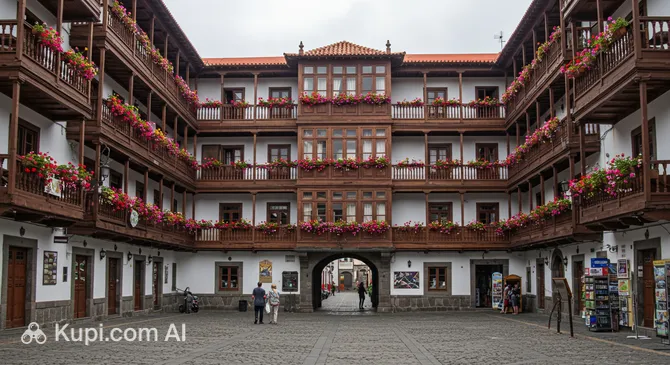
The city also takes pride in its historical and cultural sites that allow for a deeper understanding of its past. Although there are no large traditional museums in the city, some landmarks perform this role beautifully. For example, the House of Balconies (Casa de los Balcones) is a magnificent example of traditional 17th-century Canarian architecture that offers a peek into the past. Here you can see intricate carved wooden balconies and learn about local crafts. Another iconic spot is San Felipe Castle, a small 17th-century coastal fortress that once protected the city from pirates and today serves as a venue for exhibitions and cultural events.

Casa de los Balcones. Illustration.
Source: Kupi.com AI

Traveler photos:

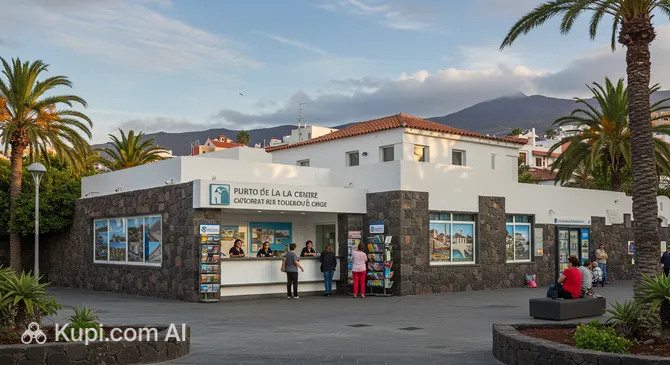
For those who want to learn more about the natural and cultural heritage of the region, it is worth visiting the Telesforo Bravo Visitor Center. It is dedicated to Mount Teide and the Orotava Valley, offering interesting exhibits on geology, flora, fauna, and the history of this unique area. An important architectural and spiritual center is the Church of Our Lady of the Rock of France, the city's main church built in the 17th century, featuring a beautiful altar and ancient icons. Also worth noting is the historical Constitution Square, the heart of the old town.

Telesforo Bravo Visitor Center. Illustration.
Source: Kupi.com AI

Traveler photos:

One cannot overlook the world-famous Loro Parque. It is not just a zoo but a massive complex with impressive shows featuring parrots, dolphins, orcas, and sea lions, as well as a large penguinarium and aquarium. The park is actively involved in species conservation programs and is one of Tenerife's main calling cards.

Church of Our Lady of Peña de Francia. Illustration.
Source: Kupi.com AI

Traveler photos:

To experience the authentic atmosphere of Puerto de la Cruz, take a stroll through the old fishing quarter of La Ranilla, which has now transformed into an open-air art space with bright murals and cozy restaurants. And for a romantic evening, there's nothing better than walking along the San Telmo promenade, admiring the sunset and the old chapel, located near the popular San Telmo Beach.

Getting Around

The primary and essentially only form of public transport in Puerto de la Cruz are the buses operated by the TITSA company. You can easily recognize them by their distinctive green color. These buses provide convenient connections both within the city and to other parts of Tenerife. There is no metro or tram system in the city, so the bus network plays a key role in the movement of residents and tourists.

To pay for your fare, you can purchase a single ticket directly from the driver; the cost for a trip within the city is usually around 1.50-2.50 euros. However, if you plan to use transport frequently, it is much more economical to get a "Tenmás" transport card (formerly known as "Bono Bus"). This rechargeable card allows you to save on every trip, sometimes up to 30-50%, especially on intercity routes. The "Tenmás" card can be purchased and topped up at bus stations, some tobacco shops (estancos), and newsagents. When entering the bus, the card must be tapped against the validator. On intercity routes, you should also tap the card when exiting so that the system correctly calculates the fare based on the distance; for city buses, one tap upon entry is sufficient.

Buses in Puerto de la Cruz run according to a schedule that can be found at stops, on the official TITSA website, and in the official TITSA mobile app, which is convenient for tracking routes and arrival times. Service usually begins early in the morning, around 6:00-7:00 AM, and continues until late in the evening, approximately until 11:00 PM - 12:00 AM; however, the frequency of trips and end times may vary depending on the specific route and day of the week. The central bus station (Estación de Guaguas) in Puerto de la Cruz serves as the main transport hub from which most routes depart.

In addition to buses, taxi services are widespread in Puerto de la Cruz. Taxi ranks are easy to find in tourist areas, near hotels, and at the bus station. Taxi prices are regulated, but the trip will be significantly more expensive than the bus. For those who prefer more freedom to move around the island, car rentals are popular; rental points are numerous both at the airports and in the city itself. Car-sharing services in Puerto de la Cruz are not very developed, so car rental remains the main option for independent trips. Bicycle rentals are also available, but one should consider the hilly terrain of some city areas and the surrounding countryside, which may require a certain level of physical fitness.

Accommodation

In Puerto de la Cruz, travelers will find a wide range of accommodation options to suit every taste and budget. The city offers everything from budget hostels and cozy guesthouses to comfortable mid-range hotels, apart-hotels, and luxury resort complexes. Renting apartments and villas is also popular, which is particularly convenient for family holidays or long-term stays.

Many tourists prefer to stay in areas close to the promenade, beaches like San Telmo Beach, or the historical city center, where main attractions, restaurants, and shops are concentrated. The La Paz district is also popular for its tranquility, beautiful views, and proximity to the Botanical Garden.

San Felipe Hotel. Illustration.
Source: Kupi.com AI

Traveler photos:

Notable hotels in the city include, for example, the Hotel San Felipe and the Hotel Valle Orotava, which offer quality service and convenient locations. The choice of a specific place depends on your preferences—whether you are looking for seclusion or want to be in the center of the action.

When planning a trip, especially during peak tourist season (summer months and Christmas holidays), it is recommended to book accommodation in advance. Prices range from budget options to luxury offers. You can book a hotel or apartment through popular online platforms or directly on hotel websites, which sometimes allows for better deals.

Nearby Cities

For those who want to explore the surrounding area, Puerto de la Cruz serves as an excellent starting point for day trips to several interesting nearby locations. Here are a few examples:

A visit to La Laguna (full name San Cristóbal de la Laguna) is a must; it is a charming city listed as a UNESCO World Heritage site. Its historical center, with straight streets and bright colonial-era houses, is perfectly preserved and invites leisurely strolls, offering a glimpse into the atmosphere of past centuries. It is also easy to reach Santa Cruz de Tenerife, the lively capital of the island. Here, modern architectural symbols await you, such as the impressive Auditorio de Tenerife, along with great shopping opportunities and beautiful parks and squares for relaxation.

Below is information about some nearby towns that may also be of interest for short trips from Puerto de la Cruz:

CityPopulationDistance
La Orotava42 4343 km
Santa Ursula15 1145 km
La Victoria de Acentejo9 1708 km
La Matanza de Acentejo9 1149 km
El Sauzal9 00513 km

These nearby destinations allow for a deeper acquaintance with the diverse culture, history, and landscapes of the island of Tenerife, perfectly complementing the experience of staying in Puerto de la Cruz.

Shopping & Souvenirs

Puerto de la Cruz offers a variety of shopping opportunities, combining modern shopping malls with colorful local shops and markets. The city is not necessarily famous for exclusive goods, but you can find high-quality clothing, shoes, cosmetics, as well as typical Canarian souvenirs and delicacies. Shopping here is a pleasant addition to your holiday, allowing you to bring a piece of the Canary Islands home.

The main shopping arteries of the city are the pedestrian Calle Quintana and the adjacent streets in the old town, especially around Plaza del Charco. Numerous clothing, shoe, jewelry, perfume, and souvenir shops are concentrated here. Walking through these busy streets is a pleasure in itself, allowing you to soak in the local atmosphere.

La Villa Shopping Center. Illustration.
Source: Kupi.com AI

Traveler photos:

For those who prefer larger-scale shopping, there are several shopping centers in Puerto de la Cruz and its surroundings. The most well-known are La Villa Shopping Center (Centro Comercial La Villa), located just outside the city towards La Orotava, and El Trompo Shopping Center (Centro Comercial El Trompo). They feature both Spanish and international brands of clothing, electronics, and home goods, as well as supermarkets, cinemas, and food courts.

The Municipal Market (Mercado Municipal) of Puerto de la Cruz is definitely worth a visit. This is an excellent place to buy fresh fruit, vegetables, local cheeses, jamón, olives, spices, as well as fresh fish and seafood. You can also find small stalls with flowers and souvenirs here. The market allows you to experience the true taste and aroma of Tenerife.

As souvenirs from Puerto de la Cruz, tourists often bring back items made of volcanic stone, aloe vera-based cosmetics grown on the islands, the famous Canarian mojo sauces (mojo rojo and mojo verde), local rum (especially ron miel—honey rum), and cigars. Leather goods, ceramics, and traditional Canarian embroidery (calados) are also popular.

Most shops in Puerto de la Cruz operate from Monday to Saturday, usually from 10:00 AM to 1:30-2:00 PM and then after the siesta from 5:00 PM to 8:00-8:30 PM. Large shopping centers and stores in tourist zones may work without a break and even on Sundays, especially during the high season. Bank cards (Visa, Mastercard) are accepted almost everywhere, but cash is also useful, especially in markets and small shops.

Tourists from non-European Union countries can use the Tax-Free system for purchases over a certain amount in participating shops (look for the corresponding logo). The Canary Islands have a special tax status (IGIC instead of IVA), so tax refund conditions may differ slightly from mainland Spain, but the opportunity to save on purchases still exists. Don't forget to ask for a special tax refund receipt in the store and present it at the airport upon departure.

Reached the end of the page?

That means the route is fully explored