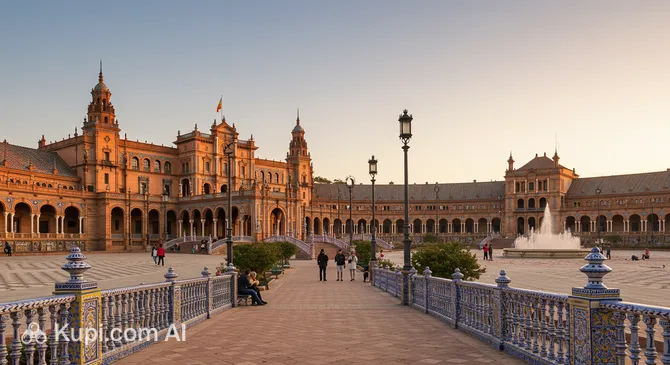
Plaza de América (Plaza de América) is a magnificent architectural complex nestled in the famous Maria Luisa Park in Seville, Spain. This square was specifically designed and built by the talented architect Aníbal González for the Ibero-American Exposition of 1929, becoming one of its main ornaments and a striking example of early 20th-century regional architecture.
Traveler photos:
The square is an exquisite ensemble framed on three sides by impressive buildings, also created by Aníbal González for the exhibition. Each is designed in its own unique architectural style: the Museum of Folk Arts and Customs (Museo de Artes y Costumbres Populares) enchants with its Neo-Mudejar style, the Archaeological Museum (Museo Arqueológico) presents a majestic Neo-Renaissance appearance, and the Royal Pavilion (Pabellón Real) impresses with its Gothic refinement. This variety of styles makes the square particularly interesting for architecture enthusiasts.
Thanks to its harmonious beauty and unique combination of architectural masterpieces, Plaza de América is rightfully considered one of the most picturesque and photographed spots in Seville. It is not just a square, but a true open-air work of art that attracts many tourists and is an important landmark of the city. Here, you can take a leisurely stroll, enjoy the peace, admire the fountains, the pigeon lofts, and the splendor of Andalusian architecture, while feeling the spirit of history and culture.