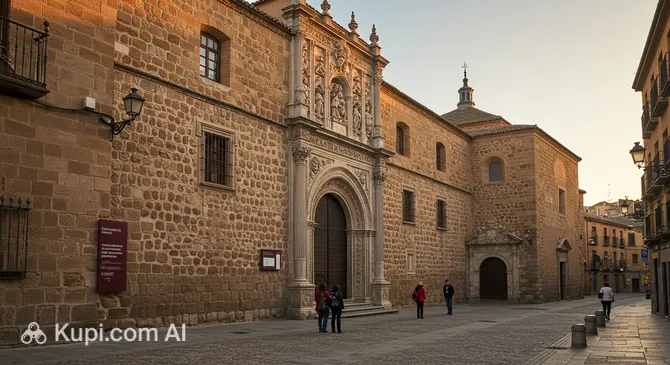
Nestled in the heart of ancient Toledo, you will find the El Greco Museum — a unique cultural space dedicated to the life and work of the most mystical painter of the Spanish Golden Age. Located in the picturesque Jewish quarter of Judería, the museum invites guests to journey back in time and touch the legacy of a master whose name is inextricably linked with this city.
El Greco Museum. Illustration.
Source: Kupi.com AI
Traveler photos:
The museum complex is a harmonious blend of history and architecture: it includes a carefully reconstructed 16th-century residence with a cozy patio, a modern early 20th-century extension, and a charming garden. Although this building was not the artist's actual home, the recreated interiors with authentic furniture and everyday objects allow visitors to experience the atmosphere of the era in which El Greco lived.
This museum is considered one of the most important cultural sites to visit when traveling to Spain. Here, the art of the great Cretan doesn't just hang in frames on walls but lives within the historical context of the city that became his second home.
Contacts
For planning your visit and more details, you can use the museum's official contact information.
An impressive panorama of El Greco’s work, particularly from his late period (1600–1614), unfolds within the museum's halls. The crown jewel of the collection is the famous 'View and Plan of Toledo' (Vista y plano de Toledo) — a painting rightfully called the city's artistic passport. You can also see masterpieces such as 'The Redeemer', 'Saint Bernardino', and the emotionally powerful 'The Tears of Saint Peter'.
In addition to the master's own works, the exhibition features paintings by his prominent followers, including his chief pupil, Luis Tristán. This offers a rare opportunity to trace how El Greco's style was transformed by other 17th-century artists.
Be sure to pay attention to the interior details: the museum houses a magnificent collection of antique furniture and the famous ceramics from Talavera de la Reina. A stroll through the halls becomes an exploration of the era's daily life, while the quiet courtyard and garden provide the perfect setting to reflect on what you've seen amidst cool greenery.
Getting There
Finding your way to the museum is easy, as it is located in the heart of the historic Judería (Jewish quarter) at Paseo del Tránsito, s/n. Most tourists choose to travel to Toledo from Madrid, which takes just over an hour by train or bus.
Once in the city, the best way to get around is on foot. Toledo's old center is a true labyrinth, and the walk from the central Zocodover square to the museum takes about 15–20 minutes. The route will take you through picturesque streets steeped in the spirit of the Middle Ages.
If you prefer comfort, you can take a local taxi or city buses that run to the edges of the pedestrian zone. Keep in mind that the museum is in a restricted traffic area, so you will need to walk the final part of the journey over cobblestone streets anyway.
Nearest city: Toledo
History & Facts
The museum owes its existence to the passion and initiative of the Marquis of Vega-Inclán. Between 1910 and 1911, he purchased dilapidated buildings in the Jewish quarter and restored them to create a space celebrating the genius of the great painter. Thanks to his efforts, El Greco’s figure regained international significance in the early 20th century.
Notably, this is the only museum in the country whose exhibition is entirely centered around the artist's personality and his profound influence on Toledo's culture. It is no coincidence that the museum is located in the Jewish quarter: this district was the epicenter of the city's intellectual and spiritual life during the Golden Age, when the master himself lived and worked here.
While the house itself is a reconstruction, it masterfully conveys the domestic aesthetics of the 16th and 17th centuries. The use of original architectural elements from that time has created an atmosphere so authentic that visitors often feel like guests in the actual home of a Spanish hidalgo from the artist's era.
Time Needed
A thoughtful tour of the main collection and a stroll through the courtyard and garden usually takes about 1.5 to 2 hours. This is enough time to examine the details of the main masterpieces without rushing and to enjoy the tranquility of the museum garden.
If you have a deep interest in Spanish painting or plan to study the temporary exhibitions in detail, it is worth setting aside more time — up to half a day. The museum is not overly large, but its atmosphere invites contemplation and discourages haste.
Working Hours
The museum is open to visitors throughout the week, except on Mondays. Please take into account the reduced hours on Sundays when planning your itinerary.
Tuesday – Saturday: 9:30 AM to 7:30 PM
Sunday: 10:00 AM to 3:00 PM
Monday: Closed
Day
Working hours
Monday
Closed
Tuesday
9:30 – 19:30
Wednesday
9:30 – 19:30
Thursday
9:30 – 19:30
Friday
9:30 – 19:30
Saturday
9:30 – 19:30
Sunday
10:00 – 15:00
Nearby
After immersing yourself in the world of fine art, it is worth taking time for the other treasures of the ancient capital. A walk around the neighborhood will help you better understand the multifaceted history of a city where the traditions of different cultures have intertwined for centuries.