Support

Real Colegio Doncellas Nobles

About

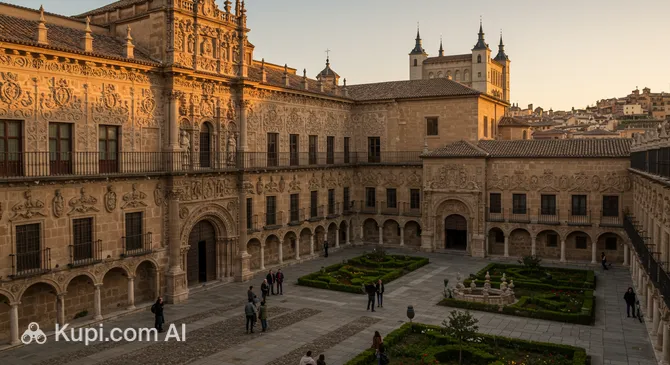
The Royal College of Noble Maidens (Real Colegio de Doncellas Nobles) is a majestic architectural and historical monument located in the ancient city of Toledo. Founded in the mid-16th century, this educational institution embodied the progressive ideas of Spain, offering girls from all over Europe not only shelter but also an education that was brilliant for its time, under the personal patronage of monarchs.
[IMAGE attraction id=261963]

The building impresses with its scale and the austere beauty of its Neo-Mudéjar style. Its red brick walls, built on a powerful granite base, hide quiet courtyards and a magnificent church within. Today, the college is recognized as a national heritage site and serves simultaneously as a university residence and a unique museum, which has only opened its secrets to tourists in recent years.

The interior decoration of the complex, where Baroque and Classicism harmoniously intertwine, is of particular value. The college is famous for its role in shaping the social structure of society back then: it prepared future mothers and educated women, providing them with a dowry for a dignified future. This place is steeped in the atmosphere of old Europe and is a must-see for those who want to see the "other" Toledo, hidden behind the facades of ordinary streets.

Contacts

To clarify visiting details or organize group tours, you can use the official contact details of the institution.

How to contactContact
AddressPl. Cardenal Siliceo, 1, 45002 Toledo, Spain
Phone+34 646 51 05 14
Websitetoledomonumental.com

What to Do

The main treasure to see inside is the inner patio. Designed by the famous Ventura Rodríguez, this courtyard with granite columns and elegant arched galleries is a perfect example of harmony and tranquility. Note the unusual metal structures that were added later, which give the space a special character.

Be sure to visit the church-chapel. Here, the magnificent main altar by Alejandro Semino, decorated with an image of the Virgin and Child, greets the eye. In the center of the chapel is a true masterpiece of sculpture—the marble tomb of Cardinal Siliceo. Executed with incredible detail, it is considered one of the best examples of Neo-Plateresque in the region and is striking for its delicate stone carvings.

While walking through the floors, pay attention to the schoolgirls' choir, separated by wrought-iron grilles, and the numerous coats of arms of the founder decorating the interiors. Architecture enthusiasts will find it interesting to study the Neo-Mudéjar facades of the building: symmetrical windows, decorative brickwork, and bright ceramic tile inserts that create the unique look of this historic complex.

Getting There

The Royal College is located in the historic center of the city at Pl. Cardenal Siliceo, 1. Finding it is easy, as it is within walking distance of the main tourist routes and the cathedral. If you are walking around the center, look for Plaza Zocodover—it's a 5–10 minute walk from there to the college.

For travelers from Madrid, it is most convenient to use the AVE high-speed train, which will take you to Toledo station in just 30 minutes. From the station, you can reach the old town by taxi or buses No. 5 and L1–L3 (the trip takes about 10–15 minutes). If you decide to walk from the station, be prepared for a 25-minute uphill climb.

For those traveling by car, it is important to remember that traffic in the center of Toledo is heavily restricted. It is recommended to leave your car at one of the park-and-ride lots at the foot of the hill, such as Alcázar or Santa Teresa, and use the city's escalators to ascend to the main attractions.

Ближайший город: Toledo

History & Facts

The history of this unique institution began in 1551. It was founded by the Archbishop of Toledo, Cardinal Juan Martínez Siliceo, who, with the support of King Philip II, realized a revolutionary idea for that time—to create a school for girls not only from noble European families but also from modest backgrounds, providing them with a decent education and a dowry.

The architectural appearance of the complex took shape over centuries. Originally, the building was purchased from the Prince of Melito, and in the 18th century, it was significantly updated under the direction of the famous architect Ventura Rodríguez. Despite the confiscation of property in the 19th century, the college survived and even expanded in the early 20th century, when neighboring buildings were added, connected by elegant passages and metal structures.

For almost five centuries, until 1988, the educational institution lived according to its original statutes. In 1990, it was transformed into a university residence, maintaining its status as a royal site under the management of Patrimonio Nacional. Only in recent years (since 2015–2016) have the doors of this previously closed world opened to the general public.

Special attention should be paid to the personality of the founder: Cardinal Siliceo bequeathed that he be buried here. His magnificent marble tomb, created in 1890 by Ricardo Bellver in the Neo-Plateresque style, is considered one of the most impressive sculptural monuments in the city, symbolizing the connection between eras and devotion to the ideals of enlightenment.

Time Needed

To fully appreciate the architecture and historical significance of this place, an average tourist will need about 1 to 1.5 hours. This time is quite sufficient to see the courtyard, visit the chapel, and study the details of the cardinal's tomb.

If you are passionate about art history or plan to carefully study every detail of the Neo-Mudéjar facades and ceramic decor, your visit time may increase slightly. Since the site is part of the archdiocese's tourist routes, visits often take place at a calm, leisurely pace, allowing you to avoid the rush.

Working Hours

The Royal College of Noble Maidens is open to visitors daily, making it a convenient stop on any tourist route through the city. The working hours remain unchanged throughout the week:

Monday — Sunday: from 10:00 to 18:45. Please note that visits may take the form of guided tours organized by the Archdiocese of Toledo, so it is recommended to arrive a bit before closing time.

10:00 – 18:45

Nearby

Toledo is an open-air museum-city, and exploring the surroundings of the Royal College will allow you to dive deeper into the atmosphere of the "city of three cultures." Just a few minutes' walk from the college building are iconic architectural monuments representing different eras and traditions.

NameDistance
Medina Mudéjar Toledo0.1 km
Taberna Embrujo0.2 km
Monastery of San Juan de los Reyes0.2 km
Synagogue of Santa María la Blanca0.3 km
Puerta del Cambrón0.3 km
La Mafia Sits at the Table0.3 km
Church of Santo Tomé0.3 km

Reached the end of the page?

That means the route is fully explored