Support

Restos Arqueológico Baños Árabes de Tenerías

About

Imagine a place where time seems to have stood still, preserving echoes of the distant 11th century. The Arabic Baths of Tenerías is a unique archaeological site located in the ancient city of Toledo. These are not just ancient ruins, but a living testament to the rich Islamic past that Spain takes such pride in.
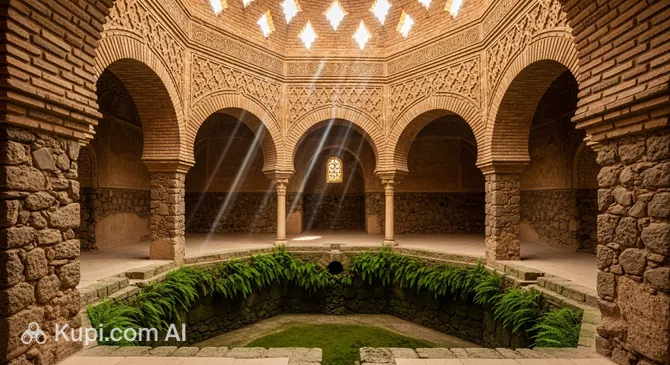
Arab Baths of Tenerías
Arab Baths of Tenerías. Иллюстрация. Источник: Kupi.com AI

The Baños Árabes de Tenerías complex consists of the remains of what were once important public baths, which were later, in the Middle Ages, converted into thriving leather workshops—tanneries (tenerías). Located in the historic tanners' quarter on the banks of the Tagus River, this site is considered one of the most complete and well-preserved examples of Arabic architecture of its kind in the country.

Although the monument was only studied in detail and opened to the general public in 2004, it has already been included in the Red List of Heritage due to its fragility. Visiting the baths offers a rare glimpse into the daily life of a medieval city and the skill of ancient engineers who masterfully combined comfort with industrial practicality.

Contacts

To ensure your visit goes as smoothly as possible, we recommend checking the site's contact information in advance. The Arabic Baths of Tenerías are within walking distance of many key points in the city and the waterfront.

How to contactContact
AddressC. Carreras San Sebastián, 9, 45002 Toledo, Испания
Phone+34 925 25 30 80
Websitewww.consorciotoledo.com

What to Do

As you stroll through the archaeological complex, you can see the structure of classic Islamic baths for yourself. The foundations and walls of various halls remain, each of which served a specific function in the complex ritual of washing. For the convenience of tourists, a viewing platform with information plaques has been set up on the eastern side of the excavation, featuring plans and reconstructions of the building facades.

Of particular interest is the part of the site connected to the craft of tanning. Here, you will discover 54 stone vats and 18 ceramic jars, as well as the remains of kilns and canal systems. These elements clearly demonstrate the complex process of tanning and dyeing leather for which Toledo was famous in the Middle Ages. Exploring these details allows you to literally touch the history of engineering and the daily labor of past masters.

Getting There

The landmark is nestled in the lower part of the historic Curtidores quarter at Calle Carreras de San Sebastián, 9. Finding the baths is easy: they are located just 50 meters from the Church of San Sebastián, which serves as an excellent landmark for travelers.

If you are in the city center, it is best to walk down toward the river, enjoying the winding streets of old Toledo and following the signs. If you prefer comfort or want to save your energy, you can take a taxi or a city bus to the southern edge of the old city. Its proximity to the banks of the Tagus River makes it a perfect spot for a stroll along the scenic waterfront.

Ближайший город: Toledo

History & Facts

The history of this site began during the height of Islamic rule in Toledo at the beginning of the 11th century. The builders chose this spot on the southern slope of the hill for a reason: a natural water source flowed here, which was essential for the operation of the bath complex. Interestingly, these baths were intended not only for hygiene but also for ritual ablution before entering the Al-Dabbagin Mosque (now known as the Church of San Sebastián).

Over time, as the original function of the complex became less relevant, the building was not abandoned. Until the 18th century, it housed leather workshops, which gave the entire district its name — al-Dabbagin (Arabic for "tanners"). This continuity of use helped preserve many architectural elements to the present day, albeit in a modified form.

The architecture of the complex showcases a construction technique characteristic of the region, known as Toledo aparejo. It consists of a recognizable alternation of rows of rough stonework and brick bonding. This style is a hallmark of Toledo's medieval architecture and can also be seen in the construction of nearby historical buildings, such as the Baño de San Sebastián de Yuso.

Time Needed

You won't need much time for a full introduction to this archaeological site. Visitors usually spend about 30–45 minutes here, which allows enough time to study the preserved structures at leisure, read the information stands, and take commemorative photos.

Thanks to its compactness, a visit here fits easily into a busy sightseeing schedule. It’s a great opportunity to take a short break while walking through the southern part of Toledo and immerse yourself in the atmosphere of medieval production and daily life.

Working Hours

Currently, the site's opening hours may be limited. According to available information, the site is often open to the public on Wednesdays from 3:00 PM, as well as on other days of the week by special schedule.

Since opening hours can change depending on the season or ongoing restoration programs, we strongly recommend checking the latest information on the official website of the Toledo Consortium immediately before your visit.

Круглосуточно

Nearby

The location of the baths on the edge of the historic core makes it easy to continue exploring the city's multifaceted culture. Wandering through the surroundings of the tanners' quarter will enrich your experience, allowing you to see the transition from medieval industrial zones to grand religious and defensive structures.

NameDistance
Synagogue of El Tránsito0.4 km
La Mafia Sits at the Table0.4 km
El Greco Museum0.4 km
Maruxiña Lounge0.4 km
Church of Santo Tomé0.5 km
Manchego Cheese Museum Toledo0.5 km
Toledo Cathedral0.5 km

Reached the end of the page?

That means the route is fully explored