Support

Spanish Steps

About

The Spanish Steps are one of the most famous and picturesque landmarks in Rome, a jewel of Baroque architecture. This monumental construction of 138 travertine steps connects Piazza di Spagna at its base with the top of the Pincian Hill, where the majestic Trinità dei Monti church stands. Built in the 18th century, it continues to impress with its scale and elegance today, serving as a must-see on every traveler's itinerary through Italy.

Despite its world-famous name, the official name of the staircase is "The Staircase to the Church of Trinità dei Monti." The popular name took hold thanks to the Spanish Embassy, which was historically located in the square at its base. At the foot of the steps lies another iconic landmark—the Barcaccia fountain (Barcaccia), which translates to "Ugly Boat," created in the 17th century. Its unusual shape, resembling a half-sunken vessel, attracts just as much attention as the steps themselves.
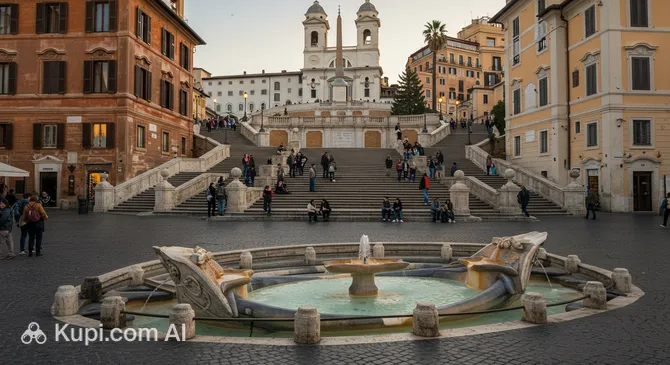
Spanish Steps. Illustration.
Source: Kupi.com AI

Traveler photos:

The architectural ensemble is designed in the Italian Baroque style and consists of a wide central section and two narrower side flights. After climbing to the top, you'll find yourself on an observation deck with a magnificent view of the city. The staircase is decorated with heraldic symbols, including crowned eagles—signs of papal authority. Today, it is not just a historical monument but a popular place for meetings, relaxation, and inspiration for tourists and locals from all over the world.

Contacts

Since the Spanish Steps are a public outdoor architectural monument, there are no specific contact details such as a phone number or email. All necessary visitor information, including the potential schedule for the Trinità dei Monti church at the top, is best found on the official tourist portal of Rome or at city information centers for travelers.

Reaching the landmark is very simple: just take the metro to Spagna station (Line A), the exit of which is located right at the base of the steps in Piazza di Spagna.

How to contactContact
AddressPiazza di Spagna, 00187 Roma RM, Italy
Phone number+39 06 0608

What to Do

A visit to the Spanish Steps offers a kaleidoscope of experiences available to every guest in Rome. The main activity here is a leisurely climb up the 138 travertine steps leading from Piazza di Spagna to the Trinità dei Monti church. After completing this path, you will be rewarded with one of the most breathtaking panoramic views of the Eternal City. The observation deck at the top offers a magnificent view of the bustling square below, the roofs of ancient buildings, and the cathedral domes on the horizon. A particularly enchanting atmosphere prevails here at sunset, when the orange rays of the sun paint the city in warm tones.

At the foot of the steps, another gem awaits—the famous "Barcaccia" fountain, meaning "Ugly Boat." This Baroque fountain in the form of a half-sunken ship, designed by Pietro Bernini, is a popular spot for resting and taking souvenir photos. Piazza di Spagna itself is one of the city's central and liveliest spots, where you can always sit down to people-watch and feel the rhythm of Roman life. In spring, the steps are transformed when they are decorated with blooming azaleas, creating a truly fantastic sight.

The Spanish Steps also serve as a wonderful starting point for exploring one of Rome's most elegant neighborhoods. Directly from the square begins the famous Via dei Condotti—the heart of high fashion. A walk along it will allow you to plunge into the world of luxury, as it is home to boutiques of the world's most famous brands such as Bulgari, Gucci, Prada, and Valentino. It's the perfect place for shopping or simply admiring the exquisite window displays and feeling like part of the glamorous life of the Italian capital.

Getting There

Located in the heart of Rome, the Spanish Steps are easily accessible from any part of the city. The fastest and most convenient way to reach this famous landmark is by metro. You'll need Line A (the red line) and should get off at "Spagna" station. The metro exit is situated right at the foot of the steps on Piazza di Spagna, putting you exactly where you need to be.

If you prefer surface transport or want to admire the city views along the way, you can take one of many city buses. Several routes pass through central Rome and have stops within walking distance of the square. Additionally, thanks to its central location, the Spanish Steps are a pleasant walk away from other landmarks. For example, a walk from iconic spots like the Trevi Fountain or Piazza Navona takes no more than 10–15 minutes, allowing you to soak in the atmosphere of the Eternal City.

For maximum comfort, especially if traveling with children or coming from a more distant neighborhood, you can always use a taxi. Just tell the driver Piazza di Spagna, and they will take you to one of Italy's most recognizable symbols. Whichever method you choose, your journey to the Spanish Steps will be quick and easy.

Nearest city: Rome

History & Facts

The history of the Spanish Steps is a fascinating narrative of diplomacy, art, and cultural rivalry. The idea of connecting Piazza di Spagna with the Trinità dei Monti church at the top of the hill originated long before its construction, but the project was delayed for many years due to political disagreements between France and Spain. The initiative for this architectural masterpiece came from the French Cardinal Pierre Guérin de Tencin, and the grand opening took place in 1725 in the presence of Pope Benedict XIII. Thus, the staircase that became a symbol of Rome was actually the fruit of French initiative and papal blessing.

The staircase owes its world-famous name not to its creators, but to its location. At its foot, in Piazza di Spagna, the Spanish Embassy was historically located, which led Romans to call it "Spanish." This colloquial name stuck over time and became official, although the full name of the structure is "The Staircase to the Church of Trinità dei Monti." The project was finalized in 1717 by talented architects Francesco de Sanctis and Alessandro Specchi. The construction of this grand 138-step structure took two years.

Upon closer inspection, one can notice interesting details on the steps reflecting its complex history. It was built from travertine—a limestone tufa widely used in Ancient Roman architecture that became a hallmark of many buildings in Italy. The decorative design blends symbols of two cultures and powers: fleur-de-lis referring to the French monarchy and images of a crowned eagle—signs of papal power. This mix of symbols serves as a reminder of how the political ambitions of different countries eventually gave the world one of its most harmonious and beautiful architectural monuments.

Time Needed

When planning a visit to the Spanish Steps, it's best to allow for 1–2 hours. This is generally enough time for a full introduction to the landmark. You'll have time to leisurely climb all 138 steps, enjoy the magnificent views of Rome from the observation deck at the top, and take some memorable photos. This timeframe also easily includes a look at the Trinità dei Monti church crowning the steps and the famous "Barcaccia" fountain ("Ugly Boat") at its base.

If you want to do more than just see the famous steps and instead dive deeper into the atmosphere of this elegant district, it's better to set aside about 3–4 hours. This allows enough time to explore Piazza di Spagna in detail, sit in one of the cozy nearby cafes, and stroll through the adjacent streets, including the famous Via Condotti—the center of high fashion in Italy. This option is perfect for those who prefer leisurely walks and want to feel the rhythm of the Eternal City.

Working Hours

As a public outdoor space in Rome, the Spanish Steps are available for visiting 24/7, year-round. You don't need tickets or reservations to walk along its famous steps. This makes it one of the most accessible landmarks in the city, where you can come at any convenient time—early morning to find it almost deserted, or late at night to enjoy the romantic lighting.

However, it's worth noting that the Trinità dei Monti church, which crowns the steps, has its own operating schedule. It is generally open to visitors during the daytime, but hours can vary, so it's recommended to check current information on Rome's official tourist portal or the church's own website before your visit. The same applies to the observation deck, which offers magnificent views of the capital of Italy.

9:00 – 19:00

Nearby

The Spanish Steps are not just a landmark but a magnificent starting point for exploring the historical heart of Rome. The charm of the Eternal City reveals itself fully when you begin to wander through its narrow streets, as many of Italy's greatest treasures are just a few minutes' walk from each other. A walk around the neighborhood will allow you to immerse yourself deeper in a unique atmosphere where new discoveries await around every corner.

From grand squares to world-famous fountains and ancient temples, the area around the Spanish Steps is a true open-air museum. To help you plan your route, we've compiled a list of iconic spots located in the immediate vicinity.

NameDistance
Trevi Fountain0.5 km
Pane e Salame0.6 km
Piazza del Popolo0.7 km
Pantheon0.9 km
Piazza Navona1.1 km
Piazza Venezia1.1 km
Scholars Lounge1.1 km

Have you reached the end of the page?

So the route has been studied inside and out