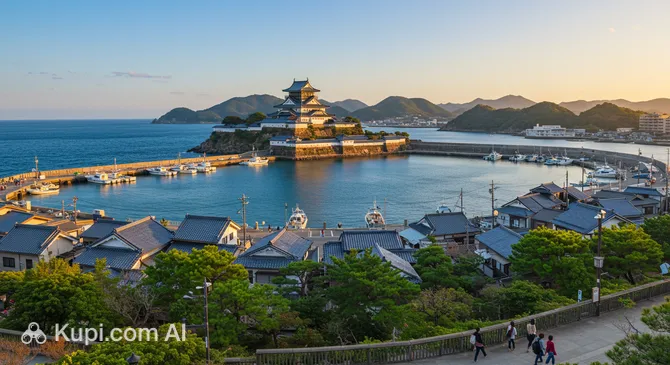
Hirado is a charming town located in the northwest of Kyushu Island, in Nagasaki Prefecture, where history and nature merge into one. The city is spread across Hirado Island, which is connected to mainland Japan by the impressive red Hirado-Ohashi Bridge. A cozy and leisurely atmosphere prevails here, while picturesque bays and green hills create a unique charm.
Hirado. Illustration.
Source: Kupi.com AI
With a population of about 29,000 people, Hirado maintains an intimate feel, which only adds to its appeal. Historically, Hirado played a vital role as one of the first ports opened for trade with European countries, particularly the Netherlands. This heritage is still felt today in the architecture and the overall atmosphere of the city, where Japanese traditions are harmoniously intertwined with European influence.
Among the key attractions, the majestic Hirado Castle stands out, rising proudly over the city and offering panoramic views of the port and the surrounding area. Strolls through the old streets will reveal former trading houses, temples, and cozy cafes. The city is also famous for its incredibly fresh seafood and colorful local festivals that immerse visitors in authentic Japanese culture.
Hirado is a place where you can relax your soul, touch a rich history, and enjoy the beauty of Japanese nature. This city will undoubtedly leave warm memories for every traveler seeking unique experiences.
The climate in Hirado is characterized by clearly defined seasons. Summer here is warm and quite humid, while winter is cool and characterized by less precipitation. Overall, expect a warm summer with occasional rain and cool, relatively dry winters.
The hottest months are July and August, with average temperatures around 26-27.5°C and maximum values reaching 29.4°C. July also stands out as the rainiest month of the year (10 mm of precipitation, 19 rainy days). In winter, especially in January and December, average temperatures drop to 7.8-9.1°C, while minimums can reach 6°C. The winter months are significantly drier than the summer months; for example, in December, only about 2 mm of precipitation falls.
For more detailed information about the weather conditions in Hirado by month, including data on minimum and maximum temperatures, precipitation amounts, and rainy days, you can visit the Hirado Climate page.
Average monthly temperature
Average monthly precipitation
Interesting Facts
Beyond its picturesque views and rich history, Hirado hides many surprising details and stories that make it a truly unique place. Ready to learn some curious facts about this charming Japanese city?
Hirado became one of the first Japanese cities to open its doors to European trade. It was here in 1609 that the Dutch East India Company established a trading post, which played a key role in the exchange of goods and cultures between East and West. This historical site can be visited today to touch the era when Japan's international relations were born.
The famous Hirado Castle, ranked among the top one hundred most famous castles in Japan, was built in 1704 and served as the residence of the powerful Matsuura clan. Today, its halls and museum tell of samurai life and store valuable historical artifacts, allowing visitors to immerse themselves in the country's feudal past.
The city is proud of its traditional Tabira Jangara dance, performed during harvest festivals. Dancers in special tabi socks, with their faces hidden, beat rhythms on small drums, expressing respect for the land and ancestors. This dance, full of symbolism, is recognized as an important Intangible Cultural Property of Japan.
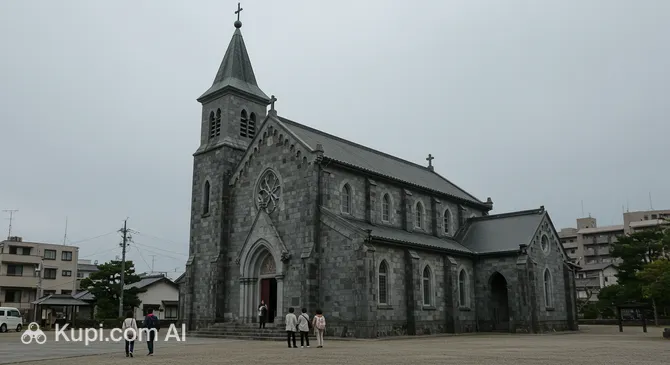
The history of Hirado is inextricably linked with the name of Francis Xavier, one of the first Christian missionaries to arrive in Japan. Memorial sites and old churches remain in the city, testifying to the early period of Christianity in the country, including the St. Francis Xavier Memorial Church, which blends harmoniously into the local landscape.
St. Francis Xavier Memorial Church. Illustration.
Source: Kupi.com AI
Traveler photos:
How to Get There
When planning a trip, it is important to think through the logistics in advance, so we have prepared information on how to get to Hirado in various ways. The city is located on an island connected to the mainland by a bridge, which makes it accessible, although there is no direct access by plane or train to the city center itself.
There is no airport in the city of Hirado, but you can fly into Fukuoka Airport (IATA: FUK) in Fukuoka city, which is approximately 87 km from Hirado. This is a major international hub that accepts many flights. The journey from there by car or bus will take about 2.5 hours (approximately 150 minutes). This is the most popular route for tourists due to the large number of connecting flights.
An alternative option is Nagasaki Airport (IATA: NGS), located in Nagasaki city, about 60 km from Hirado. This is a medium-sized regional airport, convenient for domestic flights. A trip by taxi or rental car from here will take about 1 hour and 50 minutes (approximately 110 minutes). The drive from both airports is scenic and allows you to enjoy the views of Kyushu.
For clarity, here is a summary of the main airports:
Railway communication with the region also has its own characteristics. There is no railway station in the city of Hirado itself, as it is located on an island. The nearest railway station is Tabira-Hiradoguchi (Matsuura Railway line), which is on the opposite bank of the strait but is considered the gateway to the city. However, for most tourists, it is more convenient to travel via the large Sasebo Station (JR Sasebo Station), where express trains from Hakata (Fukuoka) arrive. From Sasebo Station, you can reach the center of Hirado by regular bus in about 1.5 hours.
Main Attractions
Hirado, a city with a rich history and unique culture, offers travelers many interesting places to explore. Japanese traditions and traces of European influence are closely intertwined here, making it particularly attractive to curious tourists. Here are several key attractions worth visiting in Hirado.
One of the iconic landmarks is the St. Francis Xavier Memorial Church. This beautiful church was erected in memory of the famous missionary who arrived in Japan in the 16th century and visited Hirado. It serves as a reminder of the early days of Christianity in the country and attracts visitors with its architecture and peaceful atmosphere. The church looks picturesque against the backdrop of traditional Japanese buildings, symbolizing the meeting of two cultures.
St. Francis Xavier Memorial Church. Illustration.
Source: Kupi.com AI
Traveler photos:
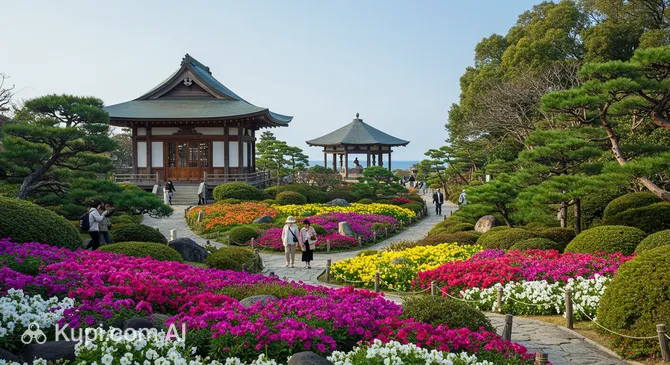
For those seeking tranquility and beautiful views, Hirado Park is a must-visit. Located on a hill, this park offers magnificent panoramic views of the city, the strait, and the surrounding islands. It is an ideal place for leisurely walks, a picnic, or simply to enjoy nature and the fresh sea air. The park is especially beautiful in spring thanks to the cherry blossoms.
Hirado Park. Illustration.
Source: Kupi.com AI
Traveler photos:
It is impossible to imagine a visit to Hirado without seeing Hirado Castle (Hirado-jo). This magnificent castle, restored in the 20th century, stands proudly on a hill, offering breathtaking views of the city and the sea. Inside the castle is a museum where you can learn about the history of the Matsuura clan, who ruled these lands, and Hirado's role as an important trading port. A walk through the castle grounds and its surroundings is a true immersion into feudal Japan.
Another iconic site is the Hirado Dutch Trading Post. In the 17th century, Hirado was one of the few places in Japan open to international trade, and it was here that the Dutch established their factory. Today, the restored warehouses and buildings of the post tell the fascinating story of these trade relations. Visiting this place allows for a better understanding of Hirado's unique position in Japanese history and its links with the outside world.
Local Cuisine
The gastronomic scene of Hirado is a real feast for seafood lovers. Thanks to its seaside location, the city is famous for the freshest gifts of the ocean. Be sure to try the local shikara fish, sea urchins, oysters, and squid. They are served in many forms, but they are particularly good as sushi and sashimi – the taste of freshly caught fish is truly unforgettable.
One of the signature dishes that will warm and satisfy you is Hirado-zosui – a fragrant and hearty rice soup with seafood and vegetables. Also, look out for local dried seafood, which makes an excellent gastronomic souvenir from your trip. At Hirado's farmers' markets, you will find an abundance of seasonal vegetables, fresh fruits such as sweet potatoes and mandarins, as well as homemade pickles and sweets.
As for drinks, traditional Japanese beverages such as sake or refreshing green tea pair perfectly with seafood dishes. Locals and tourists enjoy meals both in cozy traditional restaurants and by sampling delicacies at lively street and farmers' markets, where a special atmosphere prevails and you can observe the daily life of the city.
Hirado attracts gourmets not only with everyday treats but also with vibrant gastronomic events. For example, a seafood festival is often held here in autumn, accompanied by tastings, masterclasses, and street fairs. On such days, the city turns into a true paradise for connoisseurs of delicious food, offering a unique experience of immersion in the local culinary culture.
Travel Tips
Welcome to Hirado! This charming city with a rich history and picturesque nature awaits you. To ensure your trip to Japan, and particularly to Hirado, goes smoothly and leaves only pleasant impressions, we have prepared some practical tips.
Clothing and Essentials:
The climate in Hirado is temperate maritime. In summer (June-August), it is warm and humid, so bring light, breathable clothing. Keep in mind that June-July is the rainy season (tsuyu), so a light waterproof jacket or umbrella will come in very handy. In spring and autumn, the weather is pleasant, but evenings can be cool – a sweater or fleece will be useful. Winters can be chilly but without severe frosts. A key tip is to dress in layers. Be sure to bring comfortable shoes for walking through historical sites and nature trails. Don't forget an adapter for electrical appliances (Japan uses type A and B sockets, 100V voltage). When visiting temples and shrines, show respect: clothing should be modest, covering shoulders and knees.
Getting Around Town:
The town of Hirado itself is quite compact, and many of its attractions can be explored on foot. To travel around the island and to more distant points, you can use local buses. Schedules should be checked in advance, as the frequency of service can be low. Taxis are available but can be an expensive pleasure for long distances. Renting a car is a good option if you plan to actively explore the island and its surroundings; an international driving permit will be required for this. Note that roads can be narrow. A bicycle can also be an excellent way to get around and get to know the city.
Finances:
The local currency is the Japanese yen (JPY). It is recommended to carry a sufficient amount of cash, as not all small shops, cafes, and temples accept bank cards. It is best to exchange currency at the airport upon arrival or at banks in major cities. In Hirado, exchange options may be limited. ATMs that accept international cards can most often be found at post offices (Japan Post Bank) and in 7-Eleven stores (Seven Bank). Credit cards from major payment systems (Visa, Mastercard) are accepted in hotels, large stores, and restaurants. Tipping is not customary in Japan – high-quality service is already included in the bill.
Health and Safety:
Hirado, like Japan in general, is a very safe place for tourists. Observe standard precautions: keep an eye on your belongings in crowded places. Pharmacies (薬, kusuri) are available, but pharmacists may not speak English, so it is helpful to have a translator or write down the name of the medicine you need. For serious medical assistance, a trip to a larger city like Sasebo may be necessary. It is highly recommended to obtain travel medical insurance before your trip.
Communication:
The official language is Japanese. The level of English proficiency among the local population may be low, especially outside of tourist sites. Learn a few basic phrases: "konnichiwa" (hello), "arigato" (thank you), "sumimasen" (excuse me/sorry). For internet access, it is recommended to purchase a tourist SIM card or rent a pocket Wi-Fi router at the airport. Free Wi-Fi can be found in some hotels, cafes, and tourist information centers.
Local Etiquette:
Japanese people highly value politeness and respect for tradition. When greeting someone, a slight bow is appropriate. In public places, especially on transport, try to speak quietly. It is not customary to eat or drink on the go – it is better to stop and have a snack in a designated place. Remove your shoes when entering Japanese homes, some temples, traditional restaurants, and ryokans (Japanese-style inns). When using chopsticks (hashi), do not stick them vertically into rice – this is associated with funeral rituals.
What to Avoid:
Firstly, try not to be excessively noisy in public places, especially in temples, gardens, and public transport – this can be perceived as disrespectful. Secondly, avoid pointing at people or objects with one finger; if you need to show something, use an open palm.
Special Tip for Hirado:
Hirado has a unique history as one of Japan's first ports open to international trade. Be sure to take time to study this heritage: visit the Dutch Trading Post, the former residence of the English trader Richard Cocks, and the Matsura Museum. Also, don't miss the chance to enjoy the freshest seafood for which the region is famous. Try local delicacies in one of the city's cozy restaurants.
We hope these tips help you better prepare for your trip and get the most out of your stay in the beautiful and unique city of Hirado. Have a pleasant journey!
Entertainment & Nightlife
Hirado, with its rich history and charming port city atmosphere, offers its guests a quiet and authentic evening rest that differs from the noisy nightlife of megacities. Here you won't find large nightclubs or districts entirely dedicated to entertainment until dawn, but you can enjoy the cozy setting of local establishments.
Evening entertainment in Hirado is mainly centered around traditional Japanese drinking establishments – izakayas, as well as small restaurants offering local cuisine. Finding specific, widely known names of izakayas or restaurants that would be relevant for every tourist is quite difficult in a small city like Hirado, as many of them are small family-run establishments popular among locals. Instead of searching by name, tourists are encouraged to explore the central streets, especially those adjacent to the port area or leading off the historic shopping districts. Look for the traditional signs of such places: red paper lanterns (akachochin) at the entrance, fabric noren curtains on the doors, or handwritten menus displayed outside. The atmosphere in such places is usually very welcoming and relaxed, attracting both locals and tourists to enjoy delicious food, sake, or beer in the company of friends. Many restaurants are open until late evening, allowing for a leisurely dinner. The dress code is generally casual.
There are no concert venues with regular performances or large night markets in Hirado; evening life here flows at a steady pace. Most activity is seen in the streets near the port and in the historic city center, where most establishments are located. The best time to visit is in the evening, after 18:00-19:00. Prices in local izakayas and restaurants are moderate, making evening relaxation affordable. You can get to your hotel at night on foot if you are staying in the center, or by taxi, which can be called through the hotel or found at occasional ranks. Public transport practically does not run at night.
As for safety, Hirado, like most cities in Japan, is considered a very safe place. Walking through the lit central streets in the evening and at night usually causes no concern. Nevertheless, it is always worth observing standard precautions.
During the day in Hirado, there is also plenty to do. The city is rich in historical attractions. For example, you can visit the St. Francis Xavier Memorial Church, which bears witness to Japan's early contacts with Europe. For lovers of nature and quiet walks, Hirado Park is a wonderful place, offering picturesque views.
Hirado Park. Illustration.
Source: Kupi.com AI
Traveler photos:
Overall, nightlife in Hirado is not about noisy parties, but about the opportunity to immerse yourself in the local atmosphere, try authentic cuisine, and spend a pleasant evening in a calm setting. Instead of searching for specific "trendy" bars or clubs, tourists are encouraged to simply walk through the central areas, looking for the signs described above, and choose a local place that catches their eye – this is exactly how you can discover the real Hirado.
Parks & Museums
Hirado is a city where history comes alive at every step, and natural beauty brings peace. Here you will find picturesque parks for leisurely strolls and unique museums preserving the heritage of a time when Hirado was one of the first Japanese ports opened to international trade.
One of the city's main green oases is Hirado Park. It is located on an elevation, offering beautiful views of the city and the strait, and may include elements reminiscent of the island's rich past. In addition to landscaped parks, Hirado, being an island, offers opportunities to enjoy the beauty of the coastline and walk along scenic trails, for example, in the area of the Kawachi-Toge Pass, which offers breathtaking panoramas of the sea and surrounding islands.
To dive deeper into the history and culture of Hirado, it is worth visiting the local museums. The Matsura Historical Museum, located in the former residence of the ruling clan, offers a look at daily life, samurai armor, and artifacts from the feudal era. No less interesting is the reconstructed Hirado Dutch Trading Post, which recreates the 17th-century atmosphere and tells in detail about the period of active trade between Japan and Europe when Hirado was an important international center. These places allow you to truly feel the spirit of old Hirado.
The city is rich in other historical attractions as well. The majestic Hirado Castle, beautifully restored in the 20th century, dominates the cityscape and offers visitors exhibitions dedicated to its history and the Matsuura clan. A unique symbol of cultural blending and religious harmony is the St. Francis Xavier Memorial Church. It is especially famous for the view from the street known as the "Road with a View of Temples and the Church," where the Christian church is picturesquely adjacent to the roofs of traditional Japanese temples.
For an authentic experience, walk through the old streets with well-preserved samurai houses or visit the local fish market to try the freshest seafood for which Hirado is famous. Don't miss the chance to taste the local culinary dish "Hirado Champon" – a hearty and fragrant noodle soup with vegetables and seafood.
Getting Around
Moving around Hirado and its surroundings can be done in several ways, although the public transport system here is not as extensive as in major megacities. The main form of public transport is buses, which connect various parts of the island and provide access to major attractions.
The bus network is managed by several companies, including Saihi Bus. Routes cover both Hirado city itself and more remote areas. Fares are usually paid in cash when exiting the bus; it is recommended to carry small change. In some cases, regional transport cards may be accepted, but this should be checked in advance. The cost of the fare depends on the distance. Information about schedules and routes can be found at bus stops or tourist information centers.
For tourists planning to travel a lot by bus, it is worth asking about the availability of daily or multi-day passes, if offered by local companies. Single-ride tickets are bought directly on the bus. When entering, you often need to take a ticket with a stop number, and when exiting, pay the amount corresponding to your number on the display above the driver. Buses usually run on schedule, but in remote areas, intervals can be significant.
In addition to buses, taxis and car rentals are popular for moving around Hirado, especially for exploring more secluded corners of the island. Taxis can be found at the ferry terminal, large hotels, or called by phone. Renting a car gives maximum freedom of movement, especially if you plan to visit many attractions scattered across the island. Also, in some places, you can rent bicycles, which is a great way to slowly get to know the city and its immediate surroundings while enjoying the picturesque views.
Given Hirado's island location, ferries play an important role, connecting it with other islands and the mainland. The ferry terminal is a key transport hub. If you are planning trips to neighboring islands, check the ferry schedules and ticket prices in advance.
Accommodation
In the city of Hirado, travelers will find various accommodation options to suit different preferences and budgets. The choice ranges from traditional Japanese inns (ryokans) and guesthouses (minshuku), offering an authentic experience, to more familiar hotels and potentially apartments for short-term rent. This allows every guest to select accommodation to their taste, whether it's immersion into local culture or modern-level comfort.
When choosing a place to stay in Hirado, it is worth paying attention to areas close to major attractions, such as the St. Francis Xavier Memorial Church or Hirado Park, as well as the convenience of transport accessibility. Many guesthouses and hotels are located to provide easy access to the historic city center and its picturesque surroundings. Some options may offer beautiful views of the sea or the surrounding nature, which will add special impressions to your stay.
Although the provided data does not include specific examples of hotels, in Hirado, one can generally find both small family-run inns and mid-range hotels. It is recommended to check reviews and ratings on popular booking platforms to choose the most suitable option that meets your expectations for comfort and service.
When planning a trip to Hirado, especially during the peak tourist season (for example, during cherry blossom season or major local festivals), it is strongly recommended to book accommodation in advance. This not only guarantees availability but often allows you to choose from a larger number of options at better prices. Advance planning will help avoid unnecessary hassle and make your trip more relaxed and pleasant.
The price range for accommodation in Hirado can vary from budget options in guesthouses to more expensive offers in hotels with a full range of services. Booking is usually done through popular online platforms such as Booking.com, Agoda, or directly through hotel websites. Some traditional ryokans may also accept bookings by phone or email, offering a more personalized approach.
Nearby Cities
For those who want to explore the surrounding area, Hirado serves as an excellent starting point for day trips to several interesting nearby locations:
These nearby destinations offer a glimpse into the diverse culture and landscapes of the region. Each of these cities offers its own unique attractions: from the historical sites of Nagasaki and the bustling port of Sasebo to the traditional crafts of Saga and the picturesque landscapes of Karatsu. By planning a day trip, you can dive deeper into the atmosphere of Nagasaki Prefecture and neighboring regions.
Shopping & Souvenirs
Shopping in Hirado is an immersion into the atmosphere of a cozy port city with a rich history. You won't find huge shopping malls here, but you can enjoy searching for unique souvenirs, local delicacies, and handmade items. The city is famous for its Hirado-yaki (平戸焼) ceramics, as well as goods reflecting its past as one of the first Japanese ports open to international trade.
The main shopping spots in Hirado are concentrated along the city's central streets and in the port area. Here you will find small family-run shops, souvenir stores, and confectioneries offering local sweets. A walk through these streets is a pleasure in itself, allowing you to feel the leisurely pace of life in the city.
There are no large shopping centers in the conventional sense in Hirado. Shopping here is of a more intimate nature, focused on authentic goods and personal communication with sellers. Instead, pay attention to specialized stores where you can find, for example, pearl products or traditional Japanese goods.
While there are no large well-known markets in Hirado, you may discover small local shops selling fresh seafood or seasonal vegetables and fruits. Sometimes fairs or festivals are held in the city where local artisans and farmers present their products. This is a great opportunity to purchase something truly unique and fresh.
As souvenirs from Hirado, it is worth bringing back items made of the famous local Hirado-yaki ceramics, distinguished by elegant painting and white porcelain. Local sweets are also popular, for example, kasutera (although Nagasaki is considered its birthplace, interesting variations can be found in Hirado) or other traditional Japanese desserts. Don't forget about dried seafood and other delicacies for which the region is famous. You can also find souvenirs related to the city's history, for example, featuring the theme of the first European traders.
Most shops in Hirado are open from approximately 10:00 to 18:00 or 19:00. Some small family shops may have their own schedule. As for payment, credit cards are usually accepted in tourist spots and large stores, but in small shops and at local markets, it is preferable to have cash (Japanese yen) with you.
For foreign tourists in Japan, a tax refund system (Tax Free) is available. Look for shops with the corresponding "Tax-Free Shopping" logo. Usually, to process a refund, you must make a purchase of a certain amount (most often from 5,000 yen) and present your passport. Check the conditions directly in the stores.