Support

State Guest House Akasaka Palace

About

In the heart of the bustling metropolis of Tokyo lies a true architectural treasure — Akasaka Palace (Geihinkan). This majestic Neo-Baroque building serves as the official state guest house of Japan. The scale of the complex is impressive: it covers an area of about 120,000 square meters and is one of the two primary venues for receiving monarchs, presidents, and prime ministers from around the world.
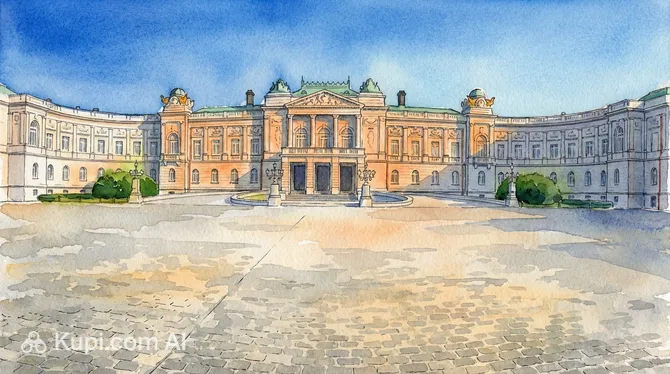
State Guest House Akasaka Palace. Illustration.
Source: Kupi.com AI

Traveler photos:

Often compared to the Palace of Versailles in Paris, the palace represents a unique synthesis of Western traditions and Japanese craftsmanship. Its facade is adorned with intricate moldings and ornaments, while the interior decor is strikingly luxurious: from the checkerboard marble flooring in the main vestibule to the eight majestic Corinthian columns made of Italian marble in the grand hall. This building is considered the pinnacle of Meiji-era Western-style architecture and is designated as a National Treasure.

Contacts

When planning a visit to Akasaka Palace, it is worth remembering that it is an active state facility used to host world leaders and diplomatic delegations. We strongly recommend checking the current opening schedule and tour availability on official resources in advance, as access to the halls may be restricted due to official events taking place in Tokyo.

How to contactContact
Address2-chōme-1-1 Motoakasaka, Minato City, Tokyo 107-0051, Япония
Phone+81 3-5728-7788
Websitewww.geihinkan.go.jp

What to Do

A visit to Akasaka Palace is a rare opportunity to peek behind the scenes of global diplomacy and enjoy imperial-level luxury. Visitors can walk through the magnificent state rooms, where every element of decor, from crystal chandeliers to ceiling paintings, tells the story of cultural exchange between Japan and the West. The Grand Hall with columns made of Italian marble is particularly noteworthy, impressing visitors with its grandeur.

After touring the interiors, be sure to take a stroll through the complex's well-manicured gardens. Here, landscape designers have masterfully combined the strict geometry of Western parks with the traditional harmony of Japanese gardens. Regular tours allow guests of Tokyo not only to see the original facades and monumental main gates but also to learn about the intricacies of Japanese craftsmanship integrated into European design.

Getting There

The majestic Akasaka Palace is located at: 2-chōme-1-1 Motoakasaka, Minato City. Reaching it in Tokyo is easy thanks to the well-developed public transport system. The closest transit hubs are the Akasaka-mitsuke (Marunouchi and Ginza lines) and Nagatachō subway stations, from which it is about a 10–15 minute leisurely walk.

For those who prefer alternative routes, a walk from Roppongi or Tameike-sanno stations is a convenient option. If you value maximum comfort, a taxi ride from the city's central districts will quickly bring you to the main gates of this historic residence in Japan.

Nearest city: Tokyo

History & Facts

The history of Akasaka Palace is inextricably linked to the period of Japan's active modernization. Construction began in 1899 and lasted ten years under the guidance of the prominent architect Katayama Tokuma. As a student of the British architect Josiah Conder, Tokuma pursued an ambitious goal with this project: to create the country's first Western-style palace that would rival the European residences of monarchs.

Initially, the building was designed as Togu Gosho — the official residence for the Crown Prince, the future Emperor Taisho, in honor of his upcoming wedding. The plot of land on which the palace was built has even deeper roots: before the Meiji Restoration, it was the site of the influential Kishu domain, belonging to the Tokugawa clan. Later, the territory was transferred to the Imperial Household.

Despite its European appearance, the palace is filled with hidden Japanese meanings and details. In 1974, after an extensive renovation, it acquired its current status as a State Guest House, becoming a venue for key international summits and high-level meetings in Tokyo.

Time Needed

To fully appreciate the splendor of the interiors and the elegance of the landscape design at Akasaka Palace, most travelers need between 1.5 to 2 hours. This is enough time to explore the main state rooms and stroll through the surrounding grounds without rushing.

If you plan to visit not only the main building but also the Yushintei Japanese Annex, or to study the temporary exhibitions in detail, you should set aside a bit more time for your visit. The duration can also depend on the chosen tour type and your passion for architectural photography, as every corner of this palace in Tokyo is worth a photo.

Working Hours

The Akasaka Palace state residence welcomes visitors from 10:00 AM to 5:00 PM. Please note that entry to the grounds closes at 4:30 PM, so it is best to arrive early to have enough time to see all the exhibits.

The operating schedule includes days from Thursday to Tuesday, and Wednesday is a day off. Since the palace remains an important diplomatic site in Tokyo, opening hours may change depending on state protocol. We recommend checking the current schedule on the official website before planning your trip.

DayWorking hours
Monday10:00–17:00
Tuesday10:00–17:00
WednesdayЗакрыто
Thursday10:00–17:00
Friday10:00–17:00
Saturday10:00–17:00
Sunday10:00–17:00

Nearby

A visit to Akasaka Palace can easily be combined with a walk to other iconic spots in the Minato district. The surroundings of the residence are rich in both ancient shrines and modern cultural sites, allowing you to deeper experience the multifaceted atmosphere of Tokyo.

Just a few minutes' walk away is the Suga Shrine, known for its tranquility, and a bit further is the majestic Hie Shrine. If you wish to switch from architectural impressions to natural beauty, the Shinjuku Gyoen National Garden is located nearby, offering the perfect setting for relaxation after your tour.

NameDistance
Suga Shrine0.7 km
Tokyo Imperial Palace2.2 km
Nijubashi Bridge2.2 km
Nezu Museum2.2 km
Blue Note Tokyo2.4 km
teamLab Borderless2.4 km
Shibuya Coffee Bar3.2 km

Reached the end of the page?

That means the route is fully explored