Support

Tokyo Dome City Attractions

About

Tokyo Dome City Attractions is a vibrant and dynamic entertainment hub located in the heart of Tokyo. As part of a large-scale urban complex, it offers visitors to Japan a unique combination of adrenaline and comfort. Unlike many other theme parks, there is no entrance fee for the grounds, allowing tourists to walk around freely and pay only for the activities they find interesting.
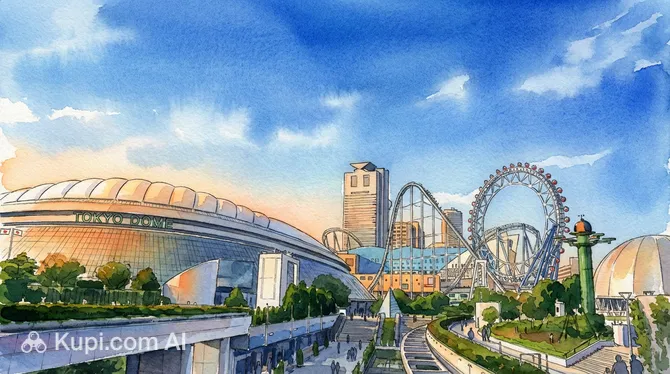
Tokyo Dome City Attractions. Illustration.
Source: Kupi.com AI

Traveler photos:

The park's main icons are the breathtaking Thunder Dolphin roller coaster, which zooms through a hole in a building, and the unique Big O Ferris wheel. The latter is listed in the Guinness World Records as the world's largest centerless Ferris wheel. These engineering marvels define the futuristic look of the Bunkyo district and attract both thrill-seekers and admirers of modern architecture.

In addition to high-thrill rides, the complex includes the modern LaQua spa with thermal springs, numerous shops, and gaming zones. Thanks to its high ratings and convenient location, the park has become a favorite spot for family outings and evening dates, especially when the grounds are lit up by spectacular illuminations.

Contacts

When planning your visit to Tokyo Dome City Attractions, we recommend checking the official website in advance or calling for more details. This will help you find information about ticket prices for specific rides and stay updated on any special events or seasonal changes to the schedule.

Below are the main contact details for reaching the management of this entertainment center in Tokyo.

How to contactContact
Address1-chōme-3-61 Kōraku, Bunkyo City, Tokyo 112-8575, Япония
Phone+81 3-3817-6001
Websiteat-raku.com

What to Do

There is something for everyone in this park, from extreme challenges to peaceful city views. Be sure to ride the Thunder Dolphin, whose tracks pass directly through a building and the center of the Ferris wheel. For those who prefer panoramic views, the Big O is an ideal choice—its cabins offer a stunning perspective of the Tokyo skyline.

Families with children should visit the arcade zone and playgrounds, while those looking for a scare can head to the local haunted house. In the evening, don't miss the colorful light and music fountain show, which creates a festive open-air atmosphere. If you want to relax after an active day, LaQua is at your service—a true oasis with hot springs right in the middle of the metropolis.

To make your visit as comfortable as possible, it is recommended to purchase fast-pass tickets on weekends. Also, look out for special combo tickets, which offer a cost-effective way to try out several of the park's key attractions at once.

Getting There

The attraction is located in the Bunkyo district at: 1-chōme-3-61 Kōraku. Thanks to its central location in Tokyo, getting here by public transport is very convenient. The main transport hubs are Suidobashi Station (JR Chuo-Sobu and Toei Mita lines) and Korakuen Station (Marunouchi and Namboku subway lines).

The walk from the stations to the park entrance takes only 1 to 5 minutes. If you are coming from central parts of the city, the train or subway ride will be quite short. For those who prefer a taxi, the distinctive white dome of the Tokyo Dome stadium is a clear landmark visible from afar.

Using public transport is highly recommended in this area, as the complex's parking zones can get very busy, especially on days with baseball games or concerts. Coordinates for navigation: 35.7042855, 139.7542081.

Nearest city: Tokyo

History & Facts

The history of this site is inextricably linked to the construction of the famous Tokyo Dome stadium, often called "The Big Egg." Opened in 1988, it was Japan's first indoor arena with an air-supported dome roof. The amusement park evolved around it as part of an ambitious project to create a multi-functional leisure space in the heart of the capital.

A significant milestone in the complex's development came in 2003 with the opening of the LaQua spa. This allowed the excitement of the stadium and the thrill of the rides to be combined with traditional Japanese relaxation in hot springs. Over time, the park became a place of world records: it is home to the world's first centerless Ferris wheel, which redefined conventional engineering designs.

Today, Tokyo Dome City Attractions is seen as a symbol of the country's technological progress. It reflects the cultural evolution of Tokyo, offering guests more than just carousels—it is an entire entertainment ecosystem where futuristic structures stand alongside cozy relaxation zones.

Time Needed

To fully enjoy the park's atmosphere and experience key attractions like the Thunder Dolphin and Big O, we recommend setting aside 4 to 6 hours. This time is sufficient not only for queues and rides but also for a leisurely lunch or watching the evening fountain show.

Travelers with children might need more time—around 8 hours—to account for visiting the numerous play areas and taking breaks. If your goal is only a couple of thrill rides without visiting the shopping mall or spa, you can finish in about 2 hours if the queues are short.

Working Hours

Tokyo Dome City Attractions is open to visitors daily. On weekdays (Monday to Thursday), the complex usually operates from 10:00 to 20:00. On Fridays and weekends, the opening hours are extended until 21:00, giving guests more time to admire the evening illumination.

Please note that operating hours may vary depending on the season or large events held at the neighboring stadium. For those who want to see the park as the sun sets, special "night" tickets are available, valid after 17:00. You can always check the current schedule on the official website before your visit.

DayWorking hours
Monday10:00–20:00
Tuesday10:00–20:00
Wednesday10:00–20:00
Thursday10:00–20:00
Friday10:00–21:00
Saturday10:00–21:00
Sunday10:00–21:00

Nearby

The park's location in one of Tokyo's central districts offers excellent opportunities for further exploration. Right nearby is the Tokyo Dome City multi-purpose complex, where you can continue shopping or visit one of the many themed restaurants.

Exploring the surroundings will allow you to see different sides of the Japanese capital, from ultra-modern entertainment quarters to quiet historical corners. Significant sites such as the Nippon Budokan arena and several colorful shrines are within walking distance, making it easy to create a full day's itinerary.

NameDistance
Tokyo Imperial Palace2.1 km
The National Museum of Western Art2.3 km
National Museum of Nature and Science2.4 km
Tokyo National Museum2.6 km
Nijubashi Bridge2.7 km
Suga Shrine3.5 km
Kaminarimon3.9 km

Reached the end of the page?

That means the route is fully explored