Support

Oslo Cathedral

About

Oslo Cathedral (Oslo domkirke) is not only the main church of the Diocese of Oslo but also a major religious and cultural center for all of Norway. This iconic site serves as the official venue for significant state ceremonies, including royal weddings, and is actively used by the Norwegian royal family and the government for various solemn events. The cathedral is both an active place of worship and an important tourist attraction, drawing visitors with its history and architecture.
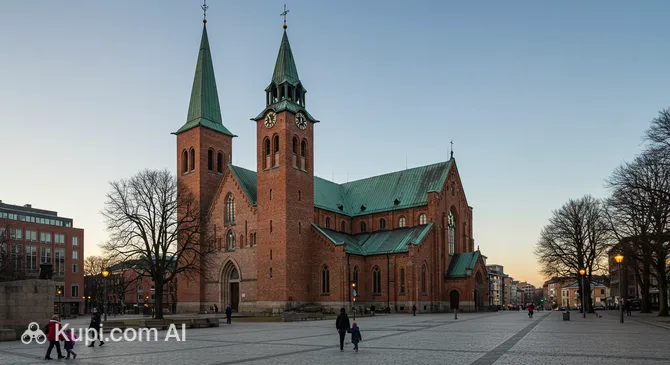
Oslo Cathedral. Illustration.
Source: Kupi.com AI

Traveler photos:

The current cathedral building, rising majestically in the heart of the city, is a prime example of Dutch Baroque. It was built between 1694 and 1697 under the direction of architect Jørgen Wiggers and consecrated in November 1697. Interestingly, this is the third cathedral in Oslo's history, each of which played its own unique role in the spiritual and social life of the city.

Throughout its centuries-long history, Oslo Cathedral has undergone several major renovations. For instance, in the 1850s, its interior was modified to include Neo-Gothic features, which were popular at the time. However, in the 1960s, it was decided to return the cathedral to its original appearance, and the interiors were meticulously restored in the Baroque style, allowing visitors today to appreciate its historical authenticity and architectural splendor.

Contacts

To get up-to-date information on opening hours, services, or events at Oslo Cathedral, as well as to check contact details, it is recommended to visit the cathedral's official website or contact tourist information centers in Oslo. As the cathedral is a significant public and religious site, detailed information is frequently updated on its official resources.

Oslo Cathedral is located right in the heart of the city, making it easily accessible for visitors. It can be reached conveniently by public transport—tram and bus stops are nearby, as is the Stortinget metro station. Additionally, many central hotels and attractions are within walking distance of the cathedral.

How to contactContact
AddressKarl Johans gt. 11, 0154 Oslo, Norway
Phone number+47 23 62 90 10
Websitekirken.no

What to Do

When visiting Oslo Cathedral, you can enjoy its rich interior decor. Look for works by 20th-century Norwegian artists that adorn the space. The impressive stained glass windows created by Emanuel Vigeland, which fill the cathedral with light and create a unique atmosphere, are particularly admirable. These artistic elements give the temple special depth and expression.

Inside the cathedral, valuable historical artifacts have been preserved. Take some time to examine the pulpit and the altar—both date back to the 17th century and are brilliant examples of church art from that period. One of the main attractions of the cathedral is the magnificent organ by Jan Ryde, installed in 1997. If you are lucky, you might hear its majestic sound during a service or an organ music concert.

The cathedral's interior was carefully restored to its Baroque style in the 1940s, timed to coincide with the 900th anniversary of Oslo's founding. This restoration brought back the temple's historical appearance, and today visitors can fully appreciate the splendor of church art and the architectural solutions characteristic of the Baroque era. A walk through the cathedral is an opportunity to touch history and enjoy the craftsmanship of those who created this spiritual center.

Getting There

The most convenient way to reach Oslo Cathedral is by public transport. Oslo has an excellent network of metro (T-bane), trams, and buses. The nearest metro station to the cathedral is Stortinget, which is a major transport hub served by all metro lines. Numerous tram and bus stops are also located nearby. To plan your trip and check current schedules, it is recommended to use the official resources of the Ruter transport company or popular navigation apps.

If you prefer to travel with more comfort or are traveling in a group, you can use taxi services. A taxi ride from the central areas of Oslo to the Cathedral usually doesn't take much time. Both traditional taxi services and ride-hailing apps, common in Norway, operate in the city.

Nearest city: Oslo

History & Facts

The history of Oslo Cathedral dates back to the Middle Ages, making it one of the city's oldest institutions. The first cathedral, known as Hallvard's Cathedral (Hallvardskatedralen), was dedicated to the patron saint of Oslo – Saint Hallvard. Its construction began in the first half of the 12th century by order of the Norwegian King Sigurd I "the Crusader". This majestic Romanesque church was situated on a picturesque shore where two rivers met the sea, on the outskirts of what was then a small medieval town.

St. Hallvard's Cathedral served as the spiritual heart for the residents of Oslo until 1624, when a catastrophic fire almost completely destroyed the medieval city. Following this tragic event, the cathedral was rebuilt, but in a new location. This was due to King Christian IV's decision to move the city center closer to the powerful Akershus Fortress, believing this location would provide better protection. Unfortunately, the second cathedral did not last long – it also met the fate of being destroyed by fire in the early 1690s.

The current building of Oslo Cathedral, which we see today, is the third version. Its construction began in 1694 and was completed in 1697. Throughout its long history, the cathedral has undergone several significant changes to its interior. In the first half of the 19th century, the interior was redesigned in the then-fashionable Neo-Gothic style. However, in the 1940s, during a large-scale restoration, it was decided to return it to its original Baroque appearance, which delights visitors today, allowing them to touch the rich history of Norway.

Time Needed

To explore Oslo Cathedral, most visitors will need between 1 and 2 hours. This is usually enough time to see the main architectural features, admire the rich interior decoration—including the famous stained glass windows and historical elements such as the altar and pulpit—and soak in the special atmosphere of this significant site in the capital of Norway.

If you plan a more in-depth study, for example, to examine the artworks by Norwegian artists in detail or to spend time in quiet reflection, your visit might take a bit longer—perhaps up to 3 hours. It's also worth considering that if you are lucky enough to attend an organ concert or a special service (we recommend checking the schedule in advance), this will certainly extend your stay and enrich your experience of visiting this landmark in Oslo.

Working Hours

Oslo Cathedral is generally open to visitors throughout the year, but exact opening hours may vary depending on the day of the week, the season, and whether services or special events are being held. Entry to view the landmark is usually free, and no advance booking is required unless you plan to attend a special event, such as an organ concert, for which tickets may be sold separately.

Since specific opening hours and service schedules can change, it is highly recommended to check current information on the official Oslo Cathedral website or contact tourist information centers in Oslo before your visit. This will help you plan your visit and avoid any inconvenience if the cathedral is temporarily closed to the public.

DayOpening hours
Monday10:00 – 16:00
Tuesday10:00 – 16:00
Wednesday10:00 – 16:00
Thursday10:00 – 16:00
Friday4:00 – 23:30
Saturday10:00 – 16:00
Sunday10:00 – 16:00

Nearby

Visiting Oslo Cathedral is undoubtedly a key part of getting to know Oslo. However, to make your trip even more rewarding and complete, it's worth exploring the surrounding area. Often, just a few steps away from iconic landmarks, other interesting spots are hidden that can provide new experiences and reveal more of the city's character.

Exploring the nearby streets and sites around Oslo Cathedral will allow you to better feel the atmosphere of Norway's capital. A short walk can lead you to cozy cafes, other historical buildings, or modern art installations, complementing the overall picture of your visit.

NameDistance
Mamma Pizza0.2 km
HIMKOK Storgata Distillery0.3 km
Fuglen0.6 km
Kiosken Bar0.7 km
Hotel Continental0.8 km
The Munch Museum0.9 km
Nobel Peace Center0.9 km

Have you reached the end of the page?

So the route has been studied inside and out