Support

Oslo City Hall

About

Oslo City Hall is not just an administrative building, but a true symbol of Oslo and one of the most recognizable landmarks in Norway. Located in the heart of the city, it serves not only as the workplace for the city council and administration but also as a venue for significant ceremonies, including the annual Nobel Peace Prize award (the ceremony takes place in the main hall).
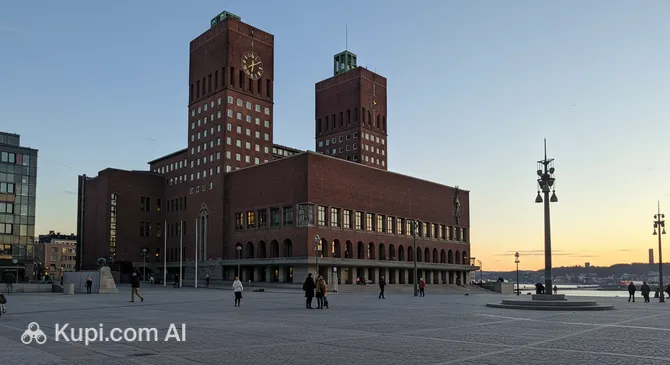
Oslo City Hall. Illustration.
Source: Kupi.com AI

Traveler photos:

Architecturally, the City Hall is an impressive structure completed in 1950, though the foundation stone was laid back in 1931. The building is designed in a functionalist style with elements of national romanticism and neoclassicism. Two monumental towers, faced with handmade red bricks, dominate the surrounding space and are visible from many points in the city. The facades and interiors of the City Hall are richly decorated with frescoes, sculptures, and tapestries created by prominent Norwegian artists of the first half of the 20th century, reflecting the country's history, culture, and lifestyle.

Beyond its administrative and ceremonial roles, Oslo City Hall is an important cultural site. Its halls are open to visitors, who can admire the magnificent interior decor and learn more about the history of the city and country. The towers offer beautiful views of Oslo and the Oslo Fjord, making a visit to the City Hall even more memorable. It is a place where modern political life harmoniously blends with a rich artistic heritage.

Contacts

Unfortunately, specific contact details such as a phone number or email for Oslo City Hall are not listed in available sources. For the most up-to-date information regarding opening hours, guided tours, and other details, we recommend checking the attraction's official website or contacting tourist information centers in Oslo.

How to contactContact
AddressRådhusplassen 1, 0037 Oslo, Norway
Phone number+47 23 46 12 00
Websitewww.oslo.kommune.no

What to Do

A visit to Oslo City Hall offers a unique opportunity to immerse yourself in the world of Norwegian art and history. Inside the building, you will find numerous halls decorated with impressive murals, mosaics, and sculptures. These works were created by prominent Norwegian artists and sculptors of the mid-20th century, each contributing to the unique atmosphere of the City Hall. Particular attention is drawn to the Main Hall, world-famous as the venue where the Nobel Peace Prize ceremony is held annually. This lends a special sense of solemnity and significance to your visit.

For a deeper acquaintance with this iconic Oslo site, visitors can join guided tours. During the tour, guides talk about the history of the building's construction, its architectural features, and its significance for the city and the country. Tours also cover exhibitions dedicated to the history of Oslo and Norway, providing a better understanding of the cultural context of the place.

In addition to exploring the interiors and learning about history, Oslo City Hall offers another unforgettable experience. Its towers offer magnificent panoramic views of the city center and the picturesque waterfront. This is a wonderful opportunity for photography enthusiasts to take impressive shots and simply enjoy the beauty of the Norwegian capital from above.

Getting There

Getting to Oslo City Hall is easy, as it is conveniently located in the very heart of the Norwegian capital, near the picturesque waterfront. If you are already exploring central Oslo, you can most likely reach the City Hall on foot. It is within walking distance of iconic landmarks such as the National Theatre, the Royal Palace, and the popular Aker Brygge district, making it a natural part of many sightseeing routes.

For those who prefer public transport or are coming from more distant parts of the city, there are many convenient options. Tram and bus stops are located near the City Hall, with routes covering the entire city. Additionally, metro stations and the central railway station are nearby, making the City Hall easily accessible even for those arriving in Oslo from other cities in Norway or from the airport.

Nearest city: Oslo

History & Facts

Oslo City Hall (Oslo rådhus) is more than just an administrative building; it is a true symbol of the Norwegian capital and its history. The idea of building a new, more representative city hall emerged shortly after Norway gained independence in 1905. In 1915, the then-mayor of Oslo, Hieronymus Heyerdahl, initiated a large-scale renewal of the city center, with a new city hall building as its centerpiece.

The path to realizing this ambitious project was not easy. An architectural competition was announced in 1918, won by Arnstein Arneberg and Magnus Poulsson. However, economic difficulties caused by the First World War delayed the start of the work for a long time. It wasn't until 1931 that the foundation stone of the future Oslo City Hall was laid, marking the start of the long-awaited construction.

The architects sought to create a building that would reflect both historical continuity and the young nation's drive for modernity, so the final design harmoniously combines various architectural styles. Unfortunately, the Second World War affected the construction schedule, and work was suspended once again. The official opening of Oslo City Hall finally took place on May 15, 1950, becoming a landmark event for the city and the entire country.

Since its opening, Oslo City Hall has played a central role in the life of the city. It is not only the meeting place for the city council and municipal services but also a popular attraction, drawing tourists with its monumental appearance and rich interior decoration. The building has become a true architectural symbol of Oslo, embodying its development and significance, and to this day serves as an important venue for various city events and celebrations.

Time Needed

When planning a visit to Oslo City Hall, you should allow for 1-2 hours. This time is usually enough to see the main rooms, including the famous Central Hall, where the Nobel Peace Prize ceremony is held annually, and other halls decorated with monumental frescoes and tapestries by Norwegian artists.

In the recommended timeframe, you will have time not only to see the interiors and artworks reflecting the history and culture of Norway but also to enjoy views of the Oslo Fjord and downtown Oslo from certain parts of the building. If you wish to study each fresco in more detail, delve into the symbolism of the artwork, or visit temporary exhibitions sometimes held at the City Hall, you may need a little more time.

Working Hours

Unfortunately, exact information about the opening hours of Oslo City Hall is currently unavailable. Since opening hours may change depending on the season, scheduled events, or other factors, it is highly recommended to check for current information on the attraction's official website or inquire at local tourist information centers before planning your visit.

It is also worth finding out in advance whether pre-booking tickets or registering for excursions is required, especially if you plan to visit the City Hall during the peak tourist season. This information is also usually available on official resources.

9:00 – 16:00

Nearby

After exploring Oslo City Hall, don't rush to end your walk. The surroundings of this iconic building are rich with other notable sites that will help you dive deeper into the atmosphere of Oslo and expand your understanding of its culture and daily life. A short stroll through the neighboring streets can lead to interesting discoveries and make your journey even more fulfilling.

Exploring the attractions located in the immediate vicinity is a great way to use your time efficiently and see more without long commutes. Each of these places has its own unique character and can add bright colors to your impressions of the capital of Norway.

NameDistance
Kiosken Bar0.1 km
Hotel Continental0.2 km
Nobel Peace Center0.2 km
National Museum0.3 km
The Royal Palace0.6 km
Fuglen0.6 km
Mamma Pizza0.7 km

Have you reached the end of the page?

So the route has been studied inside and out