Support

Basilica of the Sacred Heart of Jesus

About

In the heart of the Asturian coast, where the city of Gijón reveals its historical secrets, stands the majestic Basilica of the Sacred Heart of Jesus. This Catholic temple, which locals affectionately call "La Iglesiona", is a unique fusion of Neo-Gothic and Modernism. Built in the early 20th century, it has become not only a spiritual center but also an architectural landmark of the city.
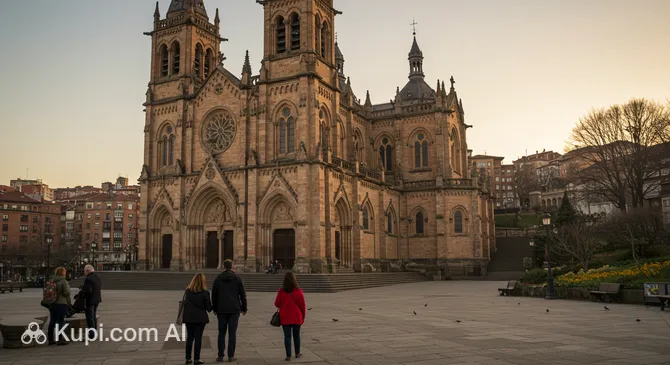
Basilica of the Sacred Heart of Jesus
Basilica of the Sacred Heart of Jesus. Иллюстрация. Источник: Kupi.com AI

Stepping across the threshold of this sanctuary in Spain, you will find yourself in a space filled with light and color. The building is famous for its luxurious paintings by German masters and magnificent stained glass windows, which are considered some of the best examples of the Modernist style in the Asturias region. In 2003, the Vatican recognized the special significance of the temple by granting it the status of a Minor Basilica.

The building's facade attracts special attention, topped by a monumental statue of the Sacred Heart, which seems to bless passersby on the busy streets of Jovellanos and Instituto. Thanks to careful restoration, the basilica has retained its original appearance, attracting pilgrims and art lovers from all over the world with its solemn and yet graceful look.

Contacts

For more information about special events, festive services, or to arrange group tours, you can use the official contact details of the temple.

How to contactContact
AddressCalle Instituto, 34, Centro, 33201 Gijón, Asturias, Spain
Phone+34 985 35 03 02
Websitebasilicadegijon.com

What to Do

The first thing to do when visiting the basilica is to carefully examine its Neo-Gothic facade. Notice the shrine crowning the building with the statue of the Sagrado Corazón—it is one of the most recognizable silhouettes in the city. Inside the temple, be sure to look up: the vaults are decorated with skillful paintings by the Immencamp brothers, and in the apse is an impressive fresco depicting the Last Judgment scene.

Decorative art enthusiasts will be interested in studying the Modernist stained glass windows, created by the famous house Casa Maumejean Hermanos in 1920. Sunlight passing through the colored glass creates a magical atmosphere inside, ideal for quiet meditation or studying the medallions depicting Jesuit saints. It is also worth noting the series of paintings Via Crucis (Stations of the Cross), which have adorned the walls of the temple since 1926.

In addition to viewing the architecture, the basilica remains an active spiritual center. You can join the daily mass or simply sit in silence, enjoying the acoustics and tranquility away from the city noise. The temple is an important pilgrimage point, so you can often meet people from all corners of the world here, who have come to worship at the sanctuary in the very center of old Gijón.

Getting There

Finding this architectural masterpiece is easy, as it is located in the very heart of the city at Calle Instituto, 34. If you are arriving at the main Gijón railway station (Gijón-Sanz Crespo), a walk to the basilica will take only 10–15 minutes along the scenic Avenida Jovellanos.

For those who prefer public transport, the EMTUSA city bus network is ideal. You will need lines 1, 9, 10, or 14, which stop at the Instituto stop, literally a few steps from the temple entrance. If you are coming from the airport, it is most convenient to take an intercity bus or train to the center and then walk a short distance.

Travelers by car should keep in mind that the basilica is located in a busy central area. Parking nearby is usually paid (orange zone), so many tourists prefer to leave their cars in park-and-ride lots and enjoy a walk through the historic streets surrounding the Royal Jovellanos Institute.

Ближайший город: Gijon

History & Facts

The history of this site began at the end of the 19th century when the Jesuits arrived in Gijón in 1882. The city was growing rapidly at that time, and existing parishes were not enough for all the faithful. In 1910, the community was gifted a plot of land in the prestigious Ensanche district, and by 1913, the first stone of the future temple was laid.

Main construction took place between 1918 and 1922. Architect Miguel García de la Cruz originally planned two high towers, but the project was changed during the process, crowning the facade with an elegant temple-like shrine featuring the statue of the Sacred Heart. The interior was created with no less scale: the unique paintings were completed in 1924 by German artists—the Immencamp brothers, whose work still amazes with its detail.

Over the decades, the building survived many trials, including a serious fire in 1930, but it was restored each time through the efforts of the community. A major milestone was 2003, when the Vatican officially granted the temple the honorary status of Minor Basilica. After a major restoration completed in 2009, the sanctuary regained its original brilliance and grandeur, characteristic of the Spanish Modernism era.

Time Needed

To leisurely explore the interiors, admire the play of light in the stained glass windows, and study the wall paintings, 1 to 2 hours is usually enough. This time is sufficient for a brief prayer and to take some impressive photos of the architectural details.

If you plan to combine your visit to the temple with a walk through the nearby squares and an exploration of neighboring attractions, you should set aside about half a day for this area. The basilica fits harmoniously into a route through the city center, allowing for a pleasant break in your cultural program.

Working Hours

The basilica is open to visitors daily, however, there is a break during the day. From Monday to Saturday, the temple doors are welcomingly open from 8:00 to 13:30 and in the afternoon from 17:00 to 20:00.

On Sunday, the schedule changes slightly: morning visits are possible from 9:30 to 14:00, and evening visits from 17:30 to 20:00. Please remember that sightseeing may be limited during religious services, so it is better to choose a time between masses for an excursion visit.

DayWorking hours
Понедельник8:00 – 13:30, 5:00 – 20:00
Вторник8:00 – 13:30, 5:00 – 20:00
Среда8:00 – 13:30, 5:00 – 20:00
Четверг8:00 – 13:30, 5:00 – 20:00
Пятница8:00 – 13:30, 5:00 – 20:00
Суббота8:00 – 13:30, 5:00 – 20:00
Воскресенье9:30 – 14:00, 5:30 – 20:00

Nearby

The basilica's location in the historic center makes it an ideal starting point for further exploration of the city. A stroll through the surrounding streets will allow you to feel the atmosphere of the Asturian coast and see Gijón's iconic landmarks in just one day.

NameDistance
Parchís Square0.1 km
Mesón Sancho0.1 km
The Gypsy Tavern0.2 km
Varsovia0.2 km
Plaza Mayor0.3 km
Las Letronas0.3 km
La Escalerona0.3 km

Reached the end of the page?

That means the route is fully explored