Support

MAR - Museo d’Arte della Città di Ravenna

What else to see

About

MAR — Ravenna Art Museum (Museo d'Arte della città di Ravenna) is the city's main art museum, housed within the monumental Loggetta Lombardesca complex. It is a place where history meets modernity: the ancient walls of a 16th-century monastery serve as home to a rich collection of painting and sculpture spanning from the 14th to the 21st century. For the city of Ravenna, this museum is an important cultural hub that regularly hosts prestigious temporary exhibitions.
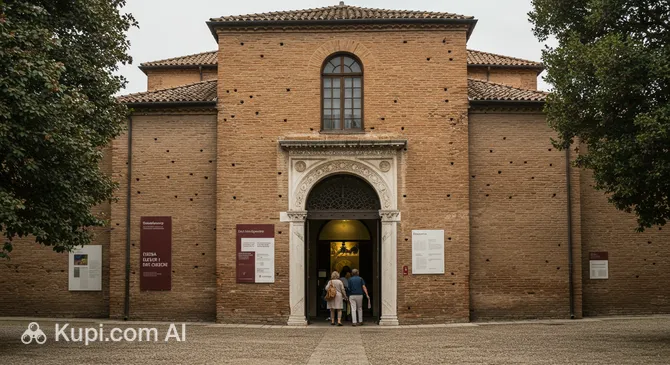
MAR - Ravenna Art Museum. Source: Kupi.com Binoculars

A special feature of the museum is its unique collection of contemporary mosaics. Italy is famous for its art, but it is here that you can see how the ancient technique of Byzantine masters has been transformed in the hands of 20th and 21st-century artists. This makes MAR not just a picture gallery, but a true laboratory exploring the evolution of artistic forms.

A visit to MAR is a chance to take a break from the hustle and bustle in quiet monastery courtyards and immerse yourself in a world of beauty. The museum is perfect for those who want to expand their understanding of Ravenna beyond its famous early Christian monuments and see the living, evolving face of Italian art.

Contacts

To help you plan your visit, we suggest checking the museum's contact details. Here you will find the address, phone number, and official website to verify current information before your trip.

Address Via di Roma, 13, 48121 Ravenna RA, Italy
Phone +39 0544 482477
Website http://www.mar.ra.it/

What to Do

First and foremost, visitors should explore the Pinacoteca — the main collection of paintings and sculptures. It features works by masters from the Emilia-Romagna region and other parts of Italy, covering the period from the 14th to the 19th century. You can trace the development of artistic styles from the late Middle Ages to Neoclassicism while examining altarpieces, portraits, and landscapes. Pay special attention to the hall housing the cult statue of Guidarello Guidarelli — a legendary knight whose marble image is shrouded in romantic legends.

An essential part of the program is viewing the Contemporary Mosaic Collection. This is a unique assemblage with no equal. You will see how Ravenna's traditional technique is used to create avant-garde and abstract works of art. It houses sketches and finished mosaic panels created based on designs by famous 20th-century artists such as Chagall and Guttuso.

Do not miss the opportunity to walk around the museum's architectural complex. The building of the former monastery, with its elegant loggia (Loggetta Lombardesca) and cozy inner courtyards, encourages leisurely contemplation. High-level temporary exhibitions dedicated to both classical and contemporary art are often held in the courtyards or special halls, so be sure to check the program for the day of your visit.

Getting There

The museum is located in a convenient part of the city, and getting there is easy. MAR is situated on Via di Roma, making it accessible for walking, especially if you are already exploring the historic center. From the Ravenna railway station, the walk takes about 10–15 minutes: head down Viale Farini, and then turn onto Via di Roma.

If you prefer public transport, city buses circulating around the center stop near the museum. You can also use taxi services, which will quickly take you from any attraction or hotel directly to the entrance of the Loggetta Lombardesca complex.

History & Facts

The building that houses the museum today is a historical monument in itself. It is the former monastery of the Abbey of Santa Maria in Porto, built in the 16th century. The complex received its second name — Loggetta Lombardesca — thanks to the graceful loggia erected by Lombard masters and masons from Campione. The elegant cloister (inner courtyard) creates an atmosphere of tranquility and harmony characteristic of the Renaissance.

Interestingly, the history of the museum collection began long before the opening of MAR itself. The foundation of the collection was formed by artworks confiscated from religious orders during the Napoleonic suppressions, as well as private donations from local aristocrats. Over time, the collection grew, and in the early 2000s, a major reorganization was carried out, transforming the city pinacoteca into a modern art center.

In the museum's recent history, the preservation and reinterpretation of the city's main symbol — the mosaic — plays an important role. Unlike the ancient Byzantine examples for which the city is famous, here they actively collect and commission works by contemporary mosaic artists, creating a unique bridge between the past and present of art.

Time Needed

For a thoughtful exploration of the museum's collections, it is usually enough to set aside 1–2 hours. This time is sufficient to leisurely walk through the halls of the main exhibition, enjoy the contemporary mosaic collection, and stroll through the picturesque inner courtyard.

If a major temporary exhibition is taking place at MAR during your visit, it is worth adding an extra hour. The museum often hosts large-scale projects that require careful study, so art lovers should plan their visit with some time in reserve.

Working Hours

When planning your visit, pay attention to the museum's opening hours, as they vary depending on the day of the week. On Mondays, the museum is closed to visitors. From Tuesday to Saturday, the doors are open from 9:00 to 18:00.

A special schedule applies on Sundays: the museum operates in the afternoon, from 15:00 to 19:00. We recommend keeping this schedule in mind to ensure you have enough time to view all the exhibitions without rushing.

Nearby

The museum's location makes it easy to combine a visit with sightseeing other gems of the city. The area around Via di Roma is rich in historical monuments, many of which are included in the UNESCO World Heritage list. A walk in the surroundings will give you the opportunity to see magnificent Byzantine mosaics and places connected with the great poet Dante.

Attraction Distance
Basilica di Sant'Apollinare Nuovo 0.3 km
Dante's Tomb 0.5 km
San Giovanni Evangelista, Ravenna 0.5 km
Battistero Neoniano (o degli Ortodossi) 0.7 km
Piazza del Popolo 0.7 km
Archiepiscopal Museum, Ravenna 0.7 km
Archbishop's Chapel of St. Andrew 0.7 km
Basilica of San Vitale 1.1 km
Mausoleo di Galla Placidia 1.1 km
Porta Adriana 1.2 km

Reached the end of the page?

That means the route is fully explored