Support

Obuse

About

Obuse is a charming town, a true corner of Japanese harmony and inspiration, nestled in Nagano Prefecture, about 20 kilometers northeast of the city of the same name. Set among picturesque hills and gardens surrounded by chestnut groves, it is famous for its peaceful atmosphere, where every visitor can find a place for quiet relaxation and leisurely walks. Obuse is part of Japan and attracts visitors with its authenticity.

Despite its compact size and population of about 10,500 people, Obuse maintains a special intimacy and warmth rarely found in major tourist centers. It is an independent administrative town with a rich history and its own cultural identity. There is no hustle and bustle of a metropolis here; instead, you'll find cozy streets, traditional Japanese houses, small shops, and cafes where every guest feels welcome. From the first moments, the town captivates with its silence, cleanliness, and the feeling of "Old Japan."
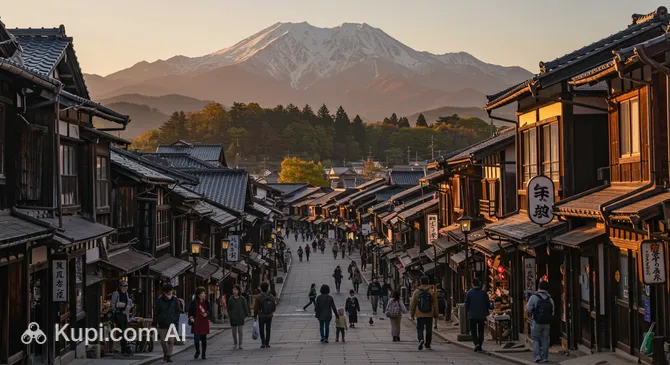
Obuse. Illustration.
Source: Kupi.com AI

The main highlight of Obuse is its close connection with the great Japanese artist Katsushika Hokusai, whose later works can be seen in the local Hokusai-kan Museum. In addition to art, the town attracts gastronomy lovers, especially with its famous chestnut sweets and local sake. Obuse also offers wonderful opportunities for strolling through blooming gardens and leisurely cycling trips through the picturesque surroundings.

If you are looking for a place to feel the true spirit of Japan, away from noisy tourist crowds and surrounded by natural beauty and art, Obuse will be a real discovery and provide unforgettable impressions.

You can find more interesting facts on the history of Obuse page.

Weather Overview

The weather in Obuse is characterized by distinct seasonal fluctuations. Summer, especially in July and August, is warm here: average temperatures stay around 21-23°C, while maximums can reach 25-27°C. Winters, on the other hand, are cold. In January and February, average temperatures drop below freezing, often down to -6°C. Precipitation occurs throughout the year, but its distribution is uneven. The maximum amount of precipitation, about 10 mm, is typical for July, which is also one of the wettest months (approximately 25 days with precipitation). In winter, especially in January, there is also a high number of days with precipitation, mainly in the form of snow, although its intensity averages 4-5 mm. Spring and autumn months offer more moderate weather. Overall, expect a warm summer with frequent rain and cold winters with regular snowfall.

For a more detailed forecast and monthly weather information, you can visit the Climate in Obuse page.

Average monthly temperature

Average monthly precipitation

Interesting Facts

In addition to its picturesque streets and famous chestnuts, Obuse holds many surprising stories and little-known details that make it a truly unique place in Japan. Here are just a few interesting facts about this charming town:

  • Did you know that the great Japanese artist Katsushika Hokusai, author of the famous "Great Wave off Kanagawa," spent the final years of his life in Obuse? Here, he not only created prints but also left unique paintings on the ceiling of Gansho-in Temple, turning the town into a kind of artistic mecca.

  • Obuse holds the unofficial title of the "Chestnut Capital of Japan." The town is literally surrounded by chestnut groves where special varieties of this nut are grown. Chestnuts are everywhere here: from the alleys and motifs in urban architecture to countless treats whose recipes are passed down through generations.

  • One of the amazing features of Obuse is the "Open Garden" tradition. Many local residents proudly display their private flower gardens to tourists, turning a walk through the town into a true aesthetic pleasure. This is complemented by the atmosphere of old craft workshops and sake breweries, where century-old traditions are still honored.

  • Despite its compact size and small population (about 10,510 people), Obuse boasts a surprising concentration of cultural sites. Here you will find many small but very interesting museums and art galleries, each preserving its own piece of the town's history and art.

How to Get There

For international travelers, the journey to Obuse usually begins with an arrival at one of Japan's major international airports, such as Narita (NRT) or Haneda (HND) in Tokyo, or Kansai (KIX) in Osaka. From these hubs, you can take domestic flights to regional airports serving Nagano Prefecture or use Japan's extensive railway network to reach the region's major cities first, and then Obuse itself.

There are several ways to reach the charming town of Obuse in Nagano Prefecture, primarily through regional airports in Japan. As there is no direct air service to Obuse itself, travelers will first need to fly into one of the nearest airports and then use ground transportation.

The closest option is Matsumoto Airport (MMJ), located in the city of Matsumoto, approximately 68.5 km from Obuse. This is a small regional airport from which Obuse can be reached by taxi or bus in about 2 hours. If minimizing travel time from the airport is important to you, Matsumoto Airport can be a convenient choice.

Another convenient option is Toyama Airport (TOY), located in the city of Toyama at a distance of about 100.7 km. This airport handles more flights than Matsumoto and is a medium-sized airport. The trip from Toyama Airport to Obuse will take approximately 2.5–3 hours by car or public transport.

For those looking for a larger transport hub with a potentially wider selection of flights, Komatsu Airport (KMQ) is worth considering. It is located in the city of Komatsu, about 173.9 km from Obuse. Komatsu Airport is a major airport with high passenger traffic offering many destinations. The journey to Obuse from here will be longer, approximately 4.5–5 hours, but this may be justified by the wider choice of flights.

For clarity, here is a summary of the main airports through which you can reach Obuse:

AirportPassenger trafficDistance
Matsumoto Airport112 61868 km
Toyama Airport736 740101 km
Noto Airport207 427137 km
Niigata Airport1.1 mln157 km
Komatsu Airport1.8 mln174 km

In addition to air travel, Obuse can be reached by train, as Japan is famous for its developed railway network. The nearest major railway stations are in the cities of Nagano or Iiyama, from where local trains or buses run to Obuse. Traveling by car is also a convenient option, especially if you plan to explore the picturesque surroundings of Nagano Prefecture. It is recommended to check public transport schedules in advance or consider renting a car for maximum flexibility.

Main Attractions

Obuse, a charming town in Nagano Prefecture, offers travelers a unique blend of art, history, and culinary delights. Despite its small size, Obuse boasts several key attractions that draw visitors from around the world.

One of the town's main gems is the Hokusai Museum (Hokusai-kan). The great ukiyo-e artist Katsushika Hokusai spent the final years of his life in Obuse, and this museum is dedicated to his work from that period. Here you can see the master's impressive works, including the famous ceiling paintings for festival floats, and gain a deeper understanding of his contribution to Japanese art. The museum is a must-visit for all admirers of Japanese culture and painting.

Nearby is the Gansho-in Temple, famous for its stunning ceiling mural "Phoenix Staring in Eight Directions," also created by Hokusai. Legend has it that if you clap your hands under the image, you can hear an echo resembling the cry of a phoenix. In addition to this masterpiece, the temple offers a serene atmosphere and beautiful architecture, making it a wonderful place for reflection and learning about Buddhist traditions.

A stroll through the Chestnut Alleys (Kuri no Komichi) is another unforgettable experience in Obuse. These picturesque paths, paved with chestnut wood blocks, lead past traditional Japanese houses, shops selling famous local chestnut sweets, and cozy restaurants. It is the perfect place to feel the authentic atmosphere of old Japan and taste local delicacies, as Obuse is renowned for its chestnuts.

The Takai Kozan Memorial Museum is also worth a visit. Takai Kozan was a wealthy merchant, scholar, and artist, as well as Hokusai's patron in Obuse. The museum is located in his former residence and studio, where you can see his own works as well as items related to his life and friendship with Hokusai. This site allows for a better understanding of the cultural environment in which the great ukiyo-e master worked.

Local Cuisine

Obuse is a true paradise for gourmets, especially those who appreciate exquisite sweets and original flavor combinations. The gastronomic symbol of the city is rightfully the chestnut. For centuries, local residents have refined the art of cooking with this fruit, turning it into culinary masterpieces that attract connoisseurs from all over Japan.

The main specialty that you must try in Obuse is "kuri manju" (栗まんじゅう) – delicate steamed or baked buns with a sweet chestnut paste filling. They can be found in almost every confectionery in town. Additionally, they make delicious chestnut ice cream, various cakes, rolls, and even seasonal dishes such as chestnut rice (kuri gohan) or soups with added chestnuts. Many recipes are passed down through generations, preserving the authentic taste.

For beverage lovers, Obuse offers unique flavors. Be sure to visit the local sake breweries that produce sake with added chestnuts. This drink has a special aroma and a mild taste, perfectly complementing local cuisine. Some breweries also experiment with chestnut-noted beer. Among non-alcoholic drinks, traditional Japanese teas and freshly squeezed juices, often featuring seasonal fruits, are popular.

Food culture in Obuse is closely tied to tradition and seasonality. Locals and tourists alike enjoy chestnut delicacies in numerous cozy cafes and restaurants, many of which specialize specifically in chestnut dishes. Small stalls offering street food are common on the town's streets: roasted chestnuts, sweet chestnut pastes, and mini-desserts that are easy to take on a walk. During the chestnut harvest season, gastronomy festivals are often held in Obuse, where you can try dozens of variations of dishes featuring this "king of autumn" and buy fresh products at farmers' markets.

Travel Tips

Are you planning a trip to the charming town of Obuse, nestled in Nagano Prefecture and known for its chestnut groves and the rich legacy of the artist Hokusai? These practical tips will help you better prepare for your journey and enjoy every moment in this unique corner of Japan.

  1. Clothing and Essentials:

    The climate in Obuse, as in all of Nagano Prefecture, has distinct seasons: warm and humid summers, snowy and cold winters, and very pleasant springs and autumns. Pack layered clothing to easily adapt to the weather. Be sure to bring comfortable walking shoes, as Obuse is a small town that is pleasant to explore on foot, visiting numerous museums and workshops. Don't forget an adapter for electrical appliances (Japan uses Type A and B sockets). When visiting temples, such as Gansho-in, choose modest clothing and be prepared to remove your shoes.

  2. Transport Around Town and Surroundings:

    Obuse itself is compact and easy to get around on foot or by rented bicycle. For trips to neighboring cities, such as Nagano, you can use local buses (Nagaden Bus) or the Nagano Electric Railway, which has a station right in town. Taxis are available but can be an expensive option for short trips. Renting a car is not necessary for getting around Obuse, but it can be convenient if you plan to actively explore the picturesque surroundings of Nagano Prefecture; remember that driving is on the left and an international driving permit is required.

  3. Finances: Currency, Cards, and Tipping:

    The official currency is the Japanese yen (JPY, ¥). It's better to exchange money in advance at the airport or in a large city, as the number of exchange points in Obuse itself may be limited. Credit and debit cards (Visa, Mastercard) are accepted in many hotels, restaurants, and large shops; however, in small traditional stalls, ryokans, and markets, cash is often preferred. ATMs that accept international cards can be found at Japan Post Bank branches or in 7-Eleven stores (Seven Bank ATMs). Tipping in Japan, including Obuse, is not practiced – good service is considered the norm.

  4. Health and Safety:

    Obuse, and Japan in general, is a very safe place with a low crime rate. There are pharmacies in town, but they may not be open 24/7, and the range of medications may differ from what you're used to, so it's better to bring a basic first-aid kit with necessary medications. Be sure to get travel medical insurance before your trip. If serious medical assistance is needed, major hospitals are located in Nagano city.

  5. Communication: Language, Internet, and Useful Phrases:

    The main language of communication is Japanese. In tourist areas of Obuse, such as museums and some restaurants, staff may speak basic English, but overall its prevalence is low. Learn a few simple phrases: "Konnichiwa" (Hello/Good day), "Arigato gozaimasu" (Thank you very much), "Sumimasen" (Excuse me/Sorry). For internet access, it's recommended to buy a local SIM card or rent a pocket Wi-Fi router at the airport. Free Wi-Fi is available in most hotels and some cafes. Translation apps and navigation tools like Google Maps will be very useful.

  6. Local Etiquette and Traditions:

    Japanese people are very polite and appreciate a respectful attitude towards their culture. When greeting someone, it is customary to give a slight bow (o-jigi). In public places, especially on transport, try not to speak loudly on the phone. Remove your shoes when entering homes, traditional ryokans, and temples. When using chopsticks, do not stick them vertically into rice or pass food from chopsticks to another person. Showing patience and politeness will always be appreciated.

  7. What to Avoid:

    First, do not leave tips – this can embarrass or even offend the staff. Second, avoid blowing your nose loudly in public; if necessary, it's better to go to a restroom. Also, try not to eat while walking on the streets unless it is in a designated area (for example, at food festivals).

  8. Special Tip for Obuse:

    Obuse is the chestnut capital of Japan! Be sure to try local chestnut delicacies ("kuri" in Japanese): cakes, ice cream, and the traditional dish kuri-okowa (rice with chestnuts). A particularly rich selection of chestnut treats is available in the autumn, during the harvest season (September–October). And, of course, don't miss the chance to visit the Hokusai Museum, where the great artist spent the last years of his life, leaving a priceless legacy to the town.

We hope these tips make your journey to Obuse as comfortable and unforgettable as possible. This town has a unique atmosphere, and you are sure to take many pleasant memories with you!

Entertainment & Nightlife

Obuse, a charming small town in Nagano Prefecture, offers its guests a peaceful and authentic atmosphere rather than the vibrant nightlife of big metropolises. Nevertheless, you can spend a pleasant evening here, immersing yourself in local culture and enjoying Japanese hospitality.

Evening entertainment in Obuse centers around traditional Japanese pubs – izakayas, small cozy bars, and restaurants offering local delicacies and drinks, with local sake being particularly famous. The nightlife here does not involve noisy clubs or neon-lit districts. Instead, a calm environment awaits you, where you can relax after a busy day. You can find such establishments by strolling through the town's central streets. The atmosphere is usually very friendly and conducive to conversation. The crowd is mixed – both locals and tourists. Most places stay open until late evening, but not into the early morning hours, which is typical for small Japanese towns. There is usually no specific dress code; a neat casual style is welcomed.

When planning your evening leisure, it is best to aim for the time after 6:00 PM or 7:00 PM. Average prices in local izakayas and bars are quite moderate. You can get back to your hotel at night on foot if you are staying in the center, or use a taxi. It is recommended to check the possibility of calling a taxi in advance, especially if you plan to stay out late. Obuse is considered a very safe town, so evening walks are pleasant and worry-free, though standard precautions should always be taken.

Unfortunately, we do not currently have a specific list of recommended bars or nightclubs in Obuse with direct booking options or detailed information. Travelers are encouraged to explore the central part of town, where many welcoming local establishments offering an authentic experience can be discovered.

During the day, Obuse offers entirely different experiences. The town is famous for its connection to the great artist Katsushika Hokusai, so a visit to the Hokusai Museum is a mandatory part of any itinerary. It is also worth strolling through the picturesque streets, visiting numerous galleries and craft shops selling items made from chestnut – a local specialty – and enjoying the beauty of local gardens and temples. For nature lovers, the surroundings of Obuse also offer opportunities for pleasant walks.

Parks & Museums

Obuse, a charming town in Nagano Prefecture, offers its guests a harmonious blend of peaceful green spaces and rich cultural heritage that can be explored in its unique museums and historical corners. It is a place where art and nature create a unique atmosphere.

Among the city's green oases, the Floral Garden Obuse stands out. It is a wonderful place for walks at any time of year, as the garden is famous for its seasonal floral displays. Here you can enjoy the beauty of various plants and relax away from the city's bustle. A walk along the banks of the Chikuma River will also leave pleasant impressions, offering scenic views and fresh air. Many temples in Obuse, such as Gansho-in Temple, are surrounded by traditional Japanese gardens, which are works of art and tranquility in their own right.

The cultural life of Obuse is inextricably linked with the name of the great artist Katsushika Hokusai. The main magnet for art lovers is the Hokusai Museum (Hokusai-kan). It features an impressive collection of his works created during the final years of his life, which he spent in Obuse. A visit to the museum allows for a deeper understanding of the master's work and his influence on Japanese art. Equally interesting is the Takai Kozan Memorial Museum, dedicated to the local merchant and artist who was Hokusai's patron. In the museum, you can see his own works and learn about the cultural life of Obuse at that time. Another significant site is the Obuse Museum & Nakajima Chinami Gallery, which exhibits the works of contemporary artist Nakajima Chinami, as well as local festival floats.

The historic center of Obuse has preserved the charm of an old Japanese town with its traditional houses and narrow streets, such as the famous Chestnut Alleys (Kuri no Komichi). Special attention should be paid to the aforementioned Gansho-in Temple, where the main attraction is the phoenix ceiling mural painted by Hokusai. This monumental work is striking in its detail and scale.

For authentic experiences, be sure to stop by the numerous shops offering local delicacies made from chestnuts – "kuri" – for which Obuse is famous. Try chestnut ice cream or traditional sweets. Also, look out for small craft workshops where you can find unique handmade souvenirs.

Getting Around

Getting around Obuse and its surroundings is quite convenient, although given the town's compact size, many attractions are within walking distance. The main types of public transport here are local trains and buses.

Obuse Railway Station is served by the private Nagano Electric Railway line, which connects the town with Nagano and other settlements in the region. This is a convenient way to reach Obuse or take a trip to neighboring towns. To travel specifically within the town and its immediate surroundings, you can use local bus routes. The bus network is not very extensive but covers the main tourist points. Bus schedules should be checked in advance, especially if you plan trips to less popular areas or in the evening.

The fare payment system in Japan is generally quite unified. On Nagano Electric Railway trains, you can most likely use popular nationwide IC cards like Suica or Pasmo, which you simply tap at the gate when entering and exiting. Train tickets can also be purchased at machines or ticket offices at the stations. In local buses, payment is most often made in cash when boarding or exiting (depending on the specific bus operator's system). It is recommended to carry small change. Some regional bus companies may accept IC cards, but it's best to be prepared to pay in cash. The fare depends on the distance; for short trips around town, it's usually a few hundred yen.

Tourists are advised to purchase train tickets at the station before departure. For buses, if payment is made upon boarding, simply drop the required amount into the special machine next to the driver. If payment is upon exit, take a ticket when boarding (if the system requires it) to show your boarding stop, and pay according to the fare when exiting. Public transport operating hours in small towns like Obuse are usually limited, and final services can be quite early, especially on weekdays and outside the tourist season. Plan your movements in advance by checking the latest schedules at stations or tourist information centers.

As an alternative to public transport, taxis are popular in Obuse and can be found at the station or called by phone. However, this is a more expensive way to travel. Given the region's scenic beauty and the short distances between main attractions in the town itself, bicycle rental is an excellent option. Many hotels and specialized rental points offer bicycles, allowing you to explore Obuse at your own pace and enjoy its atmosphere. Car sharing is less common in Japan's smaller towns than in metropolises.

Accommodation

Accommodation in Obuse is not just about finding a place to sleep, but an opportunity to dive deeper into the atmosphere of old Japan. Unlike major metropolises, you won't find huge chain hotels or skyscrapers here. The town's hotel stock consists mainly of cozy and authentic options that allow you to feel the local flavor and sincere hospitality.

The primary and most atmospheric type of accommodation in Obuse is traditional ryokans. By staying in such a place, you can sleep on tatami mats, take a relaxing bath, and enjoy an exquisite "kaiseki" dinner, which often includes dishes made from the famous local chestnuts. For budget-conscious travelers, minshuku (family-run guesthouses) and small pensions are available, offering basic amenities, cleanliness, and a homey feel at a more affordable price.

In terms of logistics, the most convenient area to stay is the historic town center. Choosing a hotel within walking distance of Obuse Station or in close proximity to the Hokusai Museum will place you at the heart of cultural life. This will allow you to explore the main attractions leisurely on foot and enjoy the morning silence of the ancient streets before the day-trippers arrive.

The price range varies from medium to high. A night in a simple guesthouse is moderately priced, while staying in a historic ryokan with half-board included falls into the upper-middle or luxury category. You can use popular international online platforms for booking, though keep in mind that some small family-run inns might only be listed on local Japanese websites.

Booking tip: Obuse is a popular destination, but the number of accommodations is limited. Demand is particularly high during the chestnut harvest season (September–October) and during "Golden Week" in May. It is strongly recommended to book your accommodation several months before your trip if you plan to visit during these peak periods to guarantee a comfortable stay.

Nearby Cities

For those who want to explore the surrounding area, Obuse serves as an excellent starting point for day trips to several interesting nearby locations. Here are some that deserve your attention:

Nagano, the capital of the prefecture of the same name, is just a few kilometers away. The city is famous for its majestic Zenko-ji Temple, one of Japan's oldest and most revered Buddhist shrines, attracting pilgrims from all over the country. Additionally, Nagano hosted the 1998 Winter Olympic Games, and the legacy of these games is still felt in the city, offering visitors the chance to see some Olympic venues.

The city of Ueda offers an immersion into the region's rich history. Its main attraction is Ueda Castle, known for its connection to the powerful Sanada clan and its role in key historical battles. A visit to the castle and its surrounding park allows you to touch the samurai era and enjoy beautiful views.

Another interesting option for a day trip is Joetsu. Here you can explore the ruins of Kasugayama Castle, the former residence of the famous warlord Uesugi Kenshin. The city is also famous for Takada Park, which is especially beautiful in spring during the cherry blossom season, turning into one of the best places to admire this phenomenon in the region.

CityPopulationDistance
Suzaka49 3935 km
Iizuna10 1349 km
Yamanouchi11 10610 km
Nagano367 18412 km
Iiyama19 27918 km

These nearby destinations provide an insight into the region's diverse culture and landscapes, complementing the experience of visiting Obuse.

Shopping & Souvenirs

The town of Obuse, famous for its chestnuts and its connection to the artist Hokusai, offers charming, though not large-scale, shopping. You won't find massive shopping malls here, but you can enjoy searching for unique local products and souvenirs in small shops and stalls that reflect the region's culture and traditions.

Main shopping opportunities in Obuse are concentrated along its central streets, especially in the area where the Hokusai Museum and other historical sites are located. Strolling through these picturesque spots, you'll find many shops selling local delicacies, handicrafts, and artworks. The atmosphere here is conducive to leisurely shopping and getting to know local traditions.

There are no large modern shopping centers in Obuse, which fits its character as a cozy historical town. Instead, you'll find small family-run shops and specialty boutiques, each offering something unique. These might be confectioneries, sake shops, or galleries featuring works by local masters.

While there are no large permanent markets in Obuse in the conventional sense, seasonal fairs or small local farmers' markets may occasionally be held where you can buy fresh produce, including the famous local chestnuts. It's worth checking for announcements or asking locals about such events during your visit.

The primary souvenirs to bring back from Obuse are undoubtedly related to chestnuts. These can include a variety of sweets (for example, kuri-kanoko – chestnuts in sweet jelly, or kuri-kinton – sweet chestnut puree), roasted chestnuts, chestnut ice cream, and even chestnut beer. Items related to Hokusai are also popular: reproductions of his works, postcards, and books. Don't forget about the local sake produced in this region and traditional crafts such as ceramics or textiles.

Most shops in Obuse are typically open from 10:00 or 11:00 AM until 5:00 or 6:00 PM. Small family-run shops may have more flexible hours or closing days, so it is recommended to check operating hours on-site. Regarding payment, while credit cards are accepted in many places, especially those geared towards tourists, cash is still widely used, particularly in small shops and markets. It is recommended to carry some Japanese yen.

For foreign tourists in Japan, a Tax-Free system is available. Look for shops with the "Tax-Free Shopping" logo. Usually, to claim a tax refund, you must make a purchase of a certain minimum amount in one shop on the same day and present your passport. Conditions may vary, so check the details with the retailers.

Reached the end of the page?

That means the route is fully explored