Support

Kikyō-mon Gate

About

Kikyō-mon Gate is a majestic monument of fortification art located in the heart of Tokyo. As one of the few surviving original structures of the ancient Edo Castle in Japan, today it serves as the main entrance to the Imperial Palace grounds. These massive fortifications, built in the classic Masugata style, were once intended to protect the shoguns' residence and still impress with their impregnability and austere beauty.

The architectural ensemble consists of two gates positioned at a right angle to each other, creating an enclosed space to ambush enemies. The outer part is built in the Koraimon style, while the inner gate is a massive two-story Watariyagura tower, the upper level of which served as a watchtower. The combination of dark wood, white walls, and a powerful stone base creates the recognizable look of a Japanese fortress.
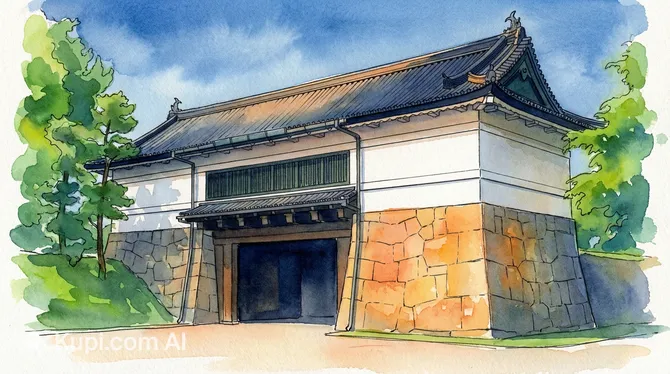
Kikyō-mon Gate. Illustration.
Source: Kupi.com AI

Traveler photos:

The gate got its name in honor of the Chinese bellflower (kikyo)—this flower was the family crest of Ōta Dōkan, the castle's first builder. Today, Kikyō-mon Gate is not just a historical site, but an important place for walks, where the harsh military aesthetics of the past harmoniously coexist with the serenity of the palace moats and well-kept park alleys.

Contacts

To make your visit to Kikyō-mon Gate as comfortable as possible, we recommend checking for up-to-date information before you go. Since the site is located on the grounds of the imperial residence, the access schedule may change due to state ceremonies or official events.

It is recommended to check the official website of the Imperial Household Agency of Japan to stay informed about possible restrictions or special holiday hours.

How to contactContact
Address1-1 Chiyoda, Chiyoda City, Tokyo 100-8111, Япония
Websitesankan.kunaicho.go.jp

What to Do

A visit to Kikyō-mon Gate offers a rare opportunity to examine the defensive architecture of medieval Japan in detail. Visitors should pay attention to the massive Watariyagura structure and the preserved embrasures through which the castle's defenders could fire. The contrast between the rough masonry of the stone walls and the exquisite decorative elements on the roofs, which emphasize the status of this site, provides a special aesthetic pleasure.

This is an ideal spot for photographers: views of the Kikyo moat, in which the ancient walls are reflected, are particularly beautiful in the morning hours. Additionally, it is often here that official tours of the restricted part of the Imperial Palace begin. Walking along the adjacent paths, you can feel the atmosphere of old Edo, observing how the ancient fortifications blend into the modern urban landscape.

For a complete experience, it is recommended to compare Kikyō-mon with other gates in the complex, such as Sakurada-mon. This will allow you to appreciate the variety of Japanese fortification styles and the skill of the builders who were able to combine impregnable power and refined grace in a single structure.

Getting There

Kikyō-mon Gate is located in the very center of the Japanese capital at 1-1 Chiyoda, Chiyoda City, Tokyo. The easiest way to get here is by public transport, which works flawlessly in Tokyo. The nearest metro station is Nijubashimae (Chiyoda Line), from which you can reach the gate on foot in just 5 minutes. Tokyo Station, where JR Yamanote and other major lines arrive, is also a 10–15 minute walk away.

If you prefer buses, look for the Hirakawa-mon or Kikyo-mon stops serving the routes around the imperial complex. For those who value comfort, a taxi ride from popular districts like Shibuya or Shinjuku takes about 15–20 minutes and costs approximately 1,000–2,000 yen. The area around the palace is very pedestrian-friendly, with wide avenues and clear signs.

When planning your route, keep in mind that the area around the moats is quite extensive, so it's best to allow some extra time for a leisurely stroll from the metro to the entrance itself. Using navigation apps will help you find your way among the many gates of the palace complex.

Nearest city: Tokyo

History & Facts

The history of this place is inextricably linked to the fate of the legendary Edo Castle, founded back in 1457 by Ōta Dōkan. Kikyō-mon Gate itself, also known as the Inner Sakurada Gate, was erected in its current form between 1614 and 1620. Influential daimyo, including the famous Date Masamune, participated in its construction, highlighting the site's strategic importance for the security of the Tokugawa shogunate.

The name of the structure preserves a tribute to the castle's founder: "Kikyo" translates as "Chinese bellflower." This flower was depicted on the family crest of the Ōta Dōkan family. Interestingly, over the centuries of its existence, the gate has survived many trials—from the devastating fire of 1657 to the powerful earthquakes of 1703 and 1855. Each time, it was restored with striking precision, preserving the authentic features of defensive architecture.

The gate acquired special historical significance in 1868 during the Meiji Restoration. It was through this gate that imperial forces entered the castle grounds, marking the end of the shoguns' rule and the beginning of a new chapter in the country's history. Since then, the former fortress has become the Imperial Palace, and the gate has become a symbol of Japan's transition from its medieval past to modernity.

Time Needed

For a thoughtful inspection of Kikyō-mon Gate, studying its architectural details, and a small photo session by the moat, 30–45 minutes is usually sufficient. This is enough time to appreciate the strength of the stone walls and the elegance of the roof finishes, as well as to enjoy the views of the surrounding park.

If you plan to include a visit to the gate as part of a larger itinerary through the Imperial Palace grounds or intend to take an organized tour, we recommend allocating at least 1.5 hours. Given the scale of the complex and the abundance of interesting sites nearby, time flies by quickly here, especially if you decide to walk along the scenic banks of the Kikyo moat.

Working Hours

Kikyō-mon Gate is available for external viewing by guests of Tokyo daily and 24/7. You can admire its monumental architecture and take commemorative photos at any convenient time, as it is located in the open part of the Imperial Palace park area.

It is worth noting that passage directly through the gate to the inner territory of the residence is only possible as part of organized groups during official tours. On holidays or during state ceremonies, access to adjacent areas may be temporarily restricted, so it is advisable to check the current schedule on the official Imperial Household Agency resource before your walk.

Open 24 hours

Nearby

Exploring the surroundings of Kikyō-mon Gate will allow you to dive deeper into the atmosphere of the capital's historical center. Very nearby are the picturesque East Gardens of the Imperial Palace, where you can stroll through impeccable landscapes and see the remains of the Edo Castle's main tower foundation.

No less interesting will be a visit to the famous Nijubashi Bridge, which is considered one of the city's most recognizable symbols. The combination of ancient fortifications, quiet water-filled moats, and the modern skyscrapers of the Marunouchi district on the horizon creates a unique architectural contrast that will stay in your memory for a long time.

NameDistance
Tokyo Imperial Palace0.5 km
Nijubashi Bridge0.6 km
teamLab Borderless2.8 km
Suga Shrine3.2 km
The National Museum of Western Art3.8 km
National Museum of Nature and Science3.9 km
Tokyo National Museum4.2 km

Reached the end of the page?

That means the route is fully explored