Support

Meiji Jingu Gaien Gingko Avenue

About

Meiji Jingu Gaien Ginkgo Avenue is one of the most recognizable and picturesque natural attractions in Tokyo. Located on the border of the Shinjuku and Minato districts in Japan, it is a magnificent 300-meter corridor formed by 146 majestic ginkgo trees planted with perfect symmetry.
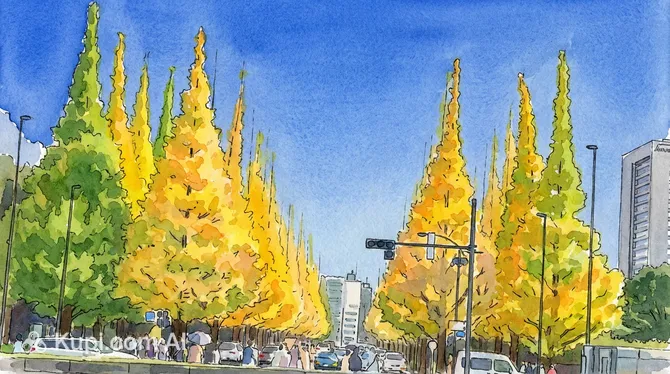
Meiji Jingu Gaien Ginkgo Avenue. Illustration.
Source: Kupi.com AI

Traveler photos:

Known among locals as "Icho Namiki," this spot is particularly transformed in late autumn. When the foliage turns bright yellow, the avenue becomes a true golden tunnel, and the ground is covered in a soft carpet of fallen leaves. Due to its exceptional aesthetics, the location regularly serves as a backdrop for movies, fashion shows, and professional photo shoots.

As part of the outer garden of the Meiji Jingu Shrine, the avenue harmoniously blends the metropolis's urban landscape with natural serenity. A walk here at any time of year offers a sense of peace: in spring, the trees delight the eye with fresh greenery; in summer, they provide shade from the heat; and in winter, they create graphic landscapes against the clear sky.

Contacts

When planning a stroll along the Meiji Jingu Gaien Ginkgo Avenue in Tokyo, we recommend checking the official website of the complex for information on current events in advance. Although this public space is accessible at any time, details regarding seasonal festivals and holiday illuminations will help you choose the perfect moment for your visit.

How to contactContact
Address2-chōme-7-付近 Kitaaoyama, Minato City, Tokyo 107-0061, Япония
Phone+81 3-3401-0312
Websitewww.meijijingugaien.jp

What to Do

The main activity on the avenue is a leisurely stroll, allowing you to fully enjoy the unique landscape. The largest crowds are seen from mid-November to early December—this is when the ginkgo trees reach the peak of their beauty. It is the best time for artistic photography, as sunlight filtering through the golden foliage creates a magical atmosphere.

The popular Jingu Gaien Ginkgo Festival is held here annually, where you can not only admire nature but also sample traditional Japanese treats from street vendors. If you are interested in history, stop by the nearby Meiji Memorial Picture Gallery, which houses large-scale murals depicting the life and reign of the great Emperor.

For those seeking tranquility amidst the city bustle, the avenue is an ideal spot for morning yoga or reading on one of the comfortable benches. Cyclists and runners also frequently choose this route for its spaciousness and inspiring views, allowing them to combine active recreation with aesthetic pleasure.

Getting There

The most convenient way to reach the avenue is by subway. The walk from Aoyama-Itchome Station (Ginza, Hanzomon, and Oedo lines) takes only about 5 minutes. Gaienmae Station on the Ginza line is also within walking distance, from which you can reach the start of the golden corridor in 10 minutes by following Aoyama-dori Avenue.

If you prefer JR trains, you can take the Yamanote Line to Yoyogi or Harajuku stations. The walk from there to the outer garden takes about 15–20 minutes, making it an excellent option if you want to combine a visit to the avenue with exploring the famous Yoyogi Park or the lively Harajuku district.

Taxis are a quick way to get there from anywhere in central Tokyo, but keep in mind that traffic can be heavy during peak hours. Parking in this area is very limited and quite expensive, so using the extensive public transport network is the most practical and convenient solution.

Nearest city: Tokyo

History & Facts

The history of Meiji Jingu Gaien Ginkgo Avenue began in 1926. It was designed and planted by volunteers as part of the outer garden of the Meiji Jingu Shrine. The entire complex was created to immortalize the memory of Emperor Meiji and Empress Shoken, whose contributions to the modernization of Japan transformed the country into a leading power.

The choice of trees for the avenue was not accidental: ginkgos are famous for their incredible resilience and longevity, making them a living symbol of eternity. The saplings were brought from China and carefully selected by height. Interestingly, the trees are planted using the principle of perspective—their height decreases as they approach the Meiji Memorial Picture Gallery building, which visually lengthens the avenue and creates an impressive architectural ensemble.

Over the decades, the avenue has evolved from a memorial site into one of Tokyo's most important cultural symbols. It has survived the city's transformations and today serves as a reminder of the harmony between the rapid progress of a megacity and the quiet beauty of nature, carefully preserved by the Japanese for centuries.

Time Needed

To fully experience Meiji Jingu Gaien Ginkgo Avenue, you usually need 1 to 2 hours. The walk along the 300-meter route itself, with short stops for photos, takes about 30–45 minutes, but the unique atmosphere of the place often encourages visitors to stay longer.

If your plans include visiting the adjacent picture gallery or participating in one of the seasonal festivals with street food tastings, you should budget about 3 hours. During the peak autumn season (late November), the avenue can be crowded, so allowing extra time will let you enjoy the famous "golden tunnel" without rushing.

Working Hours

Since the avenue is a public open space, it is accessible for visiting 24/7. You can come here early in the morning to catch the best light for photography without the crowds, or stroll late in the evening, enjoying the peace and quiet of the night city.

Please note that adjacent cultural sites, such as the Meiji Memorial Picture Gallery or sports facilities, have their own regulated operating hours. Before visiting them, we recommend checking the information on the official resources of the Meiji Jingu Gaien complex.

Open 24 hours

Nearby

The location of Meiji Jingu Gaien Ginkgo Avenue in one of Tokyo's most elegant districts allows you to easily complement your walk with visits to other iconic sites. The Aoyama neighborhood is famous for its sophisticated atmosphere, where modern architecture coexists with quiet temple gardens.

Just a few minutes' walk away, you will find the famous Nezu Museum with its magnificent collection of Oriental art and traditional Japanese garden, as well as the Watarium Museum of Contemporary Art. Exploring these locations will help you deeper feel the cultural contrast of the Japanese capital and make your day truly fulfilling.

NameDistance
Nezu Museum1.2 km
Blue Note Tokyo1.3 km
Suga Shrine1.4 km
Shibuya Coffee Bar2.1 km
Shibuya Stream Bar2.3 km
teamLab Borderless2.4 km
Nijubashi Bridge3.1 km

Reached the end of the page?

That means the route is fully explored