Support

Site of Edo Castle Honmaru (Main Hall)

About

The Edo Castle Honmaru (Main Ward) Ruins are a silent yet majestic reminder of the era when Tokyo was the residence of powerful shoguns. Once considered the largest in the world, Edo Castle's fortifications spanned approximately one million square meters. Today, the site of the Honmaru main hall is home to a historical archaeological park in Japan, where preserved stone foundations allow visitors to appreciate the colossal scale of medieval architecture.
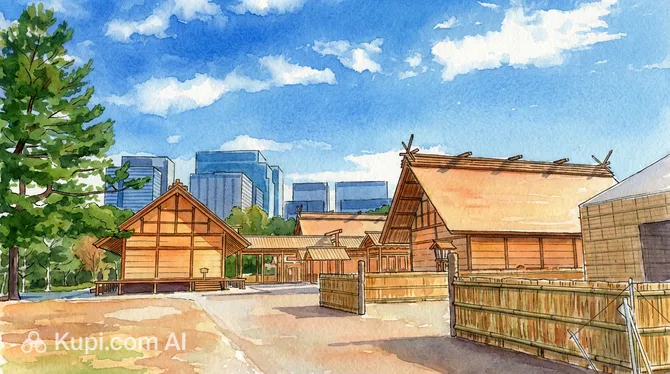
Edo Castle Honmaru Site. Illustration.
Source: Kupi.com AI

Traveler photos:

The highlight of this site is Tenshudai—the massive foundation of the castle's main tower, offering panoramic views of the surrounding gardens and the modern skyscrapers of the Chiyoda ward. Visitors can see the remains of the Kuroshoin halls, where official audiences with daimyo were once held, and feel a connection across time while walking among ancient defensive walls and moats.

Today, the ruins are integrated into the Imperial Palace East Gardens and serve as a popular national park. The attraction's high rating confirms its cultural significance: it is an ideal location for those wishing to immerse themselves in samurai history and enjoy tranquility in the very center of the Japanese capital.

Contacts

When planning a walk to the Edo Castle Honmaru (Main Ward) Ruins, we recommend checking the current schedule on official resources in advance. Since the territory is part of the Tokyo Imperial Palace, access may be limited during state ceremonies or official events.

How to contactContact
Address1 Chiyoda, Chiyoda City, Tokyo 100-0001, Япония
Phone+81 3-3213-1111
Websitechiyoda-tokyo.net

What to Do

At the Edo-jo Honmaru site, guests have the unique opportunity to literally touch stones that witnessed the rise of the great shogunate. You can climb the massive Tenshudai keep foundation to appreciate the geometry of the castle fortifications from above and take impressive photos against the backdrop of Tokyo's contrasting skyscrapers. A walk among the preserved foundations of the main palace allows you to visualize the scale of the ceremonial halls and the rulers' private quarters.

As the ruins are located within the East Gardens, exploring Japanese garden art is a must. Depending on the season, you may catch the cherry blossoms, delicate green moss, or the vibrant colors of autumn maples. For a deeper immersion into the context, it is worth using an audio guide or joining a walking tour to uncover the secrets of fortification and the daily life of the Japanese nobility.

Informational panels with reconstructions installed directly at the archaeological sites create a special atmosphere. They help visitors imagine what the original wooden structures, destroyed by fires, looked like. This place is perfect for quiet contemplation, meditation, and studying the history of Japan through its architectural heritage.

Getting There

The most convenient way to reach the Honmaru Ruins in Tokyo is by public transport. The main landmark is Tokyo Station (JR Yamanote and Chuo lines), from which a walk to the garden entrance via the bridges over the castle moats takes about 10–15 minutes. Also in the immediate vicinity is Otemachi Station, a major transport hub connecting several key metro lines.

If you are using the Chiyoda or Marunouchi lines, the most convenient options are Nijubashimae or Sakurada-mon stations. From there, the path to the historic gates leads through picturesque park trails and takes no more than 5–10 minutes. The exact address of the site is 1 Chiyoda, Chiyoda City.

Using a car for a trip to the Chiyoda area is not recommended: access to the residence is strictly limited, and public parking is extremely rare and expensive. A walking route from nearby attractions, such as the Imperial Palace East Gardens, is the most comfortable way to explore the surroundings.

Nearest city: Tokyo

History & Facts

The history of this site began in 1457 when the feudal lord Ota Dokan founded a fortified manor here. However, the true flourish of Edo Castle came in 1590 when Tokugawa Ieyasu took possession of it. After the establishment of the shogunate in 1603, the castle became the political center of all Japan and served as the residence for 15 generations of rulers for over 250 years.

The Honmaru (Main Ward) was the heart of this colossal fortress. In 1638, the construction of the massive main tower (donjon) was completed, making it the tallest structure in the country. Unfortunately, the Great Fire of Meireki in 1657 destroyed the tower, and following the wise decision of advisor Hoshina Masayuki, it was not rebuilt—resources were instead directed toward helping the affected residents and reconstructing the city's infrastructure.

Following the Meiji Restoration in 1868, the castle was handed over to the Imperial family and became the official Imperial Palace. Despite the devastating earthquakes and fires of past centuries, the massive stone foundations of the Honmaru have endured. Today, they are recognized as an important archaeological monument, preserving the spirit of the samurai era in the heart of modern Tokyo.

Time Needed

A thorough exploration of the Edo Castle Honmaru (Main Ward) Ruins and its historical foundations usually takes 1 to 2 hours. This is enough time to stroll leisurely through the grounds, climb the donjon's base, and study the information panels illustrating the former grandeur of the palace halls.

If you plan to combine your visit to the ruins with a walk through the entire territory of the East Gardens or participation in a detailed historical tour, we recommend setting aside half a day. The duration of a visit in Tokyo largely depends on your interest in archaeological details and your desire to enjoy the peaceful atmosphere away from the city noise.

Working Hours

You can visit the Edo Castle Honmaru (Main Ward) Ruins any day of the week except Mondays and Fridays, when the East Gardens territory is usually closed to the public. The standard operating hours are from 09:00 to 16:00. Please note that entry for visitors closes 30 minutes before the end of working hours.

As this site is part of the Tokyo Imperial Palace complex, temporary changes to the schedule are possible due to public holidays or private events. We recommend checking the current access status before your visit.

DayWorking hours
MondayЗакрыто
Tuesday09:00–16:00
Wednesday09:00–16:00
Thursday09:00–16:00
FridayЗакрыто
Saturday09:00–16:00
Sunday09:00–16:00

Nearby

Exploring the surroundings of the former Shogun citadel can significantly enrich your travel experience. Just a few steps away are the magnificent Imperial Palace East Gardens, where ancient architecture meets the flawless art of Japanese landscape design.

Continuing your walk, you can see the majestic Ote-mon Gate and the famous Nijubashi Bridge, which has become one of the capital's main symbols. The proximity of these iconic sites allows for a rich walking route covering key milestones in the history of Tokyo.

NameDistance
Tokyo Imperial Palace0.3 km
Nijubashi Bridge0.7 km
Suga Shrine2.9 km
teamLab Borderless2.9 km
The National Museum of Western Art3.7 km
National Museum of Nature and Science3.8 km
Tokyo National Museum4.1 km

Reached the end of the page?

That means the route is fully explored