Support

Verdal

About

Verdal is a picturesque and cozy corner located in the Trøndelag region, which wonderfully combines the tranquility of rural life with the grandeur of historical events. This town is often called the "cradle of Norway," as it was here that events took place that shaped the nation's destiny for a millennium to come. The atmosphere of Verdal is steeped in respect for the past, yet the town lives an active modern life, attracting travelers with its authenticity and hospitality.

Geographically, the town is spread across a wide and fertile valley through which the Verdal River (Verdalselva) flows into the Trondheim Fjord. The climate here is temperate, with fairly warm summers and snowy winters, making the region attractive to visit year-round. With a population of about 15,000, Verdal retains the charm of a small settlement where nature is literally on your doorstep. A trip here is a great chance to see how diverse and exciting Norway can be: from dense forests and mountain peaks to the calm waters of the fjord.

The main point of attraction for tourists is the village of Stiklestad. It was here in 1030 that the famous battle took place, in which King Olaf the Saint died. This tragedy became a turning point, and since then, the history of Verdal has been inextricably linked with the Christianization of the country and the formation of the Norwegian state. Every year, a grand festival and the open-air theatrical performance "The Drama of Saint Olav" take place here, gathering spectators from all over the world.
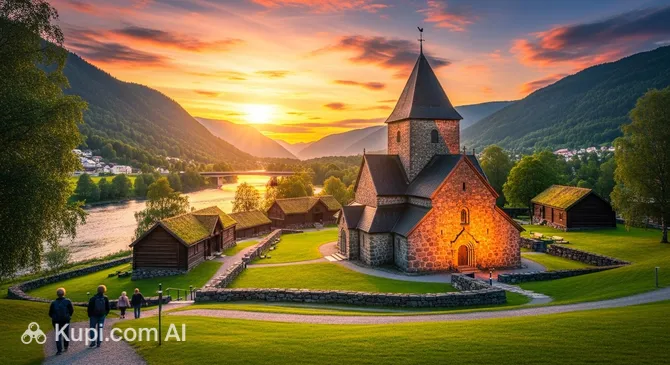
Verdal. Illustration.
Source: Kupi.com AI

In addition to its historical heritage, the town offers excellent opportunities for nature lovers. The Stiklestad National Cultural Center is not just a museum but a living space with reconstructed medieval buildings. For those who prefer active recreation, the Verdal valley offers magnificent salmon fishing and scenic hiking trails leading to mountain peaks and national parks.

Verdal is a place where you can slow down, breathe in the fresh air, and touch the roots of Scandinavian culture. Come here to feel the connection between eras and enjoy the beauty of Norwegian nature away from the hustle and bustle of metropolises.

Weather Overview

The climate in Verdal can be described as temperate, typical for the Trøndelag region. The change of seasons is very distinct here, which gives the town a special charm at any time of year. Summer is generally mild and comfortable: the warmest month is July with an average temperature of about 13.7°C, while on fine days the air can warm up to 17.2°C. This is a wonderful time for excursions and nature walks.

Winter months bring frosty freshness and snow. The coldest period is usually January, when the average temperature drops to -4.2°C, and nightly minimums can reach -6.4°C. Precipitation is distributed fairly evenly throughout the year: the number of days with precipitation varies from 14 to 21 per month, so an umbrella or raincoat will not be out of place. To choose the best time for your visit, we recommend checking the current weather in Verdal in advance and preparing for nature's whims.

Overall, expect moderately warm summers with occasional rain and cool winters with stable snow cover. Travelers should remember the variability of Norwegian weather and dress in layers to feel cozy both during a summer breeze and in the winter cold.

Average monthly temperature

Average monthly precipitation

Interesting Facts

Behind the facade of important historical dates and monuments, Verdal hides many curious details that make it truly unique. Here are a few facts that reveal the character of this place from an unexpected side:

  • The "Lottery Village" Phenomenon. Locals proudly call their town "Lotto-bygda." This is not just a joke: statistics confirm that an anomalously high number of national lottery winners live here. The luck of Verdal's residents has become a kind of legend, attracting national attention.
  • The Land that Changed Shape. The modern landscape of the valley is the result of dramatic events. The famous Verdal landslide of 1893 was the largest natural disaster of its kind on land that Norway has ever known. The shifting of clay soils forever changed the river's course and the topography, creating new fertile lands.
  • Theatrical Longevity. It is here, on the historical field of Stiklestad, that "The Drama of Saint Olav" is staged. This is the longest-running open-air play in all of Scandinavia, performed continuously every summer since 1954, attracting thousands of pilgrims and art lovers.
  • The Vømmøl Cult. Verdal is the birthplace of the unique musical and cultural movement Vømmøl. It is based on a fictional universe that celebrates traditional rural culture with humor and nostalgia. The annual festival turns the town into a colorful carnival where folk costumes and the local dialect are highly valued.

How to Get There

When planning a trip to this picturesque corner of Trøndelag, it's worth checking all ways to get to the city of Verdal in advance. Thanks to Norway's developed transport network, the journey here can be a comfortable and memorable part of your adventure, regardless of the route you choose.

The nearest air gateway for travelers is Værnes Airport (TRD). It is important to note that it is located not in Verdal itself, but near the city of Trondheim, at a distance of about 59 km. This is a major international airport receiving flights from many countries. The journey from the terminal to your destination by taxi or bus takes about 1 hour and 50 minutes. The airport has excellent infrastructure and is considered the main hub of the region.

An alternative option is Åre Östersund Airport (OSD), located in the city of Östersund, Sweden. The distance to Verdal is about 143 km, and the travel time by road is around 3.5–4 hours. This option might be convenient if you are planning a combined tour of Scandinavia, including the Swedish side.

For clarity, here is summary information on the main airports:

AirportPassenger trafficDistance
Trondheim Airport Værnes4 mln59 km
Ryumsjøen Airport37 767127 km
Roros Airport21 575134 km
Åre Östersund Airport239 000143 km
Bronnoysund Airport117 471191 km

For those who prefer ground transportation, the railway is an important reference point. There is no major transit hub in the town of Verdal itself, but you can arrive at Trondheim S Station (XZT) in Trondheim, which is about 59 km from Verdal. This is a key station in the region with high passenger traffic, from where you can easily continue your journey by local train (the Nordland Line or Nordlandsbanen passes through Verdal) or take a bus. The transfer from Trondheim takes about 1–1.5 hours.

Below is information about the nearest major railway station:

StationPassenger trafficDistance
Trondheim S Station1.5 mln59 km

Main Attractions

The town of Verdal offers travelers a unique opportunity to touch the key moments of Scandinavian history and enjoy an authentic atmosphere. Although the list of attractions here is not as large as in major cities, each place possesses deep meaning and a special energy.

The absolute center of attraction is the Stiklestad National Cultural Center. This is not just a museum, but an entire historical complex dedicated to the battle of 1030 and the legacy of Saint Olav. On the center's grounds is a magnificent open-air ethnographic museum, which houses about 30 ancient wooden buildings demonstrating the daily life of the valley's residents from the 17th to the 19th century. Here, you can visit fascinating exhibitions telling the story of the transition from the Viking Age to Christianity and see the famous amphitheater where the historical drama unfolds annually.

Next to the cultural center stands Stiklestad Church—an architectural gem of the region. This Romanesque-style stone church was built in the 12th century, and according to legend, its altar is located exactly on the spot where King Olaf met his death. A solemn tranquility reigns inside the church, and the ancient walls preserve the memory of a thousand-year history of faith and state changes through which Norway has passed.

For those interested in history and engineering, the Verdal Fortifications (De Værdalske Befestninger), particularly Vaterholmen Fort, are an interesting find. Built in the early 20th century in a picturesque gorge, this complex of bunkers, tunnels, and artillery positions once served as protection for the eastern borders. Today, it is a museum site where you can descend into underground galleries, inspect the garrison's living quarters, and appreciate the scale of defensive structures harmoniously integrated into the rugged mountain landscape.

Local Cuisine

Verdal's gastronomic scene is inextricably linked to the culinary traditions of the Trøndelag region, which is often called the "pantry" of the country. Here, the focus is on high-quality local products: from fresh salmon caught in the Verdal River to game from the surrounding forests. Local cuisine is honest, hearty food designed to warm and nourish after a long day in nature, where the main emphasis is on the natural flavor of the ingredients rather than the complexity of preparation.

The main dish, considered a must-try for any tourist, is sodd. This is a traditional regional soup consisting of a clear, rich broth, pieces of boiled mutton, and tender meatballs. In Verdal, it is prepared with special pride, served with boiled potatoes, carrots, and skjenning—a thin, slightly sweet crispy bread. Sodd is eaten here not only on holidays but also on ordinary days, and it perfectly conveys the spirit of local hospitality.

Meat lovers should pay attention to dishes made from elk (moose) meat. Since Verdal is surrounded by vast forests, elk meat is a common product here, not an exotic one. It is served as steaks, juicy patties, or in thick stews with wild mushrooms and lingonberry sauce. In the summer season, local berries become a real hit, especially strawberries, which ripen incredibly sweet and fragrant thanks to the long daylight hours.

Among beverages, black coffee is the absolute leader, which locals drink in large quantities at any time of day. It is an important part of social life. From alcoholic drinks, akevitt (aquavit) is often served at traditional meals—a strong Scandinavian spirit infused with herbs and spices, most often caraway, which helps digest hearty meat dishes. Local craft beers brewed at small farm breweries are also popular in the region.

The food culture in Verdal is characterized by its casual and unpretentious nature. There aren't many fine-dining restaurants, but there are cozy cafes and guesthouses where the food is "like grandma's." Dining in a historical setting, such as at the Stiklestad Cultural Center where you can try dishes inspired by the Viking era, is particularly popular. Additionally, many tourists adopt the local habit of taking food to go: fresh pastries and farm products are perfect for a picnic by the fjord or in the mountains.

Travel Tips

Welcome to Verdal! To ensure your trip to this historical region of Norway is as comfortable as possible and leaves only pleasant memories, I have prepared a list of useful recommendations. These tips will help you feel confident, whether you are planning to attend festivals or enjoy a quiet holiday in nature.

  1. Clothing and Equipment: The weather in Trøndelag is changeable, so the golden rule here is the layering principle. Even in summer, be sure to bring a waterproof windbreaker and a warm sweater (fleece). For walks around the historical sites of Stiklestad and natural trails, you will need comfortable, broken-in flat-soled shoes or trekking boots. There is no strict dress code in the town, but it is recommended to dress modestly when visiting the medieval church.
  2. Transport Logistics: The town center is compact and easy to explore on foot, but the main attractions and beautiful natural spots are scattered throughout the valley. Public transport (buses) runs on a schedule that can be sparse on weekends. For complete freedom of movement, I strongly recommend renting a car. If you are without a car, rely on trains (the station is in the center) for trips to neighboring Trondheim or use local taxis, but be aware that they are an expensive convenience.
  3. Financial Matters: The national currency is the Norwegian Krone (NOK). However, Norway is a country where cashless payments have practically won. Bank cards (Visa, Mastercard) are accepted everywhere: from supermarkets to tiny kiosks and museums. You might not need cash at all. Tipping is not mandatory here as service is included in the bill, but rounding up the amount in cafes will be accepted with gratitude.
  4. Health and Safety: Verdal is a very safe place; you can calmly walk around the town at any time of day. Pharmacies (Apotek) are usually located in shopping centers and are open until 17:00–18:00; they are closed on Sundays. If you plan to hike in the woods or mountains, always have a charged phone and a basic first aid kit with you. The tap water here is pure and drinkable—feel free to refill your bottles.
  5. Communication: Almost all locals speak English fluently, so there should be no language barrier. It would be polite to learn a couple of words: "Hei" (Hello) and "Takk" (Thank you). Wi-Fi is available in most hotels, cafes, and at the cultural center. If you need mobile internet, SIM cards (e.g., Telenor or Telia) can be bought at Narvesen or 7-Eleven kiosks, but passport registration is required.
  6. Local Etiquette: Norwegians value personal space and silence. In public places, it is customary to behave with restraint and not speak too loudly. A firm handshake is common when meeting. An interesting feature: on town streets, people usually don't greet strangers, but on forest trails or in the mountains, it is customary to greet those you meet with a short nod or a "Hei."
  7. What to Avoid: Never try to haggle in shops or markets—prices are fixed, and it will be considered rude. Also, Verdal is an agricultural region; it is strictly forbidden to walk on cultivated fields and meadows, even if they are not fenced. Respect the farmers' work and only use established paths.
  8. Tip for Anglers: If you plan to fish on the famous Verdal River, remember that this is strictly regulated. You must purchase a state license (fiskekort) and often undergo equipment disinfection to protect the river's ecosystem. You can check the rules and buy a permit at local sports shops or campgrounds.

I hope these tips help you quickly adapt and feel the rhythm of life in Verdal. Be open to new experiences, respect the local nature and traditions, and this hospitable land will surely reciprocate!

Entertainment & Nightlife

Nightlife in Verdal is fundamentally different from that of noisy metropolises. Here you won't find multi-story nightclubs with laser shows or districts that don't sleep until dawn. This is a town where evening entertainment is filled with coziness, tranquility, and warm conversation. The main activity is concentrated in the town center—the Verdalsøra district. It is here, along the main streets, that the main establishments are located where locals and tourists gather to relax after a workday or mountain hikes.

The atmosphere in local venues is very casual and friendly. There is practically no dress code: "casual" style is appropriate everywhere, and it is perfectly normal to show up at a pub in comfortable hiking gear as long as it is clean and tidy. The crowd in the bars is diverse—from young people to elderly couples, all coexisting peacefully. On weekends, bars often host live music evenings with local bands or quizzes, which are very popular in Norway and draw full houses.

If you are looking for specific places, the bar at Verdal Hotell is worth noting. This is a classic meeting point in the town center where you can order a glass of beer or wine and chat in a calm setting. Another important point of attraction, especially during the summer season and festivals, is the restaurant at the Stiklestad Cultural Center. Although it is located a bit away from the center, evenings there are often accompanied by themed dinners with historical flavor, creating a unique atmosphere of immersion into the Viking era.

Practical tips for night owls in Verdal are simple but important. Keep in mind that alcohol in the country is expensive: the price of a glass of beer might surprise you, which is why many locals start their parties at home. Establishments close relatively early, usually around 1:00 or 2:00 AM. Public transport is rare late at night, so if you stay late in the center or in Stiklestad, write down a local taxi number in advance—hailing a car on the street is almost impossible here. From a safety perspective, Verdal is an ideal place; night walks here pose no threats, and the streets are well-lit and quiet.

Daytime entertainment in the town is more varied and often linked to culture. Besides the historical museums already mentioned, Verdal has a modern cinema showing world premieres (films are often in the original language with subtitles). Walks through the park areas along the river and visits to local shopping centers, which serve as meeting spaces over a cup of coffee, are also popular.

Parks & Museums

The cultural and natural landscape of Verdal wonderfully intertwines the majestic tranquility of Norwegian nature with the echoes of significant historical events. For tourists, this means the possibility of walking wild mountain trails and immersing themselves in the medieval atmosphere in the halls of modern museums all in one day.

Speaking of green spaces, it's impossible not to mention that Verdal serves as one of the gateways to Blåfjella-Skjækerfjella National Park. This is one of the largest protected natural areas in the country, where dense spruce forests give way to mountain plateaus. Here you can encounter wild animals and enjoy primeval silence. For less extreme relaxation, the promenade along the Verdal River is excellent. This is a picturesque area within the town limits with well-maintained paths, perfect for morning runs or leisurely evening walks, during which you can watch fishermen catching salmon.

The town's museum life is centered around its main historical heritage. The Stiklestad National Cultural Center is the heart of the region's cultural life. The main museum building houses modern multimedia exhibitions telling the story of the life and death of King Olaf the Saint, as well as the impact of the Battle of Stiklestad on the formation of Norwegian society. This place will be of interest to anyone wanting to understand the origins of Scandinavian identity.

An integral part of the complex is the Verdal Folk Museum (Verdal Bygdemuseum). This is an open-air museum with about 30 historical wooden buildings dating from the 17th to the 19th centuries. Walking among the old farms, barns, and workshops, tourists can literally look into the past and see how the daily life of the valley's ordinary residents was organized centuries ago. Craft demonstrations are often held here in summer, making a visit particularly exciting for families with children.

Among historical sites, the Verdal Fortifications (De Værdalske Befestninger) deserve special attention. This complex of defensive structures, built in the early 20th century, represents a unique monument of military engineering. The galleries and bunkers carved directly into the rock are open to visitors and allow for an appreciation of the scale of construction in harsh mountain conditions.

As an insider tip: look out for St. Olav's Way (Sankt Olavsleden). Even if you don't plan a long pilgrimage, walking a small section of this historical trail passing through Verdal will give you a sense of belonging to an ancient tradition. The trail is marked with special signs and leads through the most picturesque corners of the valley, hidden from the eyes of regular car tourists.

Getting Around

The public transport system in Verdal is compact and organized to provide connections between the town, neighboring regions, and key attractions. Since the town is small, there are no subways, trams, or trolleybuses. The main mode of transport for locals and tourists is the bus, as well as the railway, which serves as the main artery connecting Verdal with major cities like Trondheim.

Bus services in the Trøndelag region, which includes Verdal, are operated by the company AtB. The route network covers both the town center (Verdalsøra) and remote areas of the valley. For tourists, the route connecting the railway station with the historical center of Stiklestad is particularly important. However, keep in mind that bus schedules can vary greatly depending on the day of the week: on weekends and holidays, services run significantly less frequently than on weekdays, so it's better to plan your trips in advance.

Paying for public transport is highly digitalized. The most convenient and cost-effective way to buy tickets is through the AtB mobile app. In the app, you can plan a route, find current schedules, and buy single tickets or 24-hour passes and longer. The fare depends on the number of zones crossed. If you cannot use the app, tickets can be purchased from the driver for cash, but this will be more expensive and require the exact amount as change is not always available.

Verdal railway station is within walking distance of the town center. Trains here are a comfortable and punctual way to travel. Train tickets can be bought at station vending machines (they accept cards), on the railway operator's website, or in the Entur app, which combines information about trains and buses across the country. It is important to remember that tickets must be purchased before boarding to avoid fines.

As an alternative to public transport, taxi services operate in the town. This is a convenient but quite expensive option, especially for trips outside the center. It's difficult to hail a car on the street, so it's best to order a taxi by phone or through local apps. Car sharing is poorly developed in Verdal itself, so if you plan to travel extensively around the surroundings and natural parks, renting a car is the most rational solution. Also, the town and its surroundings are perfectly suited for cycling, and the compact center is easy to explore on foot.

Accommodation

The choice of accommodation in Verdal, while lacking the scale of a capital city, is capable of meeting the needs of a wide variety of travelers: from those seeking the comfort of chain hotels to lovers of communion with nature. The hotel infrastructure here is harmoniously integrated into the landscape, offering cozy options that allow you to feel the authentic atmosphere of the Trøndelag region.

In terms of location, accommodation options can be divided into two main areas. The first is the town center (Verdalsøra). Staying here is convenient for those traveling by train or bus, as all transport hubs, shops, and cafes are within walking distance. This is a practical choice for active tourists planning day trips to the surrounding areas. The second popular direction is the Stiklestad area, located about 4 kilometers from the center. Staying here offers the opportunity to wake up to views of the historical fields and the cultural center, which is ideal for those who want to fully immerse themselves in the atmosphere of medieval Norway.

A typical range of accommodation includes several categories:

  • Classic Hotels: There are several mid-range and high-comfort hotels in and around the town. They offer a standard set of services, including breakfast (often with local products), Wi-Fi, and parking.
  • Campgrounds and Cabins (hytter): A very popular format in Norway. In the Verdal valley, you can find well-equipped campgrounds offering spots for motorhomes or small wooden cabins for rent. This is an excellent budget option for families and groups.
  • Farm Tourism: The culture of guest farms is well-developed in the Trøndelag region. Tourists can rent rooms in historical estates, enjoying home comfort and the silence of the countryside.

Booking Tip: Verdal is a popular destination, especially in the summer. It is critically important to book accommodation in advance if your trip falls at the end of July, when the Saint Olav Festival (Olsok) takes place. During these days, the town's population effectively doubles due to pilgrims and spectators, and finding a free room at the last minute is almost impossible. It is recommended to start your search 3–4 months before your arrival date.

The price range in Verdal corresponds to general Norwegian levels. Hotels fall into the mid-to-high price segment, while campgrounds and hostels offer more budget-friendly solutions. Booking is available through all popular international online platforms; however, many small guesthouses and campgrounds have their own websites where you can book directly, sometimes at a better price.

Nearby Cities

For those looking to explore the surrounding area, Verdal serves as an excellent starting point for day trips to several interesting nearby locations. Its position in the heart of the Trøndelag region allows for easy access to both major urban centers and picturesque coastal towns.

One of the most popular destinations is Trondheim—Norway's third-largest urban area and its historical capital. The trip takes about an hour and a half. In Trondheim, you should visit the majestic Nidaros Cathedral, walk across the old Gamle Bybro bridge, and enjoy the cozy atmosphere of the Bakklandet district with its wooden houses and cafes.

Another great option for a short visit is Stjørdal. It is even closer, just an hour's drive away. This town is known not only as a transport hub (the airport is nearby) but also for its historical monuments, such as Hegra Fortress, which played an important role in history, and the Stjørdal open-air museum.

Below is information about nearby cities that are convenient to visit while based in Verdal:

CityPopulationDistance
Levanger10 33330 km
Steinkjer12 98536 km
Stjørdalshalsen13 03258 km
Stjørdal24 28759 km
Malvik14 42571 km

These nearby destinations provide a fuller picture of the region's diverse culture and landscapes, from busy city streets to tranquil fjords.

Shopping & Souvenirs

Shopping in Verdal is a calm and leisurely activity, devoid of the bustle of large metropolises. You won't find endless rows of high-fashion boutiques here, but the town offers everything necessary for a comfortable stay and a great selection of authentic goods. Local shops focus on quality and practicality, especially regarding outdoor clothing and equipment, as life in the Trøndelag region is inextricably linked with nature. Additionally, Verdal is famous for its craft traditions and farm products.

The town's commercial life is primarily concentrated in its administrative center—the Verdalsøra district. This is a compact area that is easy to explore on foot. Small private shops, cozy interior stores, pharmacies, and sports shops are located along the main streets. A walk here allows you to combine shopping with sightseeing the local architecture and visiting local cafes.

For those who prefer to do all their shopping in one place, the main destination is the Amfi Verdal shopping center. This is a large modern mall located in the heart of the town, near the railway station. More than 30 stores are gathered under one roof here, including popular Scandinavian clothing brands, electronics stores, bookstores, and supermarkets. Vinmonopolet—the state-owned store and the only place to buy alcoholic beverages stronger than 4.7%—is also located here.

While there is no permanent large market in Verdal, the concept of farm shops (gårdsbutikk) is very popular in the region. During the summer season and before Christmas, fairs are often organized in the central square, where local farmers sell fresh vegetables, berries, homemade jams, and pastries. Festival days add a special flavor to trade, with stalls of handmade items and traditional souvenirs appearing on the streets.

As memorable gifts from Verdal, it is worth bringing back items that reflect the history and nature of the region. Check out the souvenir shop at the Stiklestad National Cultural Center: you can find high-quality replicas of Viking Age jewelry, history books, and themed toys. Items made from Norwegian wool (sweaters, mittens), local ceramics, or gastronomic souvenirs—such as cloudberry jam or sets for making traditional "sodd" soup—also make excellent gifts.

Shops in Verdal typically operate from 10:00 to 17:00 or 18:00 on weekdays, while shopping centers are open until 20:00. On Saturdays, working hours are shorter (usually until 15:00–18:00). It is important to remember that the vast majority of shops, including grocery supermarkets, are closed on Sundays. Payment is made almost everywhere by bank cards (Visa, Mastercard); cash is rarely used but is accepted. Contactless phone payment is also widespread.

Tourists residing outside of Scandinavian countries can take advantage of the Tax Free system. Norway offers a VAT refund (usually about 12–19% of the purchase price) for spending above a certain amount (typically from 315 NOK for regular goods) in a single store. Look for the "Global Blue Tax Free" logo in shop windows and don't forget to ask for a special receipt at the checkout to process your refund when leaving the country.

Reached the end of the page?

That means the route is fully explored