Support

Krepostʹ Manhup-Kale

About

Atop the majestic Baba-Dag table plateau lies one of the most impressive sites of the Crimean peninsula — the Mangup-Kale Fortress. It is the largest cave city in the region, located in the vicinity of Sevastopol. The site is a grand historical and archaeological complex where natural rock formations harmoniously blend with man-made fortifications created by masters of ancient Ukraine over millennia.
\n\n
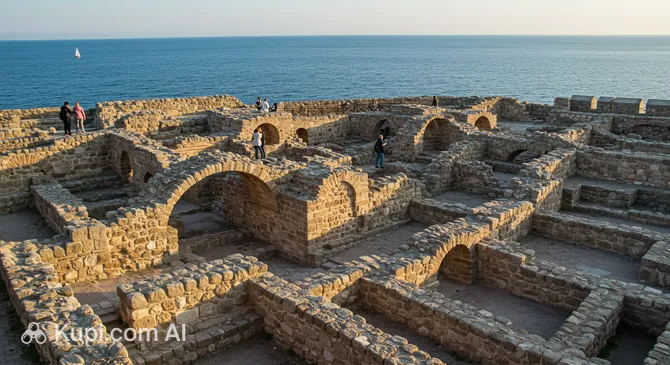
Fort Manhup-Kale
Fort Manhup-Kale. Иллюстрация. Источник: Kupi.com AI
\n\n

The name of the complex translates as "ruined fortress," reflecting its current state of noble desolation and mystery. Here, among the limestone cliffs, multi-level casemates, temples, and residential grottos remain, which once served as a secure refuge for the residents of the capital of the Byzantine Principality of Theodoro.

\n\n

Today, Mangup-Kale is not just an open-air museum, but a "place of power" where every stone breathes history. Its strategic location once granted the citadel the status of an impregnable bastion, while today it offers tourists breathtaking views of mountain valleys and the chance to feel like discoverers of a lost civilization.

Contacts

To plan a visit to this remote archaeological area, it is recommended to contact the information centers of the nearest cities. There is no direct telephone line or official website for the fortress itself.

\n\n
How to contactContact

What to Do

The main activity at Mangup-Kale is exploring the cave systems. You can see living quarters, storage rooms, and even small churches literally "grown" inside the rocks. The ruins of the great 6th-century basilica, which was once the largest Christian church in mountainous Crimea, are particularly awe-inspiring, serving as a reminder of the Byzantine grandeur of these lands.

\n\n

It is definitely worth examining the remains of the defensive towers and fortress walls, which still impress with their power even centuries later. Ethnography enthusiasts will be interested in visiting the ancient Karaite necropolis, located in a shaded ravine. Its ancient tombstones, covered in moss, create an atmosphere of profound antiquity and peace.

\n\n

Don't forget to listen to the legends that surround the fortress. The most famous one tells of the Mangup Boy — the guardian spirit of these cliffs. Furthermore, the plateau is an active site for archaeological excavations, so observant visitors may have the chance to see scientists at work, who annually find valuable artifacts here: from Byzantine medallions to everyday items from the Theodoro era.

Getting There

The journey to the top of the plateau begins at the village of Khoja-Sala, located approximately 40–50 kilometers from the city of Sevastopol. The most convenient way to reach this settlement is by private car or as part of an organized tour. Trailhead coordinates: 44.594425, 33.807739.

\n\n

If you plan to travel by public transport, use buses traveling from Sevastopol or Bakhchisaray towards Zalesnoye or Ternovka. You will need to walk from the bus stop to the start of the ascent. Additionally, taxis and local off-road vehicle operators are often stationed at the foot of the plateau, ready to drive tourists to certain sections of the trail.

\n\n

The ascent to the plateau itself requires good physical fitness and comfortable shoes, as the trail passes through rugged terrain. It is recommended to carry an adequate supply of water and plan your hike for the warmer months, as rocky sections can be hazardous during winter and the rainy season.

Ближайший город: Sevastopol

History & Facts

The history of this site spans more than four thousand years. The first settlements on the plateau were established by the Tauri as early as the first millennium BC, who appreciated the natural inaccessibility of the cliffs. However, truly monumental fortifications appeared here at the end of the 5th century AD, when the city, then known as Doros, became the capital of Crimean Gothia.

\n\n

During the Byzantine era, the fortress turned into a key outpost of the empire in the region. It was the Byzantines who built the powerful walls and the famous great basilica here. Later, starting from the 13th century, Mangup became the center of the unique Principality of Theodoro. For a century and a half, it remained a stronghold of Orthodox culture and Byzantine traditions in Crimea, withstanding numerous raids.

\n\n

The dramatic finale occurred in 1475 when Ottoman troops besieged the city. According to legend, the defenders held out for six months, and the Turks only managed to breach the gates through trickery. After its capture, the city was renamed Mangup-Kale and served as a Turkish fortress until the end of the 18th century. After the Ottoman garrison departed, Karaites lived here for some time, but by 1792, the last inhabitants had left the rocky city, leaving it to the mercy of nature and time.

Time Needed

To leisurely explore the main cave complexes, the remains of the walls, and enjoy the panoramic views, you will need at least 2–4 hours. This estimate includes time for the ascent and descent, which are adventures in themselves.

\n\n

For those planning to study the archaeological excavations in detail, visit the Karaite cemetery, and take artistic sunset photographs, we recommend allocating a full daylight day for the visit. Mangup-Kale does not tolerate haste, and its scale requires a thoughtful exploration of every terrace.

Working Hours

As Mangup-Kale is an open archaeological and natural area, there are no strict "opening and closing" hours. Visiting is recommended during daylight hours, as the complex terrain of the plateau and steep trails become hazardous at dusk.

\n\n

Before planning your trip, it is worth checking the official regional tourism portals or clarifying information at local excursion bureaus. Occasionally, access to the territory may be restricted due to active archaeological excavations or for fire safety reasons during the dry summer months.

Nearby

Exploring the surroundings of this ancient region will allow you to immerse yourself even deeper into the atmosphere of the past and complement your historical walk with modern entertainment. Nearby, you will find both natural parks and interesting scientific and educational sites.

\n\n
NameDistance
Skete of Saint Anastasia13 km
Khan's Palace18.1 km
Miniature Park18.2 km
Diorama Museum of the Great Patriotic War18.3 km
Balaklava Bay19.7 km
Lukomorye Eco-Park20.4 km
Malakhov Kurgan Defensive Tower20.4 km

Reached the end of the page?

That means the route is fully explored