Support

Neapol' Skifskiy

About

Perched atop the Petrovsky Heights, offering breathtaking views of modern Simferopol, lies Scythian Neapolis—a unique historical and archaeological reserve. This site was once the capital of the Late Scythian kingdom and a primary citadel built over two thousand years ago. Today, this landmark in Ukraine stands as one of the most significant monuments of the ancient era in the Northern Black Sea region.
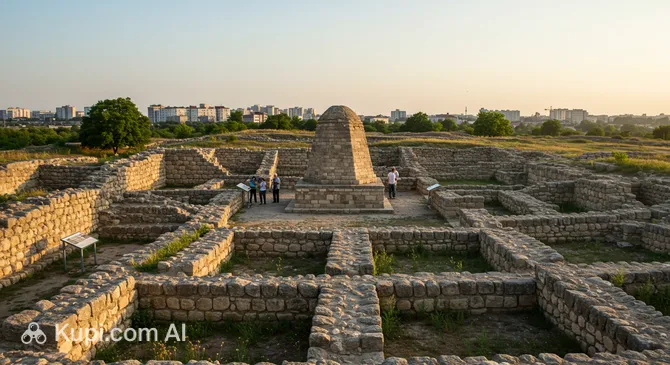
Scythian Neapolis
Scythian Neapolis. Иллюстрация. Источник: Kupi.com AI

The reserve consists of the ruins of an ancient city surrounded by massive defensive walls. The crown jewel of the museum is the Southern Palace and the mausoleum of King Scilurus, where priceless artifacts were found that shed light on the life and culture of the Scythians. The city's architecture wonderfully combined rugged nomadic traditions with the elegance of the Greek style, making its appearance truly unique.

Established as a museum-reserve in 2011, Scythian Neapolis offers guests more than just a look at foundations; it provides a full immersion into the past. Here, you can see a reconstructed gate tower, cult buildings, and a rich collection of epigraphic monuments. This place is perfect for those seeking authenticity and wanting to touch living history without excessive modern reconstruction.

Contacts

To inquire about visiting the reserve or booking a group tour, you can use the following contact details:

How to contactContact
AddressSimferopol

What to Do

Visiting the reserve is an opportunity to literally walk through the streets of an ancient city. One of the main points of interest is the Mausoleum of King Scilurus, sheltered under a special protective pavilion. Here, you can examine ancient gravestones, fragments of wall paintings, and stone reliefs depicting rulers and warriors. Visitors can study the masonry of the Southern Palace in detail and imagine what the halls of the Scythian monarchs' residence once looked like.

For those who prefer active history exploration, themed tours are available. Guides share the secrets of ancient fortifications and point out grain storage pits carved into the rock. Of particular interest are the historical reenactment festivals occasionally held on the grounds: during these days, Scythian rituals come to life with workshops and demonstration battles.

Beyond the archaeological treasures, the Kermenchik plateau attracts panoramic photography enthusiasts. From the edge of the cliff, magnificent views open up over the residential areas and surrounding rocks. It is a wonderful place for a peaceful stroll in the fresh air, where the silence and grandeur of the ancient ruins allow you to detach from the city bustle and feel the connection between eras.

Getting There

Scythian Neapolis is located in the southeastern part of the city at 1 Archeologicheskaya Street. The attraction is situated on the Kermenchik plateau, which towers over the residential quarters. You can reach it from the city center by public transport (buses and minibuses) traveling to stops near Vorovskogo Street or directly to the base of the climb up Petrovsky Heights.

If you prefer comfort, a taxi from the city center will take you to the museum-reserve gates in just 10–15 minutes. For drivers, a small parking area is provided near the entrance. The climb to the plateau does not require special physical preparation and is accompanied by scenic views of the surrounding area.

Many tourists prefer to walk to the site from key points in the city, combining the stroll with a look at the local architecture. The landmarks to look for are the Petrovskaya Balka and the distinct silhouette of the reconstructed defensive tower, which is visible from afar.

Ближайший город: Simferopol

History & Facts

The history of this site began in the 2nd century BC, when a fortress was founded on the plateau, becoming the capital of the Late Scythian state. The city reached its peak during the reign of King Scilurus and his son Palakus. It was a powerful economic and political center where Greek traditions met the culture of steppe peoples.

Interestingly, the ancient city was rediscovered only in the early 19th century quite by accident. Local residents were using stones from the ancient ruins for construction when slabs with Greek inscriptions and unique bas-reliefs were noticed. The first serious excavations in the 1820s confirmed that researchers had found the very same legendary residence of the Scythian kings mentioned in the works of ancient geographers.

Over two centuries of archaeological research, only about 5% of the total territory of the settlement has been studied. Each new expedition brings surprising finds: from gold jewelry and weapons to fragments of monumental paintings. Although the city ceased to exist in the 3rd century AD, its ruins still hold many unsolved mysteries of the ancient nomads.

Time Needed

To leisurely explore the reserve's grounds, see the exhibition in the protective pavilion, and take impressive photos against the city panorama, most visitors need between 1.5 to 2 hours.

If you plan to book an in-depth tour or attend a themed reenactment festival, you should set aside half a day. The settlement territory is quite vast, and a walk across the open plateau invites thoughtful contemplation of the ancient stones.

Working Hours

The museum-reserve is open to visitors daily, seven days a week. The complex doors are open from 10:00 AM to 6:00 PM. This convenient schedule allows you to plan your visit for either the morning or the afternoon.

Please note that the ticket office closes 30 minutes before the museum closes, so it is best to arrive early to ensure you can purchase a ticket and fully explore all the exhibits.

10:00 – 18:00

Nearby

A stroll around the ancient settlement allows you not only to touch antiquity but also to get acquainted with the more modern history and culture of the region. Exploring the monuments and art objects nearby will significantly enrich your travel experience.

Within a few kilometers of the archaeological park, you will find interesting monuments dedicated to prominent figures and important historical events, as well as entertainment venues for family leisure.

NameDistance
Holy Trinity Convent1.6 km
Starik Khinkalych1.7 km
Central Park of Culture and Leisure1.7 km
Children's Park Zoo1.8 km
Konstantin Trenyov Park1.8 km
Children's Park1.9 km
Simferopol State Circus named after Boris Tezikov1.9 km

Reached the end of the page?

That means the route is fully explored