Support

Shinjuku Gyoen National Garden

About

Shinjuku Gyoen National Garden is a vast landscape park and a true green oasis located in the heart of Tokyo. Surrounded by modern skyscrapers, this park in Japan serves as an ideal place to escape the city bustle, offering visitors peace and tranquility. It covers an impressive area of 53.8 hectares, with a perimeter of 3.5 kilometers.
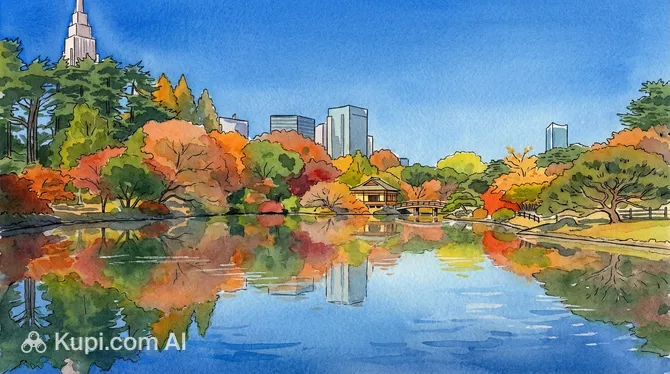
Shinjuku Gyoen National Garden. Illustration.
Source: Kupi.com AI

Traveler photos:

The uniqueness of Shinjuku Gyoen lies in its harmonious combination of three completely different garden styles. Here, visitors can walk through a traditional Japanese garden set around picturesque ponds with islands and elegant bridges. Next to it lies a symmetrical and well-kept French Formal Garden, as well as a spacious English Landscape Garden with wide lawns.

The park is famous for its rich flora: over 20,000 trees grow here. A particular point of pride is the approximately 1,300 cherry trees of various varieties, making Shinjuku Gyoen one of the most popular places in the country for spring blossom viewing. Thanks to the variety of sakura species, the blooming season here lasts longer than in other places, attracting many residents and tourists.

Contacts

Since Shinjuku Gyoen National Garden is a large public park, individual contact details for visitors, such as a phone number or email, are not usually published. For the most up-to-date information on opening hours, ticket prices, and special events, it is recommended to check the information boards located at the park entrances.

At the same time, the garden is very easy to reach via Tokyo public transport. The park has several gates located near different stations for the convenience of visitors. The Shinjuku Gate is about a 10-minute walk from JR Shinjuku Station. The Okido Gate is 5 minutes from Shinjukugyoenmae Station on the Marunouchi Subway Line, and the Sendagaya Gate is a 5-minute walk from JR Sendagaya Station.

How to contactContact
Address11 Naitōmachi, Shinjuku City, Tokyo 160-0014, Japan
Phone number+81 3-3350-0151
Websitewww.env.go.jp

What to Do

A visit to Shinjuku Gyoen National Garden is an opportunity to immerse yourself in a world of serenity and beauty. Guests can enjoy leisurely walks along well-kept gravel paths, admiring the changing landscape styles. The park is especially beautiful in two seasons. In spring, it becomes one of the main attractions in Tokyo for cherry blossom viewing, when thousands of trees wrap everything in a soft pink haze. In autumn, the garden is transformed by the vibrant colors of maple leaves, creating truly picturesque scenery.

In addition to the natural beauty, unique architectural structures can be found within the garden. The "Taiwan Pavilion", built for the wedding of Emperor Showa, deserves special attention. There is also a rare example of Chinese architecture in Japan—the Kyu-Goryo-tei pavilion. A walk will lead you to a traditional tea house, where you can experience the culture of the tea ceremony, and to a restored wooden villa from the late 19th century, which transports visitors to another era.

For lovers of exotic flora, the park features a botanical garden with a rich collection of tropical and subtropical plants. After a long walk, you can rest and have a snack at the cozy "Yurinoki" restaurant, which is open from 9:00 AM to 4:00 PM. It is a great place to share your impressions and recharge before further exploring the garden.

Getting There

Shinjuku Gyoen National Garden boasts an exceptionally convenient location in central Tokyo. It is situated in the Shinjuku district—one of the largest transport hubs in the capital of Japan. Thanks to this, getting to the park from any part of the metropolis is easy using the extensive public transport network.

You can enter the garden through several gates, including the Shinjuku and Sendagaya entrances. The park is easily accessible by metro or city buses, with stops within walking distance. Given its central location, taking public transport is one of the most logical and fastest ways to visit this famous garden.

For those who value comfort or are traveling with a family, a taxi is a good alternative. Drivers know this popular destination well, so simply saying "Shinjuku Gyoen" is usually enough. This option can be especially convenient if you are coming from an area without a direct connection to the stations nearest the park.

Nearest city: Tokyo

History & Facts

The history of Shinjuku Gyoen National Garden dates back to the Edo period when these lands were granted by the Shogun Tokugawa to his vassal—the daimyo Kiyonari Naito. A private garden was established on the grounds of his estate; however, the impoverished family was later forced to return the property to the state, lacking the funds for its maintenance.

After the Meiji Restoration, the site was given a new life: an agricultural center was opened here to study foreign farming practices. Gradually, the territory turned into a botanical garden, and in 1901, a famous French professor was invited to Japan to design a landscape park. The park in its current form was finally established in 1906 and was intended for the private use of the Imperial Family.

Starting in 1903, the park was used by the Imperial Household for relaxation and receiving guests. During this time, new plant species were brought here from all over the world, including majestic Himalayan cedars, cypresses, and plane trees. Ponds were dug in the garden to breed ornamental carp, and there was even a small zoo, which was transferred to Tokyo's Ueno Park in 1926. For a long time, Shinjuku Gyoen remained closed to the public.

The park was almost completely destroyed in the 1940s but was subsequently restored. It opened its doors to the general public only in 1949, gaining national park status. Since then, it has become a favorite getaway for residents of Tokyo and tourists alike. In 2006, Shinjuku Gyoen celebrated its centenary, confirming its status as one of the country's main green jewels.

Time Needed

To fully enjoy the beauty and diversity of Shinjuku Gyoen National Garden, it is recommended to set aside 2 to 4 hours for your visit. This will be enough time to leisurely walk through all three main zones of the park: the traditional Japanese garden with its picturesque ponds, the symmetrical French Formal Garden, and the spacious English Landscape Garden. During this period, you will also have time to see the main pavilions and the greenhouse without feeling rushed.

When planning your visit, take seasonality into account. In spring, during the cherry blossom season, or in autumn, when the park is painted in crimson hues, you might need more time. During these peak seasons, the number of visitors increases significantly, and the desire to take beautiful photos may slow down your walk. Some visitors spend the whole day here, having picnics on the lawns and simply relaxing away from the city bustle. If you are very short on time, a quick one-hour walk is also possible, but it will only provide a general impression of this magnificent place.

Working Hours

Shinjuku Gyoen National Garden operates on a seasonal schedule. From October 1 to March 14, it is open to visitors from 9:00 AM to 4:30 PM, with entry to the grounds stopping at 4:00 PM. During other periods, operating hours may be extended. The standard closing day is Monday (if Monday is a public holiday, the closure is moved to the next business day), and the garden is also closed during the New Year holidays from December 29 to January 3.

It is important to note that during the most popular seasons, the park is open seven days a week. During the cherry blossom season, roughly from March 25 to April 24, and during the autumn foliage viewing, from November 1 to November 15, the garden is open daily. Generally, tickets can be purchased at the ticket booths at the entrance, but during peak cherry blossom season on weekends, advance online booking may be required. To avoid queues and confirm current operating hours, it is recommended to check the information on the park's official website before your visit.

DayOpening hours
MondayClosed
Tuesday9:00 – 18:00
Wednesday9:00 – 18:00
Thursday9:00 – 18:00
Friday9:00 – 18:00
Saturday9:00 – 18:00
Sunday9:00 – 18:00

Nearby

After a peaceful stroll through Shinjuku Gyoen National Garden, your journey through Tokyo can continue with an exploration of its surroundings. The Shinjuku district and its adjacent neighborhoods are a vivid example of how centuries-old traditions and ultra-modern culture harmoniously coexist in one metropolis. Just a few steps from the quiet park alleys, bustling streets, iconic shrines, and trendy spots await you.

Exploring nearby attractions will allow you to dive deeper into the multifaceted atmosphere of Japan's capital and gain a more complete impression of it. From historical sites that preserve the spirit of the past to nightlife hubs—the contrast of experiences will make your trip truly unforgettable. Below is a list of interesting places located in the immediate vicinity of the garden.

NameDistance
Suga Shrine1.2 km
Shibuya Coffee Bar2.5 km
Nezu Museum2.6 km
Blue Note Tokyo2.7 km
Shibuya Stream Bar3.2 km
Tokyo Imperial Palace3.9 km
teamLab Borderless3.9 km

Have you reached the end of the page?

So the route has been studied inside and out