Support

Wadakura Fountain Park

About

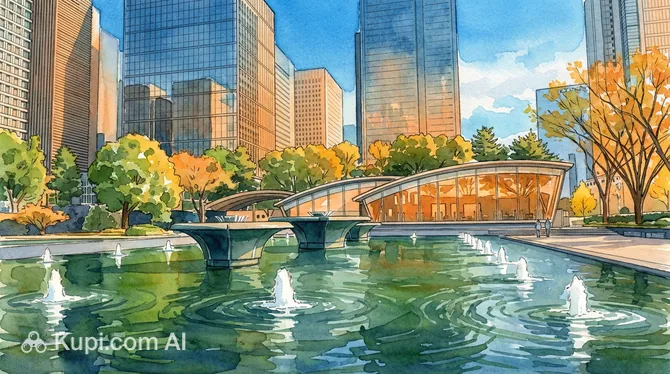
Wadakura Fountain Park is an elegant and peaceful natural corner located in the heart of Tokyo. As part of the Kokyo Gaien National Garden in Japan, this park, spanning approximately 15,000 square meters, serves as a quiet oasis amidst the skyscrapers of the Marunouchi business district. It harmoniously combines modern architecture with historical heritage, offering guests a break from the city bustle to the soothing sound of falling water.
\n
Wadakura Fountain Park. Illustration.
Source: Kupi.com AI

Traveler photos:

\n

The central element of the park is a magnificent fountain ensemble. Here you can see three main chrysanthemum-shaped basins—the imperial symbol—with jets that rise to a height of 8.5 meters. The landscape is complemented by artificial waterfalls, canals, and a unique sphere fountain, creating a distinctive atmosphere of freshness and serenity.

\n

In the evening, Wadakura Fountain Park is transformed by a unique LED lighting system in a warm golden color. Against the backdrop of modern glass structures and ancient Edo-period walls, the park looks particularly romantic, attracting tourists for evening strolls and city light contemplation.

Contacts

Before visiting Wadakura Fountain Park in Tokyo, we recommend checking the current contact information and any possible changes to the café's schedule or special events. While the park itself is usually open for walks, confirming these details will help you better plan your visit to this picturesque corner of Japan.

How to contactContact
Address3-1 Kōkyogaien, Chiyoda City, Tokyo 100-0002, Япония
Phone+81 3-3213-0095
Websitefng.or.jp

What to Do

The main activity at Wadakura Fountain Park is watching the interplay of water. Spectacular fountain shows begin here at 20 and 40 minutes past every hour. During these times, powerful jets combined with striking lighting create dynamic compositions. Be sure to walk across the glass bridge spanning the canals and take some photos by the sphere fountain and the artificial waterfalls.

\n

For the comfort of visitors, the park features a free zone called the Wadakura Free Rest Spot. This is a modern building with panoramic glazing and a terrace offering a magnificent view of the entire ensemble. You can visit the Starbucks café here or have a snack on the outdoor benches, enjoying the contrast between the park's greenery and the majestic skyscrapers of Tokyo.

\n

History buffs will be interested in seeing the ruins of the ancient Wadakura Gate and the Tatsumi Tower, preserved from the Edo period. In the evening, when the soft LED lighting comes on, the park turns into one of the most romantic spots in Japan, perfect for rounding off a busy day of sightseeing.

Getting There

Getting to the park, located at 3-1 Kokyogaien, is very easy thanks to Tokyo's extensive transport network. The fastest way is to use the subway. Nijubashimae Station (Chiyoda line, exit 2) and Hibiya Station (Hibiya line, exit A4) are just a couple of minutes' walk from the entrance. The major Otemachi Station is also only a 5-minute walk away.

\n

If you are arriving at the city's main hub, Tokyo Station, the walk to the park will take no more than 10–15 minutes. The route follows the wide and scenic Gyoko-dori Avenue, which leads directly to the Imperial Gardens. For those using JR lines, such as the Yamanote Line, exiting at Tokyo Station is the most convenient option.

\n

The park area is fully accessible for people with limited mobility and visitors with strollers, thanks to its flat paths and bridges. Please note that there are almost no public parking spaces in this area, so using public transport will save you a lot of time and effort.

Nearest city: Tokyo

History & Facts

The history of Wadakura Fountain Park is closely linked to significant events in the imperial family of Japan. It was originally opened in 1961 to commemorate the wedding of Emperor Akihito and Empress Michiko. The trio of main fountains, shaped like blooming chrysanthemums (the imperial symbol), was designed by the famous landscape architect Tsuyoshi Tamura, who sought to emphasize the solemnity of the location.

\n

In 1995, the park underwent a major reconstruction to mark the wedding of the current Emperor Naruhito and Empress Masako. The concept for the updated space—"Continuity and New Development"—is reflected in the creation of four canals that symbolically connect the fountains of two different eras. This architectural solution highlights the continuity of traditions in modern Tokyo.

\n

Interestingly, the location itself has deep roots dating back to the Edo period (1603–1867). This area was once a bay that was later reclaimed, and the name "Wadakura" is believed to be derived from a village that stood here in the 16th century. In 2011, the park reaffirmed its status as an innovative site when the country's first system of powerful underwater LED lamps was installed, creating a "sparkling light" effect during the evening hours.

Time Needed

For a leisurely stroll through Wadakura Fountain Park, viewing all the water installations, and taking photos against the backdrop of the ruins, 30–60 minutes is usually enough. It is a compact and very cozy location in Tokyo, which is easy to include in a larger itinerary around the Imperial Palace grounds.

\n

If you plan to wait for the evening light show, visit the rest area with its panoramic windows, or spend some time over a cup of coffee, you should set aside about 1.5 hours for your visit. The evening atmosphere in this part of Japan encourages longer contemplation, allowing you to fully experience the tranquility in the heart of the metropolis.

Working Hours

Wadakura Fountain Park is open to visitors 24 hours a day, daily, making it accessible at any time that suits you. Entry to the grounds is free, so you can stop by for a morning walk in Tokyo or for some evening relaxation in Japan.

\n

Please note that the fountain shows follow a schedule (every 20 and 40 minutes past the hour), and the artistic lighting turns on at dusk. The rest area and the facilities within it operate on their own schedules, so it is best to check their opening times on official resources before your visit.

Open 24 hours

Nearby

The location of Wadakura Fountain Park makes it an ideal starting point for exploring the historical center of Tokyo. Just a few minutes' walk away are the majestic Ote-mon Gate and the vast Kokyo Gaien National Garden; a stroll through these areas allows for a deeper immersion into the atmosphere of the Imperial residence.

\n

If you would like to switch from historical landscapes to the modern rhythm of Japan, head to Marunouchi Square or the stylish KITTE Marunouchi shopping complex. This combination of green zones and dynamic business districts provides a complete and vivid impression of the Japanese capital.

NameDistance
Nijubashi Bridge0.7 km
Tokyo Imperial Palace0.8 km
teamLab Borderless2.8 km
Suga Shrine3.4 km
The National Museum of Western Art3.8 km
National Museum of Nature and Science3.9 km
Kidzania Tokyo4.1 km

Reached the end of the page?

That means the route is fully explored