Support

Bunhwangsa Temple and Stone Brick Pagoda

About

Bunhwangsa Temple, also known as Punhwangsa, is an ancient Buddhist temple located in the historic city of Gyeongju, South Korea. The temple's name poetically translates to "Fragrant Emperor Temple." This iconic site was built in the 7th century AD during the reign of Queen Seondeok, one of the outstanding rulers of the ancient Korean state of Silla.
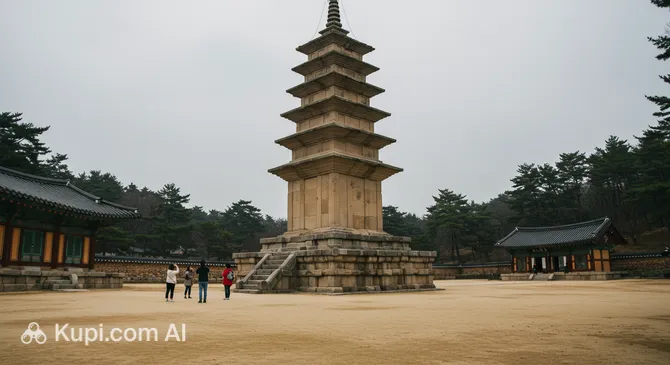
Bunhwangsa Temple and Stone Brick Pagoda. Illustration.
Source: Kupi.com AI

Traveler photos:

The main highlight and center of attraction at Bunhwangsa Temple is the unique Stone Brick Pagoda, known as Mojeon-seoktap. This structure is not just an ancient artifact but an officially recognized National Treasure of Korea No. 30, emphasizing its immense cultural and historical value.

Originally, the majestic Mojeon-seoktap pagoda rose nine tiers high, but only the bottom three have survived to the present day. Despite this, it remains an invaluable object for studying the architectural traditions and development of stone pagodas from the Silla Kingdom period. Its design is believed to have been inspired by Tang Dynasty prototypes from China, making it an important piece of evidence for the cultural exchange of that era.

Visiting Bunhwangsa Temple and its Stone Brick Pagoda is an opportunity to touch centuries of South Korea's history and see firsthand the craftsmanship of ancient architects who left behind this impressive legacy.

Contacts

To plan your visit to Bunhwangsa Temple and the Stone Brick Pagoda, including directions and current opening hours, we recommend contacting tourist information centers in Gyeongju. Useful information is also often available on the official tourism portals of South Korea or directly at information boards on-site.

How to contactContact
Address94-11 Bunhwang-ro, Gyeongju, Gyeongsangbuk-do, South Korea
Phone number+82 54-742-9922

What to Do

When visiting Bunhwangsa Temple and the Stone Brick Pagoda in Gyeongju, you will immerse yourself in an atmosphere of antiquity and tranquility. The main focus here is undoubtedly the surviving three-tier stone pagoda. Be sure to examine it closely: each of the pagoda's four doors is guarded by two figures of Diamond Guardians, and stone lions sit at the corners of the base. Interestingly, three of these lions are replicas, while the originals are carefully preserved nearby.

Bunhwangsa Temple is a place where you can escape the hustle and bustle of Gyeongju's more popular tourist routes. It is usually uncrowded, allowing you to fully enjoy the peace and serenity. Stroll through the grounds and explore the architecture of the temple buildings. Although the original structures were destroyed, the current buildings, reconstructed in the 18th century, are also of interest and provide an insight into traditional Korean temple architecture.

Beyond viewing the pagoda and temple buildings, visitors can simply enjoy the calm atmosphere. This is a great opportunity for meditation or a leisurely walk to get a deeper feel for the spirit of South Korea's history. The lack of large tourist crowds makes a visit to Bunhwangsa particularly pleasant for those seeking solitude and authentic experiences.

Getting There

There are several ways to reach Bunhwangsa Temple and the Stone Brick Pagoda in Gyeongju, depending on your location and preferences. South Korea has a well-developed public transport system, and Gyeongju is no exception. Local buses likely serve the temple, with routes passing through the city's key points and tourist areas. Information about bus numbers and schedules can usually be found at stops, in tourist information centers, or via online maps and mobile transport apps for Gyeongju.

A more comfortable, albeit more expensive, option is taking a taxi. Taxis in Gyeongju are easy to find, especially in the city center, near major hotels, and transport hubs like the train station or bus terminal. A taxi ride from central Gyeongju to Bunhwangsa Temple and the Stone Brick Pagoda probably won't take long, but the exact duration and cost will depend on the distance and traffic conditions. It is recommended to have the name of the attraction in Korean or its address to facilitate communication with the driver.

If you prefer an active holiday and the attraction is located near your hotel or other sites you're visiting in Gyeongju, you might consider walking, at least for part of the way. This will allow you to better experience the city's atmosphere. Before your trip, it is highly recommended to check the exact location of Bunhwangsa Temple and the Stone Brick Pagoda on a map to plan the most convenient route and choose the best way to travel.

Nearest city: Gyeongju

History & Facts

Bunhwangsa Temple, located in the ancient capital of Gyeongju, is one of the oldest Buddhist temples in South Korea, with a history stretching back centuries. It was founded in 634 AD by decree of Queen Seondeok, the ruler of the Silla Kingdom. During its peak, Bunhwangsa was not just a place of worship, but also an important cultural center. Many prominent monks and talented artists worked here, creating priceless Buddhist texts and paintings that glorified the Buddha's teachings.

Unfortunately, the turbulent history of the Korean Peninsula did not spare the temple. Most of the magnificent works of art that once adorned its halls and held the wisdom of ages have been lost forever. The Japanese invasions in the late 16th century (1592-1598), along with other military conflicts that swept through this land, were particularly devastating. The original temple complex was almost completely destroyed in the 13th century, erasing much of its former grandeur from the face of the earth.

Despite all these trials, part of Bunhwangsa's heritage has survived to this day. The modern temple buildings were restored in the 18th century, striving to preserve the spirit of the ancient sanctuary. However, the main jewel and witness to the past remains the Mojeon-seoktap Stone Brick Pagoda. Originally, this majestic structure had nine tiers, but today we can only see the bottom three. Nevertheless, even in this form, the pagoda is of immense historical and cultural value. It serves as an invaluable source for studying the architectural traditions of Silla-era stone pagodas and is rightfully recognized as National Treasure of Korea No. 30.

Time Needed

To get to know Bunhwangsa Temple and the Stone Brick Pagoda in Gyeongju, the average visitor should set aside approximately 1-2 hours. This is usually enough time to explore the temple grounds, carefully examine the famous stone pagoda—one of the oldest in South Korea—and soak in the atmosphere of this historical site.

The length of your visit may vary depending on your interest in Buddhist architecture and history. If you plan a leisurely stroll, want to take many photos, or delve into the details of the pagoda's carvings and construction, you may need a little more time. However, the complex itself is not very large, so even with a thoughtful inspection, two hours should be enough for full immersion.

Working Hours

Exact information regarding the opening hours of Bunhwangsa Temple and the Stone Brick Pagoda in Gyeongju can vary, so it is highly recommended to check the current schedule on the official website of the attraction or at local tourist information centers before your visit. Generally, such historical sites are open to visitors year-round, but hours may change depending on the season or special events.

As for the need for advance ticket booking or registration, this is not required for most temples of this type unless you plan to participate in special tours or programs. However, checking this information in advance will help avoid potential inconveniences and allow you to plan your visit in the best possible way.

Nearby

Visiting Bunhwangsa Temple and the Stone Brick Pagoda is undoubtedly a highlight of any trip to Gyeongju. However, to truly immerse yourself in the atmosphere of this ancient city, it is worth taking the time to explore its surroundings. There are many other interesting sites near the temple, each holding its own piece of South Korea's history and culture.

Exploring nearby attractions will give you a more complete picture of Gyeongju's rich heritage. Just a few minutes' walk or a short drive from Bunhwangsa Temple, you will find unique monuments, museums, and scenic spots that will enrich your impressions and make your trip even more memorable.

NameDistance
Hwangnyongsa Temple Site0.4 km
Hwangnyongsa History and Culture Hall0.4 km
Donggung Palace and Wolji Pond0.9 km
Gyeongju National Museum1.4 km
Cheomseongdae Observatory1.5 km
Hwangnam House1.8 km
Woljeong Bridge1.9 km

Have you reached the end of the page?

So the route has been studied inside and out