Support

Palau Sant Jordi

About

Palau Sant Jordi is a famous multi-purpose indoor arena located on Montjuïc hill in Barcelona, Spain. As the largest indoor sports facility in the city, it serves as a key part of the Montjuïc Olympic Ring, alongside the Lluís Companys Olympic Stadium and the Piscines Bernat Picornell.
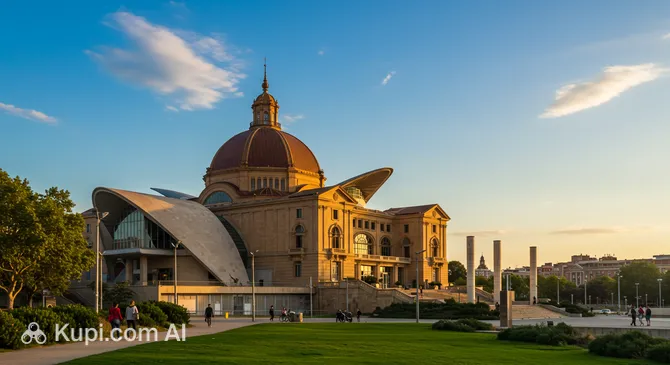
Palau Sant Jordi. Illustration.
Source: Kupi.com AI

Traveller photos:

The arena is renowned for its unique architecture, designed by Japanese architect Arata Isozaki, and is considered a masterpiece of modern engineering and design. Its construction and appearance, reminiscent of a giant flying saucer, leave a lasting impression. The majestic dome and streamlined shapes blend harmoniously into the hillside landscape, creating a futuristic image.

Thanks to its versatility, Palau Sant Jordi hosts a wide variety of events. It is not only home to major sporting competitions in basketball, athletics, and even water sports, but also to concerts by world stars, exhibitions, and other large-scale events, making it one of the main centers of the city's cultural and sporting life.

Contacts

For the most up-to-date information regarding upcoming events, ticket purchases, or venue rentals, it is recommended to contact the Palau Sant Jordi administration directly. Key contact details are provided below.

How to contactContact
AddressPasseig Olímpic, 5, Sants-Montjuïc, 08038 Barcelona, Spain
Phone+34 934 26 20 89
Websitepalausantjordi.barcelona

What to Do

A visit to Palau Sant Jordi is an opportunity to dive into the heart of Barcelona's cultural and sporting life. The arena serves as a versatile venue for a wide range of activities. Depending on the schedule, you can catch exciting sporting events, including international basketball, volleyball, and athletics tournaments. This is a great chance for sports fans to witness world-class competitions.

The venue attracts world stars, so a visit to the arena can be a unique chance to see live performances by legendary musicians. At various times, it has hosted concerts by artists such as Mark Knopfler, Estopa, and Tokio Hotel. Thanks to its excellent acoustics and capacity, every show becomes an unforgettable event, gathering thousands of fans from all over the world.

In addition to concerts and sports, Palau Sant Jordi regularly hosts major cultural events. These include large-scale exhibitions, music festivals, and themed events, such as Japan Weekend, dedicated to Japanese pop culture. Thus, a visit to the arena allows you not only to enjoy an event but also to appreciate the modern architecture and dynamic atmosphere of one of Spain's key landmarks.

Getting There

Palau Sant Jordi is located on the picturesque Montjuïc hill, making it easily accessible from anywhere in Barcelona. Thanks to its convenient location within the Olympic Ring, there are several ways to reach the arena, allowing you to choose the most suitable option—whether by public transport or car.

The most convenient way to reach the arena is by public transport. You can take the metro lines L1 (red) or L3 (green) to Espanya station. From there, you can take a pleasant walk uphill to the Olympic Ring or transfer to one of the buses heading in that direction. City buses, such as routes No. 150 and No. 55, stop directly at or near the arena, making the trip even easier.

If you plan to travel by car, parking areas are provided near Palau Sant Jordi. However, please note that during major concerts or sporting events, the area can be very crowded and parking spaces are limited. In such cases, it is highly recommended to use public transport to avoid traffic jams and parking difficulties. A taxi ride can also be a comfortable alternative, especially if you are coming from the city center.

Nearest city: Barcelona

History & Facts

The history of Palau Sant Jordi is inextricably linked with one of the most significant events in the life of Barcelona — the 1992 Summer Olympics. The construction of this grand structure took place from 1985 to 1990 under the guidance of the outstanding Japanese architect Arata Isozaki. The arena was officially opened on September 21, 1990, and became the main indoor venue for the Olympics, hosting gymnastics, volleyball, and handball competitions. Its construction became a symbol of the city's renewal and its forward-looking vision.

An interesting fact lies in the arena's name. It is named after Saint George (Sant Jordi in Catalan), the patron saint of Catalonia. This choice emphasizes the deep cultural significance of the venue for the entire region, transforming it from a simple sports complex into a symbol of national pride. The architectural design, resembling a turtle or a futuristic ship, also makes it stand out among other Olympic buildings.

After the Olympic Games, Palau Sant Jordi did not lose its significance. Thanks to its versatility and excellent acoustics, it quickly became one of the most prestigious venues in Spain for concerts by world stars, major sports championships, exhibitions, and cultural festivals. Thus, the Olympic legacy continues to live on, making the arena an important center of attraction for both locals and tourists from around the world.

Time Needed

When planning a visit to Palau Sant Jordi, keep in mind that the time required depends heavily on the purpose of your visit. If you are attending a concert, a sports competition, or another event, the duration of your stay will be determined by its format. On average, attending an event in Barcelona takes from 1.5 to 3 hours, including time for entry, finding your seats, and the event itself.

If your goal is to admire the arena's architecture and explore the Olympic Ring on Montjuïc hill without attending an event, you will need much less time. A leisurely stroll around this famous structure in Spain to view its exterior usually takes about an hour. This will allow you to appreciate the scale of the building, take photos, and enjoy the views from the hill. Thus, your visit can be either a brief architectural introduction or a full evening of entertainment.

Working Hours

Palau Sant Jordi does not have standard operating hours like a museum, as its schedule depends entirely on the events being held. Generally, the arena opens its doors to visitors 1–2 hours before the start of a concert or sporting event, allowing guests to pass through security and find their seats comfortably. These times can vary, so it is highly recommended to check the information on your ticket or the specific event page.

If you wish to visit the arena for a guided tour rather than an event, you should check for availability on the official Palau Sant Jordi website. Special tours are held occasionally and require prior booking. Given the venue's popularity, tickets for any event should be booked in advance. To get the most accurate and up-to-date information on operating hours, tour availability, and event schedules, always check the official website, as the schedule is subject to change.

8:00 – 20:00

Nearby

A visit to Palau Sant Jordi is a wonderful opportunity to explore not only the arena itself but also its picturesque surroundings. Located on Montjuïc hill, this complex is surrounded by numerous parks, museums, and observation decks that will make your day even more fulfilling and interesting. Exploring nearby attractions will allow you to dive deeper into the culture and history of Barcelona.

Montjuïc hill is a major attraction in its own right, offering visitors a wealth of leisure options. It provides magnificent panoramic views of the city and the port. A walk around the arena before a concert or after a sporting event can be a pleasant addition to your visit, allowing you to discover new corners of this amazing city.

NameDistance
National Art Museum of Catalonia0.5 km
Montjuïc Castle1.1 km
Cañete2.4 km
Palau Güell2.5 km
Colom Restaurant2.7 km
Bali Spirit Luxury Art Spa2.8 km
Bishop's Bridge3 km

Reached the bottom of the page?

Looks like you know this route inside out