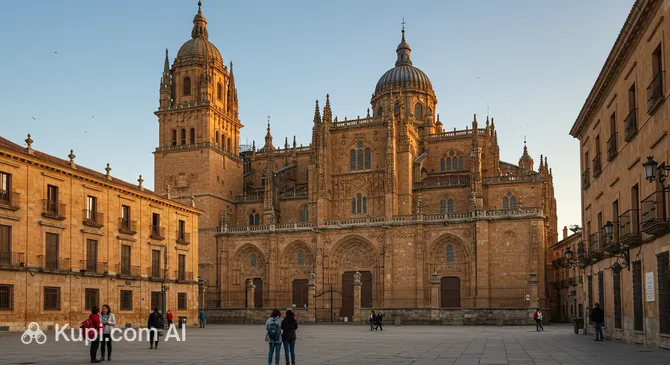
The Cathedral of Salamanca is not just a church, but a unique architectural complex in the heart of the namesake city in Spain, which actually consists of two cathedrals. They are built so closely together that they form a single entity, allowing travelers to truly immerse themselves in architectural history. This unusual decision—to preserve the old church while building the new one—makes the cathedral one of the city's most interesting landmarks.
Traveler photos:
The Old Cathedral (Catedral Vieja), dedicated to Santa Maria de la Sede, was founded in the 12th century. It is built predominantly in the Romanesque style, which is evident in its massive walls and restrained decor. Inside, ancient frescoes and a magnificent 15th-century main altarpiece, consisting of 53 painted panels depicting scenes from the lives of Christ and the Virgin Mary, have been preserved.
The New Cathedral (Catedral Nueva) began construction in the 16th century and was only finished in the 18th. Its construction was necessary due to the growth of the city, for which the old church had become too small. This grand cathedral represents an impressive blend of styles—from Late Gothic to Renaissance and Baroque. Despite the different eras, both buildings are harmoniously connected, and today visitors can move freely from one to the other, observing how architectural tastes changed over the centuries.