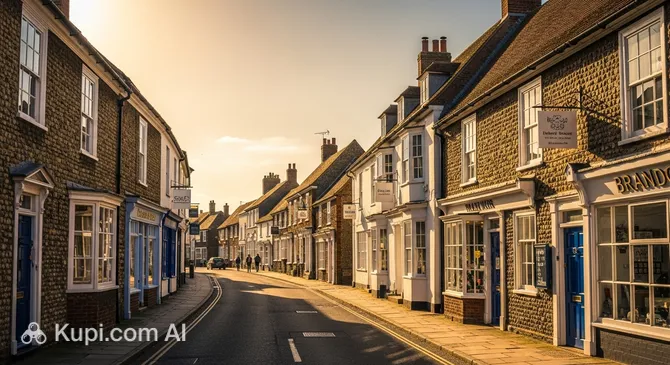
Public transport in Brandon is relatively simple and scaled to the size of the town. As a compact market town with a population of around 9,000, it does not possess a complex urban transit network like a metro, tram, or trolleybus system. For most visitors, the town center, market square, and riverside areas are easily navigable on foot. Walking is the primary mode of getting around locally, as the main shops, historical sites, and amenities are concentrated within a short distance of each other.
The backbone of the town's connectivity is the railway. Brandon Railway Station is situated on the Breckland Line and provides regular and efficient connections to major regional hubs such as Cambridge and Norwich. The station is generally unstaffed, so tickets must be purchased from the self-service ticket machine located on the platform or via mobile apps before boarding. Trains are operated by Greater Anglia, and digital ticket barriers are not typically found at this small station, but conductors will check tickets on board. It is important to note that penalty fares apply if you travel without a valid ticket.
Bus services complement the rail network, connecting Brandon to neighboring towns like Thetford, Bury St Edmunds, and Mildenhall. The main bus stops are centrally located near Market Hill and along the High Street. Services are operated by regional companies rather than a single municipal authority. While reliable, the frequency of buses can be low, often running only once an hour or less, with significantly reduced or non-existent services in the evenings and on Sundays. Tourists are strongly advised to check the latest timetables online or at the bus stop displays to avoid long waits.
Regarding payment, the system is modern and user-friendly. For buses, the most convenient method is contactless payment using a debit card, credit card, or smartphone (Apple Pay/Google Pay). You simply tap your card on the reader near the driver when you board; cash is usually accepted, but carrying exact change is recommended. For trains, purchasing tickets in advance via apps like the Trainline or the operator's own app is often cheaper than buying on the day. If you plan to travel extensively by train and bus in the wider region, look for "PlusBus" tickets, which can be added to your rail fare to provide unlimited bus travel at your destination.
For local travel where walking is not an option, taxis are the primary alternative. Unlike in large cities, you cannot simply hail a taxi on the street, and ride-sharing apps like Uber typically do not operate in this area. There are several local taxi firms, but availability can be scarce, especially on weekends or late at night. It is essential to find the phone number of a local company and book your ride well in advance to ensure you can get to your destination.
Given the town's location on the edge of Thetford Forest, cycling is a highly popular and practical alternative to motorized transport. While there is no municipal bike-share scheme, bike rentals are available nearby, particularly at the High Lodge forest center. Many visitors choose to rent a bike to navigate the scenic trails connecting the town to the surrounding woodland attractions, taking advantage of the flat terrain and dedicated cycle paths.