Support

Atami

About

Atami is a charming resort city located on the picturesque coast of Japan, in Shizuoka Prefecture. It has long enjoyed a reputation as one of the most popular vacation destinations thanks to its healing hot springs (onsens), magnificent coastal scenery, and a peaceful atmosphere that is perfect for restoring strength and peace of mind.

The city is nestled on the slopes of mountains descending to Sagami Bay, which provides protection from winds and a mild, warm climate throughout most of the year. This makes Atami attractive to visit in any season. The city's population is just over 35,000 people, giving it a sense of tranquility and comfort far from the hustle and bustle of major metropolises.
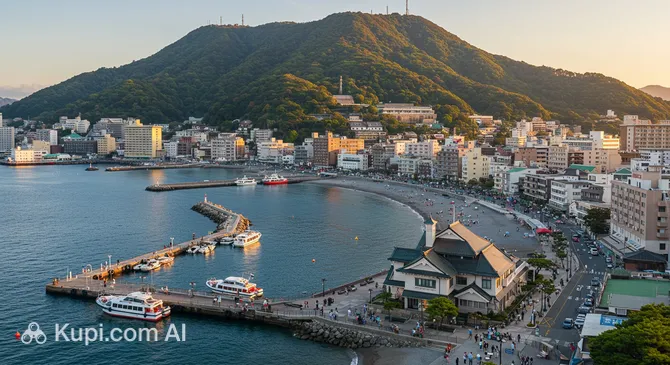
Atami. Illustration.
Source: Kupi.com AI

Atami offers its guests many interesting sites. Of course, the main highlights are the onsens – there are a vast number of them here, ranging from public bathhouses to luxury spa complexes in hotels. Other iconic attractions include the MOA Museum of Art, known for its impressive collection of Japanese and East Asian art, as well as its magnificent gardens. Equally popular is Atami Castle – although a modern reconstruction, it stands on a hill offering breathtaking panoramic views of the city and the ocean. Nature lovers will enjoy the Atami Plum Garden, which is particularly scenic during the early spring blooming season.

If you are looking for a place to combine a relaxing hot spring getaway with immersion in Japanese culture and the enjoyment of natural beauty, Atami is an excellent choice. This city will undoubtedly give you many pleasant impressions and help you rest your soul and body.

You can find more interesting facts on the Atami city history page.
Weather Overview

The weather in Atami is characterized by a pleasant mildness throughout most of the year, making it an attractive destination for tourists. Summer, especially in July and August, is warm and sunny here, with average temperatures comfortably ranging from +24.7°C to +26.0°C. The summer period is also the wettest: the peak rainfall occurs in June (averaging 10 mm), while September stands out for the highest number of rainy days (around 20 days) with 8 mm of precipitation. Winters in Atami are cool, but without severe frosts: the average temperature in January is about +4.9°C, and snow is a rare occurrence. Spring and autumn delight with moderate warmth and, as a rule, fewer rainy days compared to the peak summer months.

Overall, when planning a trip, expect a warm summer with occasional rain and cool, relatively dry winters. To get a more detailed picture of weather conditions by month, including precipitation levels and the number of rainy days, you can find detailed information on the Atami Climate page.

Average monthly temperature

Average monthly precipitation

Interesting Facts

In addition to its famous onsens and scenic views, Atami holds many curious details and stories that make it even more attractive to explorers. Here are just a few interesting facts about this charming resort city in Japan:

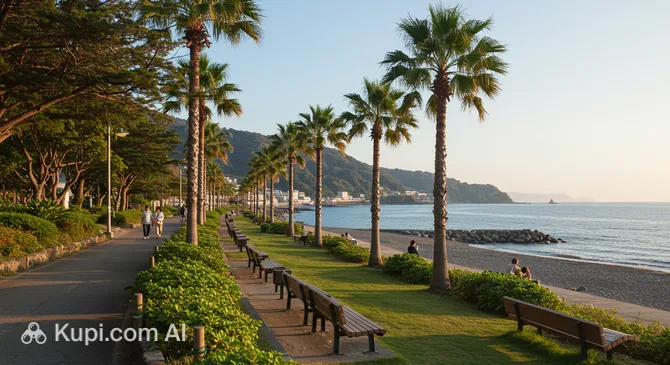
Nagahama Seaside Park. Illustration.
Source: Kupi.com AI

Traveler photos:

  • A Hot Sea Beneath Your Feet: The name "Atami" (熱海) literally translates to "hot sea." And this is not just a poetic image! The city is famous for the fact that its geothermal springs surface not only on land but also seep through the bottom of the bay, warming the seawater off the coast.

  • Literary Fame: Atami has left a notable mark on Japanese literature. The city served as the setting for the famous Meiji-era novel "The Golden Demon" (Konjiki Yasha), written by Koyo Ozaki. The legendary parting scene of the main characters at the Omiya-no-Matsu pine tree still attracts literary fans today, and the pine itself and the monument to the characters are iconic points in the city.

  • Fireworks All Year Round: Unlike most Japanese cities where fireworks are predominantly a summer sight, Atami delights residents and guests with grand fireworks festivals throughout the year. These colorful shows regularly illuminate the night sky over Sagami Bay, creating an unforgettable festive atmosphere.

  • Harbinger of Spring: The Atami Plum Garden (Atami Baien) is known as one of the places in Japan where spring announces itself earliest. Sometimes the first delicate plum blossoms can be seen here as early as late November or early December, long before the warmth reaches other regions.

How to Get There

You can reach the resort city of Atami, located in Shizuoka Prefecture, in several ways, the most popular being air travel followed by a transfer by train or car. The city is conveniently connected by a transport network to the major metropolises of Japan.

While Atami does not have its own airport, the nearest major international air hubs are located in Tokyo. One of the most convenient options is Haneda International Airport (HND), located in Tokyo approximately 81.9 km from Atami. This is a large and modern airport serving many international and domestic flights. From Haneda, you can easily reach Shinagawa or Tokyo stations, from where high-speed Shinkansen trains will take you to Atami in about 40-50 minutes. A trip by car or taxi directly from the airport takes approximately 2 – 2.5 hours, depending on traffic.

Another major international airport is Narita International Airport (NRT), also serving Tokyo but located further away, about 140.5 km from Atami. It is one of Japan's main air gateways. From Narita to Atami, it is most convenient to travel via Tokyo: first by the Narita Express or a limousine bus to Tokyo or Shinagawa Station, and then by Shinkansen. A direct car trip from Narita to Atami will take significantly longer, roughly 3 – 4 hours, depending on traffic.

Closer to Atami is Shizuoka Airport (FSZ), located in Shizuoka City, approximately 87.8 km away. This is a regional airport that may be convenient if you are arriving from certain cities in Japan or nearby Asian countries. From here, Atami can be reached by local trains (with possible transfers) or by car, which takes about 2 – 2.5 hours.

It is important to note that the city of Atami itself has its own railway station, which is a stop on the Tokaido Shinkansen line. This makes traveling by train from Tokyo, Nagoya, Osaka, and other major cities in Japan very convenient and fast. Thus, after arriving at one of the airports and reaching the nearest major Shinkansen station, you can easily travel directly to Atami.

For convenience, here is a summary of the main airports used to reach Atami:

AirportPassenger trafficDistance
Haneda Airport85.7 mln82 km
Shizuoka Airport691 27488 km
Narita International Airport40.8 mln141 km
Matsumoto Airport112 618158 km
Ibaraki Airport776 063171 km

Main Attractions

Atami is not just about famous hot springs and picturesque seascapes, but a whole kaleidoscope of interesting places that will make your trip rich and memorable. The city offers entertainment for every taste: from lively shopping streets to peaceful parks and breathtaking observation decks.

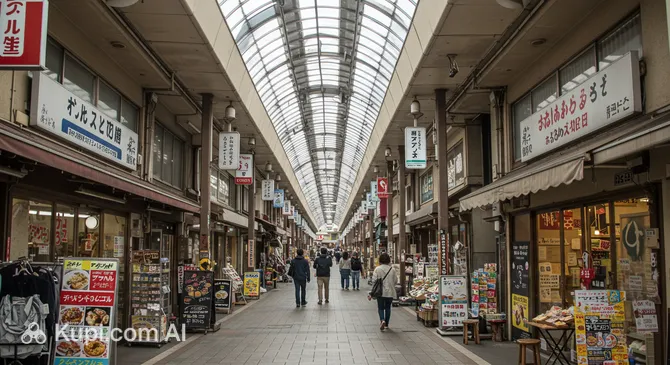
One of the popular points of interest is the Atami Heiwa-dori Shopping Gallery. This is a busy covered street stretching near the station where you can immerse yourself in the atmosphere of an old resort town. Here you will find many shops selling local souvenirs, traditional sweets, fresh seafood, and handmade crafts. It is a great place to try local delicacies, such as dried squid or fish cakes, and to pick out gifts for loved ones.

Atami Heiwa Street Shopping Arcade. Illustration.
Source: Kupi.com AI

Traveler photos:

For fans of unusual experiences and fun photos, the Atami Trick Art Museum is a must-visit. This is an interactive space where every exhibit is an opportunity to become part of an amazing painting, deceive your vision, and simply have a good laugh. The museum is especially popular with families with children, but adults will also find much to enjoy while posing for fun photos that will be remembered for a long time.

Atami Trick Art Museum. Illustration.
Source: Kupi.com AI

Traveler photos:

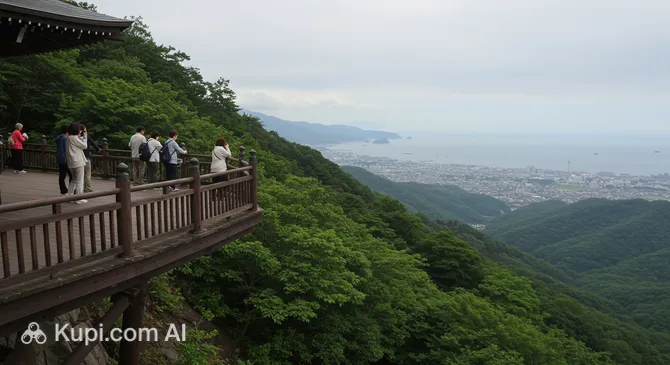
If you want to enjoy breathtaking views, be sure to head up to the Jukkoku Pass Lookout. From here, at a bird's-eye view, a magnificent panorama opens up to Mount Fuji (on a clear day), Sagami Bay, the Izu Peninsula, and even Oshima Island. A ropeway leads to the observation deck, and the trip itself is a small adventure. This place is perfect for photographers and anyone who appreciates the beauty of nature.

Jukkoku Pass Observation Deck. Illustration.
Source: Kupi.com AI

Traveler photos:

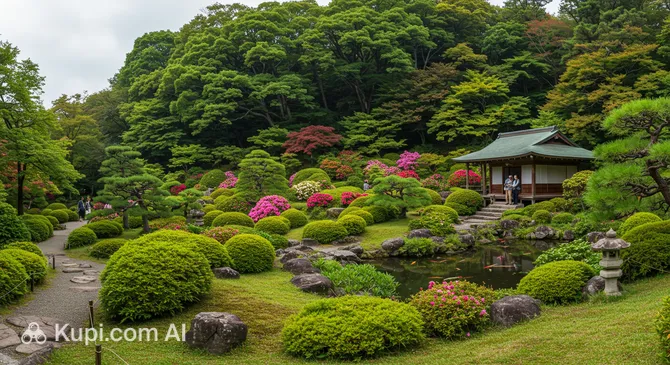
For those seeking tranquility and a touch of Japanese culture, visiting Manyo Park is highly recommended. This quiet and picturesque park is associated with the oldest anthology of Japanese poetry, the "Man'yoshu." Here you can take a leisurely stroll along well-maintained paths, admire seasonal flowers, relax by the pond, and visit a small memorial hall. The park is especially beautiful in spring during the cherry blossom season and in autumn when the tree leaves turn vibrant colors.

Manyo Park. Illustration.
Source: Kupi.com AI

Traveler photos:

Local Cuisine

The gastronomic scene of Atami is a true reflection of its seaside location and the rich bounty of Shizuoka Prefecture. Thanks to its proximity to Sagami Bay, you can always enjoy the freshest seafood here. The city's cuisine combines traditional Japanese flavors with an emphasis on local ingredients, offering tourists an authentic and memorable experience.

Be sure to try dishes made from freshly caught fish and seafood—whether it's sashimi, sushi, or expertly grilled fish. A special place in Atami's gastronomy, as in any onsen resort, is held by onsen tamago—eggs soft-boiled in geothermal spring water, which take on a delicate creamy texture. Many ryokans (traditional Japanese inns) offer exquisite kaiseki-ryori style dinners, where every dish is a work of art showcasing the region's seasonal produce.

Among drinks, local sake (jizake) is worth noting, as Shizuoka Prefecture is famous for its breweries. Of course, the famous green tea cannot be ignored—Shizuoka is one of the main tea-producing regions in Japan. Also, try refreshing drinks made from local citrus fruits like mikan, which are particularly good in hot weather.

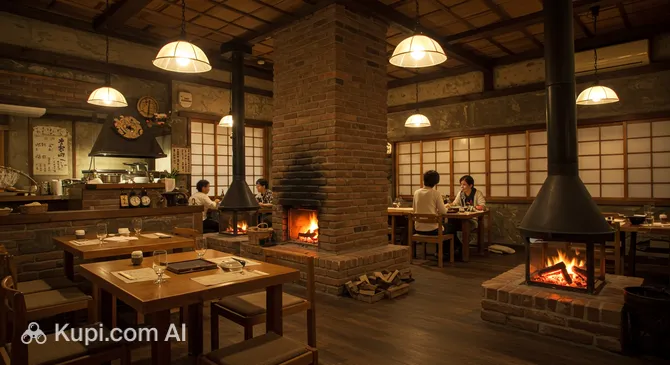
There are many places to eat in Atami. Luxurious dinners await you at hotel and ryokan restaurants. For a more casual atmosphere, numerous small restaurants and izakayas serving local cuisine are ideal. To experience the local flavor and try street food or buy edible souvenirs, check out the Atami Heiwa-dori Shopping Gallery. And if you want to taste the traditional dish mugitoro (rice with barley and grated yamaimo yam), you should visit the Mugitoro Warabe restaurant, which specializes in this healthy and satisfying meal.

Mugitoro Warabe. Illustration.
Source: Kupi.com AI

Traveler photos:

Travel Tips

Planning a trip to charming Atami? To make your journey through this Japanese resort as comfortable as possible and leave you with only pleasant memories, we have prepared some practical tips to help you navigate on-site.

  1. Clothing and Essentials: The climate in Atami is mild, but be prepared for changes. In summer, bring light, breathable clothing, sunscreen, and a hat. In the shoulder seasons and winter, layered clothing and a light jacket will come in handy. The key point is very comfortable shoes, as Atami is located on hills and you will be walking a lot. If you plan to visit temples or shrines, choose modest clothing that covers shoulders and knees out of respect for local traditions. Don't forget an adapter for electronics (Type A sockets are used in Japan, 100V voltage) and a small umbrella in case of rain.

  2. Getting Around Town: Atami is a compact city, and many parts of it can be explored on foot. For longer trips, use local buses, including the "Yu-Yu Bus" tourist route, which covers major attractions. Atami Railway Station is a major transport hub, making it easy to reach other cities by train, including the Shinkansen. Taxis are available but can be expensive for frequent trips. Renting a car can be convenient for exploring the surroundings of Shizuoka Prefecture, but in the city itself, parking and narrow streets can create inconveniences.

  3. Financial Matters: The national currency is the Japanese yen (JPY). It is recommended to have a sufficient amount of cash with you, as not all small shops, cafes, and markets accept credit cards. International system cards (Visa, Mastercard) are usually accepted in hotels, large restaurants, and department stores. You can withdraw cash from foreign cards at 7-Eleven or Japan Post Bank ATMs. An approximate daily budget, excluding accommodation, could range from 7,000 to 15,000 yen, depending on your plans for food, entertainment, and transport. Tipping is not practiced in Japan and may be perceived as a misunderstanding.

  4. Health and Safety: Atami, like Japan as a whole, is considered a very safe city. Follow normal precautions. Be sure to take out travel medical insurance before your trip. Pharmacies (kusuri-ya) are available, but many medications are prescription-only and may differ from those you are used to. Bring a small supply of necessary medications. In case of emergency, you can call 119 (ambulance, fire service).

  5. Communication: The official language is Japanese. English is understood in tourist areas, hotels, and at stations, but not everywhere. Learn a few basic phrases in Japanese, such as "arigato" (thank you) and "sumimasen" (excuse me/sorry)—this is always appreciated. For constant internet access, consider buying a tourist SIM card or renting a portable Wi-Fi router (pocket Wi-Fi)—it's very convenient for navigation and communication. Pre-download useful apps: maps and navigators (e.g., Google Maps, Japan Travel by Navitime), translators (Google Translate with offline function), and restaurant discovery apps (Gurunavi, Tabelog—though they may be predominantly in Japanese, they have ratings and photos).

  6. Local Etiquette and Onsens: Japanese people are very polite. Greet with a slight bow. In public places, especially on transport, avoid loud phone conversations. Visiting an onsen (hot spring) is an essential part of the Atami experience. Key onsen rules: wash thoroughly in the shower before entering the communal bath, do not enter in a swimsuit (unless specified otherwise), do not be noisy, and do not swim. If you have tattoos, check in advance if entry is permitted, as some onsens may prohibit them.

  7. Things to Avoid: Do not stick chopsticks vertically into rice—this is associated with funeral rituals. It is not common to eat on the go in the street (except in special festival areas). Do not point fingers at people or objects; use an open palm.

  8. Bonus Tip for Atami: This city is famous for its fireworks, which are held several times a year, not just in summer. Check the schedule before your trip—you might be lucky enough to see this magnificent spectacle over the bay. And, of course, don't miss the chance to try local delicacies, especially fresh seafood and onsen-tamago (eggs boiled in hot spring water).

We hope these tips help you better prepare for your trip to Atami and enjoy every moment in this amazing corner of Japan, known for its onsens, picturesque views, and hospitality. Have a great trip!

Entertainment & Nightlife

Atami, famous for its hot springs and scenic views, offers its guests more relaxed evening entertainment compared to the bustling nightlife of megacities. Evenings here are perfect for leisurely dinners, walks along the embankment, and visits to cozy establishments. The main focus is on restaurants with local cuisine, traditional Japanese pubs (izakaya), and hotel bars where you can unwind after a busy day.

The areas around Atami Station and the coastal zone can be considered the center of evening activity. This is where most restaurants and shops are concentrated. The Atami Heiwa-dori Shopping Gallery, for example, comes alive in the evening, offering various options for dinner and souvenir shopping. The atmosphere here is usually friendly and relaxed, attracting both tourists and locals.

Atami Heiwa Street Shopping Arcade. Illustration.
Source: Kupi.com AI

Traveler photos:

While Atami is not known for loud nightclubs, you can find pleasant places for evening relaxation. For example, the Mugitoro Warabe restaurant is perfect for dinner, where you can enjoy traditional dishes. Many large resort hotels, such as the Atami Bay Resort Korakuen Aqua Square, have their own bars or lounge areas where you can spend the evening with a drink. Karaoke bars, which are an integral part of Japanese entertainment culture, are also popular. The dress code in most establishments is quite casual, though higher-end restaurants may require a smarter appearance.

Mugitoro Warabe. Illustration.
Source: Kupi.com AI

Traveler photos:

Atami Bay Resort Korakuen Aqua Square. Illustration.
Source: Kupi.com AI

Traveler photos:

The best time for evening strolls and dinners in Atami is early evening, as many small establishments may close relatively early, especially on weekdays. The average check in restaurants and bars varies but generally corresponds to a resort town. For getting around at night, it is most convenient to use a taxi, as public transport may run less frequently. Atami, like most cities in Japan, is considered a very safe place, so evening walks along lit streets usually do not cause concern.

During the day, Atami offers many other activities. Guests can visit the Atami Trick Art Museum for unusual photos, relax in Manyo Park, or enjoy the views from the Jukkoku Pass Lookout. For family holidays, the Atami Water Park is a good fit. Thus, the city offers a variety of leisure activities both day and night.

Parks & Museums

Atami, a picturesque resort city, offers its guests not only healing hot springs but also excellent opportunities to connect with nature and culture. Here you will find peaceful parks, interesting museums, and historical corners that will make your stay rich and memorable.

Among the green oases of Atami, Manyo Park stands out in particular. This is not just a park, but a place with a rich history that is said to have inspired poets of the ancient "Man'yoshu" anthology. A walk through its shaded alleys, past ancient trees and small ponds, will give a sense of tranquility and harmony. The park is especially beautiful during the ume (plum) and cherry blossom seasons, attracting many admirers of Japanese nature.

Manyo Park. Illustration.
Source: Kupi.com AI

Traveler photos:

For lovers of seascapes and family vacations, the Nagahama Seaside Park is ideal. Located along the coast, it offers beautiful views of Sagami Bay. There are barbecue areas, children's playgrounds, and convenient paths for walking and jogging. It is a great place to enjoy the fresh sea breeze and the sun, and to have a picnic overlooking the ocean.

Nagahama Seaside Park. Illustration.
Source: Kupi.com AI

Traveler photos:

The cultural program in Atami is also capable of surprising. One of the most popular and unusual places is the Atami Trick Art Museum. This is an interactive space where every visitor becomes part of the exhibit. Here you can take many funny and creative photos that are sure to make you smile. The museum will appeal to both adults and children, offering a fun and engaging pastime.

Atami Trick Art Museum. Illustration.
Source: Kupi.com AI

Traveler photos:

For connoisseurs of more traditional art, the MOA Museum of Art is a must-visit. It is famous for its impressive collection of Japanese and East Asian art, including national treasures and important cultural artifacts. In addition to the rich exhibits, the museum offers a magnificent Japanese garden and panoramic ocean views. The architecture of the museum complex itself also deserves special attention.

Speaking of historical and architectural sites, one cannot fail to mention Atami Castle. Although it is a modern reconstruction built in 1959 for tourism purposes, the castle rises picturesquely on a hill and offers magnificent views of the city and the bay. Inside, there are various exhibitions dedicated to samurai history, Japanese culture, and even ukiyo-e erotic art. This is a popular spot for photos, especially during cherry blossom season, when the surrounding trees create a fairytale atmosphere.

For a more authentic experience and to find lesser-known spots, stroll through the quiet streets away from the main tourist routes. There you might discover small local shrines or traditional craft shops. Also, take note of the gardens at ryokans (traditional Japanese inns)—many of them are true works of art and are available for viewing, demonstrating the refinement of Japanese gardening.

Getting Around

Getting around Atami is quite convenient, as the city is compact and many interesting places can be reached on foot. However, given the hilly terrain and the location of some attractions, public transport will be your reliable helper. The foundation of the city's transport system consists of buses and trains, and there are also unique ways to get around, such as a ropeway.

Buses are the main type of public transport for moving directly around Atami and its surroundings. There are several bus routes that connect the railway station with major tourist sites, hot springs, and hotels. Look for the "Yu-Yu Bus" tourist loop bus, which follows a route covering the city's main attractions. Fares on regular buses are most often paid in cash upon exiting (it's best to have the exact change ready) or using rechargeable IC cards. Tickets for the "Yu-Yu Bus" or day passes can be purchased at the bus terminal near Atami Station or directly from the driver.

Trains play a key role in arriving in Atami and for trips to neighboring cities. Atami Station is an important transport hub where Shinkansen high-speed trains stop, as well as trains on the JR Tokaido and JR Ito lines. The JR Ito line can be useful for moving along the coast south of Atami. Train tickets are purchased at machines or ticket offices at the stations. Regional passes may be beneficial for frequent travel around the region, but they are usually not required for moving only within Atami.

One of Atami's unique features is the Atami Ropeway. It lifts passengers to the top of a hill, offering panoramic views of the city and Sagami Bay, and provides access to Atami Castle and the Adult Museum. It is not so much transport for daily needs as it is an attraction and a convenient way to reach the viewpoints.

The fare payment system in Japan, and in Atami in particular, is quite unified. Rechargeable IC cards, such as Suica, PASMO, or ICOCA, are widely used. They can be used to pay for travel on buses and trains (where supported). You can purchase and top up these cards at machines at major railway stations or in convenience stores (konbini). Cash payment is also possible, especially on buses. The fare depends on the distance; for buses, it is usually a fixed amount for a trip within the city or a zoned payment.

As an alternative to public transport, taxis are always available. Taxi stands are usually located at the railway station and major hotels. This is a more expensive but comfortable way to get around, especially if you are traveling in a group or with luggage. Bicycle rental points can also be found in Atami, which can be a pleasant way to explore the coastal zone in good weather. Car sharing is less common for tourists.

Tourists are advised to plan their routes in advance, especially if you plan to visit several places in one day. Bus schedules can be found at stops or at information desks at Atami Station. Public transport generally runs from early morning until late evening, but the frequency of service may decrease in the evening hours, especially on less popular routes.

Accommodation

In Atami, travelers will find a wide range of accommodation options to suit various preferences and budgets. The city is famous for its traditional Japanese inns—ryokans—many of which offer rooms with their own private hot springs (onsen) and exquisite Japanese cuisine. In addition to ryokans, modern hotels ranging from mid-range to luxury resorts are available, as well as more budget-friendly options like guesthouses and short-term rental apartments. This allows you to find housing for a romantic getaway, a family trip, or a solo journey.

For the convenience of tourists, it is recommended to choose accommodation in areas close to main attractions and transport hubs. The area around Atami Station is a popular choice due to easy access to trains and buses, as well as an abundance of shops and restaurants. The coastal area is also attractive, especially for those who want to enjoy ocean views and proximity to beaches and sea activities. Many hotels and ryokans in these areas offer magnificent panoramic views.

\"Relax

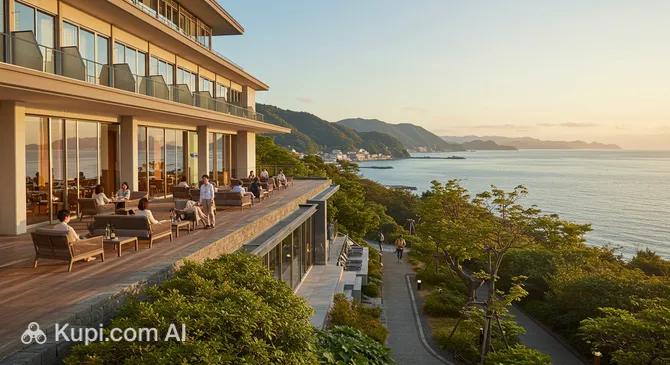
Among the well-known accommodation options in Atami, several comfortable resort hotels stand out. For example, the Relax Resort Hotel offers guests a relaxing stay and high-quality service. Another popular choice is Atami Bay Resort Korakuen Aqua Square, known for its amenities and location. These hotels, like many others in Atami, often offer packages that include meals and access to onsens.

When planning a trip to Atami, especially during peak seasons such as cherry blossom time, Golden Week, or summer holidays, it is recommended to book accommodation in advance. This will ensure a wider selection and better prices. Reservations can be made through popular online platforms or directly on hotel websites. The price range varies from budget options to luxury rooms, so everyone can find something suitable. Pay attention to the type of meal plan (breakfast or half-board is often offered) and the availability of additional services such as transfers or access to spa treatments.

Nearby Cities

For those looking to explore the surrounding area, Atami serves as an excellent starting point for day trips to several interesting nearby locations:

CityPopulationDistance
Yugawara23 4807 km
Ito64 47315 km
Izunokuni46 21215 km
Hakone10 92516 km
Nagaizumi43 20417 km

These nearby destinations provide insight into the diverse culture and landscapes of the region, complementing your stay in Atami. Each of these trips can be a small adventure, revealing new facets of Japan.

Shopping & Souvenirs

Atami, being a popular resort city, offers its guests pleasant shopping opportunities focused mainly on local delicacies, unique souvenirs, and traditional products rather than large retail chains. This is a great place to find memorable gifts from your trip to Japan and to touch upon local culture.

The main shopping areas are concentrated around Atami Railway Station and several adjacent streets. One of the most famous and busiest is the Atami Heiwa-dori Shopping Gallery, located right at the station exit. This covered arcade is filled with shops offering local treats, fresh and dried seafood, handicrafts, and a variety of souvenirs. Next to it is another popular shopping street—Nakamise-dori—where you can also find many interesting goods and experience an authentic atmosphere.

In Atami, you will not find the huge multi-story shopping centers typical of megacities. However, directly at Atami Station is the Lusca Atami shopping complex, where you can buy clothing, cosmetics, food, and, of course, souvenirs. Nevertheless, the main focus of shopping in Atami is on the traditional shopping streets and small specialized shops.

While there isn't one large central market in Atami like in some other cities in Japan, you can find shops and stalls specializing in the freshest seafood for which this coastal region is famous. There are particularly many of them near the port and on the shopping streets. Occasionally, especially during festivals, you can find small street stalls selling seasonal fruits or local snacks.

When choosing souvenirs from Atami, look for items that reflect its seaside character and onsen culture. Popular choices include:

  • Himono (干物) – dried fish and seafood, which are a local delicacy.
  • Goods related to onsens: aromatic bath salts with minerals from local springs, themed soaps, and towels with Atami symbols.
  • Local sweets (wagashi): especially those made with citrus (e.g., mikan) or sweet adzuki bean paste. Onsen-manju (steamed buns) are also popular.
  • Products from local craftsmen: ceramics, lacquerware, and textiles with traditional patterns.
  • Plum (ume) products: Atami is known for its plum gardens, so pickled umeboshi plums or umeshu plum wine make excellent authentic gifts.

Most shops in Atami, especially on shopping streets like the Heiwa-dori Shopping Gallery, are typically open from 10:00 AM to 6:00 PM or 7:00 PM. Small family-run shops may have individual schedules and a day off in the middle of the week. Larger shops and those at the station may stay open longer. Credit cards (Visa, Mastercard, JCB, AMEX) are accepted in many places, but for purchases in small shops or markets, it is better to have cash in Japanese yen. IC cards (Suica, Pasmo) and other contactless payment methods are also becoming more widely used.

For foreign tourists in Japan, there is a consumer tax refund system (Tax Free). Look for shops with the corresponding "Tax-Free Shop" sign. Generally, to qualify for a tax refund, you must make a purchase of over 5,000 yen (excluding tax) in one store in a single day. You must have your passport with you. The refund procedure usually happens directly in the store when paying for the purchase.

Reached the end of the page?

That means the route is fully explored