Support

Nishi-ku

About

Nishi-ku is not just a district, but the true heart of Yokohama, one of the most dynamic and modern cities in Japan. Located in the western part of the city, right by the picturesque bay, Nishi-ku possesses an unmistakable maritime charm. Its strategic proximity to Tokyo, just about 30 kilometers away, makes it an ideal starting point for exploring both Yokohama and the Japanese capital.

Despite being home to approximately 10,121 people, which creates a surprisingly cozy and almost intimate atmosphere against the backdrop of a massive metropolis, Nishi-ku plays a key role in the business and cultural life of Yokohama. The district's atmosphere uniquely combines futuristic urbanism with a relaxed coastal lifestyle: here, modern skyscrapers harmoniously coexist with green parks, and bustling avenues meet quiet streets where you can find traditional shops and cozy cafes.
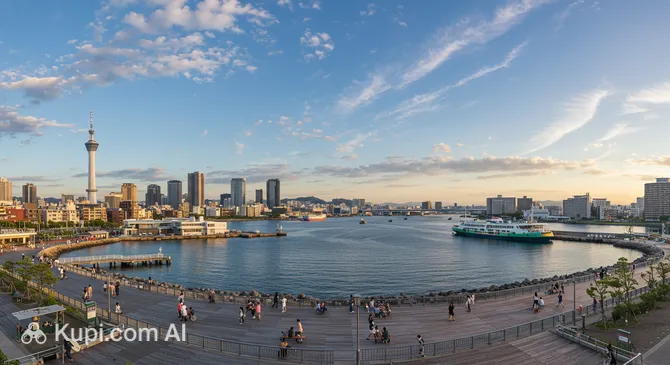
Nishi-ku, Yokohama. Illustration.
Source: Kupi.com AI

Nishi-ku attracts tourists with many points of interest. This is where you'll find Yokohama's famous skyscrapers, including those offering the best observation decks with breathtaking panoramic views of the city and the bay. The district is also famous for its world-class shopping centers, where you can find everything from global brands to unique Japanese goods. Maritime excursion enthusiasts will also find plenty to do here.

If you are looking for a place where modernity meets tradition and the city rhythm gives way to the tranquility of the waterfront, Nishi-ku in Yokohama will be a true discovery for you. This district will give you unforgettable impressions and allow you to feel the unique energy of one of Japan's most amazing cities.

You can find more interesting facts on the history of Nishi-ku, Yokohama page.

Weather Overview

The weather in Nishi-ku, Yokohama is characterized by warm and humid summers and cool, drier winters. In summer, especially in July and August, the average temperature hovers around 25-27°C, while maximum values can reach 28-29°C. July is one of the wettest months (8 mm of precipitation, as in June, and 16 rainy days). August is also humid, although with slightly less precipitation (5 mm, 15 rainy days). It is worth noting that the highest number of rainy days occurs in September (17 days). In winter, from December to February, the average temperature drops to 5-8°C, with minimum values around 1-4°C. Winter months are generally drier, with the lowest precipitation in January and December (2 mm each).

Overall, expect warm summers with occasional rain and cool, relatively dry winters. To get more detailed weather information by month, including the number of sunny days and other useful data for planning your trip, you can check the Climate of Nishi-ku, Yokohama page.

Average monthly temperature

Average monthly precipitation

Interesting Facts

Beyond its well-known landmarks, Nishi-ku, Yokohama, holds many surprising details and curious stories that make this district truly unique. Here are a few interesting facts to help you see it from a new perspective:

  • It is in Nishi-ku that the legendary Landmark Tower is located, which was for a long time considered one of the tallest buildings in Japan. Its Sky Garden observation deck offers more than just a view; it provides a breathtaking panorama encompassing the bay, urban landscapes, and, on clear days, even the majestic Mount Fuji.

  • Nishi-ku is a key part of the grand Minato Mirai 21 project, a name that translates as "Port of the Future." This is not just a modern quarter, but the realized concept of a next-generation city where futuristic architecture harmoniously blends with spacious parks, museums, and entertainment centers.

  • The famous Yokohama Red Brick Warehouse, now a trendy center with shops, restaurants, and art spaces, has an interesting past. Originally, these red brick buildings served as port warehouses, and today they are a vivid symbol of the successful transformation of industrial heritage into a popular cultural destination.

  • The district is famous for its colorful festivals and impressive light shows, which are especially frequent during the New Year and summer holidays. During these times, the embankments and squares of Nishi-ku are transformed by bright illuminations and street performances, creating an unforgettable atmosphere of a true Japanese celebration.

How to Get There

The most convenient way to reach the Nishi-ku district in Yokohama is by air, using one of the international airports serving Japan's capital region. Although Nishi-ku does not have its own airport, several major aviation hubs are within reasonable travel distance, providing easy access to this part of Yokohama.

The main and closest airport is Haneda Airport (HND). It is located in Tokyo, approximately 18.4 km from the center of Nishi-ku. Haneda is a massive international and domestic transport hub and one of the busiest in the world. A trip from Haneda Airport to Nishi-ku usually takes about 45-60 minutes by taxi, train, or limousine bus, depending on the chosen mode of transport and traffic conditions.

Another important international air hub is Narita International Airport (NRT). It is also located in Tokyo but at a significantly greater distance from Nishi-ku—about 77.9 km. Narita handles most long-haul international flights. The journey from Narita Airport to Nishi-ku takes approximately 1.5-2.5 hours. You can reach the district via high-speed trains (such as the Narita Express to Yokohama Station, followed by local transport to Nishi-ku) or by direct limousine buses.

For convenience, here is a summary of the main airports used to reach Nishi-ku, Yokohama:

AirportPassenger trafficDistance
Haneda Airport85.7 mln18 km
Narita International Airport40.8 mln78 km
Ibaraki Airport776 063108 km
Shizuoka Airport691 274150 km
Matsumoto Airport112 618172 km

Since Nishi-ku is part of the large city of Yokohama with a highly developed transport infrastructure, once you arrive at one of these airports, you can easily continue your journey by train, bus, or taxi directly to your destination in Nishi-ku.

Main Attractions

Nishi-ku, one of Yokohama's central districts, offers tourists many interesting sites, especially within the futuristic Minato Mirai 21 area, a significant portion of which is located right here. This area is famous for its modern architecture, shopping centers, and cultural sites, making it attractive to visitors of all ages.

One of the main landmarks of the district and all of Yokohama is the Yokohama Landmark Tower. This skyscraper was for a long time the tallest building in Japan and still impresses with its scale. The Sky Garden observation deck on the 69th floor offers breathtaking panoramic views of the city, the port, and, on clear days, even Mount Fuji. Inside the tower, you will also find a hotel, offices, and a shopping mall.

Art lovers should visit the Yokohama Museum of Art, located in the heart of Minato Mirai. The museum specializes in modern art, photography, and works by artists associated with Yokohama. Its impressive architecture and diverse exhibitions attract both locals and tourists.

For a family holiday, the Nogeyama Zoological Gardens is a great choice. This small but cozy zoo, located on Nogeyama Hill, offers free admission and the chance to see various animals, including red pandas, lions, and penguins. It is a wonderful place for a walk and to get to know the fauna, especially if you are traveling with children.

It is also worth walking along the Kishamichi Promenade – a picturesque pedestrian path built on former railway tracks that connects Sakuragicho with the new areas of Minato Mirai. The promenade offers beautiful views of the skyscrapers and the bay, making it a popular spot for leisurely walks, especially in the evening when the city lights up.

Local Cuisine

The cuisine of Nishi-ku in Yokohama is a fascinating journey for any foodie, offering a harmonious blend of traditional Japanese flavors and international culinary influences. Thanks to Yokohama's historical role as a port city and its proximity to one of Japan's largest Chinatowns, the Nishi-ku gastronomic scene is incredibly diverse and capable of satisfying a wide range of preferences.

Among the dishes that you should definitely try in Nishi-ku is Yokohama ramen. This local specialty is famous for its particularly rich broth and unique toppings, which distinguish it from other regional variations of ramen. Also, given the coastal location, one cannot ignore the freshest seafood. Enjoy exquisite sushi and sashimi, as well as eel dishes, often caught right in the bay. These delicacies highlight the richness of local water resources.

As for drinks, the choice is also vast. Popular alcoholic options include traditional sake of various ages and flavor profiles, refreshing Japanese beer, and the strong spirit shochu. Among non-alcoholic beverages, aromatic green tea is always available and served everywhere, as well as various lemonades, including the famous Japanese ramune with its characteristic glass marble stopper.

The food culture in Nishi-ku offers options for every taste and budget. Locals and tourists can choose between numerous restaurants—from authentic Japanese eateries to fine-dining establishments with international menus. Be sure to check out the street food: numerous food trucks and stalls offer popular Japanese snacks such as takoyaki (octopus balls), yakisoba (fried noodles), and various sweet Japanese waffles. A visit to farmers' markets can be an interesting experience, where you can not only taste but also purchase fresh local produce. Furthermore, venues like the Yokohama Red Brick Warehouse often host culinary festivals where you can discover creative dishes from young chefs and seasonal delicacies.

Travel Tips

Welcome to the vibrant district of Nishi-ku in Yokohama! To make your journey through this amazing corner of Japan as comfortable and memorable as possible, we have prepared some practical tips. They will help you find your way and enjoy every moment of your stay.

  1. Clothing and Essentials: The climate in Yokohama is humid subtropical. In summer (June-August), it is hot and humid, so choose light, breathable clothing; don't forget a raincoat, especially in early summer (the "tsuyu" rainy season). In winter (December-February), it can be cool, so a warm sweater and jacket will be useful. Spring and autumn offer moderate weather, ideal for layered clothing. The key point is comfortable shoes, as you will be doing a lot of walking. Don't forget an adapter for electrical appliances (in Japan, Type A and B sockets are used, voltage 100V). When visiting temples and shrines, choose modest clothing that covers your shoulders and knees.

  2. Transport Links: Moving around Nishi-ku and Yokohama is most convenient using public transport. There is an excellently developed network of trains (JR and private lines) and the metro, including the Minato Mirai line, which passes through the district's key points. Buses are also a good option. Taxis are clean and safe but quite expensive. You can use apps like JapanTaxi or Go. Car rental is usually not recommended for city travel due to the efficient public transport, parking difficulties, and high costs. If you still decide to rent, an international driving permit will be required.

  3. Financial Matters: The local currency is the Japanese yen (JPY, ¥). You can exchange money at airports, major banks, and some hotels. Credit and debit cards (Visa, Mastercard) are widely accepted in Yokohama, especially in tourist zones, department stores, and large restaurants. However, always have some cash on you, as smaller establishments, some temples, and markets may only accept it. ATMs that take international cards are easily found at post offices (Japan Post Bank) and 7-Eleven stores (Seven Bank ATMs). Tipping in Japan is not practiced and may cause confusion. Excellent service is included by default.

  4. Health and Safety: Nishi-ku, like Yokohama in general, is considered a very safe area. However, standard precautions against petty theft in crowded places never hurt. Pharmacies (marked "薬" or "kusuri") are easy to find, but not all staff speak English. Some major pharmacies in the center may operate 24 hours. Medical care in Japan is of a high level. It is highly recommended to take out travel insurance. In emergencies, call: police – 110, ambulance/fire service – 119.

  5. Language and Communication: The official language is Japanese. In Yokohama's tourist spots, hotels, and at major stations, many people speak English, but in small local establishments, this is rare. Learn a few basic phrases: "Konnichiwa" (Hello), "Arigato gozaimasu" (Thank you), "Sumimasen" (Excuse me/I'm sorry). You can buy a SIM card for mobile internet at the airport or electronics stores. A popular alternative is renting a pocket Wi-Fi router. Free Wi-Fi is available in many public places, cafes, and hotels; look for networks like "YOKOHAMA Free Wi-Fi". Useful apps: Google Maps (for navigation), HyperDia or Jorudan (train schedules).

  6. Local Etiquette and Traditions: Greetings are usually accompanied by a bow; for foreigners, a slight nod is often sufficient. In public places, especially on transport, it is customary to speak quietly and not to eat or drink while walking (except in specially designated areas with street food). Always remove your shoes before entering Japanese homes, some temples, traditional restaurants, and ryokans (Japanese-style inns). When using chopsticks, do not stick them vertically into rice and do not pass food with chopsticks to another person.

  7. What to Avoid: Avoid loud telephone conversations on public transport – this is considered extremely impolite. Do not leave litter behind. Japan has strict waste sorting rules. If you don't see a bin, it's better to take your trash with you.

  8. Features of Nishi-ku: The Nishi-ku district is the heart of the modern Minato Mirai 21 business and entertainment quarter. Be sure to walk along the waterfront, admire the futuristic architecture, and go up to the Landmark Tower Sky Garden observation deck for breathtaking panoramic views of Yokohama. Also, consider taking a ride on the "Sea Bass" water bus for an unusual perspective on the city.

We hope these tips help you feel more confident and get the most out of your visit to Nishi-ku, Yokohama. We wish you an unforgettable journey and vivid impressions of this dynamic district of Japan!

Entertainment & Nightlife

Nishi-ku in Yokohama, especially its modern Minato Mirai 21 section and the vibrant area around Yokohama Station, offers a wide range of evening and nightlife options. When the sun sets, this district comes alive, attracting both locals and tourists looking for entertainment for every taste.

The main center of nightlife in Nishi-ku is the Minato Mirai 21 district. Here you will find many stylish bars with panoramic views located in skyscrapers, such as the Landmark Tower, which houses the famous Sirius Sky Lounge, as well as restaurants that stay open late. The atmosphere here is more modern and sophisticated. Another popular area is the vicinity of Yokohama Station and the adjacent bustling Noge district, where a huge number of izakayas (traditional Japanese pubs), karaoke bars, small eateries, and several nightclubs are concentrated. Here the atmosphere is more casual and lively.

The choice of venues is wide: from cozy izakayas in the Noge area, where you can try local snacks and sake, to trendy cocktail bars with signature drinks. Those who love to dance can find nightclubs featuring various musical styles, such as the popular Bridge Yokohama, although Yokohama as a whole is smaller than Tokyo in terms of its club scene. Many restaurants offer late-night dining, which is convenient for those who want to combine a gastronomic experience with an evening program. Of course, one cannot forget karaoke – a highly popular entertainment in Japan, with venues open until the early morning.

The atmosphere in Nishi-ku's nightspots varies. In Minato Mirai, the crowd is generally more mature and refined, with a smart casual dress code. In the Yokohama Station and Noge area, you can meet both students and office workers; the setting here is simpler. Most bars and restaurants start to fill up after 7:00-8:00 PM, with peak activity on Friday and Saturday nights. Clubs usually operate from 10:00-11:00 PM until 4:00-5:00 AM. There is no specific dress code in most places, but some more prestigious clubs or bars might not admit guests in overly sporty clothing.

Practical Tips: The best time to visit nightspots is during the weekend, though many places are open on weekdays as well. Average prices for a drink in a bar can range from 700 to 1,500 yen; clubs may have an entry fee, especially on weekends. Public transport in Japan, including the metro and trains, usually stops running around midnight. After this time, taxis become the main way to get around. You can call a taxi via apps or find them at designated stands near stations and major hotels.

Regarding safety, Nishi-ku, like Yokohama in general, is considered a very safe area even at night. However, it is always worth taking basic precautions, especially if you are walking alone in uncrowded areas. Main tourist and entertainment zones are well-lit and patrolled.

While this account focuses on nightlife, it is worth mentioning that there is plenty to do in Nishi-ku during the day as well. Iconic spots include the Landmark Tower with its Sky Garden observation deck, Queen's Square Yokohama shopping center, the Yokohama Museum of Art, and the Cosmo World amusement park with its famous Ferris wheel. These places offer excellent daytime leisure opportunities before you immerse yourself in the city's evening lights.

Parks & Museums

Nishi-ku, one of the central and bustling districts of Yokohama, a city in Japan, offers its guests a wonderful blend of modern cityscapes, well-maintained green spaces for relaxation, and rich cultural experiences. Here, everyone will find something for themselves, whether it's a walk along the waterfront or an introduction to art and technology.

Among the green gems of the district is Rinko Park, located in the futuristic Minato Mirai 21 area. It is the largest park in this area, offering spacious lawns, a fresh sea breeze, and magnificent views of the Yokohama Bay Bridge. It is perfect for picnics, leisurely walks, and enjoying the coastal atmosphere. Another iconic spot is the Kishamichi Promenade, a picturesque pedestrian path built on the site of former railway tracks. It connects the Sakuragicho area with the Shinko area and is especially beautiful in spring during the cherry blossom season, as well as in the evening when the panorama of Minato Mirai lights opens up.

For a more traditional holiday, Nogeyama Park is suitable. Although a zoo is also located on its territory, the park itself offers pleasant walking paths, flower beds, and an observation deck with a panoramic view of the city. It is a great place for quiet relaxation in nature within the city limits.

The cultural life of Nishi-ku is no less intense. One of the main centers of attraction is the Yokohama Museum of Art. It presents an extensive collection of modern art from around the world, with a special emphasis on artists associated with Yokohama. The museum building itself, with its expressive architecture, is also noteworthy.

For those interested in science and technology, the Mitsubishi Minatomirai Industrial Museum is a must-visit. This fascinating museum offers interactive exhibits dedicated to the aerospace industry, oceanography, energy, and transport, making it particularly interesting for families with children.

Maritime history and shipbuilding enthusiasts should visit the Yokohama Port Museum. The museum's exhibition details the history and development of the Port of Yokohama, one of the key ports in Japan. The jewel of the museum and the Minato Mirai district is the impressive sailing ship Nippon Maru, a former training vessel moored next to the museum and open to the public. This allows you not only to learn about maritime affairs but literally touch history by stepping on board this majestic ship.

The architectural appearance of Nishi-ku is largely defined by the Minato Mirai 21 area – a true hymn to modern urban planning. Skyscrapers rise here, among which the Yokohama Landmark Tower stands out, with its observation deck offering breathtaking views of the city and the bay.

For a more authentic experience, stroll through the streets of the Noge district, adjacent to Sakuragicho Station. It is known for its somewhat nostalgic atmosphere, small restaurants, and jazz clubs, revealing another, more intimate side of Yokohama. You can also visit the Shinto shrine Iseyama Kotai Jingu Shrine, an important place of pilgrimage offering peace and the opportunity to experience Japanese traditions in the heart of a busy city.

Getting Around

When planning your travel around Nishi-ku, Yokohama, you will find a convenient and extensive public transport system. This central district of Yokohama is well-connected both to other parts of the city and to neighboring metropolises, largely due to the presence of the major transport hub, Yokohama Station.

The backbone of the Nishi-ku transport network is trains and the metro. Numerous lines of the Japan Railways (JR) as well as private railway company lines pass through Yokohama Station. For traveling around the district and accessing popular tourist areas like Minato Mirai 21, the Minatomirai metro line is very important. The Yokohama Municipal Subway also operates in the city. Trains and the metro run frequently and on schedule, making them a reliable way to get around.

Buses also play a significant role in Nishi-ku's transport system. Yokohama city buses and private company routes cover almost the entire district, providing access to places not reached by rail. For tourists, the special "Akai Kutsu" (Akai Kutsu Loop Bus) may be of particular interest, as it circles the city's main attractions, including many in Nishi-ku.

The fare payment system in Yokohama is very convenient, especially when using rechargeable transport IC cards such as Suica or Pasmo. These cards can be purchased at machines at most stations and used to pay for travel on trains, the metro, and buses not only in Yokohama but also in many other cities across the country. Simply touch the card to the reader on the turnstile when entering and exiting a station or when entering/exiting a bus. You can also buy single tickets at machines before your journey, but IC cards save a significant amount of time and are more convenient to use. The approximate cost of travel depends on the distance.

Practical tips for tourists: Purchase tickets and IC cards from machines at railway and metro stations. Machines usually have an English interface. Validate your journey by touching the ticket or IC card to the turnstile. Public transport usually operates from early morning (around 5:00-6:00 AM) until late evening (around midnight), but schedules may vary depending on the line and day of the week. Always check the time of the last train or bus if you are planning a late trip.

Among the alternative ways to get around Nishi-ku, taxis are popular and easy to find at stations and in busy areas, but they are a more expensive option. For short trips and walks along the Minato Mirai waterfront, bicycle rental is an excellent choice; Yokohama has a "Baybike" bike-sharing system. You should also look out for the "Sea Bass" water buses, which offer not only a transport function but also a chance to enjoy views of the city from the water, running between major points on the coast, including stops in the Nishi-ku area.

Accommodation

When planning a trip to Nishi-ku, Yokohama, you will find a wide range of accommodation options to suit various preferences and budgets. As one of Yokohama's central and most dynamic districts, it offers everything from luxury hotels with panoramic views to more affordable options for budget-conscious travelers.

In Nishi-ku, you can find accommodation for every taste: there are world-class hotels from famous international chains, especially in the Minato Mirai 21 area, comfortable mid-range hotels, more budget-friendly guest houses, and short-term rental apartments. The Minato Mirai 21 area is particularly popular with tourists due to its proximity to Nishi-ku's main attractions, shopping centers, and restaurants, as well as its stunning bay views. Staying here provides easy access to many iconic landmarks. Another convenient area for accommodation is around Yokohama Station, a major transport hub, making it an ideal base for exploring not only Yokohama but also the surrounding areas, including Tokyo.

While it's best to check for current availability and specific hotel names at the time of booking, it's worth noting that the Minato Mirai 21 area is home to many high-end hotels offering spectacular views, while comfortable mid-range and budget options can be found near Yokohama Station. The choice is truly extensive, allowing you to find the best option based on your plans and financial capabilities.

As for prices, they range from budget to luxury. During peak tourist periods, such as cherry blossom season or major events and exhibitions at Pacifico Yokohama (in Minato Mirai), it is recommended to book accommodation in advance to ensure the best choice and prices. Most hotels and apartments can be easily booked via popular online platforms or directly on hotel websites.

Nearby Cities

For those looking to explore the surrounding area, Nishi-ku, Yokohama serves as an excellent starting point for day trips to several interesting nearby locations:

CityPopulationDistance
Yokohama3 757 6302 km
Motomachi18 9434 km
Torihama9 6439 km
Furukawamachi13 94212 km
Kawasaki1 539 52212 km

These nearby destinations open up a kaleidoscope of experiences, allowing for a deeper immersion into the region's culture and landscapes. For instance, Yokohama itself, just a couple of kilometers away, will amaze you with its famous Chinatown, the futuristic Minato Mirai 21 district, and the beautiful Sankeien Garden. Kawasaki attracts pilgrims to the Kawasaki Daishi Temple and fans of Japanese pop culture to the Fujiko F. Fujio Museum. Setagaya, one of Tokyo's special wards, offers peaceful walks in Kinuta Park and a visit to the unique Gotokuji Temple, famous for its thousands of maneki-neko cat figurines. Ota, home to Haneda Airport, surprises not only with its accessibility but also with the chance to relax at Senzoku-ike Park or local onsens. Finally, Fujisawa is the gateway to the popular Enoshima Island and the picturesque Shonan beaches, ideal for lovers of the sea and surfing. Each of these locations offers unique attractions and experiences, making them excellent choices for a short trip from Nishi-ku, Yokohama.

Shopping & Souvenirs

Nishi-ku, one of Yokohama's central districts, offers exciting shopping opportunities, combining modern shopping complexes with traditional Japanese hospitality. Although the district itself is not famous for highly specialized goods, its proximity to Yokohama's main transport hubs and business centers makes it a wonderful place to shop—from fashionable clothing and electronics to unique souvenirs.

The main magnet for shopping lovers in Nishi-ku is undoubtedly the area around Yokohama Station. This is one of the largest transport hubs in Japan, and it concentrates a vast number of department stores, shopping centers, and boutiques. Another popular area, partially covering Nishi-ku, is the futuristic Minato Mirai 21, where numerous shops, restaurants, and entertainment venues offer goods for every taste and budget.

In Nishi-ku and adjacent areas, you will find several major shopping centers. Located directly at Yokohama Station are giants such as Takashimaya and Sogo—classic Japanese department stores with a huge range of products, from luxury brands to food in the basement levels. The Joinus & The Diamond shopping complex, integrated with the station, is also popular. In the Minato Mirai 21 area, look out for Landmark Plaza and Queen's Square Yokohama, which offer a variety of shops and entertainment.

While traditional street markets are not as common in the heart of Nishi-ku, you should pay attention to the so-called "depachika"—these are the food floors in the basement levels of major department stores like Takashimaya or Sogo. Here you can find an incredible variety of delicacies, fresh produce, ready-made Japanese and international dishes, as well as sweets that make excellent gastronomic souvenirs.

From Nishi-ku, as from Yokohama as a whole, you can bring back many interesting souvenirs. Look for local sweets, such as "Ariake Harbour" cakes or cookies with city symbols. Items with a maritime theme, reflecting Yokohama's port character, are also popular. In large department stores, you can find high-quality Japanese cosmetics, electronics, interesting stationery, and traditional crafts. Don't forget about the variety of KitKat flavors that can only be found in Japan.

Most major stores and shopping centers in Nishi-ku are typically open from 10:00 or 11:00 AM to 8:00 or 9:00 PM. Small private shops may have their own schedules. Credit cards (Visa, Mastercard, JCB, American Express) are accepted almost everywhere, as are transport IC cards (Suica, Pasmo) popular in Japan for small purchases. Cash is also still in use, especially in small shops.

For foreign tourists in Japan, a Tax Free system is available. In many large department stores and shops in Nishi-ku marked with the corresponding logo, you can receive a consumption tax refund for purchases over 5,000 yen (excluding tax). To do this, you must present your passport at the checkout or at a special Tax Free counter in the store.

Reached the end of the page?

That means the route is fully explored