Support

Almudena Cathedral

About

The Cathedral of Santa María la Real de la Almudena, better known as Almudena Cathedral, is the primary Catholic cathedral in Madrid, the capital of Spain. Located in the very heart of the city, right next to the Royal Palace, it is dedicated to the Virgin of Almudena, the patron saint of the city. The name "Almudena" comes from an Arabic word meaning "fortress," referring to the legend of the discovery of a statue of the Virgin Mary hidden within the walls of an old Arabic citadel.
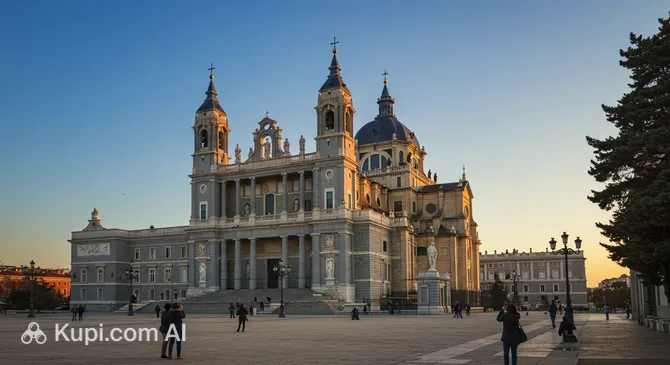
Almudena Cathedral. Illustration.
Source: Kupi.com AI

Traveler photos:

The architectural appearance of the cathedral is a unique and harmonious blend of styles, explained by the long history of its construction, which was only completed in 1993. The exterior facade is designed in a Neoclassical style to perfectly complement the ensemble of the neighboring Royal Palace. However, upon stepping inside, visitors find themselves in a completely different space—a bright and spacious interior decorated in the Neo-Gothic tradition.

Despite being relatively "young," the cathedral impresses with its grandeur and thoughtful details. It measures over 100 meters in length, and its dome reaches a height of 73 meters. Inside, you can see vibrant modern stained-glass windows, a majestic organ, and richly decorated chapels. The cathedral also houses a museum where you can learn more about the history of the diocese and the building itself. In 2004, this very cathedral hosted the wedding of the current King of Spain, Felipe VI, and Queen Letizia.

Contacts

To plan your visit to Almudena Cathedral, you can use the official contact details. It is recommended to check the cathedral's website or call directly for the most up-to-date information on service times and any potential schedule changes.

How to contactContact
AddressC. de Bailén, 10, Centro, 28013 Madrid, Spain
Phone number+34 915 42 22 00
Websitecatedraldelaalmudena.es

What to Do

Inside Almudena Cathedral, visitors will find a rich collection of religious art concentrated in numerous side chapels dedicated to the saints of Madrid. Be sure to look out for several outstanding works. In one of the chapels on the right, you will find an 18th-century figure of John the Baptist by the sculptor Michel, and in the right wing of the transept, a magnificent altarpiece (retablo) created by Juan de Borgoña in the early 16th century. The centerpiece of the cathedral is the figure of the Virgin of Almudena, the city's patron, dating from the same period.

Continuing your walk through the cathedral, peek into the ambulatory behind the altar, where you will find a unique 18th-century chest with exquisite paintings containing the remains of Saint Isidore. Here, you can also see the poignant sculpture "Recumbent Christ" by Juan de Ávalos. In one of the chapels on the left is another significant work—"Christ at the Column" by the sculptor Giacomo Colombo.

Getting There

Getting to Almudena Cathedral in Madrid is quite easy, as it is located in the heart of the city, right across from the Royal Palace. Public transport in Spain, and particularly in its capital, is excellent, making the cathedral easily accessible from anywhere in the city. The most convenient and fastest way is by metro. The nearest station, Ópera, is just a few minutes' walk away and is served by Line 2 (red) and Line 5 (green). From the metro exit, the walk to the cathedral takes no more than 5–7 minutes, passing through the picturesque Plaza de Isabel II or by the Royal Theatre.

In addition to the metro, you can reach the cathedral by one of the many city buses. Near the cathedral on Calle de Bailén, you will find stops for routes 3 and 148, which drop you off almost at the entrance. Buses 31, 50, and 65 also stop nearby. For those traveling by suburban trains (Cercanías), the nearest station is Madrid-Sol, from which it is a pleasant 15-minute walk to the cathedral, passing other central Madrid landmarks along the way.

If you prefer comfort, you can always use a taxi or ride-sharing services, which will easily take you directly to the square where the cathedral is located. However, given its central location, walking might be the best choice. From famous squares like Plaza Mayor or Puerta del Sol, you can reach Almudena Cathedral in 10–15 minutes. This route allows you to enjoy the architecture of the old city and soak in its unique atmosphere.

Nearest city: Madrid

History & Facts

The history of Almudena Cathedral is inextricably linked to the transformation of Madrid into the capital of Spain. The idea of building a grand cathedral dedicated to the city's patron saint, the Virgin of Almudena, first arose in the 16th century when King Philip II moved the capital here. However, these plans did not come to fruition for several centuries due to political disagreements and, more importantly, administrative status: the city of Toledo was the diocesan center, and its authorities did not grant permission for the construction of a cathedral in Madrid.

The situation only changed at the end of the 19th century when the long-awaited permission from Toledo was finally obtained. On April 4, 1884, King Alfonso XII laid the first stone of the future temple. Originally, the cathedral was intended as a burial place for his first wife, Maria de las Mercedes of Orléans. A year after work began, the Pope established the Diocese of Madrid, which immediately elevated the status of the building to a cathedral.

The construction process proved to be incredibly long and intermittent. In 1911, part of the crypt was opened for services, but work was later frozen and only resumed after the end of the Civil War. A key turning point in the project occurred in 1944: the original Neo-Gothic style was changed to Neoclassical so that the cathedral would harmonize with the architecture of the neighboring Royal Palace. Construction was only completed nearly a century later, and on June 15, 1993, the cathedral was solemnly consecrated by Pope John Paul II, becoming the first cathedral in Spain to be consecrated by a Pope.

Time Needed

When planning a visit to Almudena Cathedral, you should allow for one to three hours, depending on how thoroughly you wish to explore it. For a quick overview of the main part of the cathedral—the central nave, the altar, and the most famous chapels—about 45–60 minutes will suffice. This is enough time to appreciate the temple's impressive scale, its unique Neo-Gothic interior, and its vibrant modern stained-glass windows, without getting deep into the details. This option is ideal for travelers with limited time.

If you want to get a more complete picture of the cathedral, it is worth setting aside extra time to visit its other sections. A visit to the cathedral museum, which tells the story of the Madrid diocese and the temple's long construction, will take another 45–60 minutes. Additionally, one of the main highlights is the climb to the dome's observation deck, which offers breathtaking panoramic views of the Royal Palace and central Madrid. You should budget at least another 30 minutes for this.

Thus, for a full and unhurried experience of Almudena Cathedral, including the main hall, the museum, and the ascent to the dome, it is recommended to set aside 2 to 3 hours. This will allow you to enjoy all aspects of this significant site without rushing, from the artistic treasures in the chapels to the magnificent city views, and take some memorable photos.

Working Hours

Almudena Cathedral in Madrid is open to visitors year-round, though opening hours may vary slightly depending on the season. From September to June, the cathedral can be visited from 10:00 to 20:30, and in July and August, hours are extended until 21:00. Entry to the main part of the temple is free, but a donation of one euro is encouraged. It is important to remember that tourist visits may be restricted during liturgical services.

For a deeper exploration of the cathedral's history, it is recommended to visit its museum and climb to the observation deck on the dome, which offers magnificent views. The museum is open Monday to Saturday from 10:00 to 14:30 and is closed on Sundays and public holidays. A ticket must be purchased to visit the museum and the dome. Special reservations for individual tourists are usually not required, but it is always useful to check the official cathedral website for the latest information and potential schedule changes, especially if you plan to visit during the holidays.

10:00 – 20:30

Nearby

A visit to Almudena Cathedral is just the starting point for exploring the rich historical center of Madrid. Thanks to its location, the cathedral is surrounded by many other iconic sites that are within walking distance. Strolling through the surrounding area will allow you to dive deeper into the atmosphere of the Spanish capital, seeing the contrast between majestic royal architecture and vibrant city life.

Exploring nearby attractions will not only enrich your experience but also help you create a cohesive and exciting full-day itinerary. From royal residences to bustling markets and cozy squares, everything interesting is literally just around the corner. Below is a list of key locations situated near the cathedral, along with the distances to reach them.

NameDistance
Royal Palace of Madrid0.3 km
San Miguel Market0.5 km
Plaza Mayor0.6 km
Temple of Debod1 km
Rosi La Loca1 km
Inclán Brutal Bar1.1 km
Calle 365 Madrid1.3 km

Have you reached the end of the page?

So the route has been studied inside and out