Support

Las Ventas Bullring

About

Las Ventas Bullring is more than just a building; it is a true monumental symbol of Madrid and all of Spain. As the largest and most prestigious bullring in the country, it attracts both aficionados of this traditional spectacle and tourists wishing to experience a vital part of Spanish culture. Located in the city quarter of the same name, Las Ventas is rightfully considered one of the capital's key attractions.
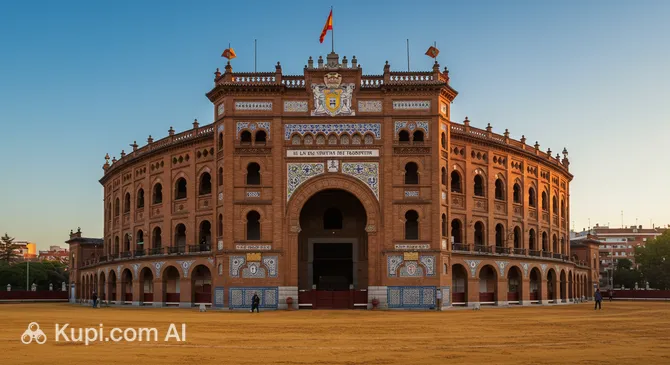
Las Ventas Bullring. Illustration.
Source: Kupi.com AI

Traveler photos:

The arena building itself is an outstanding work of architecture. It was built in the striking Neo-Mudéjar style using red brick and is richly decorated with ceramic tiles featuring the coats of arms of Spanish provinces. Characteristic horseshoe arches and elegant decorative elements make the look of Las Ventas both recognizable and memorable.

The scale of the arena is impressive: it can accommodate 23,797 spectators, making it not only the largest in Spain but also one of the largest in the world. Today, Las Ventas hosts more than just bullfights; it also serves as a venue for concerts, festivals, and other major events, making it an important cultural center for the city.

Contacts

For up-to-date information on event schedules, tours, and ticket purchases, it is recommended to check the official contact details. All necessary information, including the address, inquiry phone number, and official website, is provided below.

How to contactContact
AddressC. de Alcalá, 237, Salamanca, 28028 Madrid, Spain
Phone number+34 913 56 22 00
Websitewww.las-ventas.com

What to Do

The main reason visitors come to the Las Ventas Bullring is, of course, the traditional bullfight (corrida). The bullfighting season runs from May to October, and this is when you can see performances by Spain's top matadors. Attending such a spectacle allows for a deep dive into one of the country's most famous and debated traditions, letting you feel its intense and solemn atmosphere.

Even if you don't plan on watching a bullfight, the arena offers plenty of interest. Visitors can take a tour to examine the unique Neo-Mudéjar architecture in detail, noticing the decorative brick facade and ceramic panels with the coats of arms of all Spanish provinces. Inside the arena is the Bullfighting Museum (Museo Taurino), which houses costumes of famous toreros, posters, paintings, and other exhibits detailing the history of the spectacle.

The sightseeing experience doesn't end inside the walls. While walking around the arena, it's worth paying attention to the sculptures installed in honor of legendary bullfighting figures. Immortalized in bronze here are outstanding matadors such as Antonio Bienvenida, José Cubero "Yiyo," and Luis Miguel Dominguín. These monuments serve as a tribute to the masters whose names are forever etched into the history of Las Ventas.

Getting There

Getting to the Las Ventas Bullring is quite simple thanks to its convenient location in Madrid and its excellently developed public transport system. The fastest and most popular way is by metro. The Ventas station is located right at the arena entrance, served by two lines: 2 (red) and 5 (green). This makes it easy to reach the landmark from almost anywhere in the city with little to no transfers.

An alternative to the metro is the extensive city bus network. Numerous routes stop near Las Ventas, providing tourists with extra flexibility in planning their journey. Key buses heading to the arena include Nos. 12, 21, 38, 53, 106, 110, and 146. On days when bullfights or major events take place, city authorities often run additional services to handle the flow of spectators.

For those who prefer comfort, taxi services and ride-hailing apps are always available. A trip from the city center, such as Puerta del Sol, takes about 15–20 minutes depending on traffic. If you are staying in the Salamanca district where the arena is located, a pleasant walk to Las Ventas can be a great opportunity to get better acquainted with this elegant part of Madrid.

Nearest city: Madrid

History & Facts

The history of the Las Ventas Bullring began in 1922 when the decision was made to build a new, more spacious venue for bullfighting. It was intended to replace the old arena located in the center of Madrid near the famous Alcalá Gate. Although construction was completed in 1929, the official opening took place two years later, in 1931, marking the start of a new era in the capital's cultural life.

Two prominent architects were behind the creation of this iconic landmark. The initial project was developed by José Espeliús, who unfortunately did not live to see the completion of his creation, passing away in 1928. The work was finished by his colleague, Manuel Muñoz Monasterio. Notably, Monasterio also designed another Madrid legend—the famous Santiago Bernabéu Stadium—making his contribution to the city's architectural landscape truly unique.

The building was designed in the Neo-Mudéjar style, which was declared Spain's national architectural style in the 19th century. This style is a revival of medieval Hispano-Moorish architectural traditions, harmoniously blending decorative elements like horseshoe arches and intricate brickwork with European structural forms. It was after the construction of Las Ventas's predecessor, the Plaza de Toros de Goya, that this vibrant and recognizable style became the hallmark for arenas across Spain.

Time Needed

When planning a visit to the Las Ventas Bullring, you should set aside 1–2 hours for a full introduction to this iconic Madrid landmark. This is usually enough time to explore the main parts of the complex and soak in its atmosphere without necessarily attending a bullfight. Such a visit typically includes an audio-guided tour and a visit to the Bullfighting Museum.

A standard tour of the arena, often with an audio guide, takes about 50–60 minutes. During this time, you can see the arena itself, the stands, the famous Main Gate (Puerta Grande) through which victorious matadors are carried out on shoulders, and other key locations. You should allocate an additional 30–45 minutes for the Bullfighting Museum (Museo Taurino), which features costumes of legendary toreros, historical posters, and other exhibits telling the story of this spectacle in Spain. The museum visit is usually self-guided.

If your time is limited and you only want to appreciate the impressive Neo-Mudéjar architecture, a walk around the building and an inspection of the monuments to famous toreros will take no more than 20–30 minutes. It is important to remember that attending a bullfight itself is a separate event that lasts 2–3 hours and usually takes place in the evening. Tours of the arena on performance days close several hours before the event starts.

Working Hours

Tours of the Las Ventas Bullring and its Bullfighting Museum are available to visitors daily. Typically, the complex opens at 10:00 AM. Operating hours change depending on the season: from April to October, you can visit the arena until 7:00 PM, and from November to March, until 6:00 PM. It is important to remember that on days when bullfights or other events are held, tours end much earlier—usually 3 to 4 hours before the show starts.

The bullfighting season at Las Ventas lasts from May to October. To avoid inconvenience and guarantee your spot, it is highly recommended to check the current schedule on the official website before your visit and purchase tickets in advance, especially if you plan to visit on a weekend or during the famous San Isidro Festival. This will allow you to plan your visit and ensure the arena is open for tourists at your chosen time.

DayOpening hours
Monday10:00 – 18:00
Tuesday10:00 – 18:00
Wednesday10:00 – 18:00
Thursday10:00 – 18:00
Friday10:00 – 18:00
Saturday10:00 – 18:00
Sunday10:00 – 15:00

Nearby

A visit to the Las Ventas Bullring is a highlight, but your experience of Madrid would be incomplete without exploring its surroundings. The Salamanca district, where the arena is located, and its adjacent neighborhoods are full of interesting spots, from cozy taverns to significant cultural sites. A walk nearby will allow you to better feel the multifaceted character of the Spanish capital and complement the impressions from your visit.

Exploring the areas around iconic landmarks often leads to just as many discoveries as the sites themselves. The surroundings of Las Ventas are no exception. Here, you can find everything from modern entertainment centers to important museums, allowing you to create a diverse full-day itinerary.

NameDistance
La Taberna de Peñalver1 km
Madrid Arena1.2 km
Aventurico Prosperidad1.5 km
PezVerde Aquarium1.5 km
PlantasyGambas & Reef Aquarium1.8 km
Bel Mondo1.9 km
National Archaeological Museum2.4 km

Have you reached the end of the page?

So the route has been studied inside and out