Support

Royal Botanical Garden

About

The Royal Botanical Garden in Madrid is not just a park, but a true living museum and a green oasis in the heart of Spain. Located next to the famous Prado Museum, this garden, with over 250 years of history, is one of the oldest and most significant in Europe. It was founded by order of King Ferdinand VI in 1755 and has since served not only as a place for peaceful walks but also as an important scientific research center.

The garden's territory, covering about 8 hectares, is designed in an elegant neoclassical style and divided into several terraces. Here, visitors can embark on a journey around the botanical world without leaving the city center. The garden boasts an impressive collection of over 5,000 plant species from all over the globe. Of particular note are the historical greenhouses, where various climatic zones—from the tropics to the desert—are recreated, as well as the Villanueva Pavilion, which adds a special architectural charm to the site.
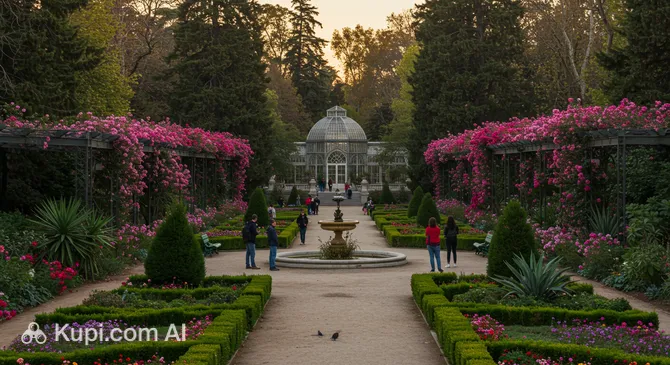
Royal Botanical Garden. Illustration.
Source: Kupi.com AI

Traveler photos:

In addition to living plants, the Royal Botanical Garden holds priceless scientific treasures. Its herbarium contains over a million specimens, and its archives and library house unique drawings, manuscripts, and diaries collected during the great scientific expeditions of the 18th and 19th centuries. This highlights the garden's dual role: as a beautiful place for relaxation and as a serious institution contributing to the study and conservation of the planet's biodiversity.

A walk through the garden is a chance to enjoy the silence away from the city bustle, admire centuries-old trees, and view elegant fountains and sculptures. This place is perfect for those interested in botany and history, or for anyone simply looking for a beautiful and quiet corner to rest. A visit to the Royal Botanical Garden will leave a lasting impression and allow you to see nature from a new and fascinating perspective.

Contacts

To plan your visit to the Royal Botanical Garden, it is helpful to have its contact information at hand. For the most up-to-date information, including opening hours and ticket prices, it is best to check the official website. The primary contact details are listed below.

How to contactContact
AddressPl. Murillo, 2, Retiro, 28014 Madrid, Spain
Phone number+34 914 20 30 17
Websitewww.rjb.csic.es

What to Do

A visit to the Royal Botanical Garden is an opportunity to immerse yourself in a world of peace and natural harmony. Guests can stroll along well-kept alleys, enjoying the blooms of diverse plants, including rare and exotic species from around the world. The garden is divided into several themed zones and terraces, including a Romantic garden in the English style, a Japanese garden, and sections with medicinal and aromatic herbs. It is the perfect spot for quiet relaxation in nature right in the center of Madrid.

One of the garden's main attractions is its modern greenhouses, where the latest technologies maintain various climatic conditions. In just a few minutes, visitors can move from the humid tropics to the arid desert and then to a mild subtropical climate, observing the lives of unique plants. The extensive collections of peonies and irises, as well as seasonal flower displays that are regularly updated, are particularly eye-catching.

The Royal Botanical Garden is not only a space for contemplation but also an active cultural and educational center. The Villanueva Pavilion and other venues regularly host themed exhibitions, workshops, and educational tours for both adults and children. Furthermore, the picturesque landscapes make the garden an ideal location for photoshoots or simply relaxing on one of the many benches in the shade of ancient trees.

Getting There

Reaching the Royal Botanical Garden is very easy thanks to its excellent location in the cultural and tourist heart of Madrid. The garden is situated next to the famous Prado Museum and is just a short walk from the major Atocha railway station. This makes it an ideal stop while exploring the city's main attractions on foot.

The most convenient way to reach the garden is via the extensive public transport network. The nearest metro stations are Atocha (Line 1) and Banco de España (Line 2), both about a 5–10 minute walk from the entrance. Numerous city bus routes also serve this area, with stops located directly by the Prado Museum or Atocha station, ensuring maximum convenience for visitors.

If you prefer to travel by car, please note that the garden is located in a busy central area. Paid parking is available nearby; however, due to potentially heavy traffic and limited spaces, using public transport is highly recommended. This will save you time and allow you to enjoy your visit without any extra hassle.

Nearest city: Madrid

History & Facts

The history of the Royal Botanical Garden in Madrid is inextricably linked to the Age of Enlightenment and royal patronage. The garden was founded on October 17, 1755, by order of King Ferdinand VI. It was originally located elsewhere, on the banks of the Manzanares River, where the first collection of over two thousand plants was assembled under the direction of botanist José Quer. However, in 1774, the next monarch, Charles III, ordered the garden to be moved to its current prestigious location on the Paseo del Prado. It officially opened at the new site in 1781, with a design entrusted to the prominent architects Francesco Sabatini and Juan de Villanueva, who created its elegant neoclassical appearance.

The late 18th century was a period of prosperity and scientific enrichment for the garden. Its collections grew significantly thanks to plants brought back from major scientific expeditions to the Americas and other parts of the world. The expedition led by Alessandro Malaspina played a particularly vital role. Development continued in the 19th century: new greenhouses were built for exotic species, and a small zoo even appeared on the grounds, though it was later moved to the famous Buen Retiro Park. These innovations solidified the garden's status as an important scientific and educational center in Spain.

Having survived various historical periods, including a devastating hurricane in 1886 and times of decline, the garden has always been restored and maintained its significance. A major milestone in its history was the official recognition of its value: in 1942, the Royal Botanical Garden was included in the prestigious list of Historical Gardens of Spain's Cultural Heritage. This status emphasizes its role not just as a green space, but as a living monument to history, science, and landscape art that continues to delight visitors and serve science to this day.

Time Needed

When planning a visit to the Royal Botanical Garden, you should expect to spend between one and a half to two hours. This is enough time for a leisurely stroll through the main terraces and alleys, discovering the most famous plant collections, and relaxing in the shade of the trees. The recommended viewing time is 1-2 hours, which provides a good general overview of this green oasis in the center of Madrid.

If you are passionate about botany, photography, or plan to visit the temporary exhibitions often held in the Villanueva Pavilion, you should allocate more time for your visit. Nature lovers can easily spend 3–4 hours or even a whole day here, studying the greenhouses with tropical, subtropical, and desert plants in detail, as well as unique collections like the rose garden or the bonsai collection. The garden houses an impressive collection of over 5,000 plant species, offering extensive opportunities for in-depth exploration.

Working Hours

The Royal Botanical Garden is open to visitors year-round, but its operating hours change depending on the season. The garden opens its doors daily at 10:00, while the closing time varies: in the winter months (November–February) it stays open until 18:00, in March and October until 19:00, in April and September until 20:00, and during the brightest months (from May to August), walks are possible until 21:00. It is important to remember that the schedule may change on public holidays or during special events, so it is highly recommended to check the current information on the garden's official website before your visit.

To avoid queues, especially during the peak tourist season, tickets can be purchased online in advance. This will save you time and guarantee entry. Additionally, for those looking to save, there is a great opportunity: on Tuesdays from 10:00 to 13:00, entry to the garden is free. Standard rates apply on other days, and discounts are available for students and seniors, making a visit to this green corner accessible to everyone.

10:00 – 21:00

Nearby

A visit to the Royal Botanical Garden is just one part of exploring the rich cultural heritage of Madrid. Thanks to its location in the very heart of the city, the garden is surrounded by many other iconic sites within walking distance. A stroll through the neighborhood will allow you to dive deeper into the atmosphere of the Spanish capital and make your trip even more fulfilling and memorable.

The famous "Golden Triangle of Art," which brings together three of the world's greatest museums, is located right near the garden. This is a unique opportunity to combine the enjoyment of nature with an immersion into the world of painting and sculpture. Below is a list of nearby attractions that will make your day in this part of Spain truly unforgettable.

NameDistance
Prado National Museum0.3 km
Casa de Campo0.3 km
Museo Reina Sofía0.5 km
Thyssen-Bornemisza National Museum0.6 km
Crystal Palace0.8 km
Cibeles Fountain0.9 km
Calle 365 Madrid0.9 km

Have you reached the end of the page?

So the route has been studied inside and out