Support

Faunia

About

The Faunia Biological Park is a unique natural complex in Madrid that offers visitors a completely new perspective on the world of wildlife. Located in the capital of Spain, this park is not just a zoo, but a true ecosystem complex where animals and plants coexist in harmony. Faunia positions itself as a place where you can get to know entire ecosystems rather than just individual species.
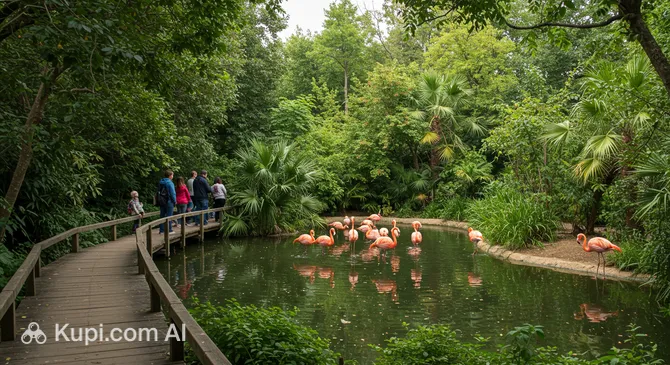
Faunia. Illustration.
Source: Kupi.com AI

Traveler photos:

Across an impressive territory of 14 hectares, many animals reside, while thousands of plants and trees create a unique microflora. The park is divided into thematic zones, each recreating a specific habitat with high precision—from jungles to polar regions. There is even a small lake that complements the picturesque landscape.

The main feature of Faunia is that animals are kept in conditions as close as possible to their natural environment. Skillfully designed safari-style enclosures, modern veterinary clinics, and research laboratories are all aimed at the well-being of the inhabitants. Thanks to this approach, many animals here breed regularly, which is evidence of the high quality of care.

A visit to Faunia will be an exciting and educational adventure for the whole family. It is a wonderful opportunity not only to see rare animals, such as Komodo dragons or West Indian manatees, but also to better understand how fragile and diverse the natural world is. Interactive exhibits and animal shows make the visit even more memorable.

Contacts

To plan your visit, find out current opening hours, or ask other questions, you can contact the Faunia park administration directly. All the necessary information for visitors is gathered below.

How to contactContact
AddressAv. de las Comunidades, 28, Vicálvaro, 28032 Madrid, Spain
Phone number+34 911 54 74 82
Websitewww.faunia.es

What to Do

A visit to Faunia is a true journey around the world, where you can discover the diverse ecosystems of our planet. Visitors can explore specially created climate zones, designed by professionals to recreate the natural habitats of many animal species with high precision. You can walk through tropical jungles, feel the cold of the polar regions, and explore other corners of the world while observing animals in conditions as close as possible to their native ones. To create these unique microclimates, special plants were brought from all continents, making the experience even more authentic.

Faunia is not only a place for observation but also for learning. Originally conceived as a scientific center for the study of wildlife, it allows visitors to not only see rare animals but also learn much about them. In addition, the park hosts educational events and shows featuring sea lions and birds of prey. Remember that the behavior of the park's inhabitants changes throughout the day. During hot hours, many of them may rest or sleep, much like people in Spain observe a siesta, so keep this in mind when planning your visit.

Beyond the animal world, Faunia offers all the conditions for a comfortable family holiday. The park territory features special relaxation areas and playgrounds for children, as well as a climbing wall and a rope course for the more active guests. This allows you to do more than just look at animals; you can spend the whole day here, combining entertainment with gaining new knowledge in an engaging way.

Getting There

Faunia Biological Park is located on the outskirts of Madrid rather than in its central part, but it is quite easy to reach using the capital's well-developed public transport system. One of the most convenient ways is to take the metro. You need Line 9 (L9) and should travel to Valdebernardo station. From the station to the park entrance, it is a short walk of about 10–15 minutes. An even more comfortable option is the city bus. Route No. 71, departing from Plaza de Manuel Becerra, will take you right to the entrance of Faunia. You can also use the Cercanías commuter trains: Line C2 to Vicálvaro station is your best bet.

For those who prefer maximum comfort, especially families with small children, a taxi or car is a great alternative. The park is equipped with its own spacious parking lot where you can leave your car for the entire day. Regardless of your chosen mode of transport, we recommend arriving at Faunia in the morning. This will help you avoid queues and large crowds, especially on weekends and public holidays, allowing you to enjoy your encounter with nature in peace.

Nearest city: Madrid

History & Facts

The history of Faunia in Madrid began in 2001 when the creation of a unique new space dedicated to wildlife was announced. To emphasize its difference from traditional zoos, the project was named "Faunia". It was originally intended not so much as an entertainment venue, but as a scientific center for the study of the animal world. This concept laid the foundation for its further development, defining a special approach to animal welfare and spatial organization.

From 2003, the park's concept began to gradually change, shifting the focus towards being more open to visitors and expanding entertainment options. However, the real breakthrough in Faunia's history occurred in 2008. This was when Parques Reunidos, a large holding company that manages key recreation areas in Spain, took an interest in the park. This event was a turning point, providing Faunia with the necessary resources for large-scale development and infrastructure modernization.

Thanks to the investments and professional management, Faunia has become one of the most vibrant and significant biological parks not only in Europe but in the entire world. Today, it is more than just a zoo; it is a multi-functional complex that successfully combines entertainment, education, and scientific goals. The park continues to follow its mission, offering visitors a unique opportunity to immerse themselves in the world of wildlife and learn more about its fragility and diversity.

Time Needed

To fully enjoy all the wonders of the Faunia Biological Park, it is recommended to set aside at least half a day for your visit. For a complete and leisurely tour of all thematic zones, from polar landscapes to the Amazon jungle, you will need about 5 hours. This will be enough time to walk through the main pavilions, get to know the variety of animals, and immerse yourself in the atmosphere of each ecosystem.

Keep in mind that Faunia is not just a zoo, but a large 14-hectare nature park that offers many activities. If you plan to attend educational lectures or watch animal shows, such as performances with sea lions or birds of prey, you should allow extra time. For a more relaxed visit, especially if you are traveling with children and want to use the playgrounds or relax in one of the cafes, you can easily plan for a full day trip.

Working Hours

The Faunia Biological Park in Madrid is open year-round, but its opening hours may change depending on the season, day of the week, and weather conditions. As a rule, the park opens its doors to visitors at 11:00, while closing times vary. On weekdays, it may close earlier, for example, at 17:00 or 18:00, while on weekends and public holidays, it may stay open longer. Since the schedule can be irregular, it is highly recommended to check the current timetable on the park's official website before planning your visit.

To avoid queues at the entrance and potentially save money, it is best to purchase tickets to Faunia online in advance. This is especially relevant during the peak tourist season and school holidays when the number of visitors increases significantly. Buying online will not only guarantee your entry but also make the start of your adventure into the world of wildlife more comfortable.

DayOpening hours
Monday11:00 – 19:00
Tuesday11:00 – 19:00
Wednesday11:00 – 19:00
Thursday11:00 – 19:00
Friday11:00 – 19:00
Saturday11:00 – 20:00
Sunday11:00 – 20:00

Nearby

Visiting the Faunia Biological Park is a highlight in itself, but you shouldn't stop there. The park's surroundings and Madrid itself offer many other interesting places that can enrich your journey and provide new experiences. Exploring nearby attractions will help you better appreciate the multifaceted nature of the Spanish capital and gain a more complete understanding of its culture and history.

Exploring the area around Faunia is a wonderful opportunity to combine a love of nature with visits to cultural and entertainment sites. Just a few kilometers from the park, you can find both modern entertainment centers and iconic historical landmarks. Below is a list of nearby attractions that might interest you.

NameDistance
PlantasyGambas & Reef Aquarium5.5 km
Madrid Arena6.1 km
Crystal Palace6.3 km
Casa de Campo6.7 km
La Taberna de Peñalver7 km
Prado National Museum7.2 km
Museo Reina Sofía7.2 km

Have you reached the end of the page?

So the route has been studied inside and out