Algeria

About

Algeria is the largest country in Africa, stretching across the north of the continent from the azure waters of the Mediterranean Sea to the vast expanses of the Sahara Desert. It is a land of contrasts, where ancient traditions intertwine with modernity, and the hospitality of the locals warms the hearts of travelers. The capital city, the vibrant Algiers, serves as the gateway to this amazing world.
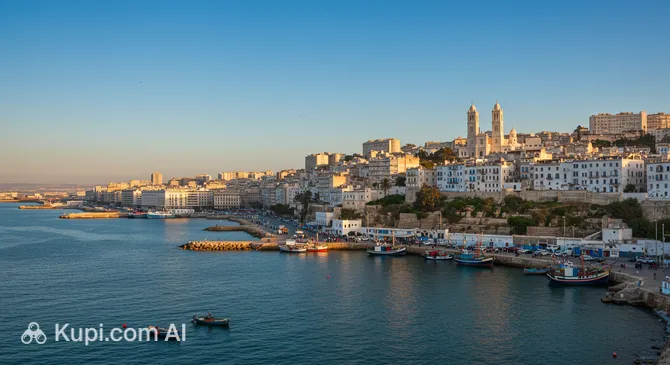
Illustration.
Source: Kupi.com AI

Algeria's history is rich and multifaceted, leaving behind an impressive legacy. Here, you can see beautifully preserved Roman ruins, majestic mosques and citadels from the Ottoman period, and elegant French colonial architecture. Cities like Constantine, famous for its bridges over a deep gorge, preserve the spirit of centuries and invite fascinating exploration.

Algeria's natural diversity is breathtaking: from picturesque coastlines with cozy bays to the majestic Atlas Mountains and the magical Sahara Desert with its oases. Visiting places like the Jardin d'Essai du Hamma in the capital will allow you to enjoy greenery and tranquility. Algeria offers a unique combination of cultural discoveries and natural beauty, leaving an unforgettable impression on everyone who chooses to visit.

Currency

The national currency of Algeria is the Algerian Dinar (DZD). Dinar banknotes are typically decorated with images reflecting the country's rich history and culture, including historical figures, important events, and architectural monuments. Coins also feature national symbols and imagery related to Algerian heritage.

Exchanging foreign currency into dinars is recommended at official banks or licensed exchange offices, which can be found at airports, major cities, and some hotels. It is strongly recommended to avoid exchanging money with street money changers, as this may involve the risk of fraud or receiving an unfavorable rate. The use of credit cards in Algeria is limited: they are mainly accepted in large international hotels, some restaurants, and shops in tourist centers. For daily expenses, especially when visiting markets or small towns, it is preferable to carry a sufficient amount of cash in dinars.

Visa Requirements

To enter Algeria, citizens of most countries, including those from the EU, the USA, and the CIS, generally require a visa. Usually, a tourist visa is obtained in advance by applying to an Algerian embassy or consulate in your country of residence. The possibility of obtaining a visa on arrival or online is extremely limited and is not standard practice, so this aspect of the trip should be planned well in advance.

In addition to a visa, to cross the border you will need a valid passport, the validity of which should cover the intended period of stay. Return tickets, proof of hotel booking, and medical insurance may also be required. It is crucial to check current visa requirements and the list of necessary documents on the official website of the Algerian embassy or consulate before your trip, as visa rules are subject to change.

We'll let you know if you need a visa

Enter your destination or
Your nationality
Destination

Timezones

When planning a trip to Algeria, you won't have to worry about changing time zones within the country. A single time zone applies throughout the entire territory of Algeria.

It corresponds to GMT+1 (Central European Time, CET). This simplifies planning travels between different cities and regions of the country, as the time will be the same everywhere.

Getting There

The easiest way to reach Algeria is by air. The country has several international airports, the main one being Houari Boumediene Airport in the capital, Algiers. It serves as the primary hub for international flights. Regular air services connect Algeria with many cities in Europe (especially France), the Middle East, and Africa. There are also flights from some other regions of the world, often with convenient connections through major European or Middle Eastern hubs.

For those who prefer land travel, there are possibilities to enter Algeria from neighboring countries, specifically from Tunisia, via car and bus routes; however, it is advisable to check current information on border crossing operations in advance. Given its extensive Mediterranean coastline, Algeria can also be reached by sea. Regular ferry lines connect Algerian ports, such as Algiers and Oran, with cities in Southern Europe, like Marseille in France or Alicante in Spain. Regardless of the chosen method, it is recommended to book tickets in advance, especially if your trip coincides with the peak tourist season or holidays, to ensure the best prices and availability.

AirportCityIATA
Houari Boumediene AirportAlgiersALG
Es Senia AirportOranORN
Ain El Bey AirportConstantineCZL
Setif AirportSetifQSF
Oued Irara AirportHassi MessaoudHME

Algeria is a country with a rich history and diverse landscapes, offering travelers many interesting cities and resort areas. From bustling metropolises with ancient medinas to picturesque coastal towns—everyone will find something here. The capital city, Algiers, is the main cultural and economic center, striking with its blend of Ottoman, French colonial, and modern architecture.

Illustration.
Source: Kupi.com AI

Among other popular destinations is Oran, the country's second-largest city, known for its Spanish Santa Cruz Fort and lively promenade. Constantine, the "City of Bridges," impresses with its unique location on a rocky plateau divided by a deep gorge. History buffs and fans of ancient ruins should visit Tipaza with its well-preserved Roman remains on the shores of the Mediterranean Sea. The coastal city of Annaba attracts tourists with its beaches and the Basilica of Saint Augustine.

Top Attractions

Algeria is a country with a rich history and diverse landscapes, offering tourists many interesting places to visit. From ancient ruins to modern monuments and natural beauty—there is something for everyone here. Let's get to know some of the most iconic attractions.

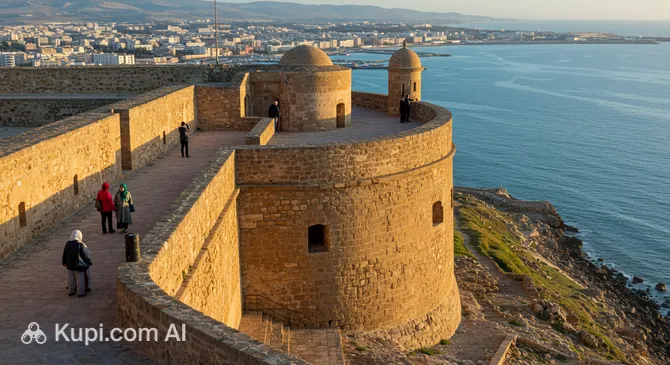
One of the most impressive historical structures is Fort Santa Cruz in Oran. This majestic fort, perched on a hilltop, offers not only a dive into history but also breathtaking panoramic views of the city and the Mediterranean Sea. Its powerful walls and towers hold the memory of many events that took place in the region.

Illustration.
Source: Kupi.com AI

Traveller photos:

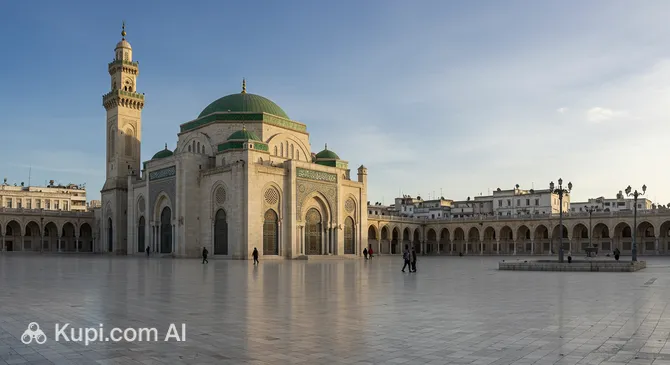
In the city of Constantine rises the magnificent Emir Abdelkader Mosque. This is one of the largest and most beautiful Islamic religious buildings in North Africa. The mosque impresses with its size, exquisite architecture, two tall minarets, and rich interior decoration, serving as an important spiritual and cultural center.

Illustration.
Source: Kupi.com AI

Traveller photos:

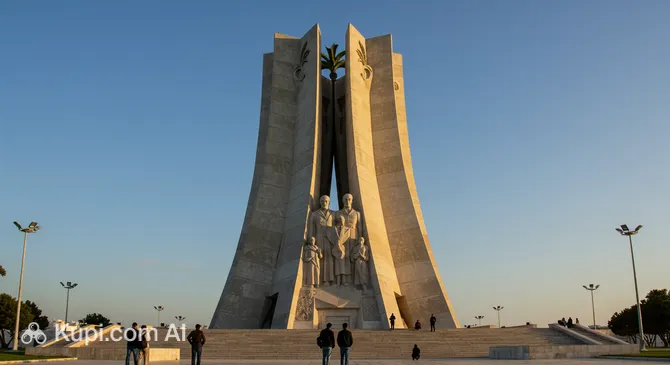
A symbol of the capital city, Algiers, is the Martyrs' Memorial (Maqam Echahid). This monumental landmark, built in memory of the fighters for Algerian independence, consists of three stylized palm leaves that converge at the top. At its base lies the Eternal Flame and a museum dedicated to the national liberation struggle.

Illustration.
Source: Kupi.com AI

Traveller photos:

For nature lovers, a must-visit is Gouraya National Park, located on the Mediterranean coast. This UNESCO biosphere reserve is famous for its scenic mountains, dense forests, diverse flora and fauna, as well as beautiful beaches and opportunities for hiking.

Best Time to Visit

When planning a trip to Algeria, it is important to consider the country's climatic features, which vary significantly depending on the region and time of year. Generally, the best time to visit the northern coastal areas, including the capital Algiers, is considered to be spring (March to May) and autumn (September to November). During these periods, the weather is most comfortable: warm but not swelteringly hot, with temperatures ranging from +20°C to +28°C. This is an ideal time for excursions to ancient cities such as Constantine or Tlemcen, and for relaxing on the coast in places like Oran or Tipaza. High season usually coincides with these months, which can mean more tourists and slightly higher prices for accommodation and services. Additionally, these seasons offer cultural events: in spring, some regions hold blossom festivals, such as the Strawberry Festival in Jijel, while in autumn, you can witness the traditional Date Harvest Festival in oases like Taghit. It is also important to note that the dates of major religious holidays, such as Eid al-Fitr and Eid al-Adha, are movable and may affect the availability of some services and business hours.

Summer (June to August) in Algeria, especially in the central and southern desert regions, is characterized by extremely high temperatures, often exceeding +40°C. Trips to the Sahara during this time can be very exhausting. However, on the coast, the sea breeze slightly softens the heat, making beach holidays possible. Winter (December to February) in the north of the country is cool and rainy, with snow possible in mountainous areas. At the same time, winter is a relatively comfortable season for visiting the Algerian Sahara, when daytime temperatures are more moderate, and it is also the time for celebrating Yennayer, the Berber New Year (usually in January), which is particularly vibrant in the Kabyle regions. The low season (summer for the Sahara, winter for the north) attracts fewer tourists and potentially lower prices. However, one should be prepared for weather variations and keep in mind that during this period, some tourist sites or establishments may have reduced hours or be temporarily closed. It is recommended to always check the weather forecast for a specific region before traveling, as the climate in Algeria is very diverse—from Mediterranean in the north to desert in the south.

Traditions

When traveling to Algeria, you will immerse yourself in a culture where traditions and respect are highly valued. Greetings play an important role here: a handshake is common, especially between men, often accompanied by placing the right hand over the heart after the shake as a sign of sincerity. A common greeting is "As-salamu alaykum" (peace be upon you). When communicating with locals, try to maintain eye contact but avoid staring, especially at members of the opposite sex, to avoid being misunderstood. It is important to remember modesty in clothing: when visiting mosques and religious shrines, women should cover their heads, shoulders, and knees, while men should wear long trousers and shirts. Even in large cities like Algiers, a conservative dress style will help you feel more comfortable and show respect for local customs.

Algerians are famous for their exceptional hospitality. If you are invited into a home, it is a great honor, and it is customary to bring a small gift for the hosts—for example, sweets, pastries, or fruit (alcohol should only be given if you are sure of the hosts' preferences). At the table, remember that food is traditionally taken with the right hand, as the left is considered unclean. Refusing offered treats is considered impolite, as is not trying every dish if offered. Among the important dates in Algeria's cultural calendar are Independence Day (July 5), celebrated on a grand scale, and religious holidays such as Eid al-Fitr, which concludes the holy month of Ramadan, and Eid al-Adha. To show respect, avoid public displays of affection between men and women, always ask permission before photographing people, and during Ramadan, refrain from eating and drinking in public places during daylight hours.

Entertainment

Algeria offers its guests a wide range of entertainment for every taste. Lovers of active recreation will find many opportunities here: from trekking through the scenic Atlas mountain ranges and exploring the mysterious Sahara Desert to water sports on the Mediterranean coast. Cities such as Oran and Tigzirt attract visitors with opportunities for diving, snorkeling, and boat trips.

The cultural program in Algeria is equally rich. The country is proud of its historical heritage, reflected in numerous museums, ancient ruins, and architectural monuments, especially in cities like the capital Algiers, Constantine, and Tlemcen. In the evening, major cities offer diverse leisure options: from visiting theaters and concert halls to dining in restaurants featuring traditional Algerian cuisine or relaxing in cozy cafes. Nightlife is concentrated mainly in large cities, offering both lively bars and more peaceful lounge areas.

For those who cannot imagine a trip without shopping, Algeria offers colorful markets and modern shopping centers. Here, you can purchase authentic souvenirs: leather goods, ceramics, Berber jewelry, handmade carpets, and fragrant spices. Family vacations are also well-catered for: the country has amusement parks, such as Mostaland in Mostaganem, as well as water parks and well-equipped beach areas where you can have a great time with children.

Currency rates

Planning a trip? Wonderful! To make sure the financial side of your journey holds no surprises, it's worth remembering that exchange rates are constantly changing. That's why we strongly recommend keeping an eye on current rates both before departure and throughout your trip. To help with that, you can use the data provided below — we monitor exchange rates 24/7 and strive to provide the most up-to-date information.

DZD exchange rate for 13/08/2026

1 AED
~ 36.01 DZD
2.77 AMD
~ 1 DZD
1 AUD
~ 93.43 DZD
1 AZN
~ 77.80 DZD
1 BYN
~ 44.45 DZD
1 CAD
~ 94.93 DZD
1 EUR
~ 152.56 DZD
1 GBP
~ 178.64 DZD
2.39 HUF
~ 1 DZD
1 INR
~ 1.39 DZD
1 KGS
~ 1.51 DZD
10.71 KRW
~ 1 DZD
3.52 KZT
~ 1 DZD
1 PLN
~ 35.45 DZD
1 RUB
~ 1.60 DZD
1 SAR
~ 35.25 DZD
1 SGD
~ 103.33 DZD
1 TRY
~ 2.77 DZD
1 UAH
~ 2.95 DZD
1 USD
~ 132.24 DZD
90.17 UZS
~ 1 DZD

Reached the bottom of the page?

Looks like you know this route inside out

We use cookies and services to collect user information. This is essential for the functioning of the site and for marketing purposes. You can find out more in .