Congo

Cities in the country

About

The Republic of the Congo, located in the heart of Central Africa, is a land of contrasts where pristine nature meets vibrant urban centers. Occupying a significant territory washed by the waters of the mighty Congo River and the Atlantic Ocean in the southwest, the country offers a unique immersion into African exoticism. Here, you will find an atmosphere of authenticity and hospitality, opening doors to a world of rich culture and incredible natural beauty.

Congo's cultural heritage is woven from the traditions of numerous ethnic groups, which is reflected in its music, dance, and crafts. The capital, Brazzaville, situated on the banks of the Congo River, is not only the administrative but also the cultural heart of the nation. It is a dynamic city where you can feel the pulse of modern African life and get acquainted with local art and history. Not far from the capital, you can visit unique natural sites demonstrating the full diversity of local flora and fauna.
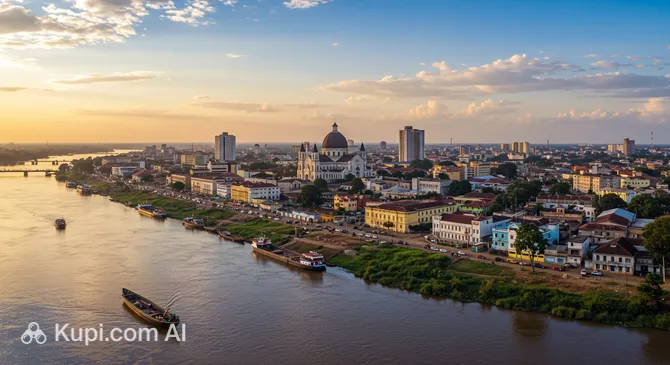
Illustration.
Source: Kupi.com AI

The main asset of Congo is undoubtedly its nature. Vast tropical forests, part of the Congo Basin — the world's second-largest tropical forest massif — serve as home to an incredible variety of wild animals, including forest elephants, gorillas, and chimpanzees. The equatorial climate ensures lush vegetation all year round. In addition to the capital, an important economic and tourist center is the city of Pointe-Noire, located on the Atlantic coast and known for its beaches.


Currency

The national currency of the Republic of the Congo is the Central African CFA franc (international code — XAF). This currency is also used in several other Central African countries. CFA franc banknotes and coins come in various denominations and often feature motifs reflecting the culture, nature, and economy of the region. You will see images of local animals, scenes from daily life, or portraits of significant figures. It is recommended to carry a sufficient amount of cash, especially when traveling outside of major cities.

Foreign currency can be exchanged for CFA francs at banks and official exchange offices, which are mainly concentrated in large cities like Brazzaville. Try to avoid exchanging money with street vendors due to the risk of fraud or getting an unfavorable rate. The use of credit cards in Congo is limited: they are primarily accepted in major hotels, some restaurants, and supermarkets in the capital and other large cities. For everyday expenses, market shopping, and paying for services in smaller towns, cash is preferred.

Visa Requirements

To enter Congo (the Republic of the Congo), citizens of most countries, including EU countries, the USA, and the CIS, generally require a visa. Usually, this is a tourist visa that must be obtained in advance at the embassy or consular section of Congo in your country of residence. To obtain a visa, in addition to the completed application form and photographs, you will need a valid passport, the expiration date of which should typically exceed the intended date of departure from the country. Return tickets, hotel booking confirmation, and medical insurance may also be required.

Visa rules are subject to change, so it is highly recommended to check for the most current information regarding necessary documents and the visa application procedure on the official website of the Embassy of the Republic of the Congo or at an authorized visa center before planning your trip. This will help avoid unforeseen difficulties and make your travel preparations smoother.

We'll let you know if you need a visa

Enter your destination or
Your nationality
Destination

Timezones

When planning your trip to Congo, you won't have to worry about time zone changes within the country. The entire territory of the Republic of the Congo is in a single time zone — West Africa Time (WAT), which corresponds to GMT+1 (or UTC+1). This means that the time in the capital, Brazzaville, and in other regions of the country will be the same.

Thanks to the single time zone, you won't need to change your clocks when moving around Congo, which simplifies the planning of domestic travel and excursions. Just set your watch upon arrival in the country, and you will always know the exact local time.

Getting There

Getting to Congo is easiest by air. The main gateway to the country is Maya-Maya International Airport, located in the capital, Brazzaville. Flights operate here from several European and African cities, providing convenient connections for travelers from other regions of the world. Another important transport hub is the airport in Pointe-Noire, serving the coastal region.

Although air travel is the most common way to reach Congo, overland routes through neighboring countries theoretically exist, though they may be less predictable and comfortable for tourists. Sea transport options, for example, through the port of Pointe-Noire, are mainly focused on freight, but passenger options may occasionally appear. In any case, when planning your trip, it is recommended to book tickets in advance, especially if your travel coincides with the peak tourist season, to ensure the best prices and availability.

AirportCityIATA
Maya Maya AirportBrazzavilleBZV
Pointe Noire AirportPointe-NoirePNR

Congo offers travelers an amazing variety of experiences, from lively urban centers to serene natural corners and coastal resorts. Everyone will find something here, whether it's cultural immersion, relaxing on the coast, or exploring unique nature.

The heart of the country is certainly its capital — Brazzaville. This dynamic city, spread along the banks of the mighty Congo River, attracts visitors with its unique atmosphere where modernity is intertwined with colonial heritage. Here you can stroll through lively streets, visit colorful markets, and get acquainted with local art. For lovers of beach holidays and the ocean breeze, the main destination is Pointe-Noire — the largest port city and a popular resort with long sandy beaches.

Illustration.
Source: Kupi.com AI

If you are looking for communion with nature, you should look toward Loango, known for its eponymous national park where you can observe wild animals right on the Atlantic coast — a unique sight! In the inland areas of the country, there are also interesting places, such as the city of Oyo, which can offer a deeper immersion into local culture and traditions, away from the bustle of major tourist centers. Each of these places has its own unique charm and is ready to provide unforgettable impressions.

Top Attractions

The main attractions of the Republic of the Congo are inextricably linked with its incredible nature and authentic culture. The country offers unique opportunities for ecotourism, allowing you to touch pristine forests and see rare animals in their natural habitat. A trip here is a chance to discover a "different" Africa, green and mysterious.

One of the country's true gems is Odzala-Kokoua National Park. It is one of the oldest national parks on the continent, located in the northwest. It is famous for its dense tropical forests and open savannah areas, but the main goal for most travelers here is encountering western lowland gorillas. Observing these majestic primates in the wild provides emotions that cannot be compared to anything else.

Completely different, almost Martian landscapes are revealed by the Diosso Gorge, located near the Atlantic coast. This natural amphitheater is often called the "Grand Canyon of Congo." Red rocky ridges and cliffs, effectively contrasting with the emerald green of the surrounding jungle, create a fantastic picture. The gorge was formed by erosion, and the view from its edge is truly breathtaking.

In the capital city, the Basilica of St. Anne deserves special attention. This architectural marvel, built in the mid-20th century, impresses with its unusual appearance, far from classical canons. The building is designed in a modernist style using elements of traditional African art. Its famous green roof, which changes shades in the sun and resembles snake scales, as well as its pointed arches, make this temple one of the most recognizable and beautiful structures in the region.

Water lovers should see the Loufoulakari Falls, located at the confluence of the Loufoulakari and Congo rivers. This picturesque spot, surrounded by lush vegetation, is perfect for those who want to feel the power of African rivers. The sound of falling water and the misty haze over the streams create a special, peaceful atmosphere here, perfect for contemplating the beauty of nature.

Best Time to Visit

When planning a trip to Congo, it is important to consider the characteristics of the equatorial climate. The best time to visit is during the long dry season, which usually lasts from June to September. During this period, the weather is more predictable with less rainfall, making it ideal for wildlife viewing, such as gorilla trekking in national parks, and for more comfortable travel across the country. The air becomes slightly less humid, though the heat remains. It is during this period, on August 15th, that the main national holiday — Independence Day — takes place, which can add extra color to your trip. Although Congo does not experience a massive influx of tourists, there may be slightly more during the dry season, and prices for some services, especially safaris and excursions, may be higher.

The low season or transition period can be considered the long rainy season, occurring from March to May, as well as the short rainy season (October to December). During this time, rainfall is heavy, which can make travel difficult in some regions, especially on unpaved roads. However, there are benefits: nature appears in all its lush greenery, there are significantly fewer tourists, and prices for accommodation and some services may be lower. The short dry season (January to February) can also be a good option for a trip, offering a compromise between rainfall levels and tourist activity.

Regardless of the chosen time, it is worth remembering that the climate in Congo is hot and humid year-round. It is recommended to check weather conditions for the specific regions you plan to visit, as the Atlantic coast, for example, in the Pointe-Noire area, may have a slightly different climate than the central regions. Also, keep an eye out for cultural event announcements — sometimes major festivals, such as the Panafrican Music Festival (FESPAM), are held in Brazzaville, which can be a highlight of your journey.

Traditions

When planning a trip to Congo, it is worth getting acquainted with local cultural characteristics to ensure your stay is comfortable and respectful toward the residents. Greetings play an important role here: a handshake is common and can be quite long. Special respect is shown to elders — it is customary to greet them first. Although direct eye contact in Western culture often signifies confidence, in Congo, especially when communicating with elders or high-status individuals, it may be perceived as a challenge; a modest gaze is more appropriate. In clothing, especially outside the capital Brazzaville, modesty is valued. When visiting religious sites or official institutions, clothing that covers shoulders and knees is recommended. Remember that it is best to photograph people only with their permission.

Hospitality is one of the key traits of Congolese culture. If you are invited into a home, it is a great honor. A small gift for the hosts (such as fruit, sweets, or something for the children) will be a pleasant token of appreciation, though it is not a strict requirement. Refusing offered food or drink is considered impolite. At the table, especially if food is served from a communal dish, it is customary to eat with the right hand. People usually wait until the host or the oldest person starts the meal. Try to avoid public displays of anger or impatience, as this may be perceived negatively. It is also better to refrain from discussing sensitive political topics unless your interlocutor initiates the conversation themselves.

Among the important national holidays in Congo, Independence Day on August 15th stands out; it is celebrated with great fanfare, including parades and public festivities, reflecting pride in the country's sovereignty. Understanding and respecting local traditions, such as the slow pace of life (sometimes referred to as "African time"), will help you build warm relations with locals and gain the most positive impressions from your trip. Showing a sincere interest in the culture and customs is always appreciated and opens doors to a deeper understanding of this amazing country.

Entertainment

Congo offers travelers a unique experience where entertainment is closely intertwined with rich nature and authentic culture. Active recreation enthusiasts will appreciate the opportunities for exploring national parks, trekking through tropical forests, and wildlife viewing. While the country is not a classic destination for diving or skiing, its river expanses and untouched landscapes provide ample opportunities for adventure, such as safaris along the Congo River or hiking to waterfalls.

The cultural program in Congo focuses on getting to know local traditions. Instead of large theater complexes, you can immerse yourself in an authentic atmosphere by attending traditional music and dance performances, which often take place during local holidays or at cultural centers. Museums, though few, tell the story of the region's history and ethnography. As for shopping, travelers usually bring back items made by local artisans: wooden masks, sculptures, brightly colored fabrics, and woven goods. The best places to find such souvenirs are local markets, especially in Brazzaville and Pointe-Noire.

Nightlife in Congo is most noticeable in the capital, Brazzaville, and in the city of Pointe-Noire. Here you can find bars and restaurants where local and modern music is played, and national dishes and drinks are served. The atmosphere is usually lively and welcoming, conducive to socializing. For family vacations, Congo primarily offers joint nature exploration — visiting reserves where you can see monkeys and other animals in their natural habitat, which can be an unforgettable adventure for both children and adults. Specialized theme parks are few; the focus is on natural and cultural experiences.

Currency rates

Planning a trip? Wonderful! To make sure the financial side of your journey holds no surprises, it's worth remembering that exchange rates are constantly changing. That's why we strongly recommend keeping an eye on current rates both before departure and throughout your trip. To help with that, you can use the data provided below — we monitor exchange rates 24/7 and strive to provide the most up-to-date information.

XAF exchange rate for 13/08/2026

1 AED
~ 154.08 XAF
1 AMD
~ 1.55 XAF
1 AUD
~ 399.84 XAF
1 AZN
~ 332.78 XAF
1 BYN
~ 190.15 XAF
1 CAD
~ 406.17 XAF
1 EUR
~ 652.74 XAF
1 GBP
~ 763.94 XAF
1 HUF
~ 1.79 XAF
1 INR
~ 5.93 XAF
1 KGS
~ 6.47 XAF
2.50 KRW
~ 1 XAF
1 KZT
~ 1.21 XAF
1 PLN
~ 151.65 XAF
1 RUB
~ 6.84 XAF
1 SAR
~ 150.85 XAF
1 SGD
~ 442.09 XAF
1 TRY
~ 11.85 XAF
1 UAH
~ 12.64 XAF
1 USD
~ 565.61 XAF
21.07 UZS
~ 1 XAF

Reached the bottom of the page?

Looks like you know this route inside out

We use cookies and services to collect user information. This is essential for the functioning of the site and for marketing purposes. You can find out more in .