Mauritania

Cities in the country

About

Mauritania, located in northwest Africa on the shores of the Atlantic Ocean, is a land of contrasts where the vast expanses of the Sahara Desert meet a unique local culture. This destination is for those seeking something special, far from the beaten tourist paths, and ready to immerse themselves in a world of ancient traditions and stunning landscapes.

The heart of the country is its capital, Nouakchott, a relatively young but fast-growing city. Mauritania preserves a rich historical heritage linked to ancient trans-Saharan trade routes and the spread of Islam. Here, you can touch history by visiting ancient oasis towns like Chinguetti, which was once an important center for Islamic scholarship and caravan trade.
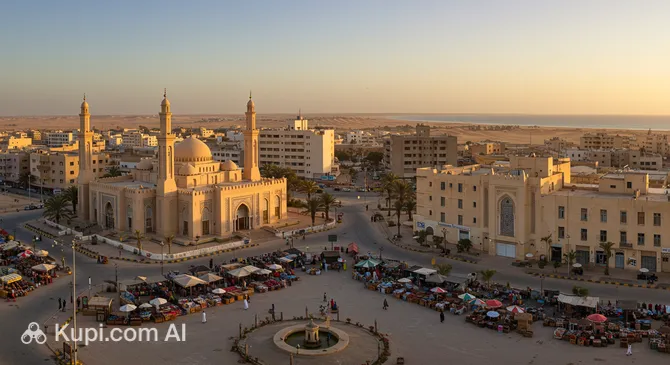
Illustration.
Source: Kupi.com AI

Mauritania's nature is not just the majestic dunes of the Sahara, but also the unique Banc d'Arguin National Park, a UNESCO World Heritage site that is one of the world's most important wintering grounds for migratory birds. Traveling through Mauritania gives a sense of adventure and discovery, allowing you to experience the hospitality of the locals and see life flowing at a different, leisurely pace. To get a taste of the country's coastal life, you can visit the city of Nouadhibou, its second-largest economic center.


Currency

The national currency of Mauritania is the Mauritanian ouguiya (international code: MRU). In 2018, the country underwent a denomination, resulting in a new ouguiya that replaced the old one (MRO) at a ratio of 1 to 10. Modern Mauritanian banknotes issued after the reform are made of polymer materials, which increases their durability. Banknote denominations include 20, 50, 100, 200, 500, and 1000 ouguiya. Coins are also in circulation, including a unique 1/5 ouguiya coin called the "khoums."

Exchanging foreign currency for ouguiya is recommended at official banks or licensed exchange offices, which can be found in the capital Nouakchott and other major cities. Avoid exchanging money with street money changers, as this carries a risk of fraud or unfavorable rates. The use of credit cards in Mauritania is limited: they are accepted mainly in large hotels, some restaurants, and by airlines in the capital. For most daily transactions, especially outside of Nouakchott, it is preferable to carry cash. ATMs are also uncommon and may not always serve international cards, so it is worth taking care to have a sufficient amount of cash in advance.

Visa Requirements

To visit Mauritania, most foreign citizens, including citizens of the EU, USA, and CIS countries, generally require a visa. A tourist visa can often be obtained upon arrival at Nouakchott International Airport or in advance at a Mauritanian embassy or consulate in your country of residence. To enter the country, you will need a valid passport, the expiration date of which should typically exceed the date of your intended departure. It is also recommended to have return tickets, hotel booking confirmation, and medical insurance, although the specific list of documents may vary.

Visa rules can change, so it is strongly recommended to check for up-to-date information regarding visa requirements and application procedures on the official website of the Mauritanian embassy or consulate in your country or at the nearest diplomatic mission before your trip.

We'll let you know if you need a visa

Enter your destination or
Your nationality
Destination

Timezones

When planning a trip to Mauritania, you won't have to worry about changing time zones within the country. The entire territory of Mauritania operates in a single time zone — Greenwich Mean Time (GMT), also designated as UTC+0. This means the time here corresponds to Coordinated Universal Time and does not switch to daylight saving time.

Thus, the time in the capital, Nouakchott, will be the same as in any other region of Mauritania. This simplifies planning for domestic travel and communication, as you won't need to account for time differences between different parts of the country.

Getting There

You can reach Mauritania in several ways, but the most common and convenient method for most tourists is by air. The country has international airports, the main one being Nouakchott International Airport, which serves the capital Nouakchott. Typically, there are direct flights or convenient connections from some African countries, Europe (particularly France), and the Middle East. It is recommended to check schedules and flight options in advance, as they can change depending on the season.

For those who prefer land travel or combined routes, entry into Mauritania is possible via land borders with Senegal, Mali, and the territory to the northwest. Movement is primarily by motor vehicle; international rail connections in the region are poorly developed or non-existent. The sea route to Mauritania is used mainly for freight, and passenger ferry lines are not a widely common method for tourists. In any case, when planning a trip, especially during the peak season, it is worth taking care of ticket bookings in advance to ensure the best prices and availability.

AirportCityIATA
Nouakchott International AirportNouakchottNKC
Nouadhibou AirportNouadhibouNDB
NemaNemaEMN

Mauritania, a country with a unique combination of desert landscapes and ancient culture, offers travelers not only the endless sands of the Sahara but also colorful cities, each with its own history and atmosphere. Here, you can find both lively centers and quiet oases that hold the secrets of centuries, attracting both history buffs and adventure seekers.

The main city and starting point for many journeys across the country is its capital, Nouakchott. This is a relatively young but dynamically developing city where you can get acquainted with modern Mauritanian life, visit busy markets, including the famous Fish Market, and feel the pulse of the country.

Illustration.
Source: Kupi.com AI
Another important center is Nouadhibou, the second-largest city and a major port on the Atlantic coast. It attracts not only business travelers but also those interested in marine life and proximity to the famous Banc d'Arguin National Park. For seekers of authenticity and immersion in desert history, essential stops include Atar, the gateway to the Adrar region with its impressive rock formations and prehistoric sites, and the legendary Chinguetti—an ancient oasis town listed as a UNESCO World Heritage site, known for its old libraries containing priceless manuscripts and unique clay architecture.

Top Attractions

Mauritania is a country rich in unique attractions that reflect its deep history and impressive nature. While we cannot currently provide an expanded list with details like images or direct links to each attraction's page due to the absence of full structured data, we can highlight several key places that traditionally attract travelers and offer a glimpse into the treasures of this land.

Among the main historical gems of Mauritania are its ancient ksars (fortified oasis towns) such as Chinguetti, Ouadane, Tichitt, and Oualata. These UNESCO World Heritage-listed cities were once important centers on trans-Saharan trade routes and hubs of Islamic scholarship. Their mud-brick architecture and ancient manuscript libraries transport visitors back through the centuries.

A natural wonder of Mauritania is Banc d’Arguin National Park, also under UNESCO protection. Located on the Atlantic coast, this reserve serves as one of the world's most important wintering grounds for millions of migratory birds, including impressive colonies of flamingos and pelicans. Its unique landscapes of shallow waters, islands, and mangroves are ideal for ecotourism and wildlife watching.

And, of course, a trip to Mauritania is unimaginable without experiencing the majestic Sahara Desert. Its endless sand dunes, rocky plateaus, and rare oases create unforgettable landscapes and offer a unique experience of immersion in harsh but fascinating nature. The country's cultural mosaic can be rounded out by visiting the capital Nouakchott, where the National Museum and lively markets allow for a closer look at the life and traditions of Mauritanians. These and many other places make Mauritania a destination for deep and vivid impressions.

Best Time to Visit

The best time to visit Mauritania is during the period from November to March, which is considered the high season. During this time, the weather is most comfortable for travel: daytime temperatures are pleasant, and nights can be cool, especially in desert areas. These are ideal conditions for exploring ancient cities like Chinguetti or Atar and for trips across the Sahara. Although Mauritania is not a mass tourism destination, you can expect a slightly higher number of travelers and possibly slightly higher prices for some services during this period.

The low season, covering the months from April to October, is characterized by very hot weather, especially in the central and northern regions of the country, where temperatures can reach extreme levels. In coastal cities like Nouadhibou or the capital Nouakchott, the heat may be slightly tempered by ocean breezes. A short rainy season, mainly affecting the southern regions, occurs from July to September. Traveling in the low season may mean fewer tourists and lower prices, but be prepared for the heat and possible sandstorms known as the harmattan, which occur more frequently from November to March but can happen at other times as well. There are few major international festivals with fixed dates in Mauritania; however, local cultural events and festivals, such as those related to the date harvest (usually in autumn), can be an interesting addition to your trip. It is recommended to check weather conditions for the specific regions you plan to visit, as the climate can vary.

Traditions

Mauritania is a country with deep Islamic traditions that permeate all aspects of daily life. Hospitality here is elevated to a cult: declining an invitation for tea, which is usually served in three stages (from bitter to sweet), can be perceived as a sign of disrespect. Greetings can be lengthy, with inquiries about health and family matters; handshakes are common, especially between men, and usually the right hand is used, which is also considered "clean" for eating and passing objects. Locals highly value a respectful attitude toward their customs, so knowing a few basic rules will help you establish warm contact.

When visiting Mauritania, it is important to remember modesty in dress, especially for women: it is recommended to cover shoulders, arms, and legs, and to cover the head when entering a mosque. Men should also avoid overly revealing clothing in public places. At the table, if eating with hands, only the right hand is used. Public displays of affection between a man and a woman are not accepted. You should only photograph people, especially women, with their prior permission. Major holidays include religious ones, such as Ramadan and the following Eid al-Fitr, as well as Independence Day. Showing respect to elders and avoiding criticism of local customs or religion is key to a pleasant and problem-free journey.

Entertainment

Mauritania offers travelers a unique spectrum of entertainment, far from standard tourist packages. Here, the emphasis shifts toward immersion in ancient culture and exploration of majestic nature. Active recreation in Mauritania primarily consists of unforgettable adventures in the Sahara Desert: from thrilling jeep safaris across sand dunes to meditative camel caravan treks. While rock climbing or diving are less developed here, exploring the vast desert expanses and learning about nomadic life will provide just as many vivid impressions. The cultural program revolves around discovering the rich historical heritage: ancient oasis towns like Chinguetti house centuries-old manuscripts and unique architecture. Visiting local festivals, if they coincide with your travel dates, will allow for a deeper dive into Mauritanian traditions and art.

Cultural entertainment in Mauritania is largely tied to daily life and traditions. Instead of the usual theaters and concert halls, you can witness improvised musical performances or storytelling by elders. Museums, especially in the capital Nouakchott, will help you better understand the country's history and culture. Shopping in Mauritania is an opportunity to purchase authentic handmade products. In lively markets, you can find colorful fabrics, traditional clothing, leather goods, silver jewelry, and unique souvenirs reflecting the nomadic spirit and African motifs. Bargaining here is an integral part of the process, adding local flavor.

Nightlife in Mauritania is quite subdued and concentrated mainly in large cities like Nouakchott or Nouadhibou. It is primarily represented by restaurants where you can enjoy local cuisine and spend an evening in a quiet atmosphere. There are few loud nightclubs and bars in the European sense. Family entertainment also has its own specifics: instead of theme parks, Mauritania offers families shared adventures in the desert, getting to know the amazing world of Saharan animals (such as fennec foxes or gazelles, if you are lucky enough to see them), and immersion in a completely different culture, which can be an unforgettable educational experience for children.

Currency rates

Planning a trip? Wonderful! To make sure the financial side of your journey holds no surprises, it's worth remembering that exchange rates are constantly changing. That's why we strongly recommend keeping an eye on current rates both before departure and throughout your trip. To help with that, you can use the data provided below — we monitor exchange rates 24/7 and strive to provide the most up-to-date information.

Reached the bottom of the page?

Looks like you know this route inside out

We use cookies and services to collect user information. This is essential for the functioning of the site and for marketing purposes. You can find out more in .