Lesotho

Cities in the country

About

Lesotho, often called the 'Kingdom in the Sky', is a unique enclave state entirely surrounded by the Republic of South Africa. It has the highest average altitude in the world, offering travelers incredible mountain landscapes and a sense of vast space. The capital, Maseru, is the main economic and cultural hub from which many routes through this amazing land begin.
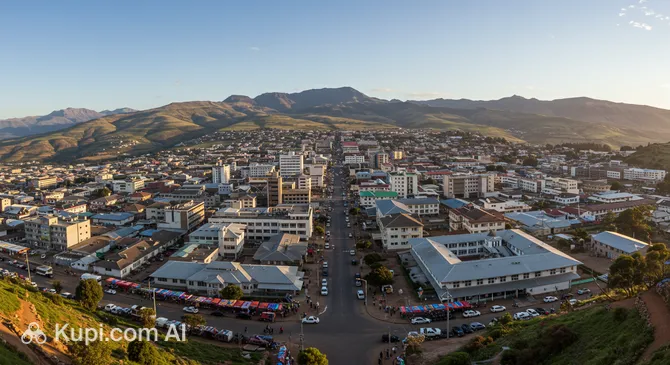
Illustration.
Source: Kupi.com AI

The primary draw of Lesotho is its pristine nature and opportunities for active recreation. High-altitude plateaus carved by deep valleys, majestic waterfalls like Maletsunyane near the town of Semonkong, and pure mountain air attract fans of trekking, horseback riding on the famous Basotho ponies, and wildlife exploration. The climate is continental, with warm, sometimes rainy summers and cold, snowy winters, which makes the mountains particularly picturesque.

The culture of the Basotho people is deeply rooted in tradition and closely tied to the harsh conditions of mountain life. Travelers can explore local crafts, see traditional dwellings, and learn about the famous Basotho blankets, each of which has its own meaning. Lesotho leaves the impression of a peaceful, uncrowded country with friendly locals and an atmosphere of serenity, where one can truly rest from the city hustle and enjoy communion with nature.


Currency

The official currency of Lesotho is the loti (LSL), which is divided into 100 lisente. Interestingly, the loti is pegged to the South African rand (ZAR) at a 1:1 ratio, and the rand is also widely accepted throughout the country. Loti banknotes are decorated with images reflecting the culture and history of Lesotho, including portraits of royalty and national symbols. The coins also have a distinctive design.

Foreign currency can be exchanged for loti at banks and official exchange offices in the capital, Maseru, and other major cities. It is recommended to avoid changing money with street dealers due to the risk of fraud or unfavorable rates. Credit cards (mainly Visa and MasterCard) are accepted in large hotels, restaurants, and some shops in tourist areas, but for daily transactions, especially in small settlements and markets, it is preferable to carry cash. ATMs are available in cities, but their number may be limited outside of them.

Visa Requirements

When planning a trip to Lesotho, it is important to familiarize yourself with the visa rules in advance. Citizens of many countries, including most European Union countries and the USA, do not require a visa for short-term tourist trips to Lesotho. For citizens of other states, including CIS countries, a tourist visa is generally required. It can usually be obtained by contacting a Lesotho embassy or consulate in your country, and in some cases, an e-visa or visa on arrival option is available.

Regardless of visa requirements, to enter the country you will certainly need a valid passport, which must cover the intended period of stay. It is also recommended to have return tickets, proof of hotel booking, and medical insurance. Since visa rules can change, we strongly advise checking for updated information on the official websites of the diplomatic missions of the Kingdom of Lesotho or at visa centers before your trip.

We'll let you know if you need a visa

Enter your destination or
Your nationality
Destination

Timezones

When planning a trip to Lesotho, you won't have to worry about changing time zones within the country. The entire territory of the Kingdom of Lesotho operates on a single time zone – SAST (South African Standard Time), which corresponds to UTC+2. This means that the time in the capital, Maseru, and in the most remote mountain villages will be the same.

This uniformity significantly simplifies the planning of travels and activities during your trip through this amazing country. You can be sure that you won't have to change your watch when crossing the regional borders of Lesotho.

Getting There

Reaching Lesotho, a landlocked country, is most convenient by air. The main international gateway is Moshoeshoe I International Airport (MSU), located near the capital, Maseru. While direct long-haul flights to Lesotho are rare, convenient connections are usually available via major South African transport hubs, primarily Johannesburg, from where regional flights to Maseru are operated.

In addition, Lesotho can be reached by land from the Republic of South Africa, which entirely surrounds the kingdom. There are several border crossings, and traveling by car or bus is a popular option, especially for those already in South Africa. Major roads are generally in good condition. Regardless of the chosen method of travel, it is always recommended to book tickets and arrange necessary visas in advance, especially if your trip coincides with the peak tourist season or major local events.

AirportCityIATA
Moshoeshoe International AirportMaseruMSU

Lesotho, known as the 'Kingdom in the Sky', offers travelers unique experiences, primarily related to its majestic mountain landscapes and the authentic culture of the Basotho people. Cities and settlements here reflect a calm pace of life and a deep connection with nature. The main urban center and gateway to the country is its capital, Maseru. It is not only the administrative and economic heart of Lesotho but also a convenient starting point for exploring the many wonders of this mountain kingdom, where you can learn about local history and daily life.

Illustration.
Source: Kupi.com AI

Beyond the capital, there are other notable places in Lesotho, each with its own character. For instance, Semonkong attracts adventurers and nature lovers; it is home to the breathtaking Maletsunyane Falls, one of the highest in Southern Africa, and the surrounding area is perfect for pony trekking and hiking. The town of Teyateyaneng, often shortened to TY, is famous as a craft center where you can find authentic handmade products, including the famous Basotho blankets and mohair items. For those seeking the rugged beauty of the highlands and solitude, Mokhotlong is an excellent choice—one of the highest and most remote settlements in the country, serving as a base for expeditions into the eastern regions of Lesotho.

Top Attractions

Lesotho, the 'Kingdom in the Sky', offers travelers unique attractions closely linked to its majestic nature and the authentic culture of the Basotho people. Instead of noisy tourist centers, discoveries and adventures await you surrounded by mountains, which are the main draws.

The primary treasure of the country, without a doubt, is its mountains. The majestic Maloti ranges, part of the mighty Drakensberg, define not only the landscape but also the spirit of Lesotho. These mountain ranges offer countless opportunities for active recreation: from hiking along scenic trails of various difficulty levels to exciting pony trekking on hardy Basotho ponies, which are an integral part of the local way of life. Truly breathtaking panoramas open up from the peaks, which is why many travelers strive to come here.

Another striking natural attraction of Lesotho is its many waterfalls. Water streams plunging from high rocky ledges, especially full during the rainy season, create impressive and refreshing sights. A journey to such waterfalls often becomes an adventure in itself, as many of them are located in remote and incredibly beautiful corners of the country. Additionally, to preserve the unique high-altitude ecosystem, there are national parks and reserves in Lesotho where you can encounter rare species of alpine flora and fauna.

Besides its natural wonders, Lesotho is rich in cultural heritage. Deep immersion into the authentic atmosphere of the kingdom is possible when visiting traditional Basotho villages. Here, travelers can learn about the daily life of the locals, their customs, and traditional crafts such as weaving and pottery, as well as see the famous conical 'mokorotlo' straw hats, which are a symbol of the nation. Historically significant sites that tell the story of the formation and history of the Basotho kingdom also attract the attention of curious tourists wanting to better understand this amazing country.

Best Time to Visit

Lesotho, known as the 'Kingdom in the Sky', offers unique experiences year-round, but the best time to visit depends on your preferences and plans. High season in Lesotho usually falls during the summer months, from December to February. This period brings warm weather, ideal for hiking, exploring national parks, and enjoying picturesque mountain views. Days are mostly sunny, though short afternoon rains are possible. The advantage of this period is the maximum accessibility of tourist routes and activities. On the downside, there are more tourists and, consequently, slightly higher prices for accommodation and services.

The shoulder season, covering spring (September-November) and autumn (March-May), is considered by many to be the best time to visit Lesotho. In spring, nature blooms with bright colors of wildflowers, and the temperature becomes comfortable for outdoor activities. In autumn, the weather is typically dry and clear, with a pleasant coolness that creates perfect conditions for trekking. During these periods, there are fewer tourists, allowing for more peace and quiet, and prices can be more attractive. Winter (June-August) is the low season for most types of tourism due to cold weather, especially in high-altitude areas where snow falls. However, it is in winter that opportunities for skiing open up at the AfriSki resort, and snow-capped peaks create truly magical landscapes. An important cultural event that might influence your travel timing is the Morija Arts & Cultural Festival, usually held in September or October, attracting many visitors.

It is worth remembering that the climate in Lesotho depends heavily on altitude. While in low-lying areas, including the capital Maseru, the weather can be relatively mild, in the highlands even in summer nights can be cool, and in winter frosts and snowfalls are common. Therefore, when planning a trip, it is recommended to check weather conditions for the specific regions you intend to visit and be prepared for changeable mountain weather.

Traditions

When traveling to Lesotho, you will discover a culture where traditions of respect and hospitality are deeply rooted. Greetings here are an important part of communication. Usually, this is a handshake, and to show special respect, especially to elders, the right hand may be supported by the left at the wrist. Don't forget to greet elders first. A common greeting in the Sesotho language is 'Khotso', which means 'peace'. The people of Lesotho, the Basotho, are known for their warmth. If you are invited into a home, a small symbolic gift (for example, something from your country or a practical item) would be a nice gesture, though not a strict requirement. Modesty in clothing is valued, especially in rural areas and when visiting public places: women are advised to cover their shoulders and knees, and men should not go shirtless. Showing respect for these customs will help you better understand the locals and build a connection with them.

At the table, especially if you are offered traditional dishes eaten by hand, it is customary to use the right hand. It is considered polite to try a little of everything offered. Important dates reflecting the spirit of the nation and its history are Independence Day (October 4) and Moshoeshoe I Day (March 11), dedicated to the founder of the Basotho nation. These holidays are often accompanied by cultural events. To avoid awkward situations, always ask for permission before taking photos of people. Pointing at someone or something with an index finger is considered impolite—it is better to use an open palm or a nod of the head. And, of course, learning a few simple phrases in Sesotho, such as 'Kea leboha' (thank you), will certainly evoke a warm smile and goodwill from the locals, opening the hearts of this mountain kingdom.

Entertainment

Lesotho, known as the 'Kingdom in the Sky', offers unique opportunities for active recreation and immersion in an authentic culture. The main magnet for tourists is its breathtaking mountain landscapes. Excellent conditions are created here for hiking and trekking of various difficulty levels, including trips to picturesque waterfalls like Maletsunyane and exploring national parks like Sehlabathebe. Pony trekking is particularly popular—a traditional way of travel for the Basotho, allowing one to reach the most remote and beautiful corners of the country. In the winter months, the high-altitude regions offer opportunities for unusual skiing adventures.

Cultural entertainment in Maseru and other settlements centers around the heritage of the Basotho people. Travelers can visit small museums, craft centers, and learn about local traditions. Shopping is of particular interest: at local markets, you can buy unique handmade items such as the famous Basotho blankets, mohair products, and traditional 'mokorotlo' straw hats. Nightlife in Lesotho is quite calm, but in the capital and major cities, you can find cozy restaurants offering both local and international cuisine, such as the Lancer's Inn Restaurant, as well as several bars for a pleasant evening. For families, Lesotho offers a quiet and safe atmosphere and many opportunities for active time in nature, which children will undoubtedly enjoy.

Currency rates

Planning a trip? Wonderful! To make sure the financial side of your journey holds no surprises, it's worth remembering that exchange rates are constantly changing. That's why we strongly recommend keeping an eye on current rates both before departure and throughout your trip. To help with that, you can use the data provided below — we monitor exchange rates 24/7 and strive to provide the most up-to-date information.

Reached the bottom of the page?

Looks like you know this route inside out

We use cookies and services to collect user information. This is essential for the functioning of the site and for marketing purposes. You can find out more in .