Morocco

About

Morocco is a land of contrasts and ancient traditions located in Northwest Africa at the junction of the Atlantic Ocean and the Mediterranean Sea. It is a place where East meets West, offering travelers a unique blend of exoticism, history, and hospitality. From bustling bazaars to majestic desert landscapes, Morocco enchants at first sight.
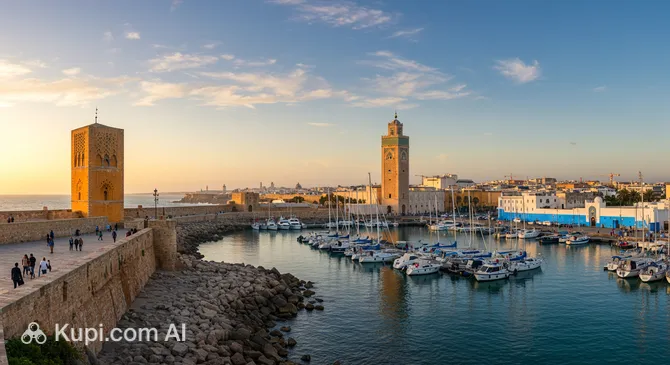
Illustration.
Source: Kupi.com AI

The heart of Moroccan culture beats in its imperial cities. The capital, Rabat, combines historical heritage with a modern rhythm. No less attractive is Marrakech with its famous Jemaa el-Fnaa square, where a real open-air performance unfolds every evening, or ancient Fez, whose medina is a UNESCO World Heritage site. These cities hold centuries-old secrets reflected in the intricate architecture of mosques, palaces, and traditional riad houses.

Morocco's nature is as diverse as its culture. The majestic Atlas Mountains with their snow-capped peaks give way to the golden dunes of the Sahara Desert, while the extensive ocean coast attracts lovers of surfing and peaceful beach vacations. Morocco is not just a country; it is a whole adventure full of bright colors, spicy aromas, and unforgettable experiences.

Currency

The official currency of Morocco is the Moroccan Dirham (MAD). Dirham banknotes are decorated with images of King Mohammed VI, as well as various architectural and cultural symbols of the country. Coins also have a characteristic design reflecting Moroccan heritage. It is recommended to exchange currency at official banks or licensed exchange offices (bureaux de change), which can be found at airports, cities, and tourist zones. Avoid exchanging money with street money changers, as this can be risky and unfavorable. Keep your exchange receipts, as they may be needed to exchange dirhams back when leaving the country.

Credit cards (mainly Visa and Mastercard) are accepted in many hotels, large restaurants, and shops in tourist centers and large cities. However, in small towns, markets (souks), and local cafes, it is preferable to carry cash. ATMs are quite common in cities, allowing you to withdraw cash as needed. Before your trip, check with your bank for terms of withdrawing cash abroad and any possible fees.

Visa Requirements

When planning a trip to Morocco, it is important to check visa requirements in advance. For citizens of many countries, including European Union countries, the USA, and some CIS countries (for example, Russia), a visa is generally not required for tourist trips of up to 90 days. However, a mandatory condition is the presence of a valid foreign passport, the validity period of which should usually exceed the intended date of departure from the country by at least six months.

If a visa for Morocco is necessary for your country of citizenship, it will be a tourist visa that should be applied for in advance at the embassy or consulate of the Kingdom of Morocco in your country of residence. Besides a passport, standard supporting documents may be required, such as return tickets, hotel booking confirmation, and medical insurance. In any case, visa rules can change, so it is highly recommended before your trip to check the most up-to-date information on the official websites of Moroccan embassies or visa centers.

We'll let you know if you need a visa

Enter your destination or
Your nationality
Destination

Timezones

Morocco adheres to a single time zone throughout its territory. Officially, the country lives by GMT+1 (corresponding to Central European Time, CET) for most of the year. However, travelers should note an important nuance: during the holy month of Ramadan, Morocco typically reverts to GMT+0 (Western European Time, WET). We recommend always checking the current time before your trip and during your stay in the country, especially if your travel coincides with the period of Ramadan, to avoid confusion with transport schedules, excursions, and the operation of institutions.

Getting There

Getting to Morocco, a country with a rich culture and diverse landscapes, can be done in several ways, the most popular of which is air transport. Several international airports operate in the country, receiving flights from Europe, the Middle East, Africa, and North America. The main air gateway is often Mohammed V Airport in Casablanca, from where it is easy to reach other cities in the country. Direct flights and convenient connections are available from most major European capitals.

For those who prefer to travel by land or sea, there are alternative routes. From Europe, especially from Spain, ferries regularly depart for Morocco, arriving at ports such as Tangier or Nador. This is a popular option for tourists traveling by car or wanting to enjoy a sea trip across the Strait of Gibraltar. Although Morocco has land borders, international bus and train connections are less developed compared to air travel and ferry crossings. Cruise ships also frequently include Moroccan ports in their itineraries.

Regardless of the chosen method of travel, it is recommended to book tickets in advance, especially if your trip falls during the peak tourist season (spring and autumn) or during major holidays. This will help not only save money but also guarantee availability. When planning your trip, it is also worth checking visa requirements for citizens of your country in advance.

AirportCityIATA
Mohammed VCasablancaCMN
Menara AirportMarrakechRAK
Agadir Al Massira AirportAgadirAGA
Fes-Saiss AirportFezFEZ
Sale AirportRabatRBA

Morocco is a country of amazing contrasts, where ancient traditions blend harmoniously with modernity. Travelers can expect both bustling imperial cities with their intricate medinas and rich history, as well as magnificent Atlantic resorts offering relaxed beach holidays. One of the most colorful and attractive cities is undoubtedly Marrakech. This "Red City" is famous for its lively Jemaa el-Fnaa square, luxurious palaces, and gardens, immersing visitors in the atmosphere of an oriental tale.

Illustration.
Source: Kupi.com AI

No less interesting is Fez, considered the spiritual and cultural heart of Morocco, with its Al-Qarawiyyin University, the oldest operating university in the world, and famous tanneries. For lovers of the ocean and sun, the ideal choice would be Agadir—a popular resort with extensive sandy beaches and modern tourist infrastructure. The business capital Casablanca will impress with its majestic Hassan II Mosque and the atmosphere of a dynamic metropolis. And, of course, the capital of the country, Rabat, where ancient fortresses sit alongside elegant modern quarters, should not be overlooked.

Top Attractions

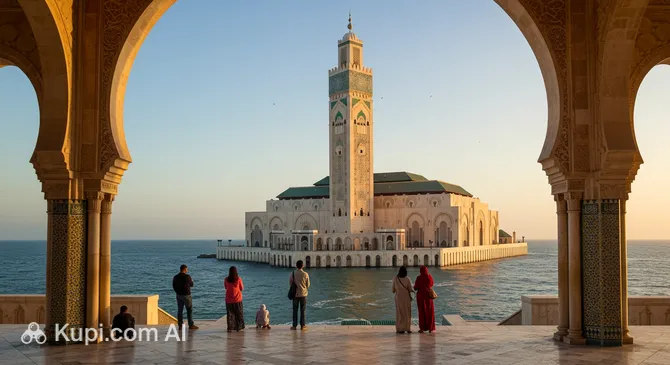
One of the most impressive attractions in Morocco is the Hassan II Mosque in Casablanca. This grandiose structure, partially standing over the Atlantic Ocean, impresses with its size, exquisite architecture, and the highest minaret in the world. The interior decoration of the mosque, completed by the best Moroccan craftsmen, will not leave any visitor indifferent.

Illustration.
Source: Kupi.com AI

Traveller photos:

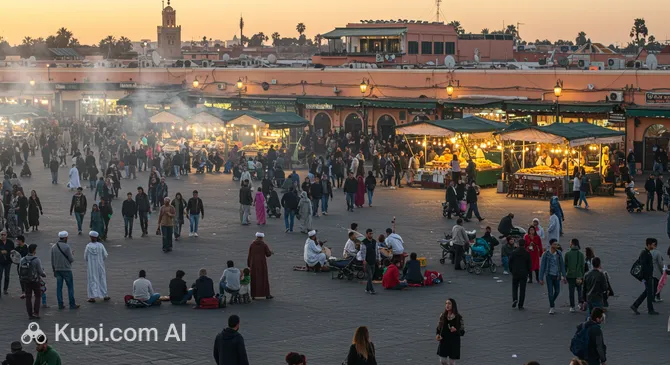
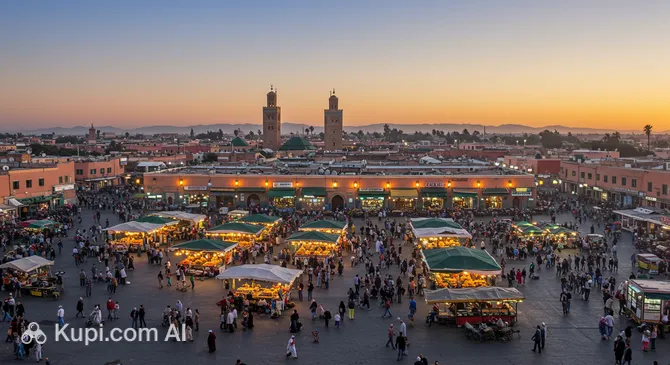
The heart of Marrakech and a real open-air theater is the famous Jemaa el-Fnaa square. During the day, you can see snake charmers, street vendors, and try fresh juices, and in the evening, the square turns into a huge open-air restaurant, filled with the aromas of local dishes, music, and artist performances.

Illustration.
Source: Kupi.com AI

Traveller photos:

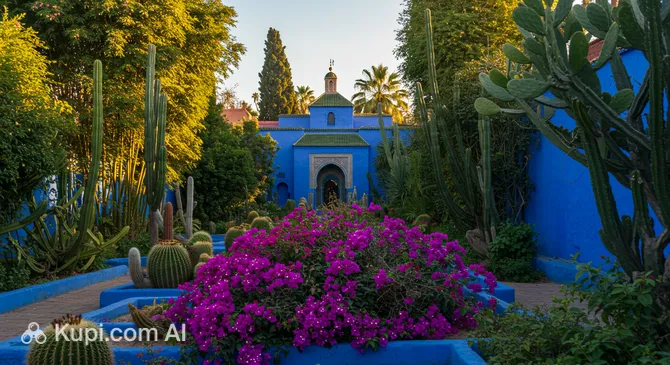
For lovers of tranquility and beauty, a visit to the Majorelle Garden in Marrakech is a must. This botanical garden, created by French artist Jacques Majorelle and once owned by Yves Saint Laurent, is famous for its collection of exotic plants, bamboo grove, and buildings of a characteristic bright blue "Majorelle" color.

Illustration.
Source: Kupi.com AI

Traveller photos:

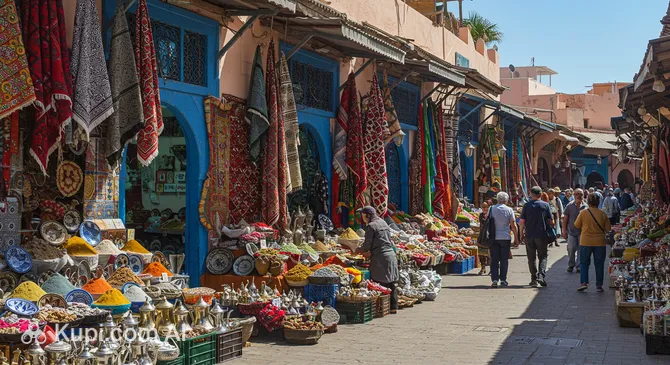
To immerse yourself in the atmosphere of a real oriental bazaar, head to Souk El Had in Agadir. This is one of the largest markets in the region, where you will find everything: from fresh produce, spices, and traditional clothing to leather goods, rugs, and souvenirs. It's an excellent place to get to know the local culture and buy authentic goods.

Illustration.
Source: Kupi.com AI

Traveller photos:

Best Time to Visit

When planning a trip to Morocco, it is important to consider seasonality, as the climate in the country is diverse. High season usually falls in spring (from March to May) and autumn (from September to November). At this time, the weather is most comfortable for traveling: warm and sunny but without exhausting heat, which is ideal for sightseeing in cities like Marrakech or Fez, as well as for trips to the desert or hiking in the mountains. The pros of this period are pleasant temperatures and a wealth of vibrant natural colors. However, be prepared for more tourists and, accordingly, higher prices for accommodation and services.

Low season (or the off-season) covers the summer months (June-August) and winter (December-February). In summer, internal parts of the country, including Marrakech and desert regions, can be very hot, with temperatures reaching +40°C and higher. At the same time, on the Atlantic coast, for example, in Agadir or Essaouira, the weather is milder thanks to the ocean breeze. In winter, snow falls in the Atlas Mountains, and it can be cool and rainy in the northern and central regions. The advantages of the low season are fewer tourists and more affordable prices. However, the weather can be less predictable, and some high-mountain routes or establishments may be temporarily closed.

When choosing a time to visit, it is also worth considering local festivals and events that can make your trip even more fulfilling. For example, in the spring, the famous Rose Festival takes place in the Dades Valley, and in June, Fez hosts the Festival of World Sacred Music. It is important to remember that the climate in Morocco varies greatly from region to region: from Mediterranean in the north to desert in the south and southeast, and mountain in the Atlas Mountains. Therefore, it is always useful to check the weather forecast for the specific places you plan to visit, whether it's the busy Casablanca or historical Rabat.

Traditions

The culture of Morocco is rich and multifaceted, and respecting local traditions will make your journey more pleasant. When greeting Moroccans, it is customary to shake with the right hand; the left hand is traditionally considered unclean, so try not to use it for greetings, passing food, or money. Moroccans are very hospitable, and if you are invited into a home for tea or lunch, it is considered a great honor. A small symbolic gift for the hosts, such as sweets or good tea, will be received with gratitude, although it is not mandatory. Always ask for permission before photographing local residents and try to avoid excessive public displays of affection.

In public places, especially outside major tourist centers and beaches, it is recommended to adhere to a modest dress style. This means that both men and women are better off covering their shoulders and knees. When visiting active mosques (if they are open to non-Muslims, such as the Hassan II Mosque in Casablanca), it is also advisable for women to cover their heads. At the table, especially if you are eating traditional dishes like tagine or couscous, it is often customary to eat with the right hand, sometimes using bread instead of cutlery. Remember that refusing offered food or drink can be perceived as impoliteness.

Among the most significant holidays in Morocco are religious ones, such as the holy month of Ramadan, during which Muslims fast from dawn to sunset, and the subsequent festivals of breaking the fast, Eid al-Fitr, and the festival of sacrifice, Eid al-Adha. During these periods, the pace of life in the country may change, and some establishments may operate on a special schedule. By showing awareness and respect for these customs, you will not only avoid awkward situations but also gain a deeper understanding and appreciation of Morocco's unique culture.

Entertainment

Morocco is a country capable of surprising with a variety of entertainment suitable for any traveler. Lovers of active holidays will find many opportunities here: from exciting hikes in the majestic Atlas Mountains and surfing on the Atlantic coast, especially around Essaouira, to fascinating camel or quad bike rides through the desert. For those who prefer calmer sports, there are golf courses and opportunities for horseback riding.

The cultural program in Morocco is incredibly rich. You can spend hours exploring the ancient medinas of cities like Marrakech or Fez, visit numerous museums showcasing the country's history and art, and admire the unique architecture, a striking example of which is the Hassan II Mosque in Casablanca (access for non-Muslims may be limited). In the evening, in squares such as the famous Jemaa el-Fnaa, you can see performances by street artists and musicians. Shopping in Morocco is a special adventure. In colorful souks, for example, Souk El Had in Agadir, you will find traditional leather goods, ceramics, handmade rugs, aromatic spices, and the famous argan oil. For fans of modern shopping, there are large shopping malls, for example, Morocco Mall.

Nightlife in Morocco offers options for every taste. In major cities such as Marrakech, Casablanca, or Tangier, you can find modern bars, restaurants with live music, and nightclubs. However, many tourists prefer calmer evenings in atmospheric cafes or in their riads, enjoying traditional mint tea. Morocco is also suitable for family vacations: besides beach activities at resorts, you can visit beautiful gardens like the Majorelle Garden or go on fascinating excursions that introduce children to the rich culture and nature of this amazing country.

Currency rates

Planning a trip? Wonderful! To make sure the financial side of your journey holds no surprises, it's worth remembering that exchange rates are constantly changing. That's why we strongly recommend keeping an eye on current rates both before departure and throughout your trip. To help with that, you can use the data provided below — we monitor exchange rates 24/7 and strive to provide the most up-to-date information.

MAD exchange rate for 13/08/2026

1 AED
~ 2.52 MAD
39.59 AMD
~ 1 MAD
1 AUD
~ 6.53 MAD
1 AZN
~ 5.44 MAD
1 BYN
~ 3.11 MAD
1 CAD
~ 6.63 MAD
1 EUR
~ 10.66 MAD
1 GBP
~ 12.48 MAD
34.20 HUF
~ 1 MAD
10.32 INR
~ 1 MAD
9.46 KGS
~ 1 MAD
153.25 KRW
~ 1 MAD
50.41 KZT
~ 1 MAD
1 PLN
~ 2.48 MAD
8.95 RUB
~ 1 MAD
1 SAR
~ 2.46 MAD
1 SGD
~ 7.22 MAD
5.17 TRY
~ 1 MAD
4.85 UAH
~ 1 MAD
1 USD
~ 9.24 MAD
1290.20 UZS
~ 1 MAD

Reached the bottom of the page?

Looks like you know this route inside out

We use cookies and services to collect user information. This is essential for the functioning of the site and for marketing purposes. You can find out more in .