Namibia

About

Namibia is a country of striking contrasts and vast open spaces, located in southwestern Africa. It is one of the most sparsely populated countries in the world, which gives a sense of primordiality and freedom. Its uniqueness lies in its incredible desert landscapes, rich wildlife, and a distinctive culture formed at the intersection of African traditions and European heritage. The capital, Windhoek, is the starting point for most journeys and offers a chance to explore colonial architecture and local flavor.
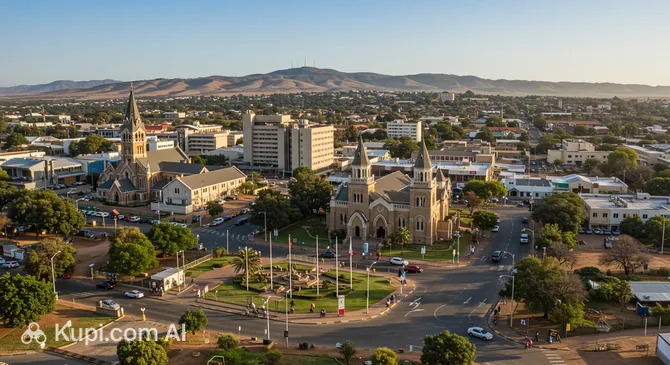
Illustration.
Source: Kupi.com AI

Namibia's main treasure is its nature. The ancient Namib Desert with its famous orange dunes in the Sesriem area, including the famous Sossusvlei and Deadvlei, is truly breathtaking. Etosha National Park in the north of the country is one of the best places in Africa for wildlife viewing, where elephants, lions, giraffes, and antelopes gather at waterholes such as the Okaukuejo Waterhole. Namibia's climate is predominantly arid with many sunny days a year, making it attractive to visit at almost any time.

In addition to natural wonders, Namibia offers a chance to get acquainted with an interesting culture. It is home to various ethnic groups, each with its own traditions and language. In cities like the colorful Swakopmund on the Atlantic coast, German colonial influence is felt in the architecture and cuisine. The overall impression of Namibia is that it is a country for adventure seekers, photographers, and all those who appreciate untouched nature and the opportunity to be alone with majestic landscapes.
Currency

The national currency of Namibia is the Namibian dollar (NAD). Interestingly, the Namibian dollar is pegged to the South African rand (ZAR) at a 1:1 ratio, and the rand is also widely accepted for payment throughout the country. Namibian dollar banknotes often feature local fauna and figures significant to the country, making them unique souvenirs. It is recommended to exchange currency at official banks or licensed exchange offices found at the airport and in major cities like Windhoek. Avoid exchanging money with street money changers to avoid fraud or unfavorable rates.

Credit cards (mostly Visa and Mastercard) are accepted in most hotels, restaurants, and large shops in tourist centers and cities. However, in rural areas and at small markets, cash is preferred. Therefore, it is always useful to have some cash on hand, especially if you plan to travel outside of major settlements. ATMs are quite common in cities, but their availability may be limited in remote areas.

Visa Requirements

When planning a trip to Namibia, it is important to check the visa requirements in advance, as they may vary depending on your citizenship. For citizens of many countries, including most European Union countries and the USA, a visa for Namibia is generally not required for short-term tourist trips, or it can be obtained upon arrival. However, for citizens of CIS countries, visa rules can vary significantly: most need to apply for a visa in advance, while for citizens of some countries in this group, a visa on arrival may be available. To enter the country, you will definitely need a valid passport, which must be valid for at least six months from the date of your intended departure from Namibia. It is also recommended to have return tickets, proof of accommodation booking, and a medical insurance policy.

Since visa policies can change, we strongly advise checking the most up-to-date information on the official websites of the Namibia embassy or consulate in your country of residence or at accredited visa centers before your trip. This will help you avoid misunderstandings and make the preparation for your journey through this amazing African country as smooth as possible.

We'll let you know if you need a visa

Enter your destination or
Your nationality
Destination

Timezones

When planning a trip to Namibia, you won't have to worry about changing time zones within the country. The entire territory of Namibia operates on a single time zone—Central Africa Time (CAT), which corresponds to UTC+2. This means that the time in the capital, Windhoek, will be the same as in any other corner of the country, simplifying the planning of transfers and activities.

Getting There

The easiest way to reach Namibia is by air. The country's main international hub is Hosea Kutako International Airport (WDH), located near the capital, Windhoek. Direct flights to Namibia operate from several European cities, such as Frankfurt, as well as from major hubs in Southern and Eastern Africa, including Johannesburg, Cape Town, and Addis Ababa, providing convenient connections for travelers from most regions of the world. It is recommended to book air tickets in advance, especially if your trip falls during the peak tourist season (typically from June to October).

For those who prefer land travel or combined routes through Southern Africa, Namibia is accessible by land from neighboring countries: South Africa, Botswana, Angola, and Zambia. There are regular bus services connecting Windhoek and other Namibian cities with settlements in neighboring states. Self-driving in a rental car is also a popular option, especially from South Africa. International rail links to Namibia are poorly developed and are not the primary method of arrival for tourists. Maritime routes to Namibia are less common; cruise ships occasionally dock at the port of Walvis Bay, but there is no regular passenger ferry service from other countries.

AirportCityIATA
Hosea Kutako International AirportWindhoekWDH
Rooikop AirportWalvis BayWVB
MpachaKatima MuliloMPA
Ondangwa AirportOndangwaOND
Luderitz AirportLuderitzLUD

Namibia is a country of striking contrasts, offering travelers a kaleidoscope of experiences, from bustling urban centers to serene natural corners. The heart of the country is undoubtedly its capital, Windhoek. This city harmoniously combines African culture and European heritage, reflected in its architecture, cuisine, and atmosphere. Here you can explore historic buildings, visit interesting museums, and enjoy the hospitality of the locals.

Illustration.
Source: Kupi.com AI

For those looking for adventure on the Atlantic coast, Namibia offers charming towns like Swakopmund. This resort town, known for its German colonial architecture, is a center for extreme sports—from sandboarding down dunes to skydiving. Nearby is Walvis Bay, which attracts tourists with its picturesque lagoon, home to thousands of flamingos, and opportunities for boat excursions.

Further inland, unique desert landscapes beckon travelers. Sesriem serves as the gateway to the famous Namib Desert, where you can see the breathtaking Sossusvlei dunes and the mystical Deadvlei. And for wildlife lovers, a mandatory stop is Okaukuejo, one of the main camps in Etosha National Park, where you can observe lions, elephants, giraffes, and other animals in their natural environment. Each of these places offers its own unique experience, making a trip through Namibia truly unforgettable.

Top Attractions

Namibia is a country of stunning contrasts and unforgettable experiences, offering tourists unique attractions. From vast deserts to wildlife oases, there is something for everyone here. Let's get to know some of the most striking places to visit.

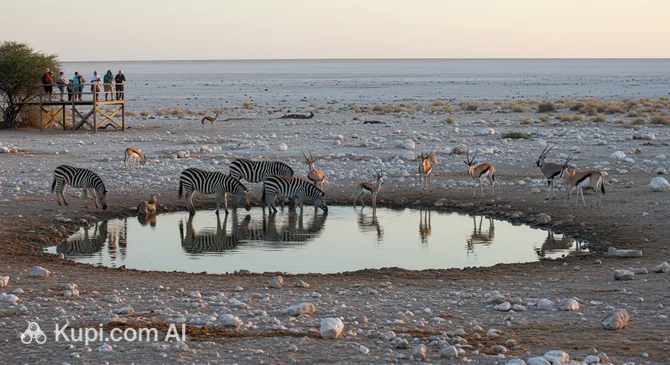
One of the iconic spots for wildlife viewing is the Okaukuejo Waterhole. Located within the famous Etosha National Park, this waterhole attracts many animals, especially during the dry season. Here, you can see elephants, rhinos, giraffes, lions, and antelopes coming to drink, making it an ideal place for photo hunting and observing African fauna in its natural habitat.

Illustration.
Source: Kupi.com AI

Traveller photos:

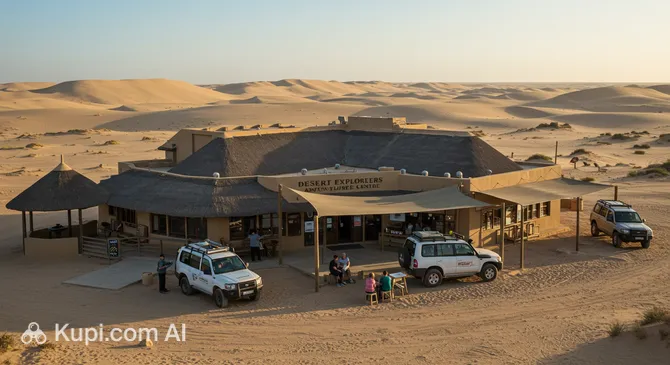
For outdoor enthusiasts and adventure seekers, the Desert Explorers Adventure Centre in Swakopmund is a real find. It offers exciting tours of the Namib Desert on quad bikes, sandboarding down the famous dunes, or even paragliding. It's a great opportunity to feel the adrenaline and see incredible desert landscapes from an unusual perspective.

Illustration.
Source: Kupi.com AI

Traveller photos:

If you find yourself in the capital, Windhoek, and want to combine shopping with entertainment, take a look at Maerua Mall. It is one of the largest shopping centers in the country, where you can find a variety of shops, restaurants, a cinema, and other entertainment facilities. This place is perfect for taking a break from the heat, buying souvenirs, or just having a good time.

Illustration.
Source: Kupi.com AI

Traveller photos:

Best Time to Visit

The best time to visit Namibia is considered to be the dry season, which lasts from approximately May to October. During this period, you can expect mostly clear, sunny weather with comfortable daytime temperatures, ideal for safaris and exploring desert landscapes. Nights can be chilly, especially in the desert. This is the peak tourist season as conditions for wildlife viewing in national parks like Etosha are most favorable—animals gather at waterholes. The downsides can include larger crowds and slightly higher prices for accommodation and excursions.

The wet season, or "green season," falls between November and April. During this time, Namibia's landscapes are transformed, covered in fresh greenery, which is especially attractive for photographers and birdwatchers as many migratory species arrive. Air temperatures are higher, and short but intense afternoon rains are possible. The advantages of this period are fewer tourists and potentially lower prices. However, it should be noted that some roads, especially in remote areas, can become difficult to navigate, and wildlife viewing can be hindered by dense vegetation. Although Namibia is not famous for large festivals that affect tourist flow, the changing seasons and the associated concentration of animals at water sources in the dry season or the burst of greenery after the rains are unique natural spectacles. The climate varies across the country: coastal areas like Swakopmund can be cool and foggy due to the Benguela Current, in the capital, Windhoek, the climate is more temperate, typical of high-altitude plateaus, and significant daily temperature fluctuations are observed in the deserts.

Traditions

Namibia is a country with rich cultural diversity, where the traditions of many ethnic groups intertwine. When interacting with locals, you will notice their friendliness. The standard form of greeting is a handshake, often accompanied by direct eye contact, which is considered a sign of openness and respect. Namibians are very hospitable, especially in rural areas. If you are invited into a home, a small symbolic gift (such as fruit or sweets for children) will be appreciated, though not strictly mandatory. The most important thing is sincerity and openness to communication.

In everyday life, there are no special clothing requirements for tourists, especially in cities and tourist zones. However, when visiting local communities or villages, as well as religious sites (though there are few on typical tourist routes), it is recommended to dress modestly: cover your shoulders and knees. This is a sign of respect for local traditions. Regarding table manners, European etiquette norms apply in most cases. If you find yourself at a traditional meal where people eat with their hands from a common dish, remember that it is customary to use the right hand. Always ask for permission before taking photos of people—this simple rule of politeness is highly valued.

To better understand the spirit of the country, it is worth knowing some important dates. Independence Day, celebrated on March 21, is one of the main national holidays, symbolizing the freedom and unity of the nation. In general, Namibians value a respectful attitude toward their culture and elders. Avoid loud behavior and public displays of impatience. Showing interest in local customs and trying to learn a couple of words in one of the local languages, even though English is widely spoken, will always be received warmly and help establish contact.

Entertainment

Namibia is a true paradise for outdoor enthusiasts and adventure seekers. The main draw, of course, is its unique natural landscapes. Embark on exciting safaris through Etosha National Park to see the "big five" and hundreds of other animal species, or conquer the majestic red dunes of the Namib Desert in the Sossusvlei area—on foot, by quad bike, or even from a bird's-eye view in a hot air balloon. Coastal cities like Swakopmund and Walvis Bay offer sandboarding, boat trips to see dolphins and seals, and kayaking. For those seeking solitude and challenge, trekking routes like the one through the Fish River Canyon are ideal.

The cultural program in Namibia allows for a deeper understanding of the history and traditions of this amazing country. In the capital, Windhoek, you can visit the National Art Gallery of Namibia and various museums detailing the country's past and present. The city is also a hub for crafts, where markets and specialized shops sell unique souvenirs: wood and leather goods, jewelry with semi-precious stones, traditional clothing, and art pieces from local tribes. In the evenings, numerous restaurants in Windhoek and the resort town of Swakopmund offer both local and international cuisine, as well as cozy bars where you can relax after a busy day. The nightlife here is generally quiet, perfect for socializing and enjoying the atmosphere.

Namibia offers many exciting activities for the whole family, especially those who appreciate nature and adventure. Children will be thrilled by safaris and the chance to see wild animals in their natural habitat. Many lodges and national parks offer special programs and routes adapted for young travelers. In Swakopmund, you can visit the National Marine Aquarium or simply spend time on the beach. While there are no large theme parks in the country, unique natural attractions such as giant dunes or Cape Fur seal colonies will provide unforgettable memories for both children and adults.

Currency rates

Planning a trip? Wonderful! To make sure the financial side of your journey holds no surprises, it's worth remembering that exchange rates are constantly changing. That's why we strongly recommend keeping an eye on current rates both before departure and throughout your trip. To help with that, you can use the data provided below — we monitor exchange rates 24/7 and strive to provide the most up-to-date information.

NAD exchange rate for 13/08/2026

1 AED
~ 4.38 NAD
22.76 AMD
~ 1 NAD
1 AUD
~ 11.36 NAD
1 AZN
~ 9.46 NAD
1 BYN
~ 5.40 NAD
1 CAD
~ 11.54 NAD
1 EUR
~ 18.55 NAD
1 GBP
~ 21.72 NAD
19.66 HUF
~ 1 NAD
5.93 INR
~ 1 NAD
5.44 KGS
~ 1 NAD
88.10 KRW
~ 1 NAD
28.97 KZT
~ 1 NAD
1 PLN
~ 4.31 NAD
5.15 RUB
~ 1 NAD
1 SAR
~ 4.29 NAD
1 SGD
~ 12.56 NAD
2.97 TRY
~ 1 NAD
2.79 UAH
~ 1 NAD
1 USD
~ 16.08 NAD
741.71 UZS
~ 1 NAD

Reached the bottom of the page?

Looks like you know this route inside out

We use cookies and services to collect user information. This is essential for the functioning of the site and for marketing purposes. You can find out more in .